
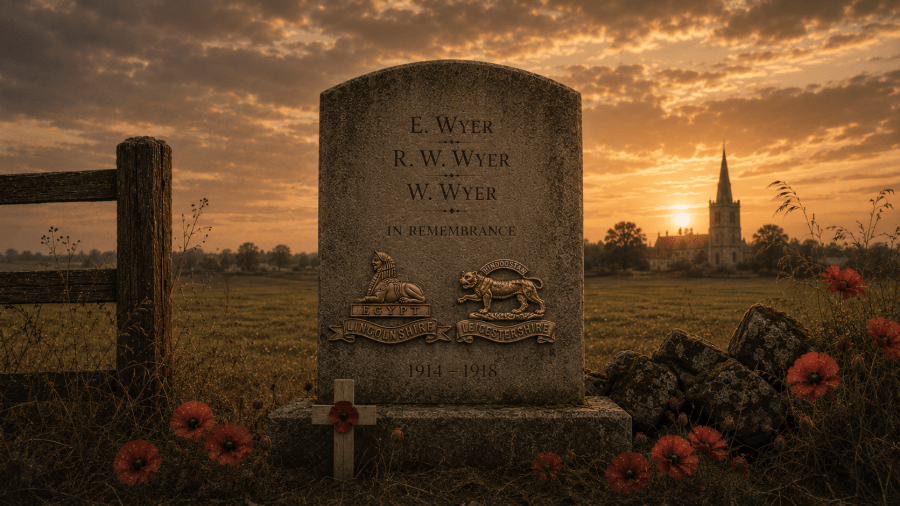
The Harvest of War
WHILE ROBERT AND EDMUND continued their training in England, their younger brother William was already on his way to war.
In the early hours of 30 July, 1915 he and the 9th Battalion Leicestershire Regiment reached Boulogne with 26 officers and 872 other ranks. From there began a succession of trains, marches, camps and billets that carried them steadily towards the front.
The marches through the August heat were gruelling, men falling out along the way as they struggled with the roads, the weather and the weight of their equipment.
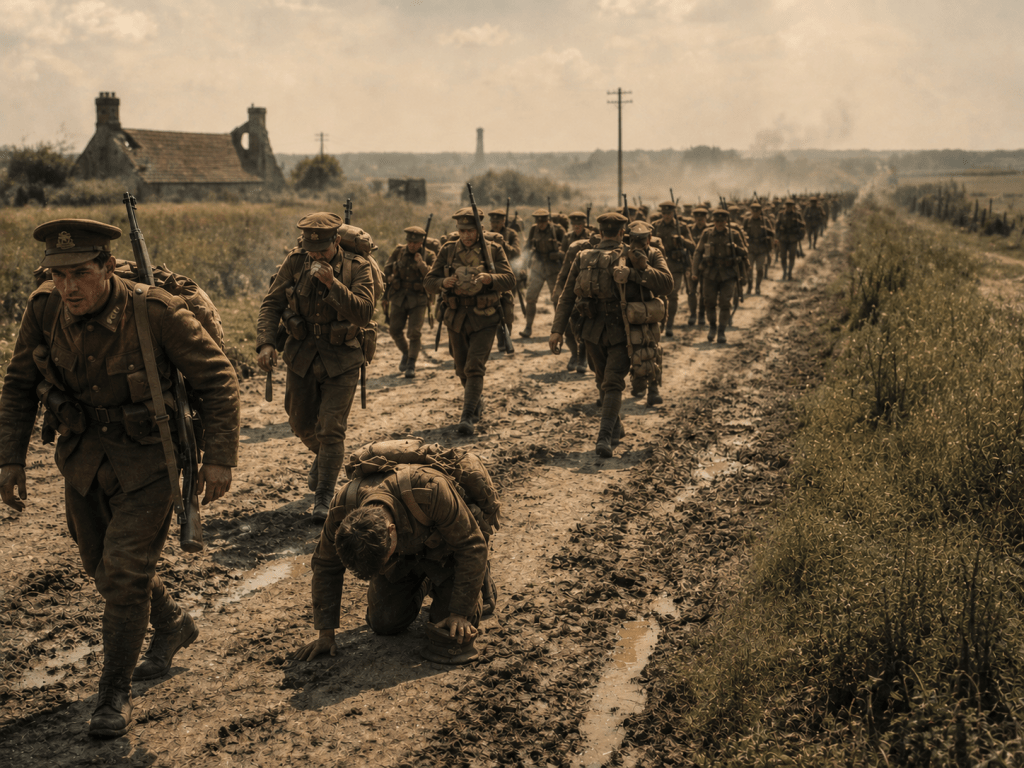
By 8 August the battalion had reached Dranoutre. The following evening its companies began moving into the trenches around Wulverghem, initially alongside experienced soldiers of the 2nd Buffs who would introduce these newcomers to the realities of trench warfare.
For William, this was his first encounter with the Western Front.
Thankfully, the sector was comparatively quiet, according to the Battalion Diary, but here quiet was a relative term.
The diary goes on to record that German artillery periodically shelled the trenches; patrols and working parties went out after dark to repair the wire; Very lights illuminated No Man’s Land.
Nearby, the village of Wulverghem offered a stark indication of what the war could do.
‘During the whole period in which the Battalion was in the trenches the Germans occasionally shelled the village of Wulverghem which was about 250 yards away from Battalion Headquarters. When visited the village was found to be completely ruined and the church was practically destroyed, except for the tower, part of which was still standing.’
9th Leicestershire Battalion War Diary
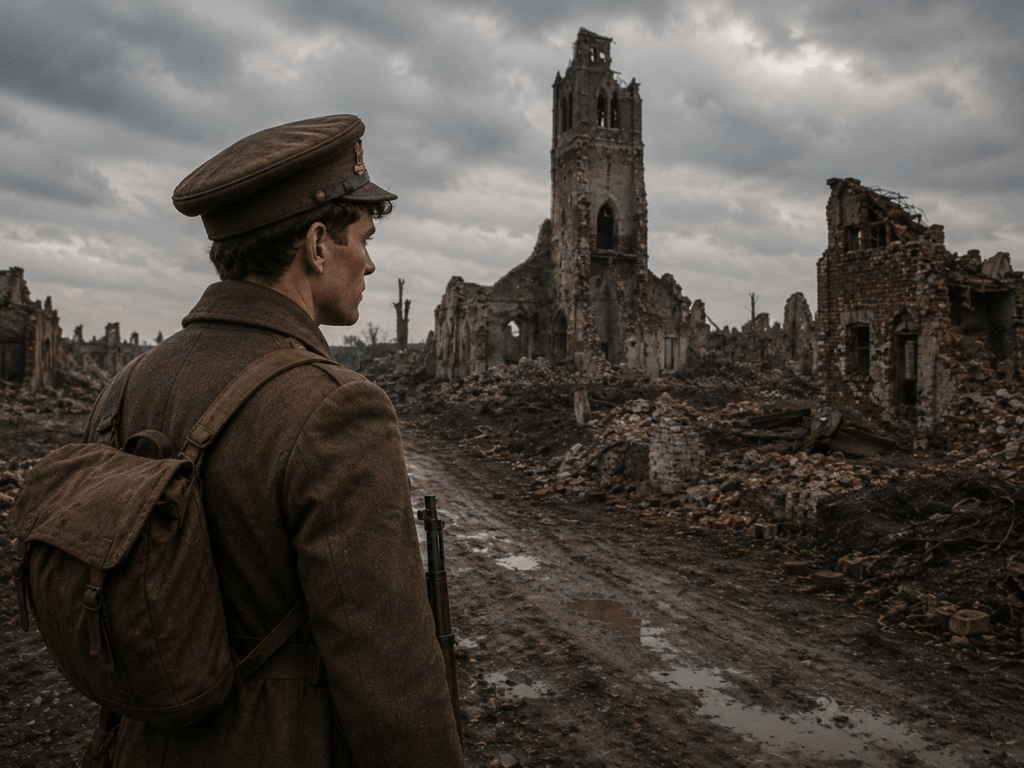
For a young man raised among the tranquil farms and cottages of Hacconby, the sight must surely have brought home something of the destructive power of the conflict into which he now found himself.
By this time, the twenty-one-year-old horseman from Hacconby had slept in barns and billets, marched mile after mile through unfamiliar country, worked beneath enemy fire and stood his first watches across No Man’s Land.
Meanwhile, as he was learning the realities of life on the Western Front, brothers Robert and Edmund were completing their long months of training in England.
That separation was now about to end.
The three brothers who had enlisted together in the autumn of 1914 were, at last, being drawn inevitably towards the same theatre of war—though their paths through it would remain very different.

ON 10 SEPTEMBER 1915, Robert and Edmund finally followed their younger brother across the Channel.
Also with them was their cousin (and mine), Robert Wand of the 3rd Battalion. [For Robert’s story please see posts ‘Robert Wand – Part One‘ and ‘Robert Wand – Part Two‘]
The Wyer’s 8th Battalion Lincolnshire Regiment left Witley Camp that evening and entrained at Milford for the journey through Folkestone to Boulogne.
It was a substantial body of men—923 other ranks and around thirty officers—most of whom, like the Wyer brothers, had enlisted a year earlier and spent the intervening months being fashioned into soldiers. Now the training grounds of England were behind them.
After a day at the Boulogne rest camp they travelled by train towards Watten and went into billets at Bayenghem-lès-Éperlecques.
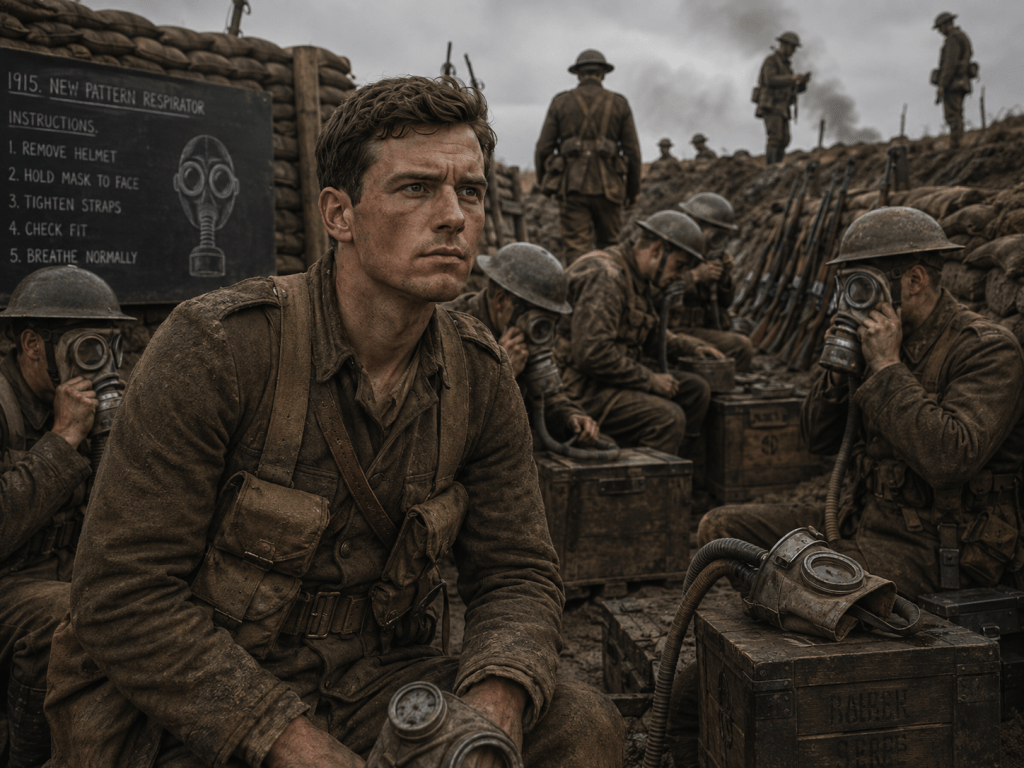
Their introduction to active service was initially measured rather than dramatic. Officers were sent forward for experience in the trenches, while the battalion continued exercising and learning how to use the new-pattern respirator—a reminder that poison gas had become another hazard of the battlefield they were approaching.
Then, on 20 September, the battalion began moving south-east: first to Racquinghem, then Norrent and Cauchy-à-la-Tour. On 24 September they bivouacked at Fours-à-Chaux, barely a mile and a half from Noeux-les-Mines.
The following morning everything changed, and at 10.30 the 8th Lincolns were warned to prepare for the firing line. By half past two they had reached Vermelles and were already under artillery fire.
Robert and Edmund had been in France for barely a fortnight, and unlike William, they would have no lengthy period in which to become accustomed to the routines of trench warfare.
For they had arrived at precisely the moment the British Army launched the Battle of Loos. Within hours, the two brothers from Hacconby would be moving towards their first battle—and one of the 8th Lincolns’ most devastating encounters of the war.
FOR THE LINCOLNSHIRE REGIMENT, the Battle of Loos was a brutal introduction to major offensive warfare. On 25 September 1915, the battalion passed through Vermelles under artillery fire before advancing towards Hill 70.
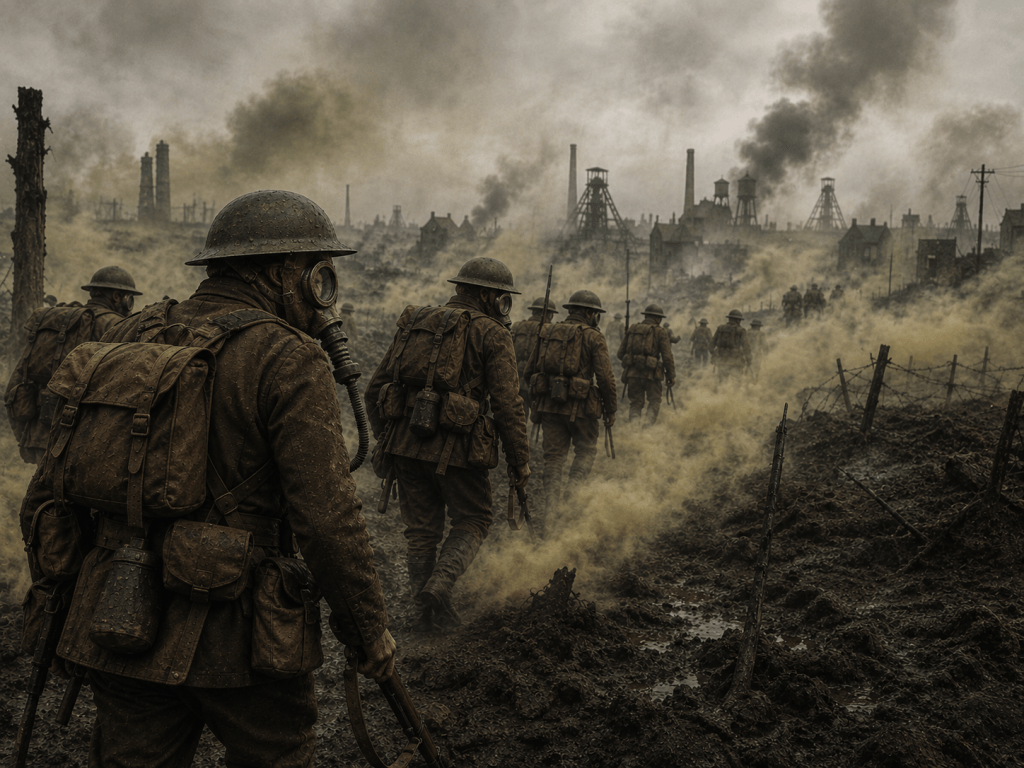
Through the night Robert and Edmund moved forward with their battalion, crossing the old trench lines before digging in at daybreak. Heavy shell and rifle fire followed.
When the advance resumed, they encountered strong German resistance and were temporarily forced back.
With officers falling and formations becoming disordered, a new line was established some 400 yards to the rear before the survivors advanced once more, many fighting alongside whatever units they found themselves among.
On the 27 September they were finally relieved.
The engagement’s cost had been appalling. During their first action on the Western Front, between 25 and 27 September, the battalion lost 22 officers and 401 other ranks. The casualty list included Robert Wyer.
Also listed was Robert’s cousin, Robert Wand, wounded on 26 September.
We cannot say for sure exactly when the eldest of the Wyers sustained his own wound, though it was certainly in the same action as his cousin. His service record does not reveal details of his wound, nor his subsequent treatment and convalescence. Was he evacuated to Canterbury with Robert Wand? It is certainly possible — perhaps probable.
However, the battalion’s severe losses at Loos, followed by its withdrawal from front-line fighting during October, strongly suggest that Robert Wyer was among the 401 other-rank casualties sustained during those terrible first days.
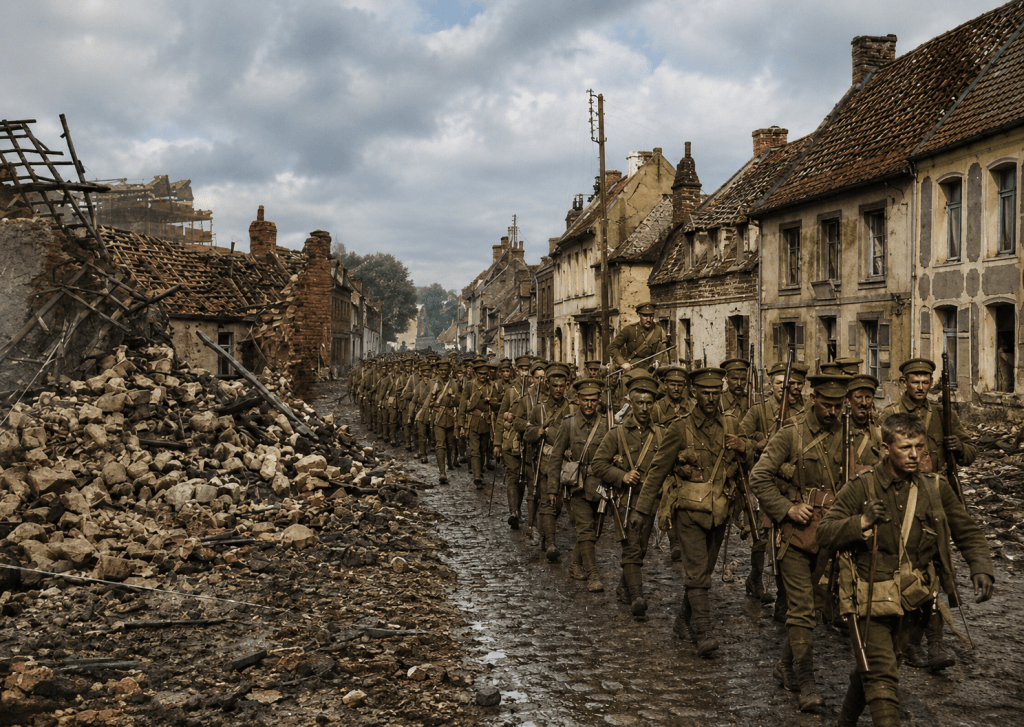
For Robert, his younger brother Edmund, and their cousin Robert Wand — all agricultural labourers from the same small corner of Lincolnshire — Loos had provided their first experience of battle.
Edmund came through it physically unscathed; Robert and his cousin were less fortunate.
Thankfully, they emerged from battle, two of them blooded by the experience, but all three men were alive.
Meanwhile, William and the men of the 9th Leicesters were in the Bienvillers area, where their days were largely occupied with the unglamorous but essential work of maintaining and strengthening the front: repairing trenches, digging communication lines and providing working parties.
For the moment, at least, he had been spared the ordeal of taking part in a major offensive. That test was yet to come.
AT SOME POINT after recovering from his wounds, Robert was passed fit for active service and returned to France. Instead of re-joining his old battalion, he was posted to the 7th Battalion, Lincolnshire Regiment, almost certainly as a replacement for earlier losses.
By June 1916 the battalion was moving south towards the Somme, where preparations were under way for the great British offensive. On 2 July, the day after the Somme offensive began, the 7th Lincolns advanced on Fricourt.
The following morning they were drawn into bitter fighting around Fricourt Wood and Railway Alley, where German machine-gun fire swept their positions as companies and bombing parties were sent forward to support the attack.
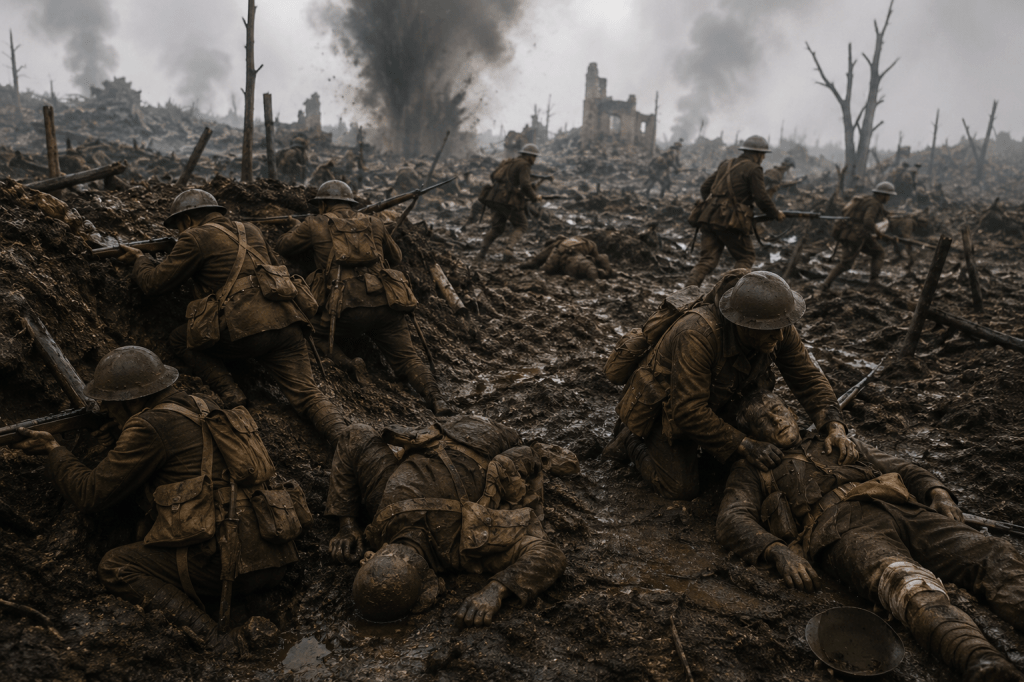
The cost was shocking: by 5 July the battalion recorded 35 other ranks killed, 153 wounded and eighteen missing.
Among those who disappeared during the fighting of 3 July was Robert Wyer. There was no body and, initially, no certainty that he was dead. Robert was simply missing.
For William and Sara, at home in Hacconby, those words left open possibilities to which any parent would have clung.
Their eldest son might have been wounded and separated from his battalion. He might have reached another dressing station without his name being recorded. He might even have been taken prisoner.
Until something definite was known, there was hope.
Tragically, while they were still clinging to this hope, the war trespassed most cruelly upon their lives once again.
On 14 July 1916, just eleven days after his brother had disappeared, the youngest of the three boys, William, was killed in action.
It had been a dreadful day for William’s regiment, one in which the 9th Battalion had been thrown into the confused fighting around Bazentin-le-Petit Wood.
Throughout the day they endured heavy shelling, machine-gun fire and determined German resistance as they attempted to secure the wood and its approaches. Late in the afternoon, every available man was ordered forward against the north-western edge.
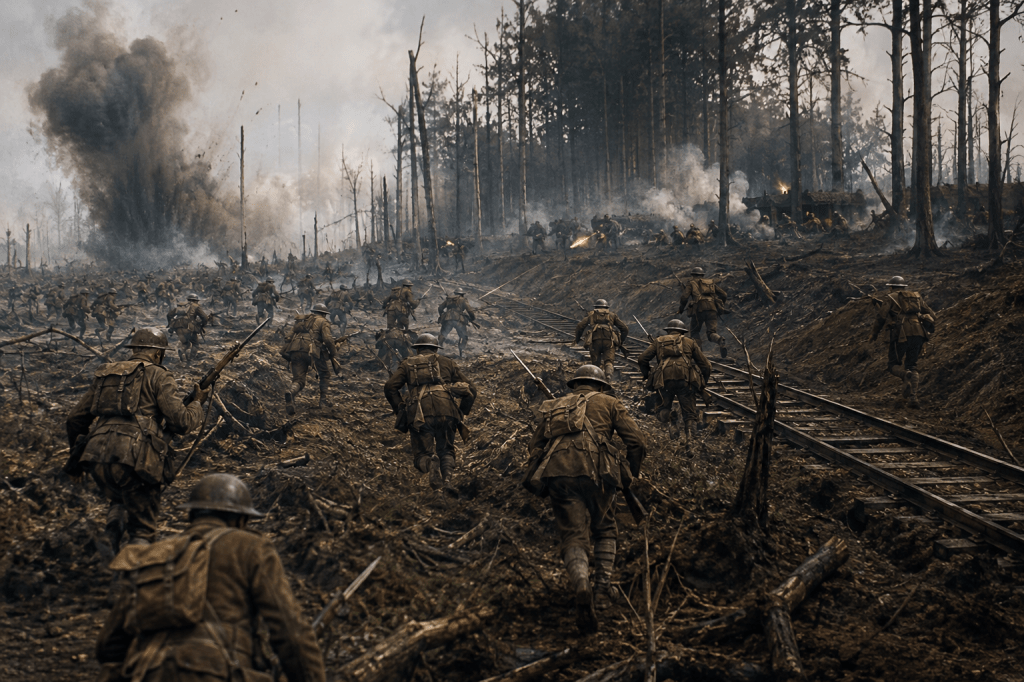
About forty men under Captain Emmett reached the edge of the wood and attempted to charge a German trench only fifty yards away.
Machine-gun fire swept through them: Emmett and thirty-six of his men were killed.
Elsewhere, other parties advancing towards the railway line were caught by enfilade fire — that is, machine gun fire sweeping them from the flank — while snipers inflicted further casualties.
By evening the survivors were consolidating whatever ground they held.
We do not know the part William played in the action, only the sad events that occurred after he was wounded.
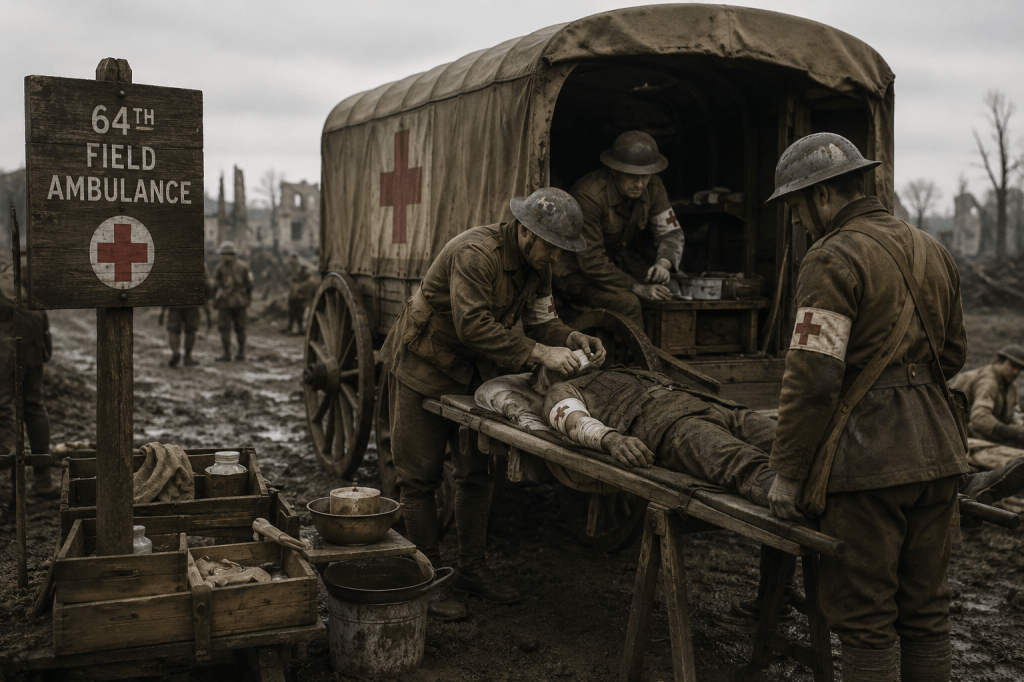
Suffering from multiple gunshot wounds, he was taken first to the 64th Field Ambulance — not an ambulance in the modern sense, but a mobile medical unit established behind the fighting line where wounded men could receive their first treatment.
From there, William passed through the 67th Field Ambulance before being taken farther back to No. 38 Casualty Clearing Station.
There, his journey ended.
Despite having survived long enough to be carried from the battlefield and passed back through the chain of medical care, William Wyer died at No. 38 Casualty Clearing Station.
The youngest of the three brothers was dead.
For his parents, there was none of the terrible ambiguity that surrounded Robert. Somewhere in the machinery of the Army, William’s death had been recorded and the process of informing his next of kin carried out.
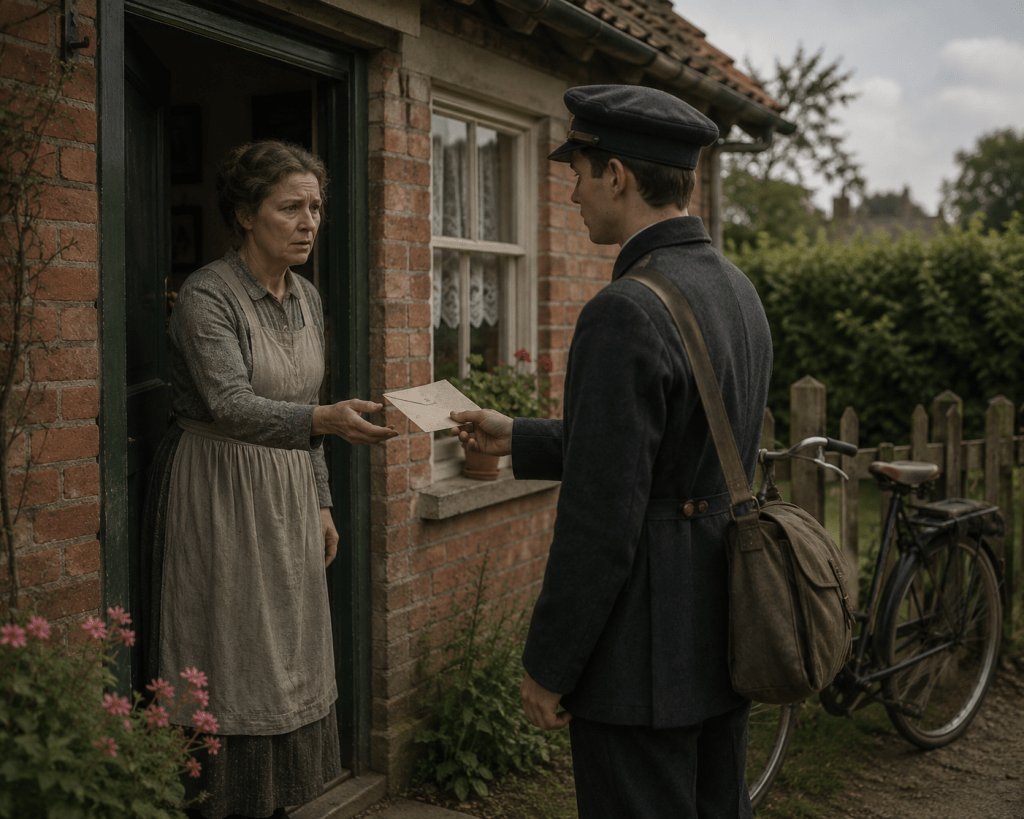
In due course the news had reached Hacconby, and one can only imagine what that moment meant inside the Wyer household.
William and Sarah now had to begin mourning one son while still not knowing whether another was alive or dead.
For them, there could be no simple surrender to grief, because hope for Robert remained. Every knock at the door, every arrival of the post, every newspaper casualty list might bring the news for which they waited—or the news they dreaded.
The cruelty lay in not knowing which.
Weeks of waiting became months. Autumn passed into winter and still Robert remained missing. Meanwhile William’s absence was already irreversible, his fate beyond question. His parents knew that their youngest son would not return; of their eldest, they knew almost nothing.
It was not until 16 March, 1917, more than eight months after Robert had disappeared, that the uncertainty was finally brought to an end. It was then that the Army accepted that he had been killed during the fighting of 3 July 1916.
For William and Sarah there could now be no remaining refuge in hopeful possibility. Two of their three sons who had answered Kitchener’s call in September 1914 were dead.
And somewhere across the Channel, their youngest, Edmund, was still at war.
FOR EDMUND WYER, there could be no withdrawal from the war that had already taken both of his brothers. Whatever news eventually reached him of Robert and William, his own service continued.
Through the remainder of 1916, the 8th Lincolns fought on through the Somme campaign, taking part in a series of major battles before the fighting culminated at the Ancre in November. By then the battalion had suffered heavily and was absorbing new drafts of men to replace its losses.
Edmund’s surviving service record becomes difficult to follow during this period.
In January 1917 he was granted ten days’ leave in England — a brief return home before going back to France and the familiar routine of trenches, billets and training.
The circumstances of that homecoming can only be imagined. Three Wyer brothers had gone to war; Edmund was now the only one to return.
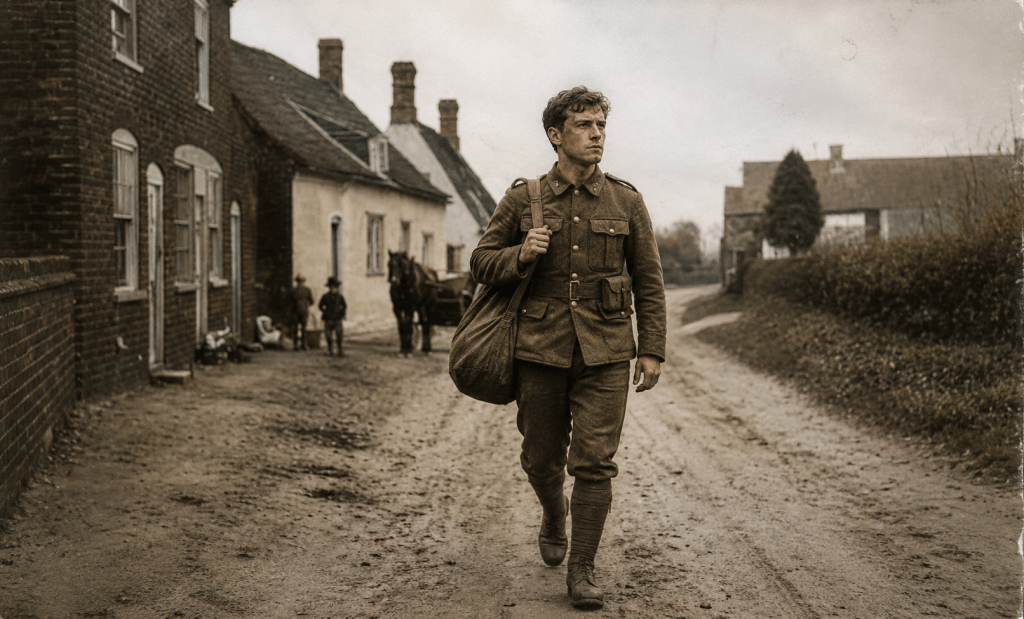
For William and Sarah, the joy of seeing their surviving son must have been tempered by the absence of Robert and William.
For those few days the family was together again, but it was a smaller family now, painfully conscious of the two who should have been there.
And there was another uncomfortable truth. Edmund’s return home was only temporary, and on 12 January his leave ended.
Having already lost two sons to the war, William and Sarah watched helplessly as their youngest son left Hacconby and returned to the untold dangers in France.
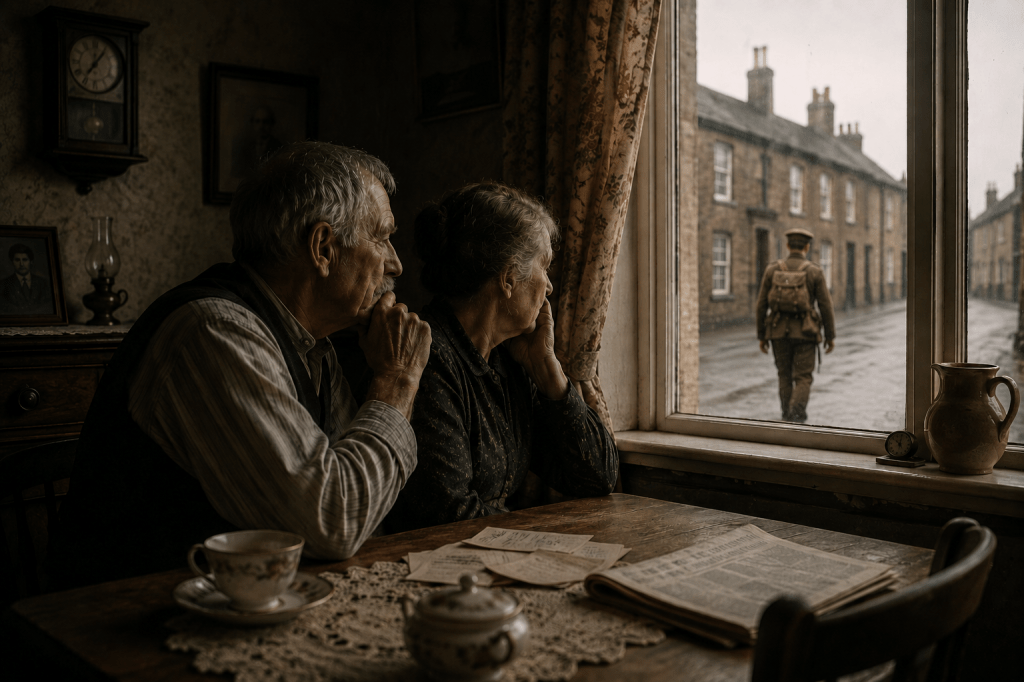
ON 27 MARCH Edmund was attached to the 37th Division Burial Company. It was a grim duty. These men worked behind the fighting, recovering and burying the dead left by earlier battles and the continuing artillery war.
It was while serving with the division during the Arras offensive that Edmund himself became a casualty. On 16 April 1917 he was admitted to the 47th Field Ambulance with a gunshot wound to his right arm. Two days later he had been carried farther down the medical chain to the 7th Canadian General Hospital at Étaples.
The surviving records do not allow us to trace his movements with certainty during the following weeks, but the evidence suggests that after recovering he returned to the 8th Lincolns.
By the autumn of 1917 the battalion had moved north to Ypres, where another great offensive was consuming men. The 8th Lincolns fought at Pilckem Ridge, the Menin Road and Polygon Wood as the British Army struggled eastwards through the devastated landscape that would become synonymous with Passchendaele.

Here, roads disappeared beneath liquid mud. Shell holes became ponds. Horses, wagons, guns and men were swallowed by the mire. Duckboards formed narrow islands across a landscape that scarcely seemed part of the natural world any longer. A single misplaced step could mean drowning beneath the weight of rifle, ammunition and sodden clothing.
Edmund had survived the Somme. He had survived Arras and a gunshot wound that had taken him as far as a hospital at Étaples. He had returned to his battalion and followed it into the shattered landscape around Ypres.
Now, on the eve of the Battle of Broodseinde, he was once again in the front line.
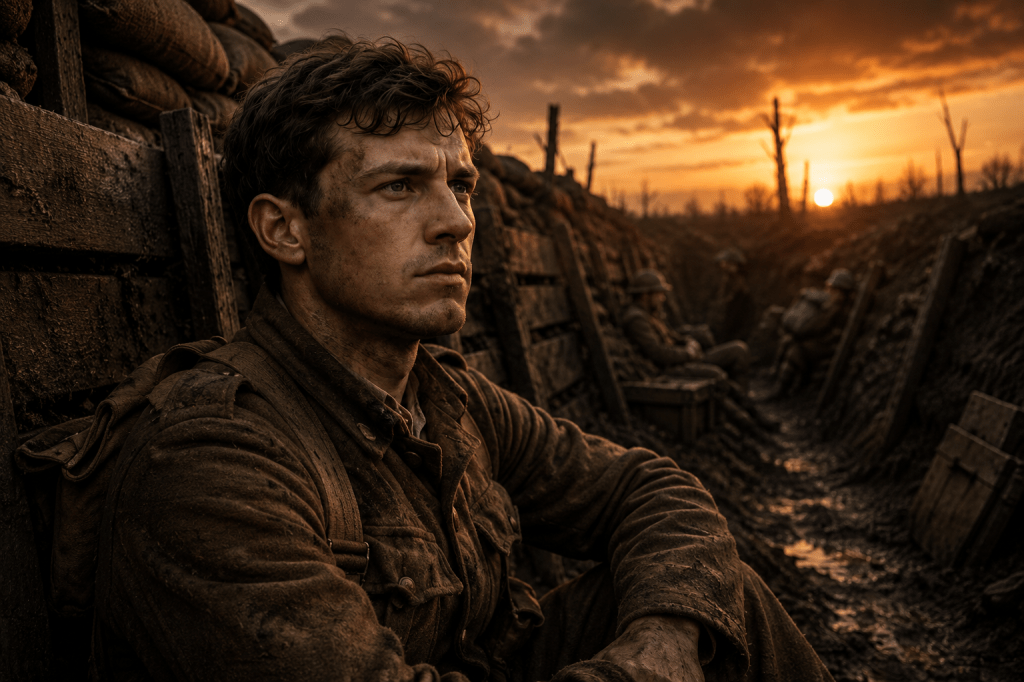
AT SIX O’CLOCK on the morning of 4 October, the 8th Lincolns went forward as part of the British attack at Broodseinde, and almost immediately they encountered determined German resistance.
Strong enemy positions around Jute Cottages, Berry Cottages and Hamp Farm poured machine-gun fire and bombs into the advancing troops, while the British artillery barrage offered little protection.
Some men succeeded in reaching the road ahead, but could not hold it and were forced back. Elsewhere the attack stalled before reaching its objectives. The battalion suffered heavily and by the end of its operation, 184 other ranks had become casualties.
Among them was Edmund.
Exactly where or how he fell is unknown. Like his brother Robert fifteen months earlier, Edmund simply disappeared amid the fighting. He was posted missing and, in the absence of any subsequent news, presumed dead.
FOR THE WYER family, the loss of three sons was not brought to a close by the end of the war. The Armistice ended the fighting but not the consequences.
For years afterwards, the Army continued to intrude upon their grief through official letters, forms, personal effects, medals and payments.
Initially, the young men’s effects were to be sent to their father, William. But there was to be another family tragedy. In 1919, William Wyer died, leaving Sarah to deal alone with the remaining formalities surrounding the deaths of their sons.
Thereafter it was Sarah who corresponded with the Army, supplied details of the surviving family and received what remained of her sons’ service: their medals, gratuity and, finally, in July 1920, Edmund’s memorial plaque and scroll issued in his name.
For Sarah, the war had taken three sons and, before its administrative machinery had finished recording their loss, her husband too.
Peace may have come to the nation in November 1918, but for families such as the Wyers, there could be no single moment when the war simply ended.
THE THREE WYER brothers had left the same small Lincolnshire village, but their war ended in different places, and today their names remain scattered across the former battlefields of France and Flanders.
Robert Wilson Wyer, lost during the fighting on the Somme on 3 July 1916, has no known grave. His name is inscribed on the Thiepval Memorial to the Missing, Pier and Face 1C, among more than 72,000 British and South African servicemen commemorated there.
His younger brother William does have a known resting place. Killed on 14 July 1916, eleven days after Robert disappeared, he lies in Heilly Station Cemetery, Méricourt-l’Abbé, Grave II.B.34.
Edmund, the last of the three brothers, was killed during the Battle of Broodseinde on 4 October 1917. Like Robert, his body was never identified, and he is commemorated on the great Tyne Cot Memorial near Passchendaele, Panels 35–37 and 162–162A.
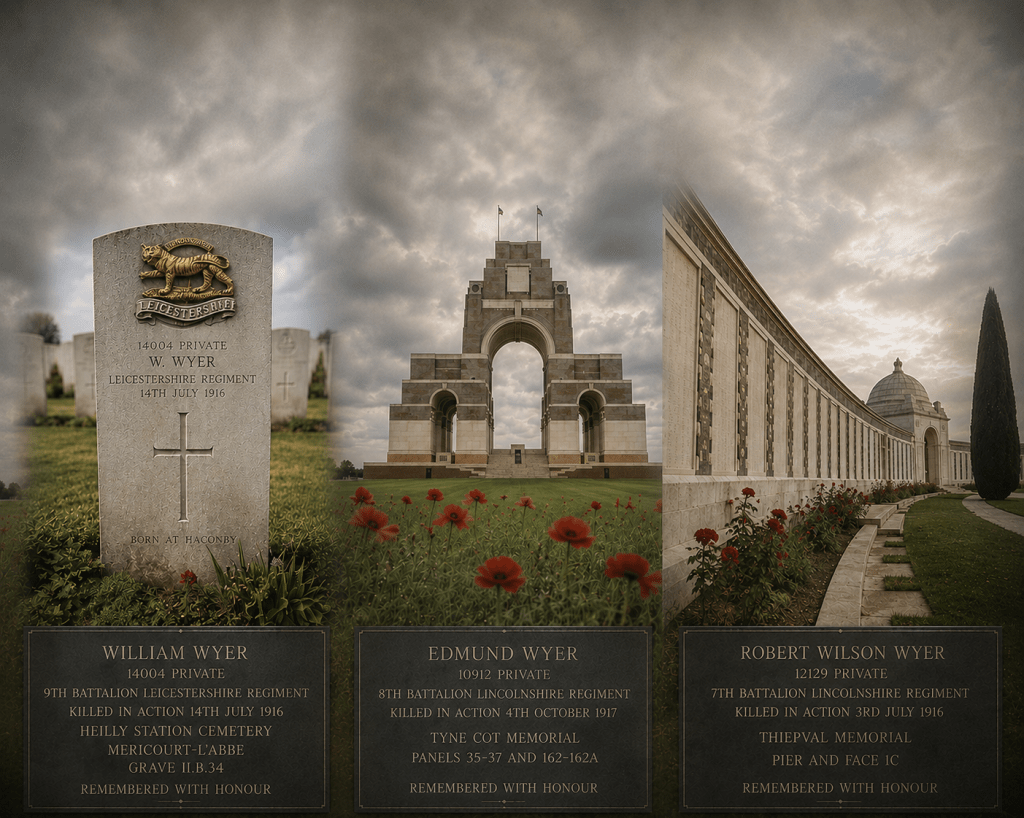
And so the brothers who had grown up together in Hacconby remain separated in death: William beneath a headstone on the Somme, Robert’s name overlooking the Somme battlefield at Thiepval, and Edmund remembered among the missing of Ypres at Tyne Cot.
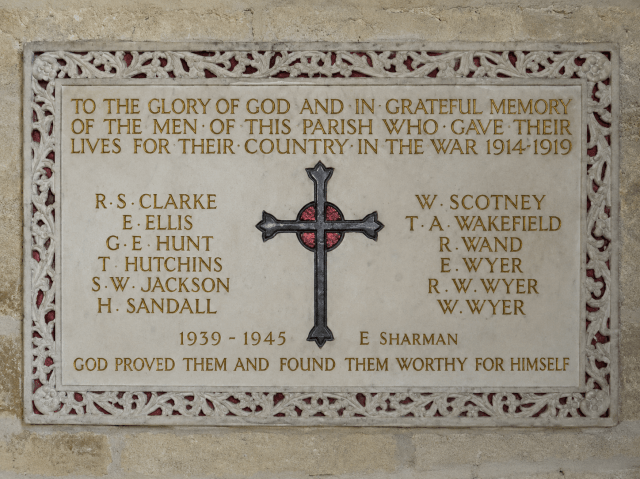
It is only at home where their names are reunited: on the memorial plaque in St Andrew’s Church, Hacconby.
IT IS TO HACCONBY that our story now returns; to that crisp November morning in 2021, and to the small street sign unveiled at a quiet cul-de-sac.
Wyer Close might easily be passed without a second glance, its name becoming part of the everyday geography of the village. Yet behind those two words lies the memory of a family whose loss, more than a century earlier, had been almost beyond measure.
There is something fitting in the simplicity of it.
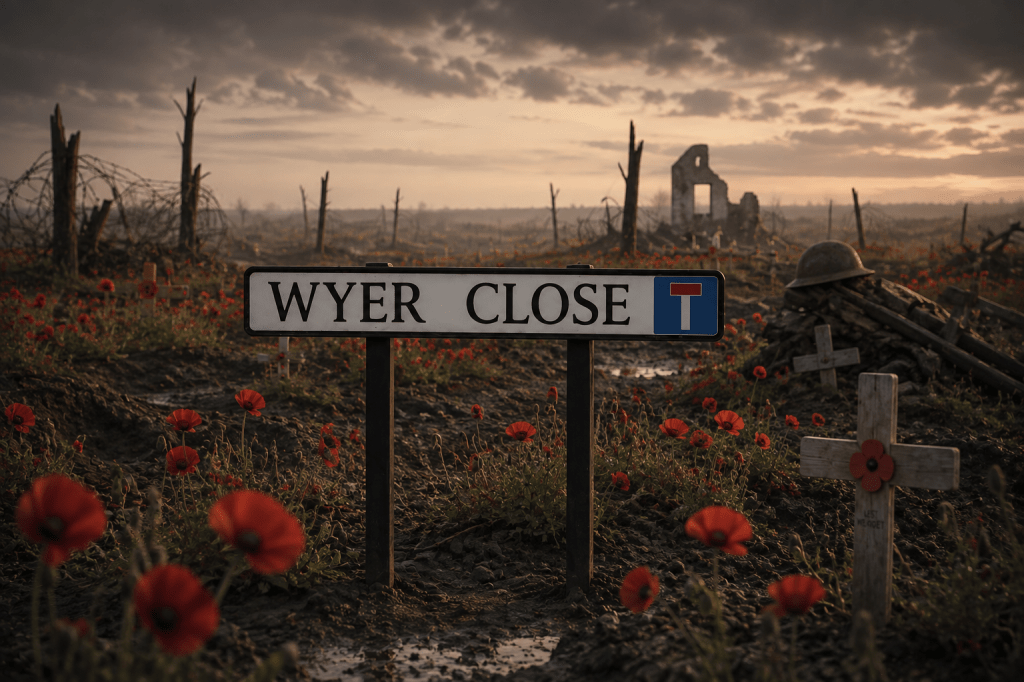
Robert, William and Edmund are remembered on the great memorials and in the cemeteries of France and Belgium, but here their family name has been placed back into the landscape they once knew.
Among houses, gardens and the ordinary rhythms of village life, the Wyers have become part of Hacconby once more.
Perhaps that is the quiet significance of Wyer Close. It does not tell their story; it simply ensures that the name remains. And whenever someone pauses to wonder why it is there, the story of the three Wyer brothers can begin again.
Author’s Notes:
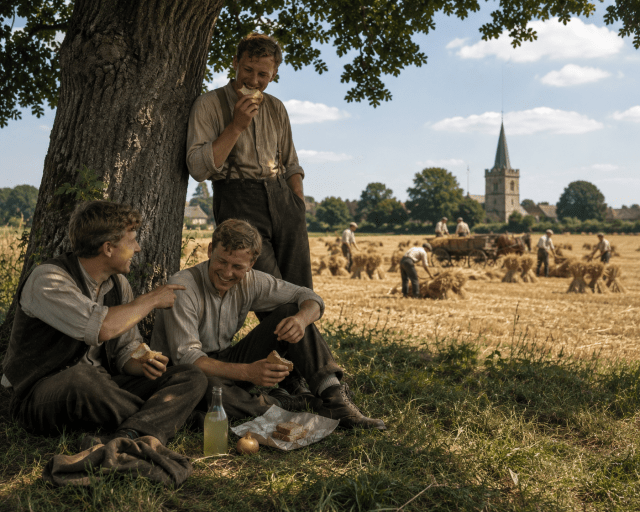
On 2 April 1911, when the census was taken, only Edmund remained at the family home in Hacconby. Robert was then living with an uncle in Oldham, where he was recorded as a labourer. William, meanwhile, was lodging in the south Lincolnshire village of Greatford, where he was working as a horseman on a farm.
We cannot know for certain where the three young men were three years later, at the outbreak of war. For the purposes of this narrative, and to reflect the close-knit family networks of the area, I have therefore chosen to place them together at Hacconby, working on the harvest. This is a reconstruction, but it is by no means an implausible one.
The village itself has been known by various spellings throughout its history. Today the name is generally rendered as Haconby, but Hacconby was a contemporary spelling found in many records from the period in which this narrative is set. I have therefore chosen to use the latter form throughout.
While I have exercised a degree of creative licence in portraying the Wyers’ lives and activities in the months leading up to the war, the subsequent account of their enlistment, training and movements with the Army is based upon surviving service records, military records and battalion war diaries.
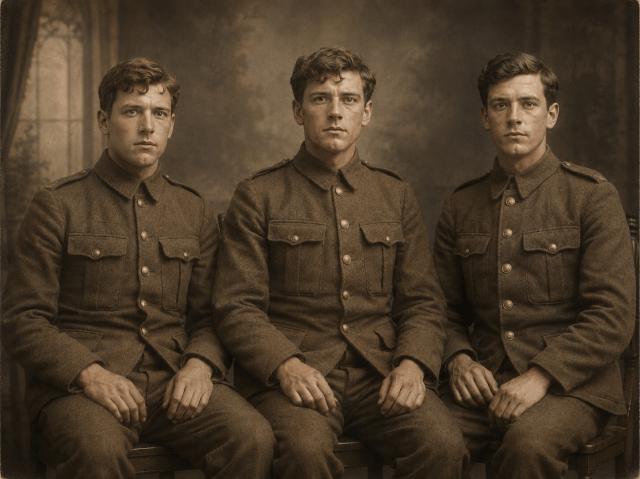
No known images of the Wyer brothers exist. I have therefore used family archive photographs of other, related males from which to create conceivable likenesses.
 RAVEN MOON