
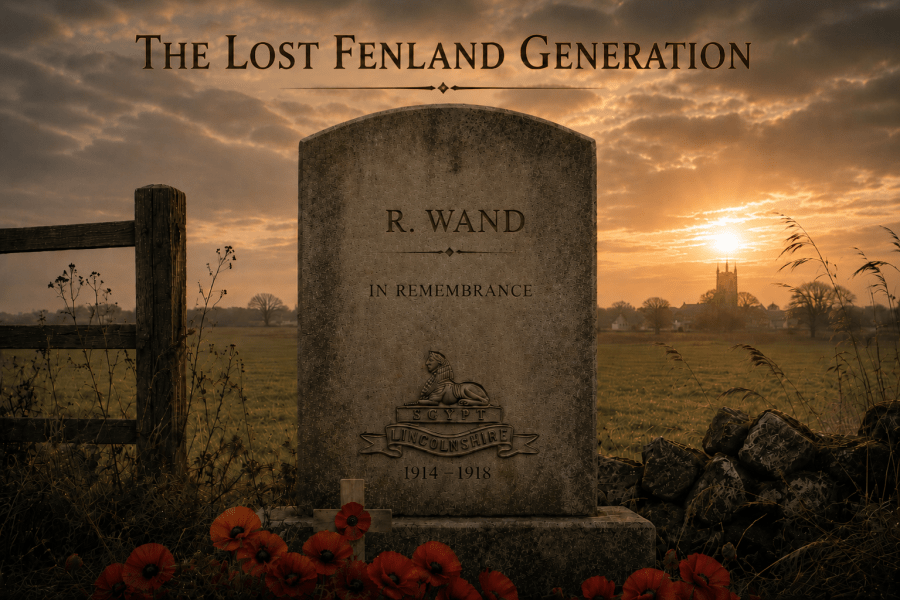
Changing Landscapes
WHEN ROBERT WAND left Hacconby in September, 1914 he could scarcely have imagined that, two years later, the war that pundits considered would be ‘over by Christmas’ would continue to consume men at an unimaginable rate.
Expected to last only a few months, the conflict had become one of endurance, measured not in victories but in the steady exhaustion of armies and nations alike.

AS WE HAVE seen in part one, after only a few weeks of front line service, Robert received a gunshot wound, for which he was transported back to England, where he received treatment at the military hospital at Canterbury.
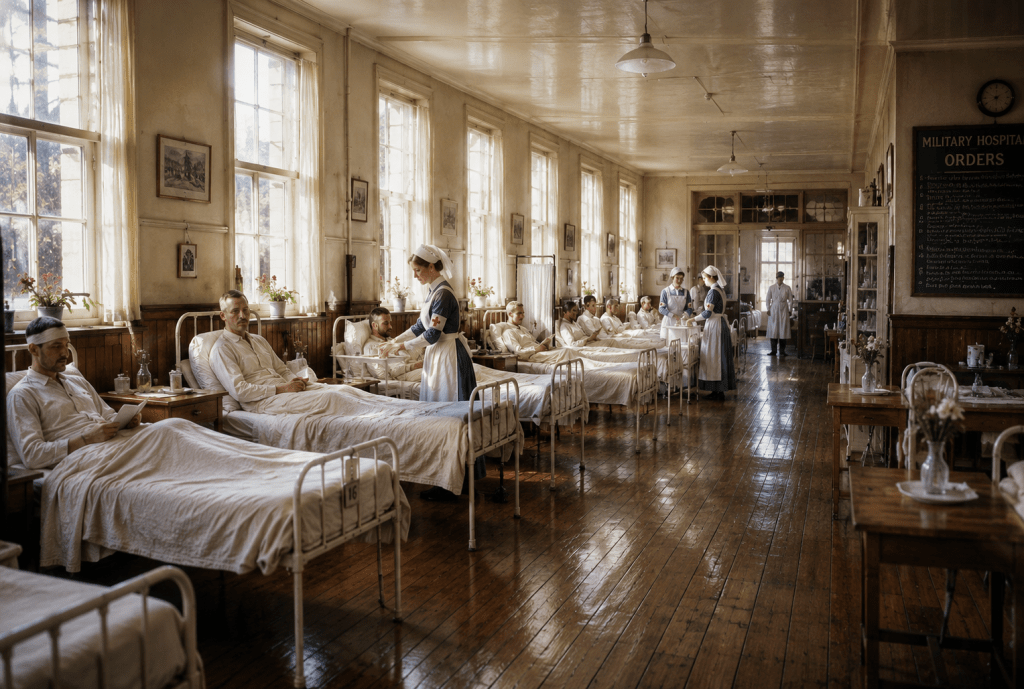
Robert’s recovery was remarkably brief. The gunshot wound to his right forearm had removed him from the fighting, but only for a matter of weeks.
Following his arrival at the military hospital at Canterbury on 4 October, where the wound was cleaned and dressed, he was placed on Home Service while his strength returned.
For many men, this period ― treatment and recovery from non-serious wounds ― became the first real opportunity to reflect upon everything they had endured since crossing to France.
Whether Robert managed to spend a few precious days in Hacconby cannot now be known. Like so much of the ordinary business of soldiers’ lives, the answer has disappeared with time.
One thing is certain, however. His war was far from over.
ON 14 NOVEMBER, 1915 Robert was posted to the Mediterranean Expeditionary Force. His papers do not identify the battalion he joined, but the dates coincide almost exactly with the Lincolnshire Regiment’s 6th Battalion then occupying the front north of Suvla Bay on Gallipoli.
It is therefore highly probable that, once declared fit for front line duty, Robert was sent out as a reinforcement to rejoin his county regiment in one of the most difficult campaigns of the war.
If so, his return could scarcely have presented a greater contrast.
Only weeks earlier he had been fighting amongst the shell-torn villages of northern France. Now he found himself overlooking the inhospitable ridges of Gallipoli, where the struggle had settled into another exhausting contest of trenches, snipers and relentless attrition.
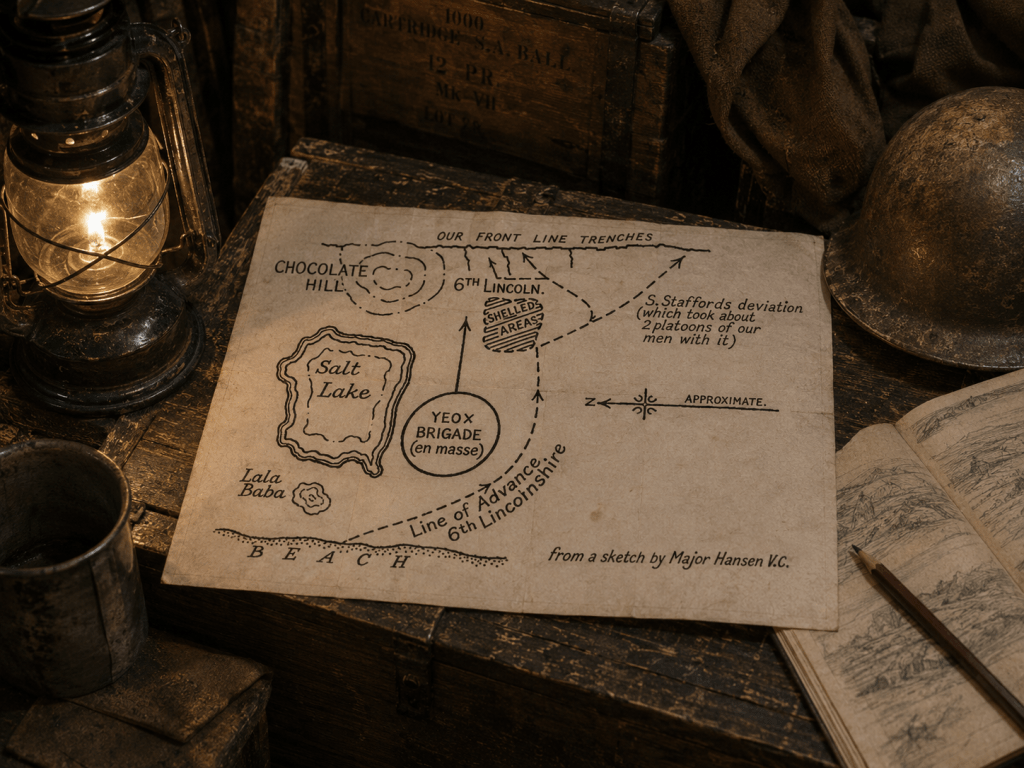
After taking over the line north of Chocolate Hill, the Lincolnshires occupied trenches cut into hard, rocky ground beneath the heights of Karakul Dagh. Digging was almost impossible. Breastworks had to be built above ground, while every gallon of water, every ration and every box of ammunition had to be carried forward by hand.
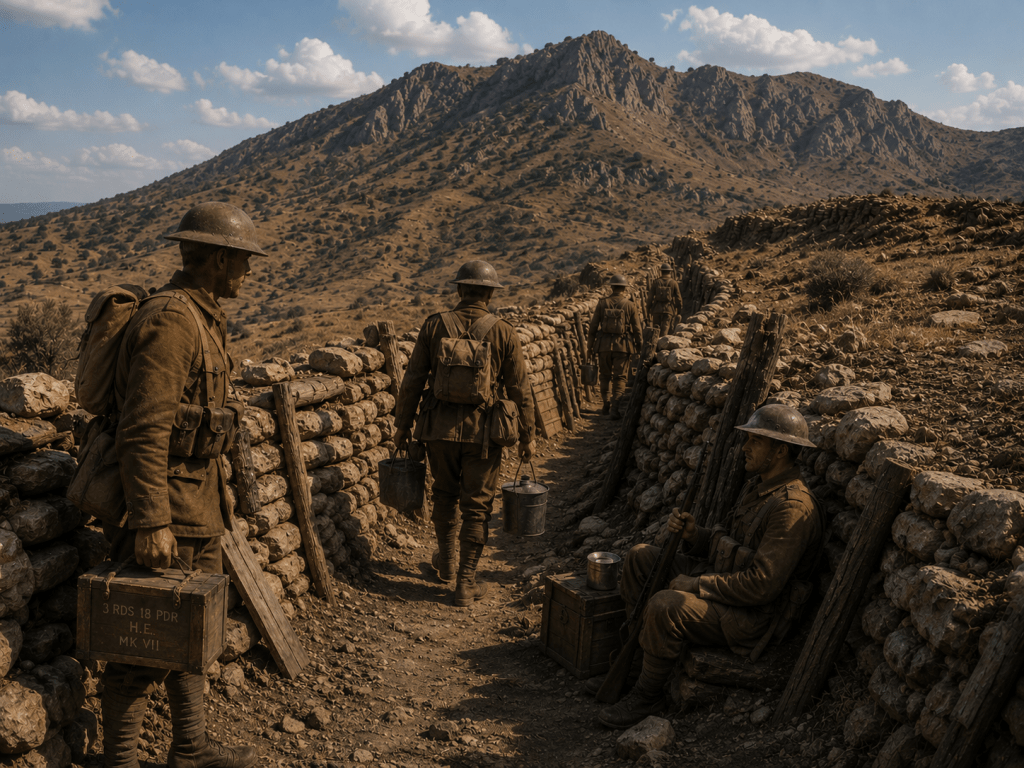
Dysentery became almost universal amongst the troops, and even before winter set in, the battalion had already been worn down by disease as much as enemy fire.
The hardships will have been unlike anything Robert had yet experienced.
In France the enemy had been positioned beyond broken villages, shattered woods and shell-torn hedgerows. At Gallipoli there was little shelter at all. Turkish riflemen occupied commanding ground overlooking the British trenches, and every movement invited a bullet.
Then came winter.
TORRENTIAL RAIN FLOODED the trenches until men stood waist-deep in freezing water. Dugouts collapsed beneath them. Several soldiers drowned before the water could escape to the sea.
Hardly had the ground begun to dry when bitter frost arrived, followed by heavy snow. Men who only weeks before had suffered beneath the Mediterranean sun now found themselves enduring freezing temperatures with inadequate clothing and little protection from the weather.
Rumours of evacuation circulated for weeks before the order finally came.
During the opening days of December the battalion quietly reduced its stores, removed unnecessary equipment and prepared to abandon the peninsula without alerting the Turks.
Every movement had to be concealed. Any sign that the line was thinning might have invited a determined assault upon the beaches.
The withdrawal remains one of the most remarkable operations of the First World War.
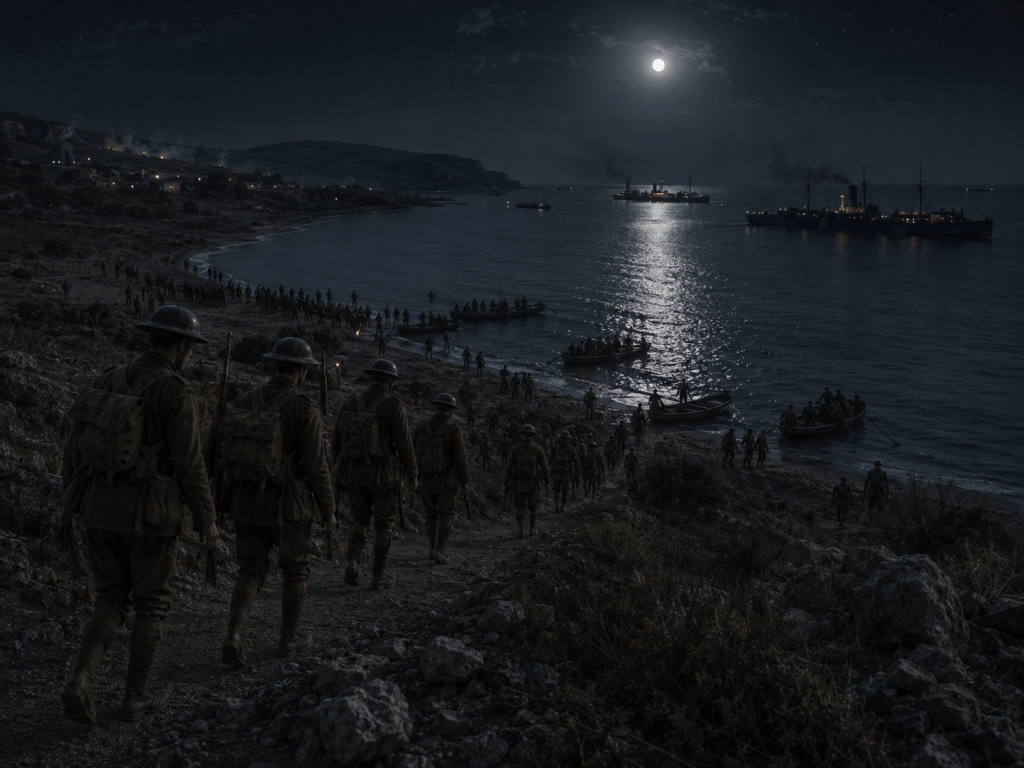
Night after night men slipped silently away from the trenches in carefully timed stages until at last, under cover of darkness, the final parties marched down towards Suvla Bay, where lighters carried them to transports waiting offshore.
Colonel Spring later reflected that the battalion had completed the evacuation without losing a single man. After months of relentless hardship, Gallipoli had at last released them.
The battalion reached Egypt in February 1916.
For many soldiers the change seemed almost unreal. The barren cliffs of Gallipoli gave way to palm groves, broad avenues and brilliant sunshine.
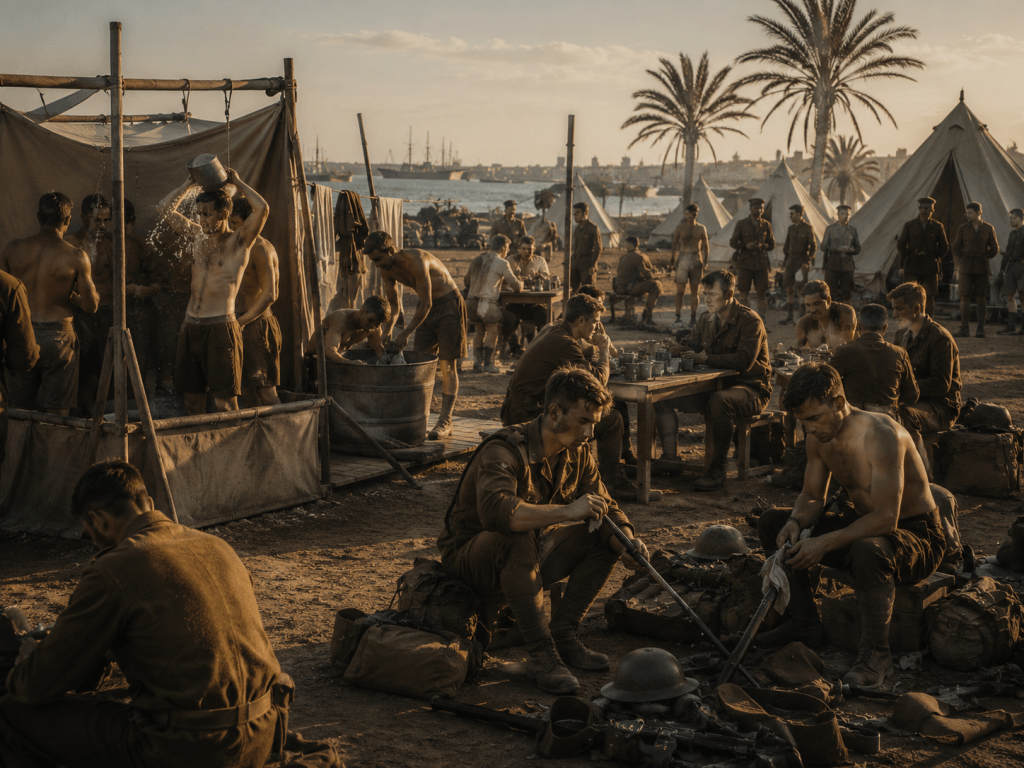
Camps were established near Alexandria, where weeks of rebuilding began. Men cleaned their equipment, completed route marches, resumed rifle practice and, for the first time in many months, enjoyed proper bathing facilities, fresh food and regular rest.
Everyone knew the respite would not last. They all knew another campaign awaited them.
That summons came during the summer.
ON 8 JULY, 1916 the battalion embarked once again, sailing from Alexandria to Marseilles before travelling north by rail through the length of France.
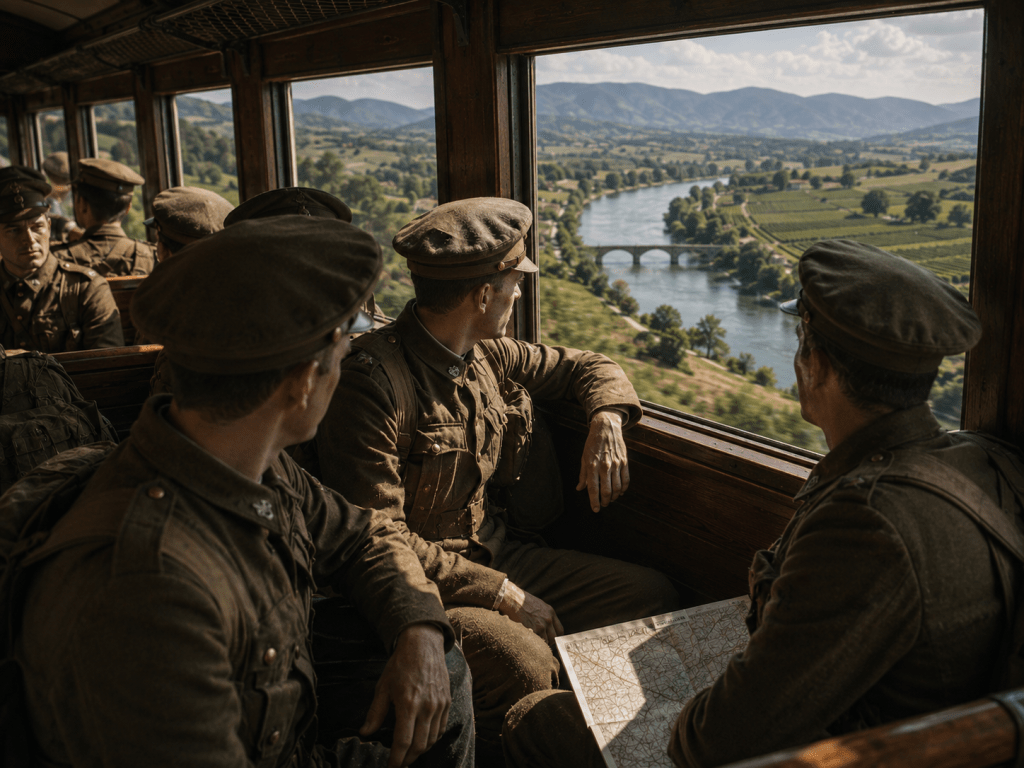
Passing through the Rhône valley, Lyon and Paris, they eventually reached the Flanders theatre, where the greatest battle ever fought by the British Army was already consuming thousands of lives every week.
The men had scarcely unpacked before they were moving once more towards the sound of the guns.
For Robert the journey had come full circle.
Less than a year after leaving France wounded, he had crossed the Mediterranean, survived Gallipoli, endured disease, flood and winter, trained beneath the Egyptian sun, and now found himself once again marching towards the Western Front.
Ahead lay the Somme.
BY THE TIME Robert reached northern France the Somme offensive had already been raging for weeks. The disastrous opening day of 1 July had become the bloodiest in the history of the British Army. Entire battalions had ceased to exist within a matter of minutes. Yet the offensive did not end there.
Instead it settled into a relentless struggle measured by devastating loss of life and a few hundred yards of broken ground.
Fresh reinforcements such as Robert and the men of the 6th were urgently needed. And for these men, their journey to the front revealed a landscape unlike anything they could have imagined.
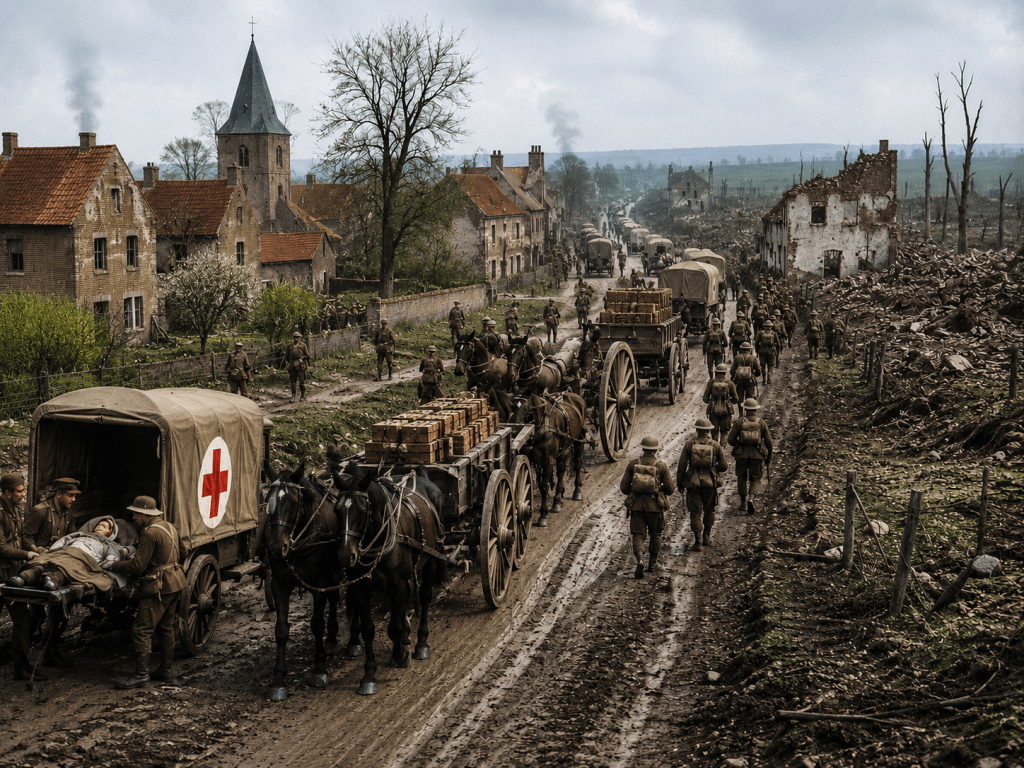
Roads were crowded with endless columns of transport, horse teams hauling ammunition, field guns rumbling towards the guns, ambulances returning with the wounded, and infantry moving steadily towards the line.
Villages behind the front still stood, but every mile eastward carried clearer signs that civilisation itself was beginning to disappear.
“Looking back on this period one chiefly remembers the poppies. The ground was scarlet with them, and they were found everywhere, even in the trenches.”
Colonel F.G. Spring – 6th Battalion, Lincolnshire Regiment
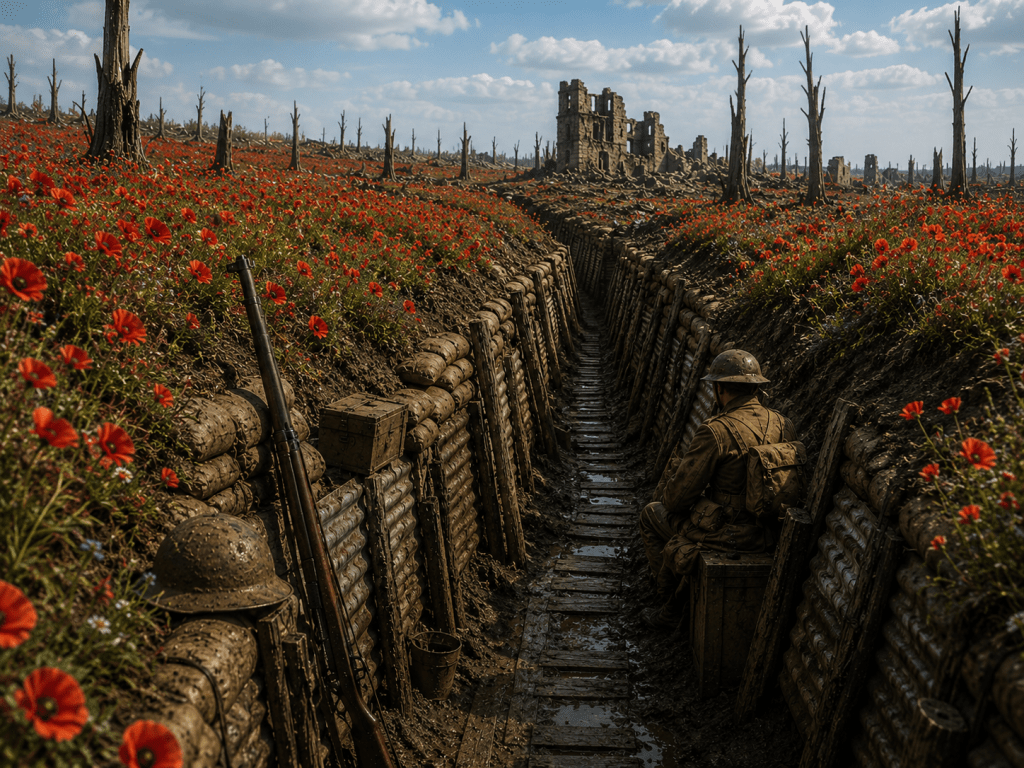
Colonel Spring later described how familiar landmarks simply ceased to exist beneath constant shellfire. Woods became fields of splintered stumps. Roads dissolved into seas of chalk and mud. Villages survived only as names on military maps.
For Robert, a farm horseman who had spent his life reading the seasons through the condition of the land, the destruction must have seemed almost beyond comprehension.
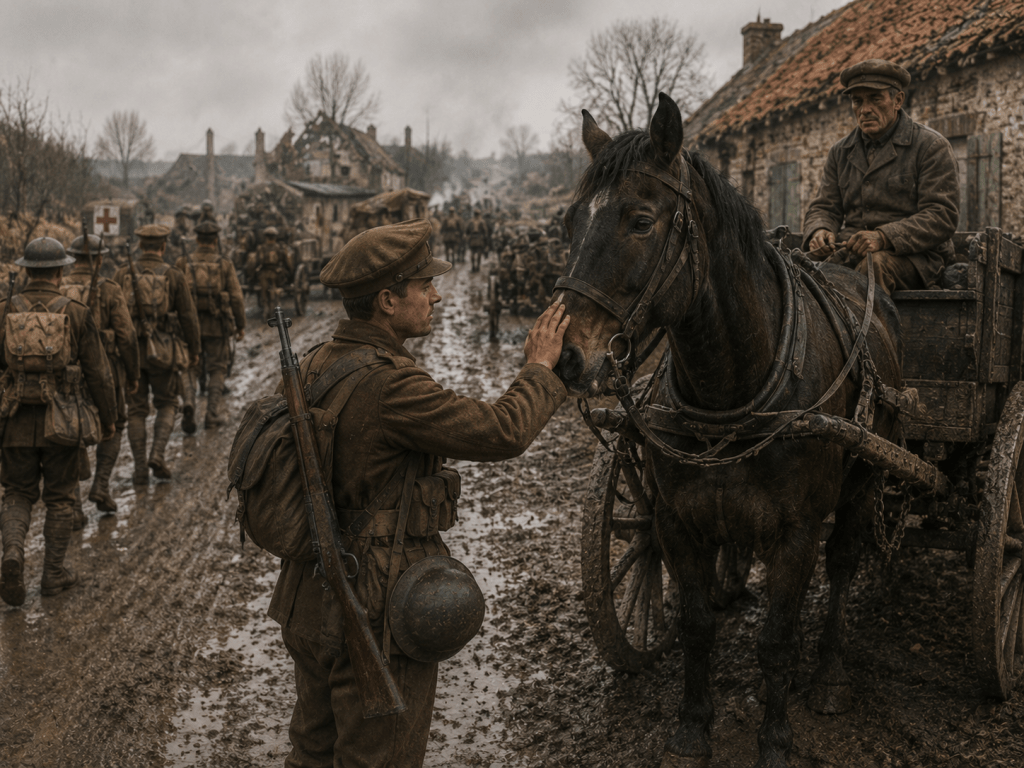
This was no longer the open countryside, familiar to a man who had spent his working life guiding horses across broad fields beneath expansive skies. Here, the landscape itself seemed to have died.
THE SOMME ALLOWED newcomers little time to settle. A soldier who arrived one evening might be in the front line before dawn.
The battalion into which Robert arrived was no longer the confident volunteer unit that had enlisted earlier in the war. It had become something harder, more resolute and infinitely more experienced.
Veterans no longer spoke casually about victory. Their concern was surviving the next bombardment, the next night patrol, the next attack ― and the inevitable counter attack to follow.
September brought renewed operations.
On 2 September the battalion marched to Bouzincourt. Here they found themselves only four miles from Thiepval, one of the strongest bastions of the German defensive system on the Somme.
When the Yellowbellies finally joined the troops holding the line, they entered a battlefield unlike the trench systems so often imagined today.
The opposing armies occupied what remained of the old German front-line trenches, running roughly parallel to one another at distances varying between seventy and three hundred yards.
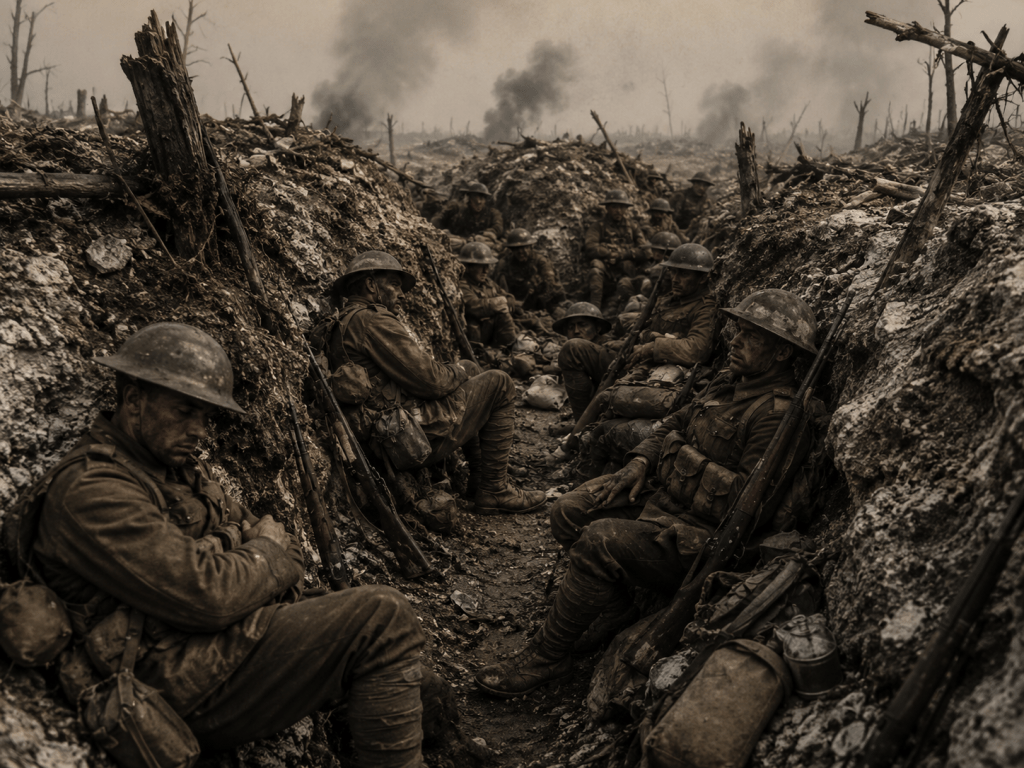
These were not the deep, carefully engineered trench complexes of the later war. Months of shellfire had shattered them into little more than broken earthworks.
Support trenches were few or non-existent. Communication trenches had largely disappeared. The battered line was often no more than a single ditch hacked through churned chalk, crowded with exhausted men and offering scant protection from the artillery that searched relentlessly for every position.
It is impossible to know with certainty whether Robert was among those packed into these shattered defences. Colonel Spring records that, on 12 September, the 6th Battalion relieved the 9th Sherwood Foresters in the line near Ovillers, scarcely a mile and a half south of Thiepval. He described what followed with characteristic restraint:
“The trenches were almost obliterated, and the bombardment was continuous. Casualties were heavy.”
Those few words convey little of the deafening violence that the men endured.
Continuous shellfire buried dugouts, smashed parapets, severed telephone lines and left few places where a soldier could shelter. Men waited, helpless beneath explosions that arrived without warning, knowing that the next shell may signal their end.
Whether Colonel Spring’s brief account records the very bombardment in which Robert fell cannot now be proved. Yet the chronology makes it entirely possible.
What is certain is that, on 14 September 1916, Robert sustained grievous shrapnel wounds and died the same day.
He was thirty-three years old.
Within his Service Record, under the heading ‘Record of promotions, reductions, transfers, casualties etc’ there are three blunt, bleak words:
Killed in Action.
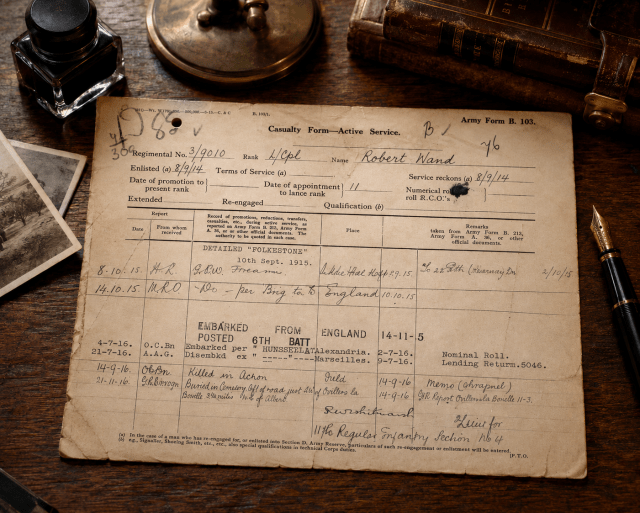
His burial was recorded as being in a cemetery just north-west of Ovillers-la-Boisselle, beside the road where so many temporary battlefield cemeteries were established during the fighting.
There is no account of the shell that killed him, nor whether death came instantly or following the desperate work of stretcher-bearers to save him. Like countless soldiers of the Somme, Robert disappears from the historical record in a single, terse line of official handwriting.
Today Lance Corporal Robert Wand rests in Ovillers Military Cemetery, only a short distance from the ground over which the 6th Battalion fought during those desperate September days of 1916.
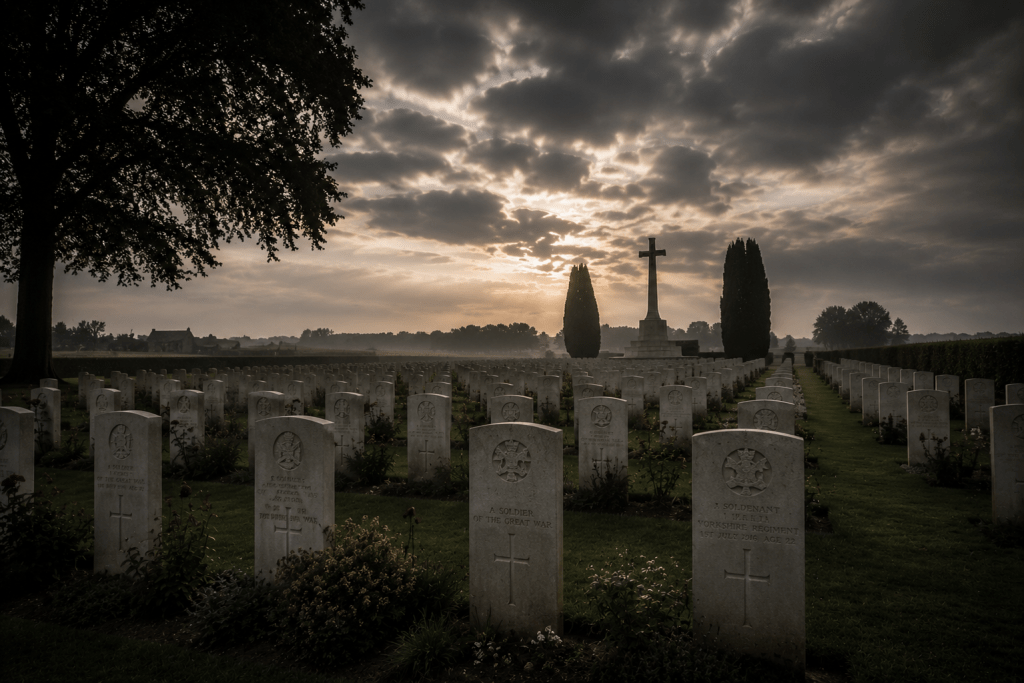
The temporary battlefield grave marked by his comrades became, after the war, part of the permanent cemetery created by the Imperial War Graves Commission. Each Portland stone grave marker represents a life interrupted before its natural course had run.
One of those stones bears the name of the horseman from Hacconby.
A YEAR LATER, in the fields around Hacconby, another harvest was gathered without him.
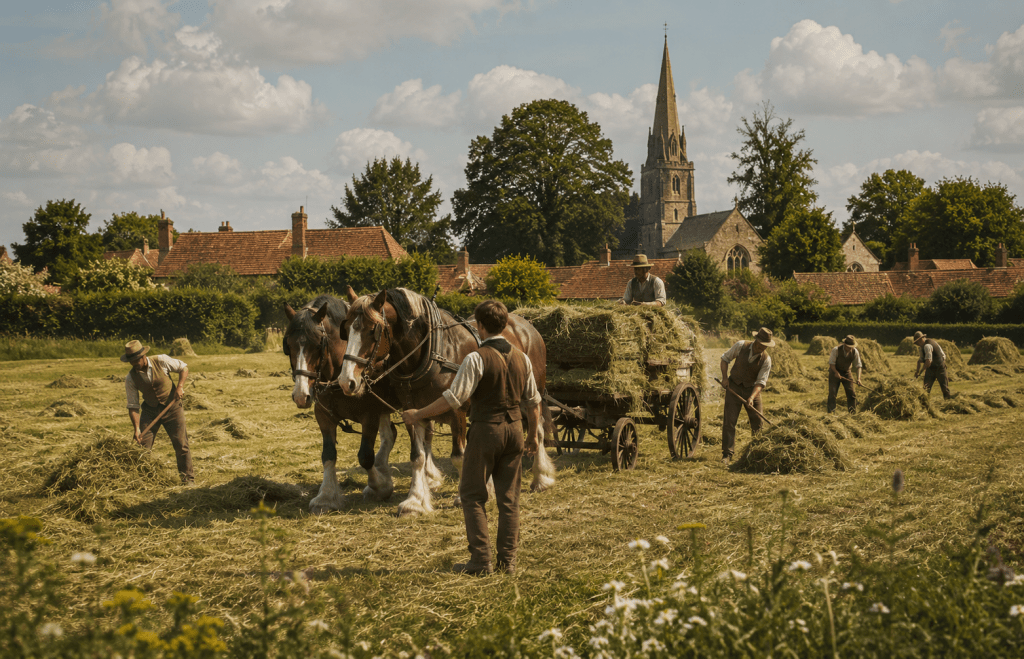
The horses he had left behind still required feeding, brushing, care. Fields, the contours of which he was intimate, demanded labour. And the seasons continued to turn in their endless, reassuring cycle.
Yet one familiar face would ever be absent from the fields and lanes, and one pair of willing hands forever lost.
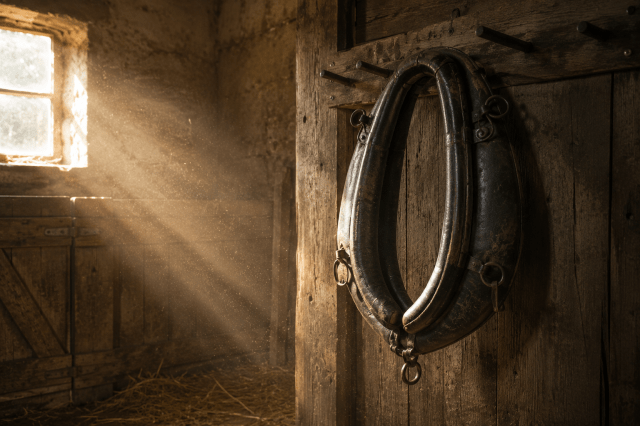
That, perhaps more than anything, is what the Great War took from communities like Hacconby.
Not soldiers, nor names carved in stone, but sons, brothers, neighbours and working men; men whose steadfast contribution to village life ended in the mud of places whose names they could scarcely have imagined before that summer of 1914.
 RAVEN MOON
Always well written, I feel I knew Robert, my cousins from Hacconby certainly did. I was moved to tears by your beautiful, thoughtful words.
LikeLike
Many thanks, Rebecca. I find them moving to write, if I’m being honest. And even though I may have written the words, on reading them again I’m moved once more. Such sad stories – but worth telling.
LikeLike