
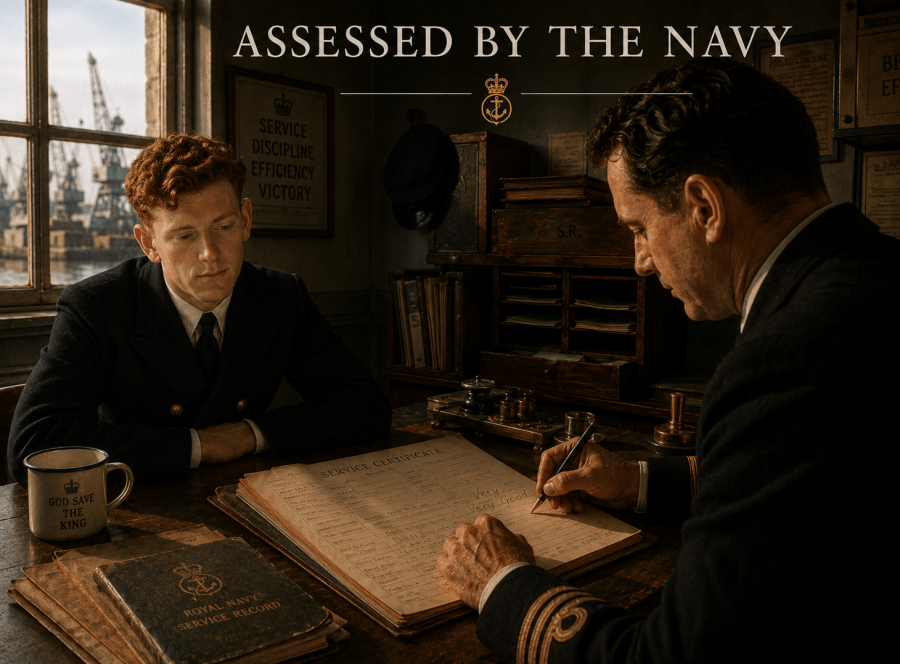
The RN Service History of Francis Wand
FOR THOSE OF us interested in family history, there is something oddly compelling about official military service records.
Unlike memoirs, they are not written to amuse or delight. Unlike family stories, they require no sentiment to soften the edges.
They are, quite simply, administrative documents – written in the dispassionate vernacular of the military, compiled by clerks, signed by officers, filed away in cabinets and forgotten.
Yet, once they do come to light, they reveal far more than they were ever intended to.
I’ve written previously about my father, Francis Harold Wand, and his wartime service in the Royal Navy.
Through his own recollections, memorabilia and historical evidence, I have been able to piece together some of the experiences that shaped those eventful years of 1940 to 1945.
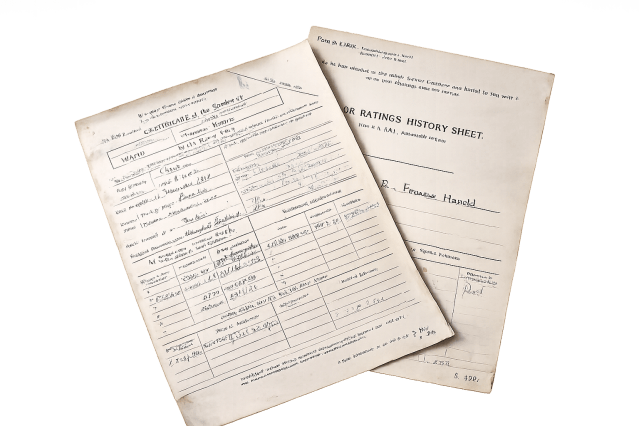
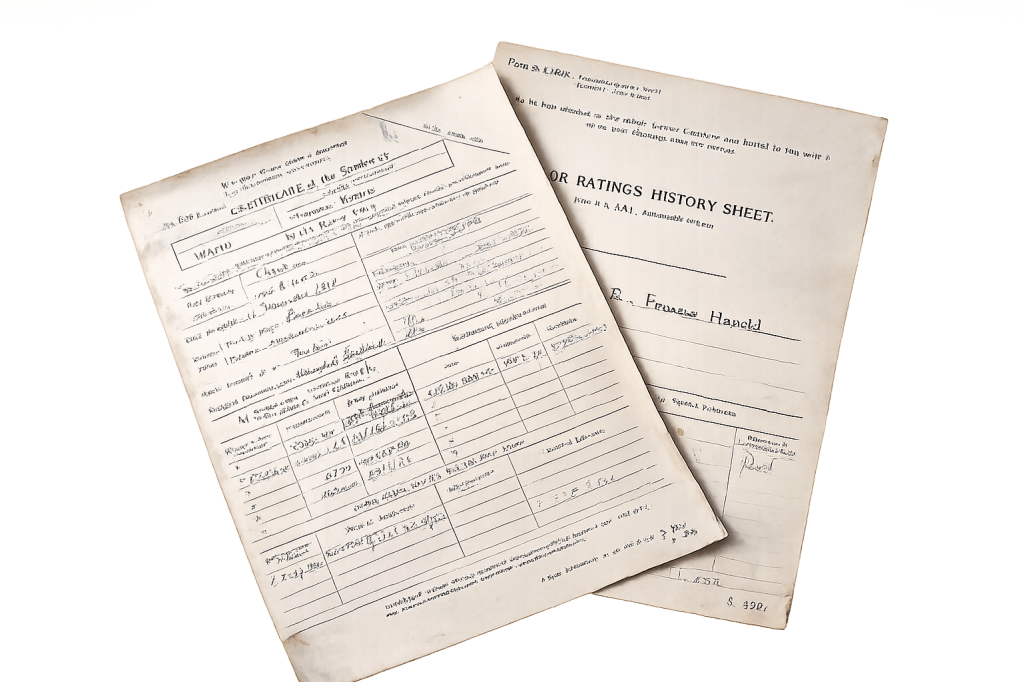
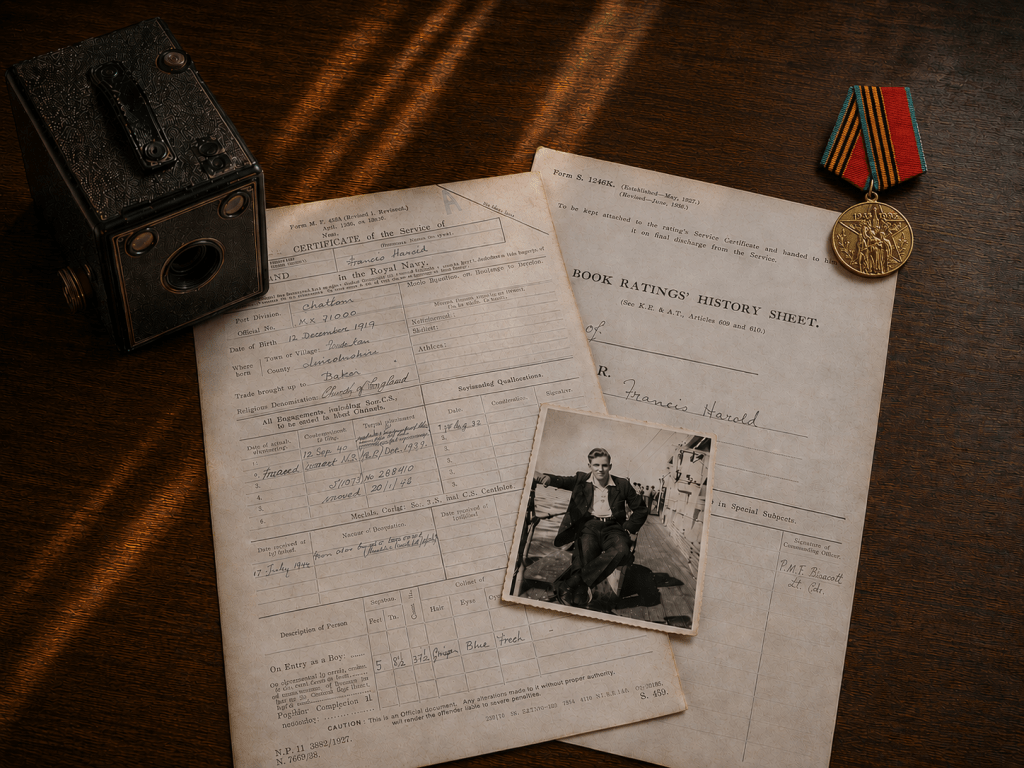
More recently, and prompted by my research into military records as part of my ‘Lost Fenland Generation‘ project, I have been looking again at my father’s own Service Certificate, together with his Naval Employment Record and Trade Certificate.
Rather than asking what they tell us about his wartime experience – after all, I feel I have adequately covered that – I found myself asking a different question:
What did the Royal Navy think of him?
Trade: Baker
THE FIRST PAGE tells us surprisingly little, yet enough to begin painting a picture.
We’re told that Francis Harold Wand was born in Pointon, Lincolnshire, on 12 December, 1919. His trade was recorded simply as ‘Baker’.
However, this civilian experience of working in Pointon’s small village bakery would dictate the nature of his military service for the next five years.
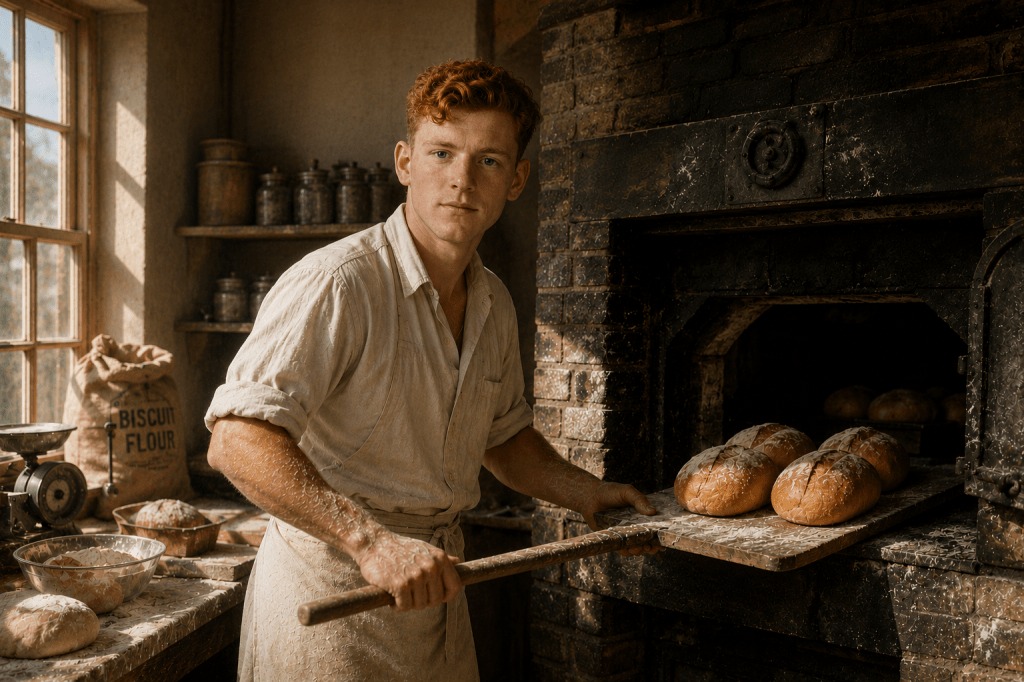
The Navy had an immediate need for trained cooks, bakers and men accustomed to working long hours preparing food for large numbers. Rather than learning an entirely new trade, my father brought into naval service an existing skill.
The record also tells us that he volunteered on 12 September, 1940. The timing is striking.
Britain had only recently emerged from the Battle of Britain, while the Blitz had begun to devastate London’s docks and cities. Only a few months earlier, 338,000 allied soldiers had been miraculously plucked from the jaws of defeat at Dunkirk.
On June 4, Winston Churchill had given his landmark ‘We shall fight on the beaches’ speech; perhaps his bleakest of the entire conflict.
It was one of the starkest periods of the war. There had been no successes or victories for Britain at this point (only later was the Battle of Britain viewed as such). Britain was reeling, on its heels and facing the threat of invasion by a powerful, well equipped enemy.
And it was then, in Britain’s ‘darkest hour‘ that the young baker from Pointon, Lincolnshire stepped forward to serve his country.
From Baker to Cook
ALTHOUGH ALREADY an experienced baker, my father still had to qualify within that most fastidious of services, the Royal Navy.
His Cook Ratings History Sheet records that he passed the Assistant Cook’s examination with a mark of 77%, after which he was officially rated as an Assistant Cook.
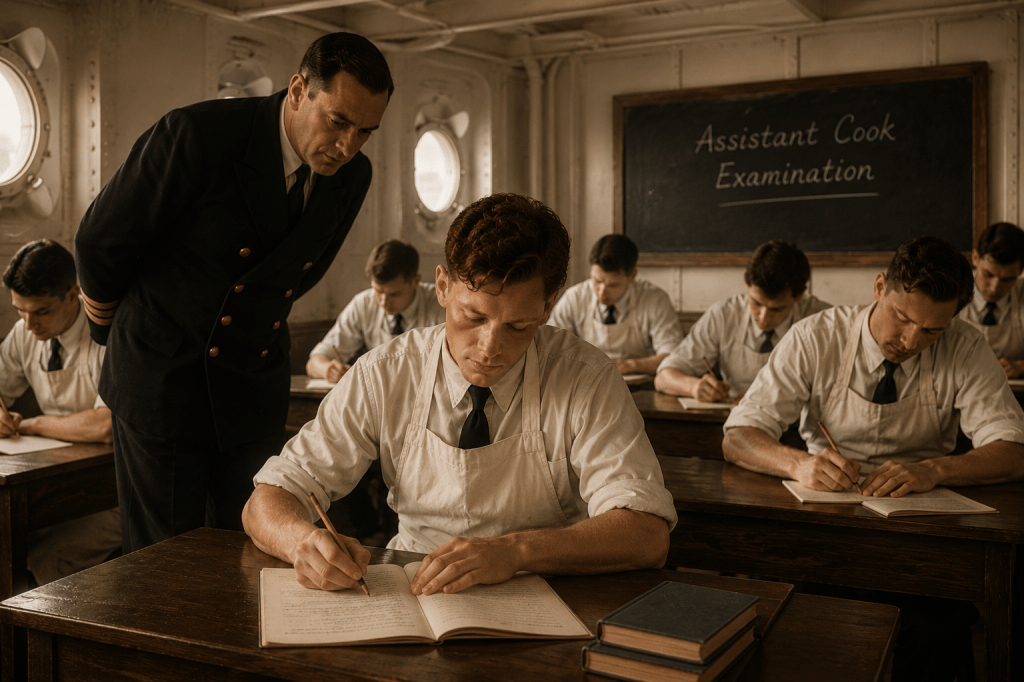
That detail reminds us that wartime service continued to demand the same exacting standards that applied in peacetime. Men were expected to learn naval procedures and meet professional requirements, regardless of previous civilian experience.
Promotion followed steadily, and assistant Cook became Cook. This advancement was not rapid, nor was it remarkable. But it was consistent. It was the steady progress of someone who was evidently doing his job well.
Internal Assessments
PERHAPS THE MOST revealing document is the Employment Record.
Like the Certificate of Service, this wasn’t written for posterity. It was an internal assessment by officers responsible for supervising my father, and it offers brief but telling snapshots of his service.
Following his period aboard HMS Shropshire, one officer noted:
“Through illness has worked very little during the past six months, but can be a good cook. Clean appearance.”
We know nothing more about the illness from these papers, and there is no reason to speculate. What matters is that it was sufficiently significant to be recorded officially. Despite this interruption to his duties, the assessment remained positive.
Later reports become increasingly complimentary.
One simply states:
“A good worker.”
Another describes him as:
“A good cook under supervision. Has played cricket for the department.”
By the end of the war, however, the assessment had become markedly stronger:
“A first class cook who works hard. Tactful with a good power of command.”
Those final words caught my attention.
“Good power of command.”
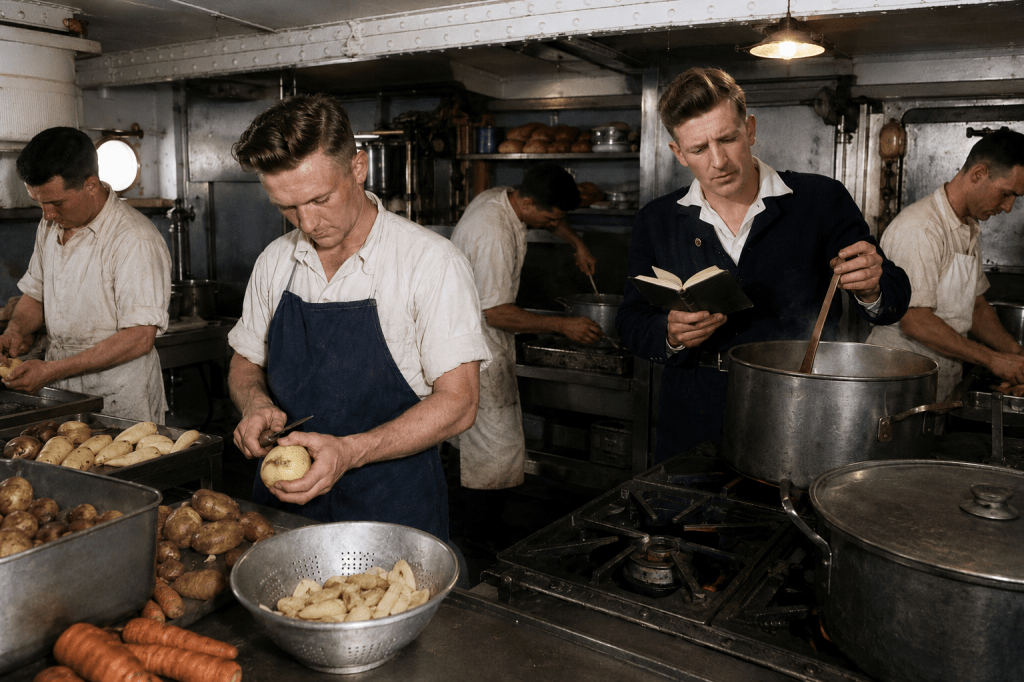
My father was, after all, a cook rather than a combat officer. This wasn’t praise for culinary ability alone. It suggests someone trusted to supervise others, organise a busy galley and exercise even-handed authority over those working with him.
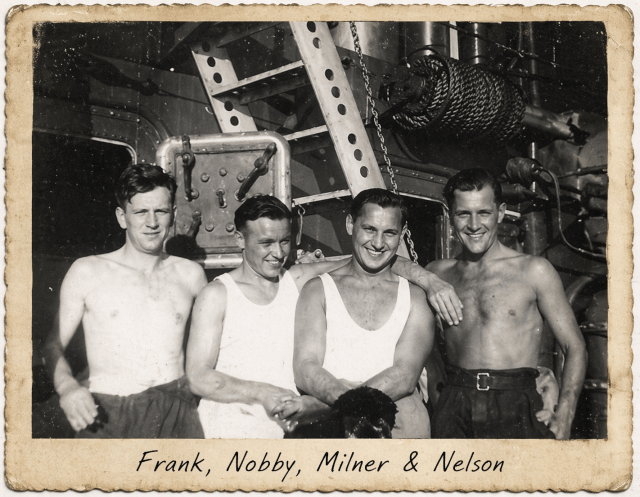
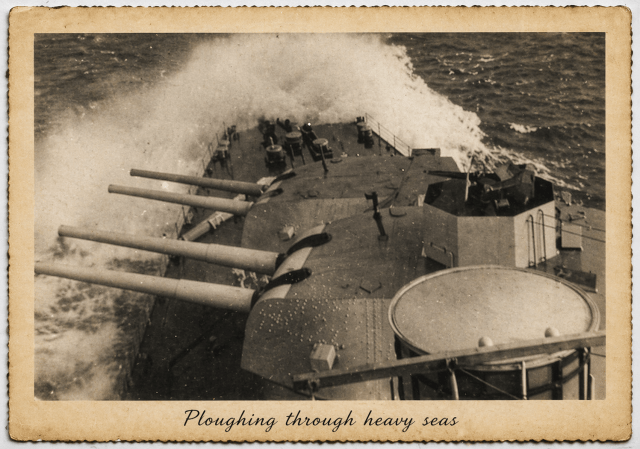
And let’s not forget: his workplace was not simply a large kitchen. It was the galley of one of the Royal Navy’s largest warships, where every meal was prepared while the ship rolled, pitched and fought its way through some of the most dangerous waters of the Second World War.
Leadership isn’t unique to a battlefield; it comes in many forms.
‘Uniformly Very Good’
THROUGHOUT HIS Service Certificate, one phrase appears again and again.
Character: Very Good.
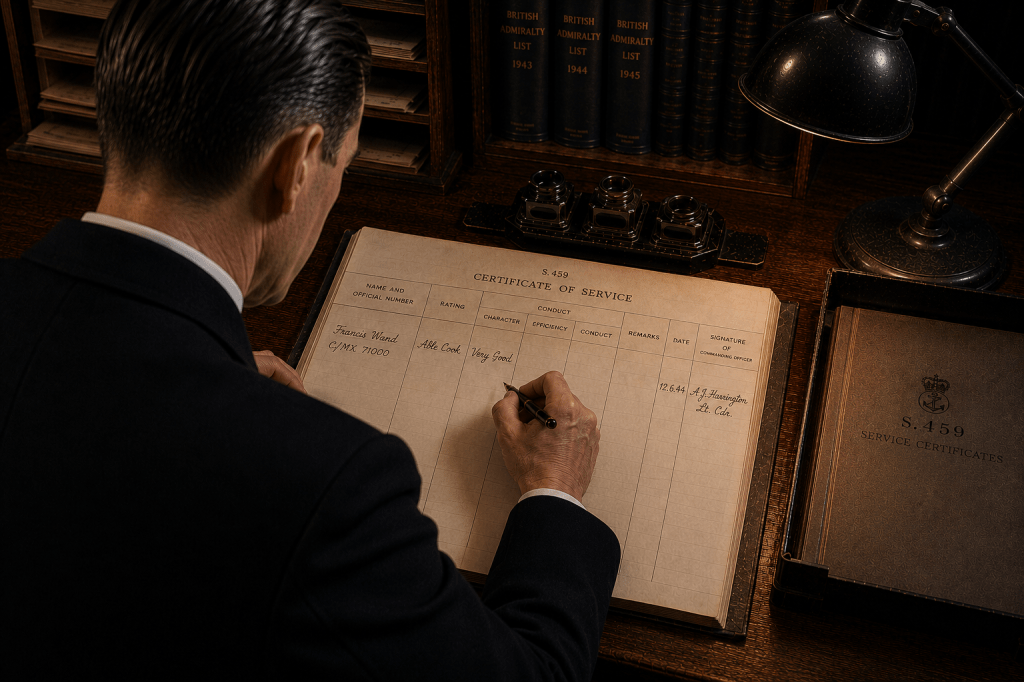
Year after year, the assessment remains unchanged. There are no disciplinary entries. No recorded punishments. No forfeiture of time. No blemishes on his conduct. Not one.
Eventually, his Trade Certificate summarises six years of service in a single sentence:
“His character during service was uniformly very good.”
That word uniformly carries considerable weight.
It means consistently. Not occasionally, or usually. Consistently – or, to put it another way: in a steady and reliable manner.
His efficiency on discharge was assessed as ‘Superior‘, while his general efficiency was recorded as ‘Satisfactory‘ in the formal naval sense of the term – meaning he had met or exceeded the standards expected of him throughout his service.
He also qualified for a Good Conduct Badge during the war, another official acknowledgement of steady and reliable service.
The Young Sailor
AMONG ALL THE official language are a few wonderfully human details.
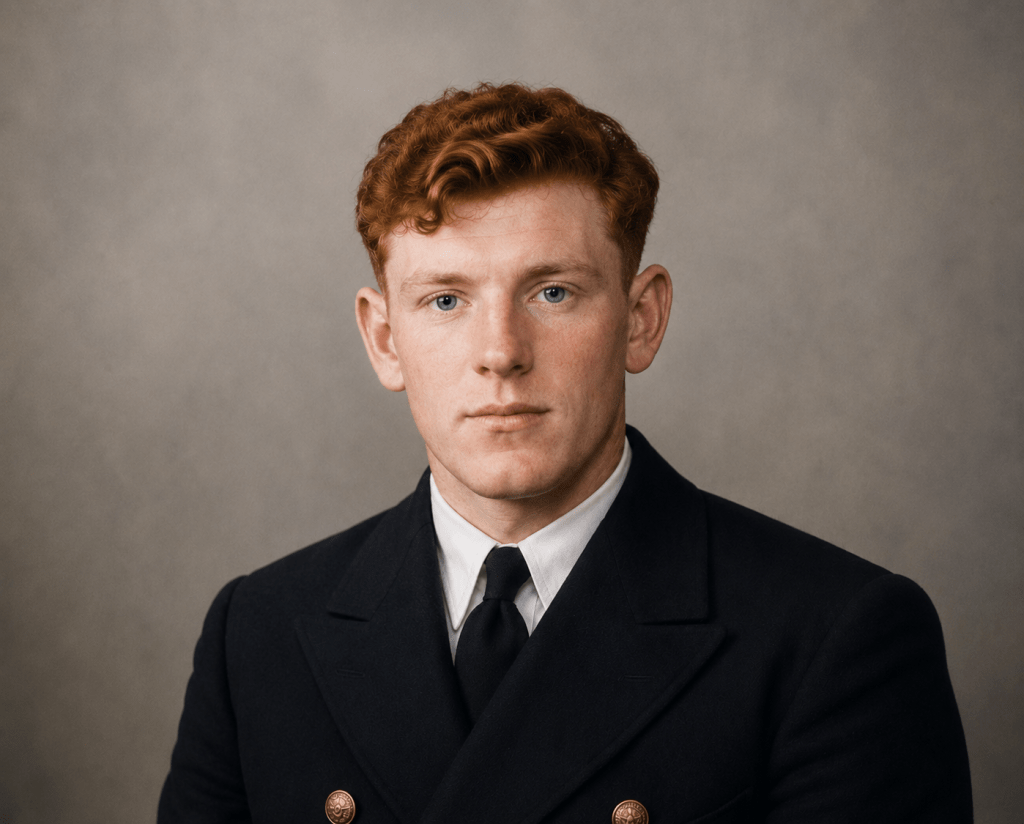
When he enlisted, he was recorded as being 5 feet 8½ inches tall, with ginger hair, blue eyes and a fresh complexion.
For his grandchildren and great-grandchildren, those few handwritten words probably bring him to life more vividly than many pages of statistics ever could.
It is easy to forget that every service number belonged to an individual.
Be that as it may, a naval administrator at the Skegness shore base, HMS Royal Arthur, had looked up from his paperwork and simply described the young man standing before him.
The Value of Ordinary Records
THERE IS A tendency when approaching a writing project on an aspect of military history or conflict to look for dramatic acts of heroism, battles fought and won, and medals earned.
The story revealed in my father’s Service Record is more restrained. Yet it is no less significant for all that.
Because it speaks of competence. Of reliability. Of professionalism. Of quiet, conscientious hard work. These are the qualities upon which successful organisations depend. In wartime, they are the qualities that win battles, secure victory and, ultimately, change history.
It records a man who learned his trade, overcame a period of illness while at sea, earned promotion through merit and finished his service with the respect of those under whom he served.
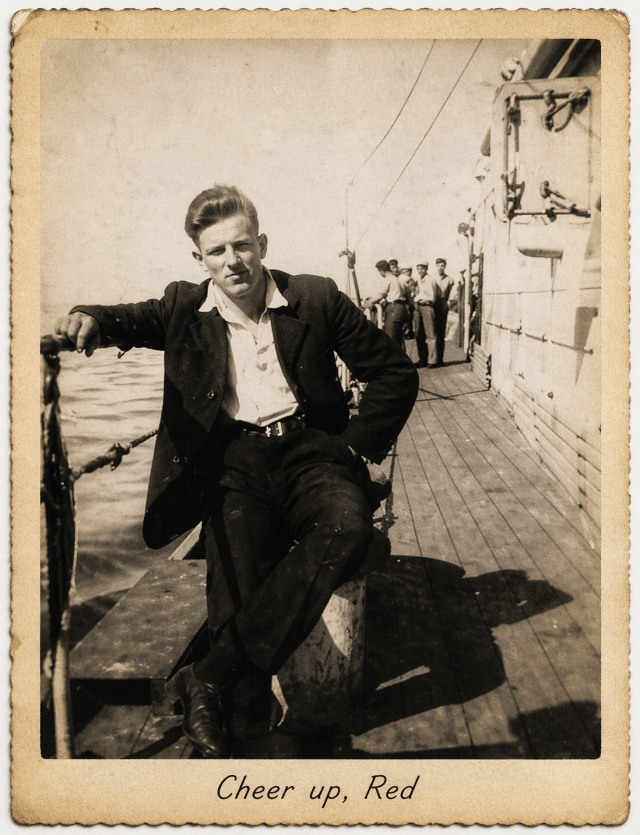
These may not seem glamorous achievements. But nor were they intended to be.
The officers completing these reports during my father’s five years of service will have had no idea that, eighty years later, someone would be reading every word with such interest. They were simply recording their honest assessment of one sailor among thousands.
And that is precisely why their words carry such authority today.
In Summary
WHEN I FIRST unfolded these documents, I expected little more than dates, ships and official stamps.
Instead, I found something rather more valuable.
Not the story of where my father served—that story has largely been told elsewhere—but the opinion of the Royal Navy itself.
After nearly five years of wartime service, promotions, examinations, routine service and at least one significant illness, the Royal Navy’s verdict was remarkably straightforward.
My father worked hard.
He conducted himself well.
He could be trusted with responsibility.
And, perhaps most telling of all, his character remained uniformly very good.
Perhaps that is what moves me most about these faded pages. They do not merely record where my father served or what he did. They preserve an assessment of the sort of man he was.
The dependable, capable and conscientious father I grew up with was, it seems, exactly the same dependable, capable and conscientious young sailor the Royal Navy assessed all those years before.
 RAVEN MOON