
Introduction
IN OCTOBER, 2023 I experienced a nervous breakdown. I wrote of this in June of this year, in my post titled ‘The Raven.’
Upon leaving hospital I inevitably did so laden with a cocktail of prescription drugs. One of these was the so-called ‘anti-depressant,’ Sertraline. Now, after gradually reducing my daily dose, I have finally freed myself of it.
Notwithstanding the care I’ve taken in steadily weaning myself off the drug, I am now faced with what is termed as ‘SSRI Discontinuation Symptoms.’
Whilst these may differ among users, in my case they include:
- Dizzyness – feelings of being ‘off balance’
- Headaches
- Nausea & stomach cramps
- Fatigue, muscle aches, hot sweats
- Anxiety
- Poor concentration
- Sense of emotional rawness
To help me cope with these presentations I tell myself that what feels like a relapse is actually my brain re-learning equilibrium after two years of pharmaceutical influence.
I know that I am not alone in facing this challenging situation ― there will be thousands of fellow sufferers, perhaps tens of thousands who, having once been prescribed the drug, must endure difficult withdrawal symptoms before they can regain mental and emotional freedom from pharmaceuticals.
My personal circumstances have enlightened me as to a recent dramatic rise in widespread emotional distress and mental trauma—and the resulting surge in antidepressant prescriptions.
I therefore decided to explore the facts, and consider what might be driving this phenomenon.
Media-led Anxiety and the Surge in Sertraline Prescriptions in England
IN RECENT YEARS, millions of Britons have been prescribed antidepressants — particularly Sertraline, one of the most commonly dispensed selective serotonin reuptake inhibitors (SSRIs).
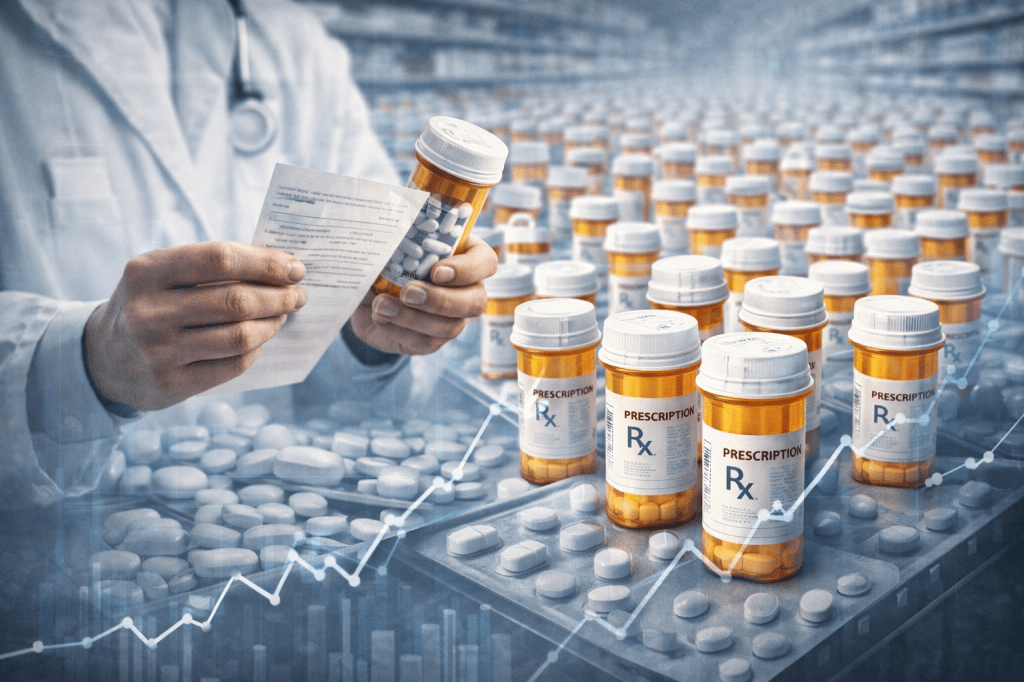
Between 2019 and mid-2020, prescriptions for sertraline in England alone increased dramatically, with estimates suggesting tens of millions of items dispensed annually.
At the same time, the cost of sertraline to the NHS skyrocketed — at one point increasing by more than 400% per item between 2019 and 2021.
Such trends raise complex questions:
Is there a correlation between fear-inducing media coverage and rising use of antidepressants? What forces drive pharmaceutical pricing? And how do cultural critics from decades past help us make sense of today’s mental health landscape?
The Numbers
DATA FROM NHS prescription analyses show that Sertraline prescriptions in England have grown significantly over the last decade.
It is true that millions of people were already taking antidepressants before the COVID-19 skulduggery. However, pandemic poli-tricks, media panic-mongering and 24/7 public health theatrics led to substantially sharper increases, with 2024/25 prescription estimates in the mid-20+ million range — up from the 2019 figure of approximately 17 million.
Even more dramatic were the changes in drug costs.
Between 2019 and 2021 the net ingredient cost (NIC) for Sertraline — the basic cost NHS pays for the drug before dispensing fees — reportedly leapfrogged from around £21 million to nearly £100 million.
This has been glibly ascribed to sharp increases in the price per item, driven by ‘…supply chain pressures, manufacturing shortages, and changes in drug sourcing during the pandemic.’
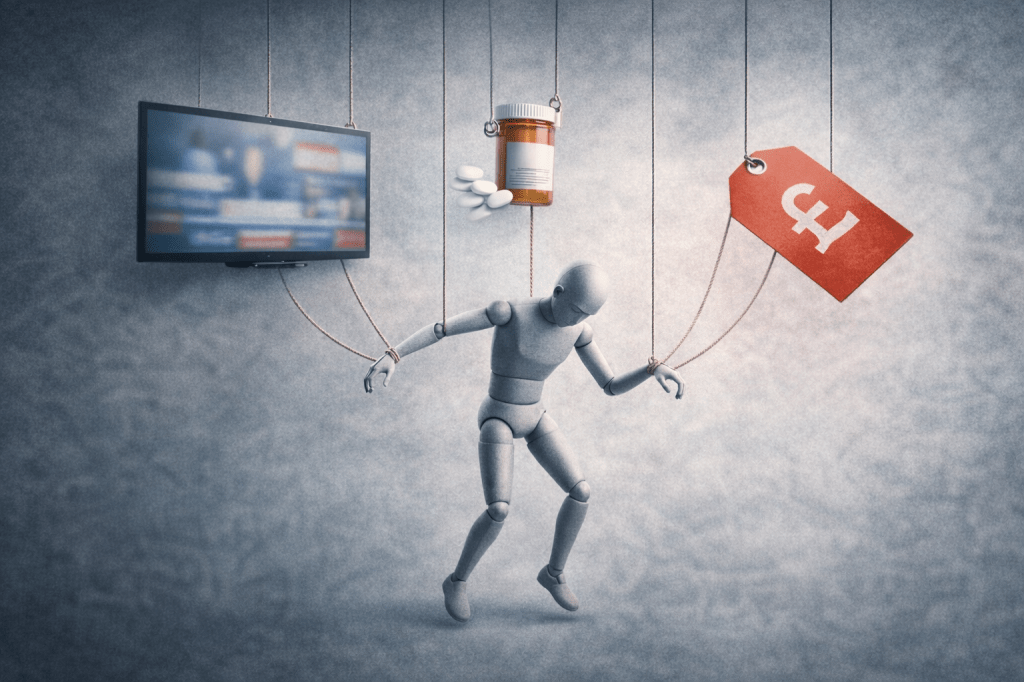
These figures matter not only because they reflect increased use of potentially life-limiting drugs, but also because they highlight the health system’s susceptibility to ‘Price Gouging’ ― the raising of prices unfairly during emergencies.
Fear in the Media: Sensationalism & Manipulation
TO UNDERSTAND why more people might be seeking antidepressants, it’s useful to look at the broader informational ecosystem.
Over the last decade — and particularly during the COVID-19 pandemic — media coverage of health risks, economic instability, and global conflict has intensified. News cycles have grown faster and more saturated, often emphasizing uncertainty, threat, and disruption.
From rolling death tolls and overwhelmed hospitals to geopolitical anxieties and alleged climate crises, the standard fare of headlines today may be summarised as alarmist fear propaganda.
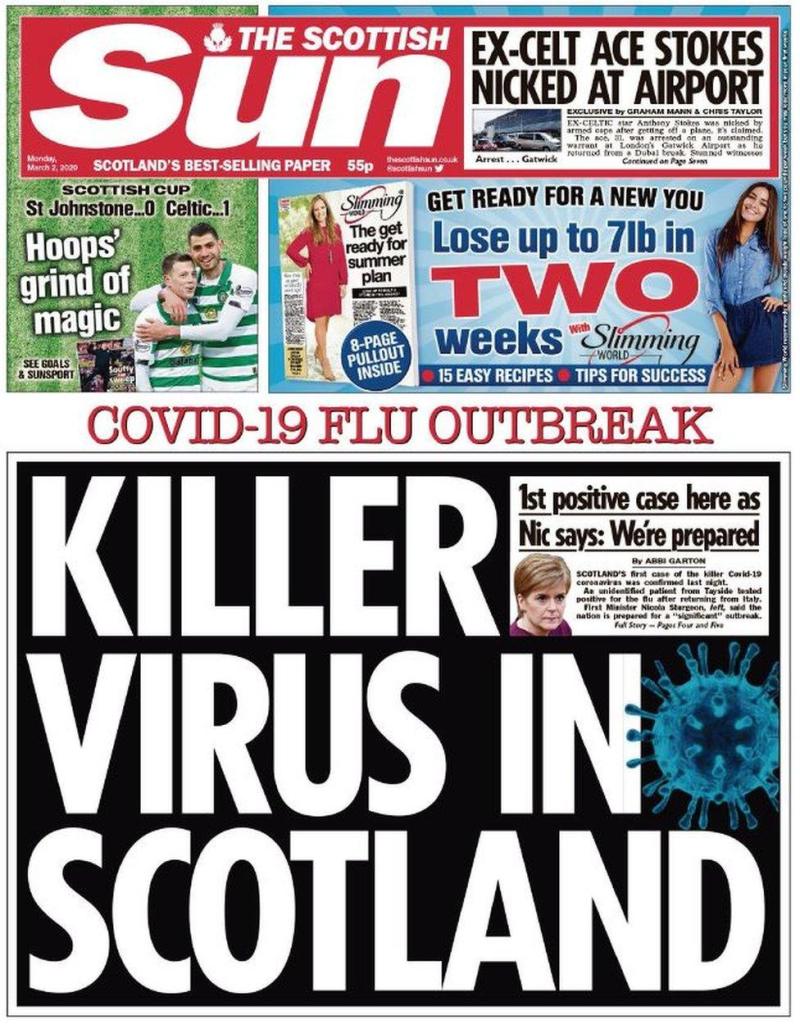
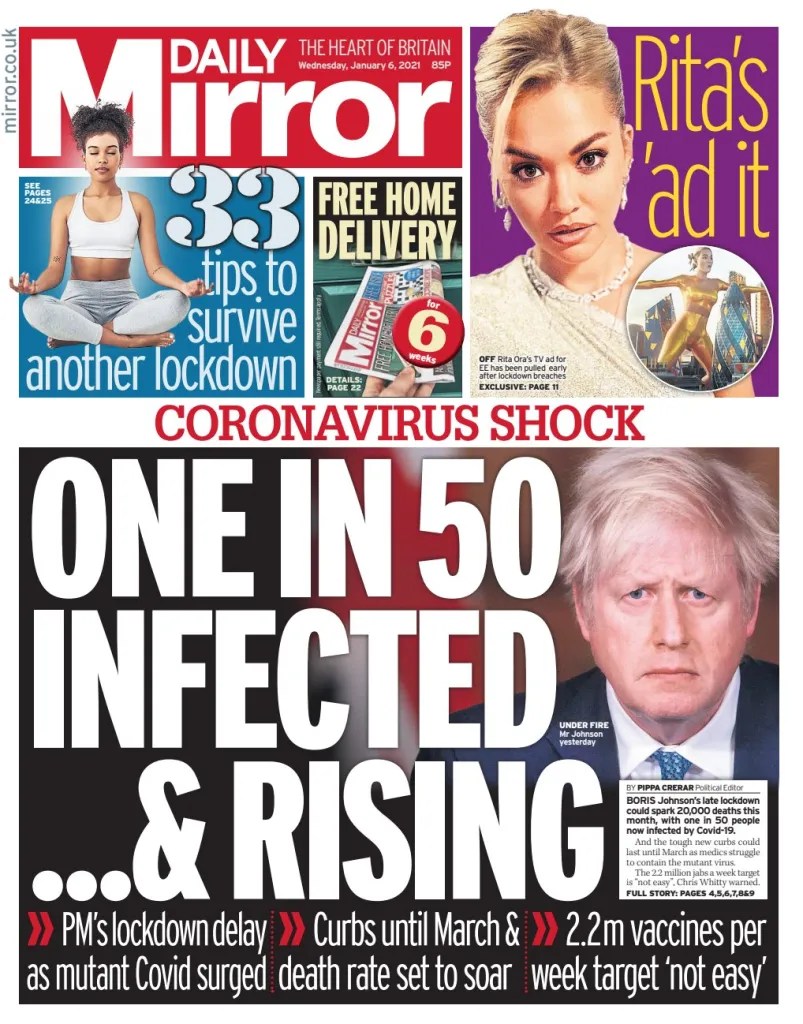
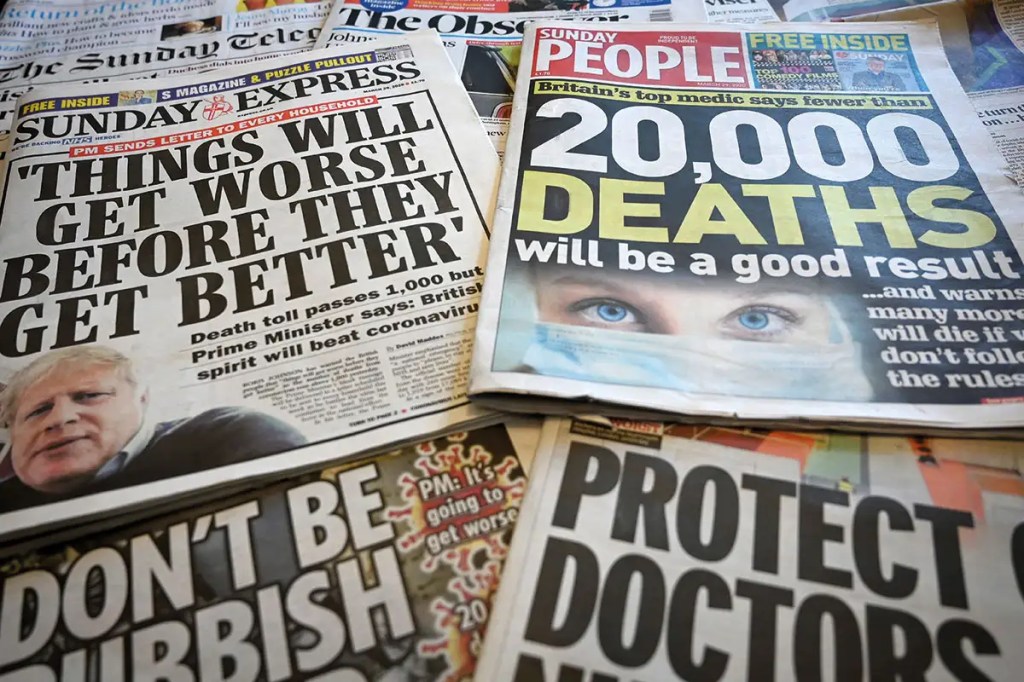
A growing body of research suggests that prolonged exposure to fear-inducing media can affect mood and stress levels. Constant alerts about potential dangers can heighten vigilance and anxiety, particularly in people already predisposed to mental health struggles.
For some, this evidently translates into increased help-seeking behaviour, including consultations with GPs and, unsurprisingly, antidepressant prescriptions.
Of course, rising prescriptions can result from many factors. Yet the synchronicity — more intense negative media environments alongside sharper rises in prescriptions — invites reflection on how our informational climate shapes emotional well-being.
Who Gains?
Beyond the human stories lies the economic one. When a drug’s price jumps significantly — as sertraline’s did — questions inevitably arise: who benefits financially?
In the UK context, the NHS negotiates prices and reimburses pharmacies under complex regulatory frameworks. The big players in drug pricing include:
- Pharmaceutical manufacturers — whose pricing decisions can be influenced by global markets, production costs, and regional competition.
- Distributors and wholesalers, who bridge manufacturing and dispensing.
- Community pharmacies, which receive reimbursement for dispensing services.
- Regulatory bodies and intermediaries, which set tariffs and manage reimbursement.
During COVID-era supply disruptions, shortages and logistical challenges pushed list prices up. Global demand for key pharmaceutical inputs — and reliance on a small number of manufacturing hubs — magnified price volatility.
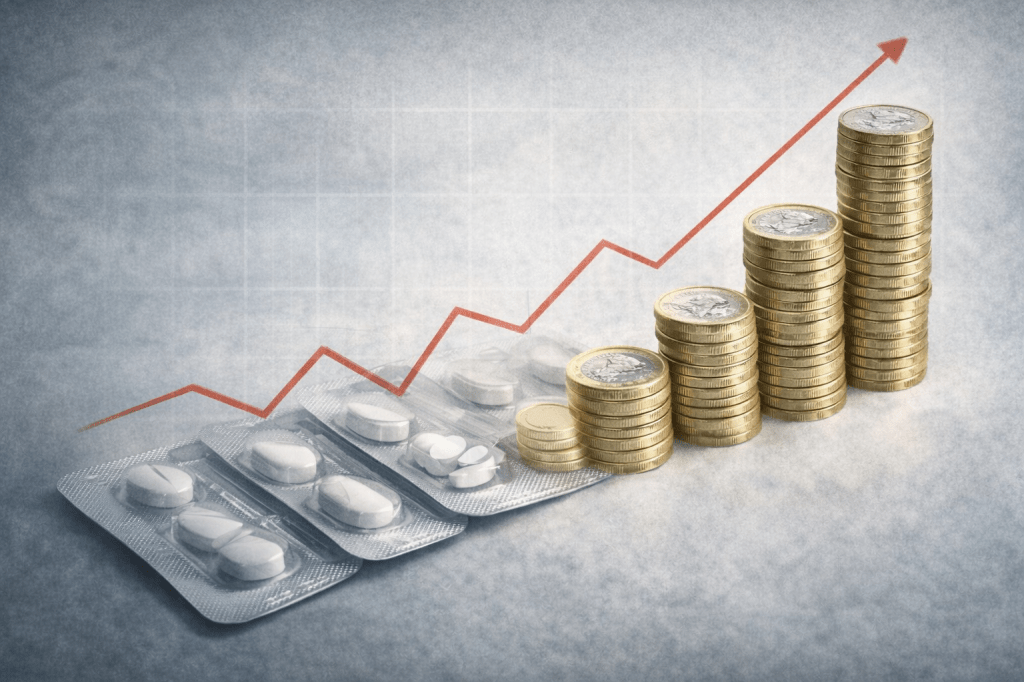
While no singular party “profits” in a simplistic sense, higher prices inevitably translate into greater revenue for holders of drug licenses, as well as for intermediaries protected by reimbursement structures.
Echoes From the Past

AS WE THINK about media, anxiety, and pharmaceuticals, it’s worth briefly revisiting themes from earlier cultural critics. [See also posts ‘Servitude without Tears‘ and ‘The Pandemic Playbook.’]
Aldous Huxley, a member of the Tavistock Institute’s intellectual periphery, warned in works like Brave New World about societies that seek to pharmacologically manage mood and conformity.

His critique was less about specific drugs and more about the risk of cultural dependence on chemical solutions for social discomfort.
Huxley foresaw a world where pleasure and placation might be engineered rather than earned — where mood regulation becomes commodified and routine.
Likewise, Dr William Sargent — in his often-quoted 1957 address sometimes referred to as The Battle for the Mind — drew attention to the ways psychological states could be shaped by external forces, including media and culture.

Although Sargent’s speech is frequently invoked in broader debates about propaganda and influence, it was at its core a call to understand the mechanisms through which environments — informational, social, economic — impact human psychology.
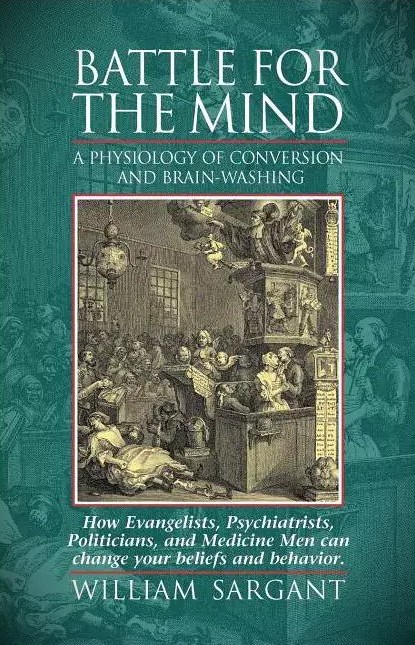
Both men anticipated a world in which external pressures — technological, medical, and informational — play a large role in shaping inner life.
Today’s context — with headlines around global threats and the ready availability of pharmacological interventions — resonates with their concerns.
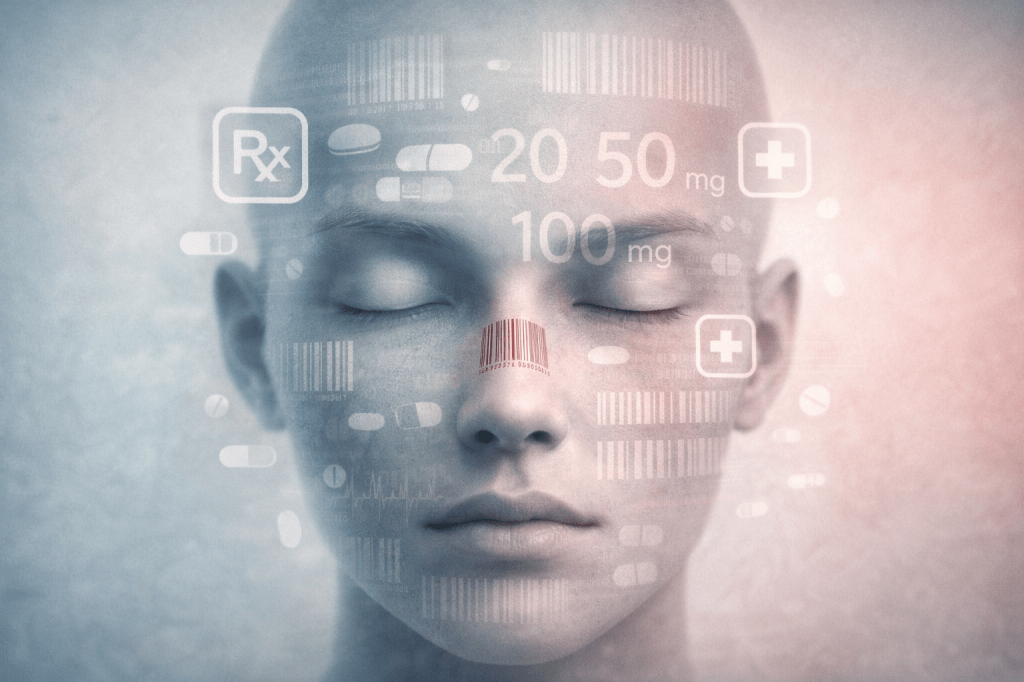
So What Is the Relationship Really?
IT MAY BE viewed as simplistic to say that fear-inducing media directly causes antidepressant use. But a few key patterns are irrefutable:
- Anxiety and uncertainty have tangible psychological effects, and pervasive negative messaging can contribute to a climate where distress feels unavoidable.
- Primary care responses have evolved toward greater use of pharmaceutical medications.
- Economic incentives and structural dynamics influence drug pricing, with real consequences for public health budgets.
What next?
IF WE ACCEPT that both media environments and pharmaceutical practices affect public well-being, then a healthy society needs:
- Media literacy and responsible reporting, emphasizing context and resilience as much as risk.
- Robust mental health support systems, including psychological and holistic therapies alongside medication when needed.
- Transparent drug pricing mechanisms, so public funds are used efficiently and patients aren’t left bearing hidden costs.
- Ongoing research into the psychosocial consequences of our information ecosystems.
Ultimately, understanding why so many people now need anti-depressants — and at what economic and cultural cost — requires us to look beyond prescription counts to the deeper interplay of media, markets, and meaning.
 RAVEN MOON
I understand, so many need help spiritual (first) and physical (secondary). I deeply understand and comprehend.
LikeLiked by 1 person