

Discovering Küehne + Nagel’s Dark WWII Past
WHEN I worked for the shipping and transport giant Küehne + Nagel, I was pleased to be a small part of the global logistics heavyweight.
It was a company built on precision, reliability, and efficiency. Containers, tilt trailers, freight rates and manifests: this was the language of our trade.
I admired their brand image; their bold and distinctive corporate colours and that iconic anchor-logo — a reminder that here was a company founded on maritime trade.

For a brief period in my working life I was a small part of their history, as they were a part of mine.

Since that time, each sighting of their distinctive vehicles on our motorways has been accompanied by a sense of nostalgia as I recall my time spent negotiating freight rates in their import department.
But recently, while researching the company out of nothing more than curiosity, I stumbled on something that stopped me cold. For behind the glossy corporate image lies a history far darker than I’d ever imagined.
During the Second World War, Küehne + Nagel played a significant role in the Nazi regime’s systematic looting of Jewish property — transporting goods confiscated from deported families in the Netherlands, Belgium, France, and Luxembourg back to Germany.
It was one of those moments when the floor shifts beneath your feet.
Tainted by ideologies
KŰEHNE + NAGEL was founded in Bremen in 1890 by August Küehne and Friedrich Nagel, specialising in freight forwarding. It expanded to Hamburg in 1902 and quickly built a reputation as a dependable international shipping firm. By the interwar years, the company was well-established, with offices across Europe and beyond.
But history intervened in 1933, when Hitler came to power.
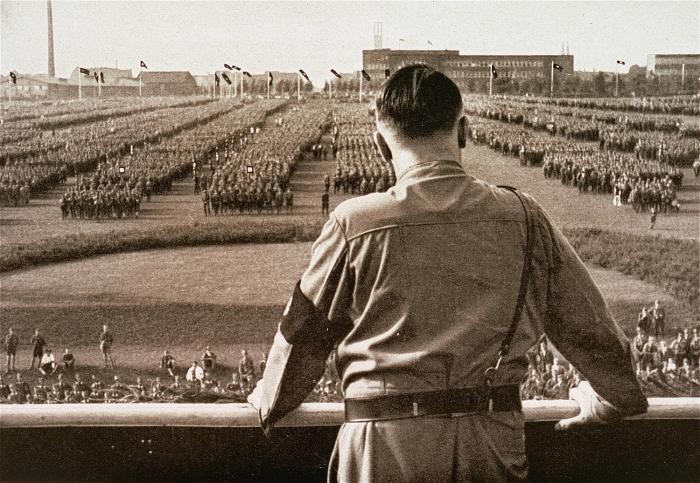
1933 – History intervened
That April, the company forced out its Jewish partner and major shareholder, Adolf Maass, who had owned nearly half of the firm. He was expelled solely because of his Jewish background. On May 1st of that same year, August Küehne’s sons — Alfred and Werner — joined the Nazi Party.
At that point, Küehne + Nagel’s trajectory became entwined with one of history’s darkest chapters.

The ‘M-Aktion’: Looting on an industrial scale
FROM 1942 onwards, the Nazi regime organised what it chillingly called the ‘M-Aktion’ — short for Möbelaktion, or ‘Furniture Action.’ It was a systematic operation to empty the homes of Jews who had been deported from occupied Western Europe.
Their apartments were stripped bare — furniture, clothes, kitchenware, toys, paintings, even baby carriages — and the goods were shipped to Germany for redistribution among bombed-out German families.
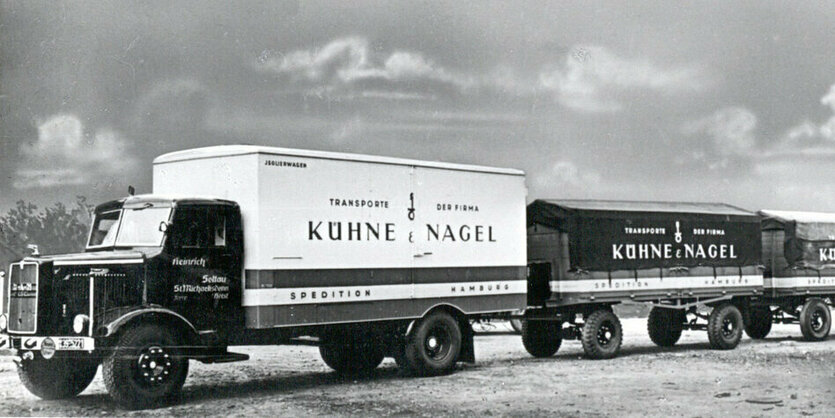
The company who handled much of this vast transport network was Küehne + Nagel.
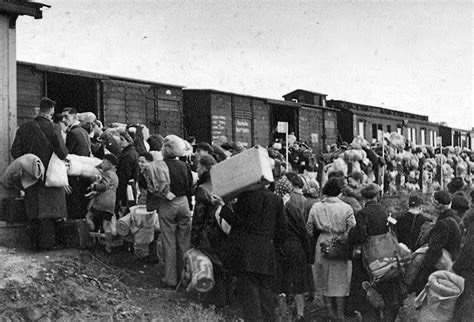
(Right) Some of the 107,000 Jews deported from The Netherlands, the vast majority to Auschwitz and Sobibor. Of these, 102,000 were murdered.
According to historical research cited in Vanity Fair (2024), between June 1942 and August 1943, at least 360 convoys carried looted household goods from the Netherlands and neighbouring countries into Germany. By August 1944, the contents of some 65,000 Jewish homes had been removed.
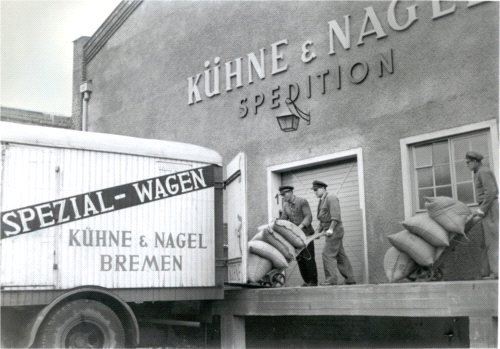
One documented shipment reads like an inventory of stolen lives:
‘220 armchairs, 105 beds, 363 tables, 598 chairs, 126 cupboards, 35 sofas, 307 crates of glassware, 110 mirrors, 158 lamps, 32 clocks, a gramophone and two baby-carriages.’
(Source: French Wikipedia, citing wartime transport records)
All of it was shipped from Amsterdam to Bremen aboard a vessel chartered by Küehne + Nagel in December 1942.
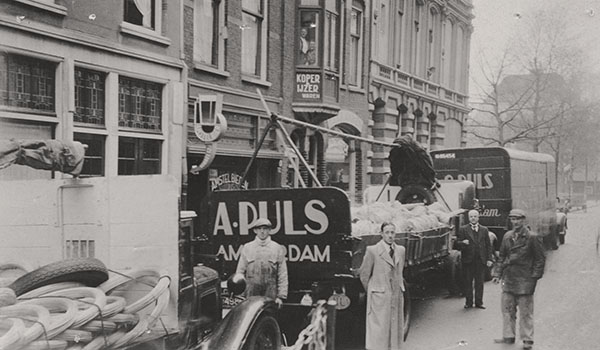
To call this ‘freight’ feels grotesque. These weren’t goods in the ordinary sense — they were the last possessions of deported men, women, and children, many of whom were murdered in Auschwitz and Sobibor.
Historian Frank Bajohr, interviewed in Vanity Fair, described it bluntly:
‘Transporting the stolen goods of people after they were deported … is a kind of dirty business far beyond anything I can comprehend.’
The machinery of atrocity
WE OFTEN think of the Holocaust in terms of ideology and violence. But it was also a vast logistical enterprise. Someone had to plan the trains, load the trucks, issue the invoices. Freight rates and manifests. A familiar language, but this time having an abhorrent subtext.

Küehne + Nagel wasn’t an incidental player. Its expertise in freight forwarding made it ideal for the Nazi state’s needs — and the company profited from it. Historians have suggested it held a virtual monopoly over these west-to-east looting transports, moving the furniture of entire Jewish neighbourhoods into Germany.
In some cases, Nazi records even refer to Küehne + Nagel by name in association with the ‘M-Aktion’ agenda.
It’s easy to imagine the company’s Hamburg headquarters humming with activity — clerks filling out waybills, dockworkers loading crates, ships departing. Not trade but tragedy.
Post-war silence and selective memory
WHEN THE war ended, Küehne + Nagel resumed operations. Its founders’ sons — both Nazi Party members — managed to rebuild quickly in post-war Germany, expanding into Switzerland and later to North America.
By the 1960s, the company was thriving once again. And in its public history, the wartime years were reduced to a brief footnote — if mentioned at all.
The company’s official website today highlights its founding in 1890 and its ‘long tradition of reliability and customer service.’ But there is no reference to the Nazi period or the company’s participation in the ‘M-Aktion.’
Researchers who have tried to examine K+N’s archives say they’ve met resistance. The firm claims that most wartime documents were destroyed in Allied bombings — a convenient absence that makes independent verification difficult.
A few years ago, journalist investigations renewed interest in the topic. A Vanity Fair exposé in 2024 called ‘The Billionaire’s Secret’ revisited Küehne + Nagel’s past and its founder’s descendants, suggesting that the company’s wartime expansion was a key foundation for the enormous wealth of Klaus-Michael Küehne, now one of Germany’s richest men.
The article quoted historian Bajohr again:
‘Küehne + Nagel is in the same category as other firms that profited from Nazi policies. The looting transports were not an accident of history — they were business.’

(Left) Klaus-Michael Kuehne is Germany’s wealthiest person, with a fortune estimated at $44 billion, according to the Bloomberg Billionaires Index.
A partner erased
ONE NAME, however, deserves to be remembered: Adolf Maass, the Jewish co-owner expelled from the company in 1933.
(Right) Adolf Maas with his wife, Käthe. Both were murdered in Auschwitz in 1944.
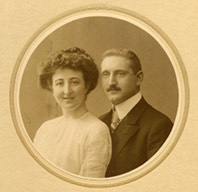
After being forced out, Maass was later deported and murdered, together with his wife, at Auschwitz. His family’s stake in the business — nearly half the company — was seized under the Nazi regime.
Some historians have argued that if restitution had been pursued properly after the war, much of Küehne + Nagel’s post-war structure might have looked very different. Instead, Maass’s role was quietly written out of corporate memory.
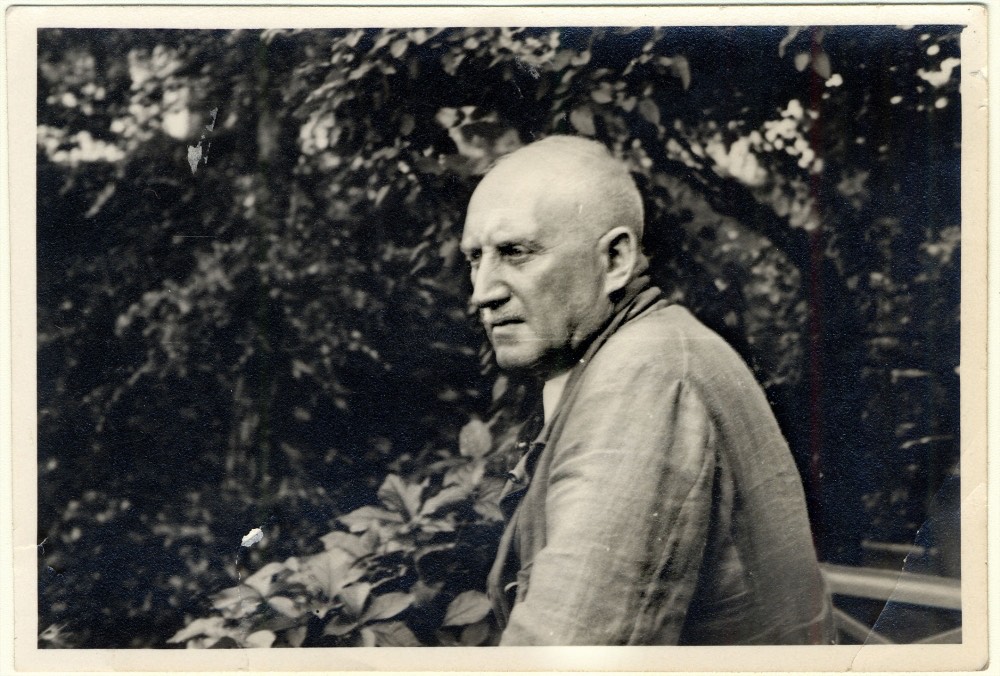
In Hamburg today, a small memorial plaque (Stolperstein) marks his name. But you won’t find him mentioned on the company’s ‘About Us’ page.

Confronting what we inherit
WHEN I discovered this history, I felt a complicated mix of shock, sadness, and discomfort. I’d worked under the same brand name — without ever knowing that decades earlier, it had been part of something so monstrous.
Of course, none of today’s employees or leaders bear personal responsibility for what happened in the 1940s. But that doesn’t erase the need to confront it.
Many German companies — from Siemens to Volkswagen — have commissioned independent historical studies to examine their Nazi-era activities. Some have published the findings, paid restitution, or supported educational projects. Küehne + Nagel, by contrast, has done very little in public to acknowledge its past.
The silence feels like a kind of moral omission — a refusal to look in the mirror.
Logistics & Morality
WHAT UNSETTLES me is how ordinary all this was. A freight company. Invoices. Schedules. Freight rates and manifests.

The Holocaust depended not just on ideology, but on systems — the smooth functioning of transport networks and supply chains. Logistics firms like Küehne + Nagel made the machinery of dispossession run efficiently. They made it happen. Without them, and those like them, the Holocaust would have remained nothing more than a detestable ideology.
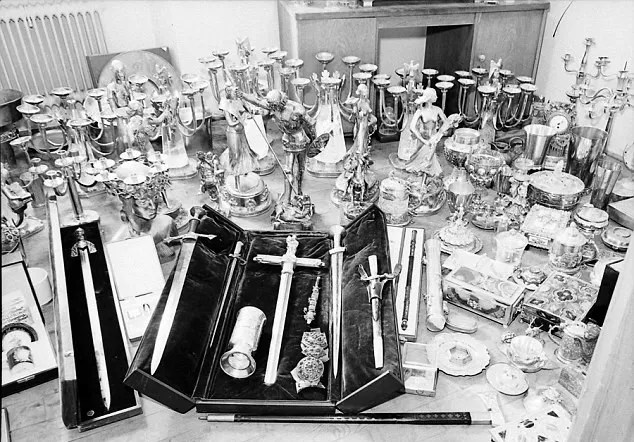


That’s why this history matters today. Because modern logistics — whether moving consumer goods, medical supplies, or humanitarian aid — still wields enormous power. The Küehne + Nagel story clearly tells us that the line between neutral commerce and moral complicity is thinner than we think.
If companies don’t examine their histories, or their present-day ethics, they risk repeating old patterns in new forms.
Closing thoughts
EACH SHIPMENT Küehne + Nagel carried during the ‘Furniture Action’ represented a family erased — not only from their homes, but from history. Beds, lamps, mirrors, gramophones: fragments of ordinary lives turned into anonymous freight.
There’s an unbearable symbolism in that. A logistics company, whose business is movement, helping to re-move the traces of people who would never return.

History isn’t just in archives or textbooks; sometimes it’s hiding inside the familiar logos we see every day.
For me, learning what Küehne + Nagel did during the war has been a jarring reminder that the ordinary can be complicit in the unthinkable — and that even the most respectable institutions can carry shadows in their foundations.

We can’t change what happened. But we can insist that it be remembered.
 RAVEN MOON
Within every too bright light is a dark truth that makes the light even brighter in some ways when understood. That’s what I have to contribute and say.
LikeLike
Thanks for your thoughts on this. They are appreciated.
LikeLike