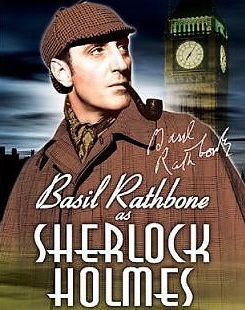
IN MY PREVIOUS post—’The Timeless Detective‘—I declared who, of the innumerable literary characters in English fiction, is my all time favourite. I also explained why.
‘Few reading pleasures rival a Holmes mystery. Each feels like a game played in candlelight — a test of wits where the clues are laid before us, daring us to see as Holmes sees.’
In this post I reveal which of the 60 works in Arthur Conan Doyle’s official Sherlock Holmes ‘canon’ I prefer above all others.
From London Smog to Moorland Mists
AFTER REFLECTING ON the magic of Sherlock Holmes more broadly, there is one mystery that rises above all others in atmosphere, structure, and sheer narrative presence:
The Hound of the Baskervilles
It is the novel where reason confronts folklore, and where the solid cobbles of Baker Street give way to the haunting immensity of Dartmoor.
The shift from London’s tight intensity to the lonely reaches of Dartmoor transforms this story into something darker and more elemental. Conan Doyle replaces hansom cabs and gaslight with swirling fog, isolated tors and the eerie calls across moonlit moorland.
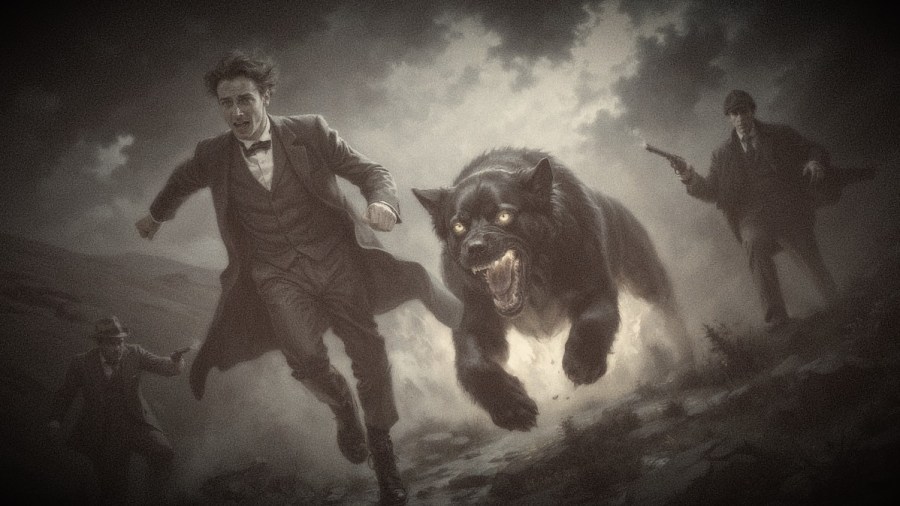
The moor is not merely backdrop; it is the story’s pulse — ancient, superstitious, half-wild and wholly unforgettable.
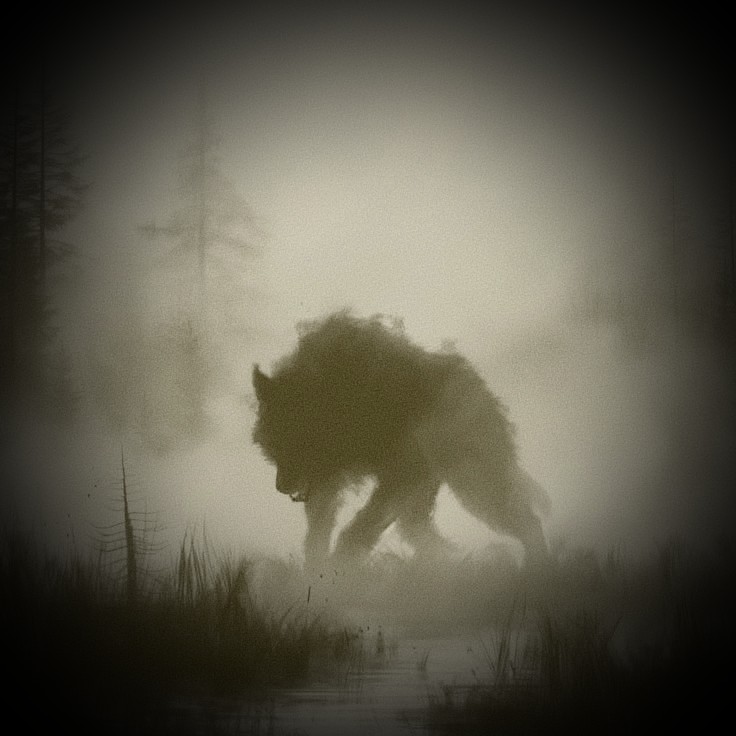
Here, fear is not confined to alleyways but roams the landscape itself. The moor holds secrets in its bogs, whispers in its mists, and shadows that shift in the twilight. It is a perfect stage for a multi-layered mystery anchored in supernatural legend.
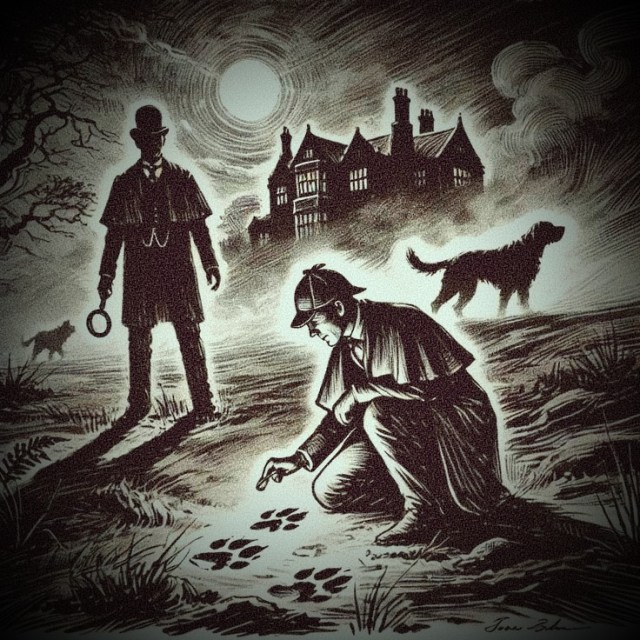
Dr Mortimer looked strangely at us for an instant, and his voice sank almost to a whisper as he answered:
‘Mr Holmes, they were the footprints of a gigantic hound!’
A Web of Mysteries
UNLIKE MANY HOLMES tales that follow one dominant thread, Baskervilles weaves a tapestry of puzzles:
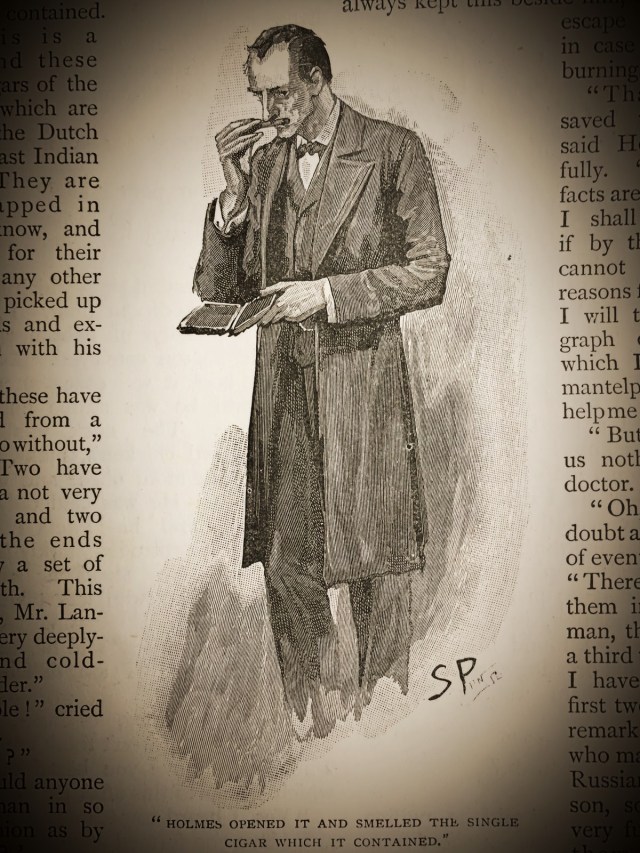
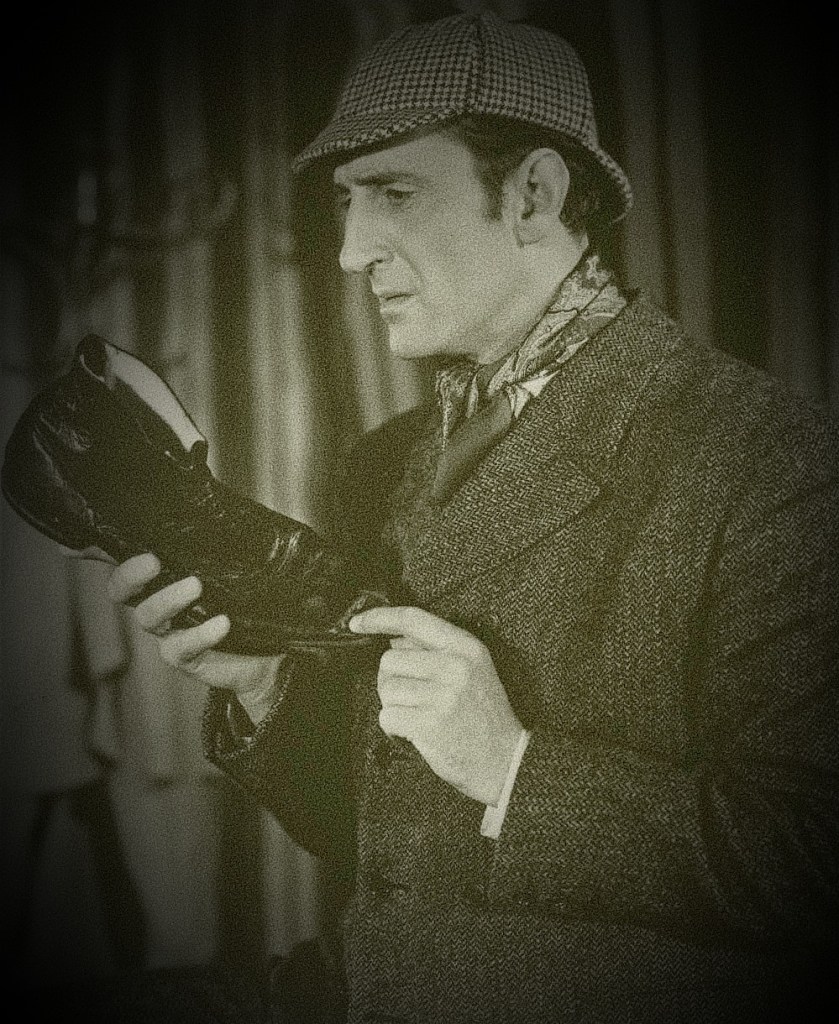
Sir Henry Baskerville’s vanished boots
A mysterious warning formed from newspaper clippings
A bearded stranger following Sir Henry in London
An escaped convict loose on the moor
Inexplicable conduct of Baskerville’s servants, the Barrymores
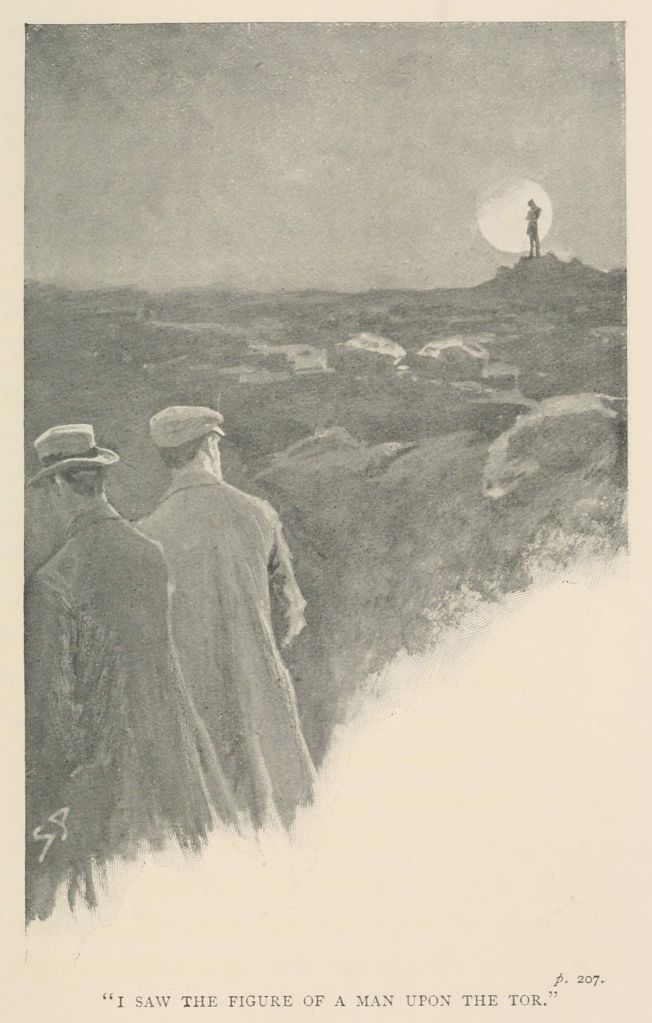
A secretive figure hiding in the hills
Why DID Sir Charles wait at the moorland gate?
The identity of ‘LL.’
The missing boot
‘Bear in mind, Sir Henry, one of the phrases in that queer old legend which Dr Mortimer has read to us, and avoid the moor in those hours of darkness when the powers of evil are exalted.’
Puzzles multiply, suspicion spreads, doubt lingers and superstition sends chills down the reader’s neck, until the final, dramatic reveal when Holmes uncovers a rational solution to the terror. It is a masterclass in pacing and narrative control.
Britain’s ‘Black Dog’ Legends
PART OF THE novel’s eerie power lies in how deftly it taps into a much older British fear: the spectral black dog.
Long before Baskerville Hall stood on the printed page, lonely rural roads and windswept moorland were said to be haunted by monstrous canines — omens of doom, death or misfortune.
The Black Shuck of Lincolnshire is a spectral hound said to roam lonely lanes, churchyards, and coastal paths, its eyes glowing like burning coals.
A portent of death or misfortune, this ghostly beast haunts local folklore, blending fear and fascination as part of Britain’s wider tradition of phantom black dogs that guard, warn, or curse those who cross their path.
These legends appear across the British Isles, from Devon to East Anglia. Most famously, we find Black Shuck, the spectral hound of East Anglia and Lincolnshire, whose fiery eyes and silent tread are said to presage tragedy.
In some tales, Shuck is a demonic terror; in others, a mournful guardian of lonely travellers.
Conan Doyle did not invent this superstition; he charged it with modern energy and scientific tension, leaving folklore and reason to clash in thrilling fashion.
The Hound on Screen
FEW HOLMES STORIES have been adapted as often — or as distinctively — as this one. Each version casts its own light (or shadow) on the moor:
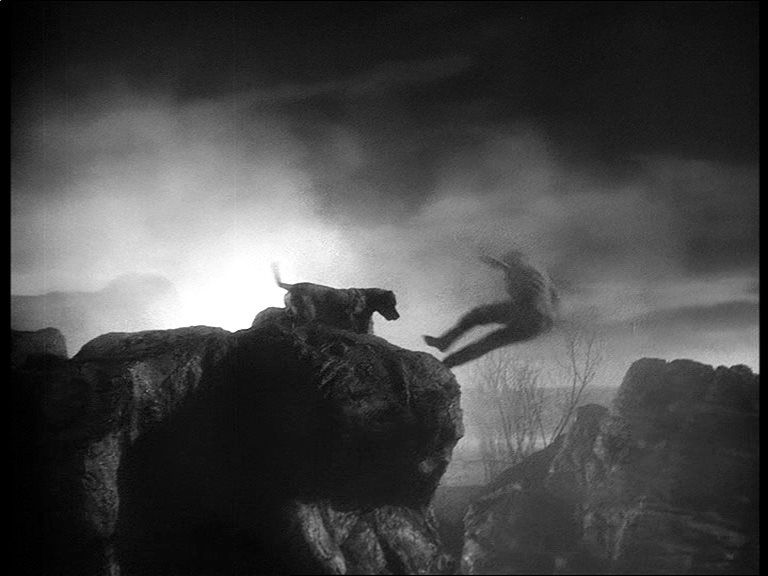
Hammer Films (1959) — Gothic grandeur and rich atmosphere, with Peter Cushing’s razor-sharp Holmes and Christopher Lee’s vulnerable Sir Henry. Hammer leans into folklore and dread, drawing the story close to supernatural horror without ever crossing the line.
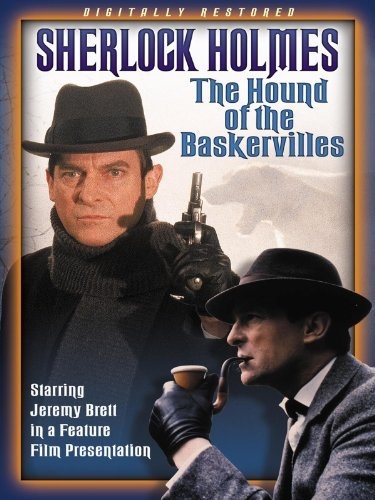
Granada Television (1988) — Jeremy Brett delivers perhaps the most psychologically intricate Holmes ever committed to screen. Granada’s version is faithful, cerebral, and masterfully paced — a slow tightening of the noose of suspense.
BBC’s Sherlock (2012) — ‘The Hounds of Baskerville‘ — A bold modern interpretation where military conspiracy replaces ancient curse. Atmospheric and clever, it toys with psychotropic fear and gives us a mind-hound in place of legend — proving the tale’s adaptability to science-driven paranoia.
Before I discovered him in fiction, Hammer’s 1959 presentation of ‘The Hound of the Baskervilles’ was my own introduction to Sherlock Holmes.
Each adaptation takes the same primal dread — the dog that shouldn’t exist — and refracts it through its time. From Victorian Gothic to modern psychological thriller, the story endures because its fear is universal: the fear that something ancient and brutal might be stalking us just beyond the circle of lamplight.
The Dogged Tale
THE HOUND OF the Baskervilles endures not merely because Holmes’ brilliance sidesteps the supernatural legend, perceives the corrupt heart of man and pierces the mystery, but because Conan Doyle understood something deep and timeless: the human mind is always half-tempted by superstition.
Even as Holmes champions logic and evidence, we continue to feel the pull of legend.
We step onto that moor with John Watson and wonder — just a little — whether reason alone is enough. Whether there is something more.
Even now, as we walk at twilight across quiet countryside, we may feel a sudden chill, a shift in the wind, a sense of presence in the gloom.
It is then we may recall the legend of Doyle’s hound. And perhaps, in the ancient quiet, the faint echo of a myth far older than Holmes might stir: as a pair of canine eyes gleams with malice from the shadows. Waiting.
‘… It’s an ugly business, Watson, an ugly, dangerous business, and the more I see of it the less I like it. Yes, my dear fellow, you may laugh, but I give you my word that I shall be very glad to have you back safe and sound in Baker Street once more.’





 RAVEN MOON