
A recent group walk at the foot of the Lincolnshire Wolds, a couple of miles outside Grimsby, was an ideal opportunity to spend valuable time in nature by inspecting the source of the River Freshney. The event became so much more, however. For here, history, ancient culture and folklore came together, right where the Freshney’s headwaters emerged from Mother Earth.
Traveling through rural Lincolnshire I am often given to flights of fancy as I wonder, if those silent fields had a voice, what stories could they tell? Well, perhaps they do, and in some cases they have a lot to say. To hear them, all we need is a little imagination and an inquiring mind.
For example, have you ever wondered why so many of our country roads feature sharp, right-angled bends for no apparent reason? What prompted past road builders to dismiss cost economy, by deviating from an otherwise straight course?
One reason is that they follow the line of pre-existing routes.
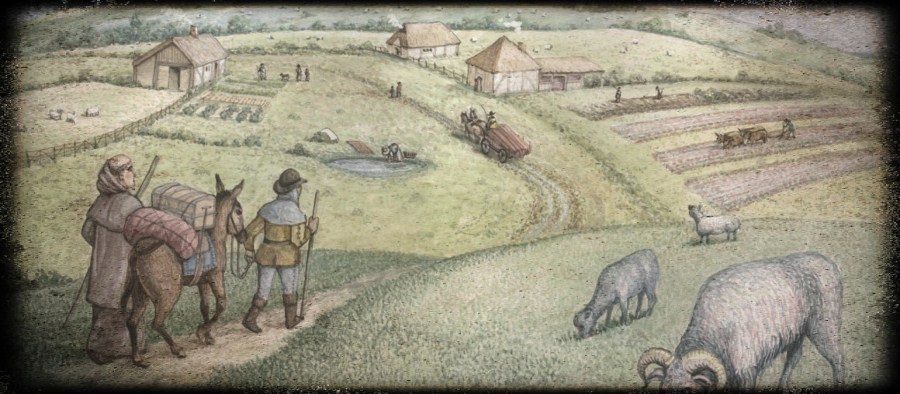
Swathes of our existing road network simply follow the traverses and tangents of ancient trackways – trails which once meandered around strip fields farmed by our early medieval forebears.
Some bends, however, were necessary to avoid an obstruction, such as a building that no longer exists. In some cases, the obstruction may have been an entire village.
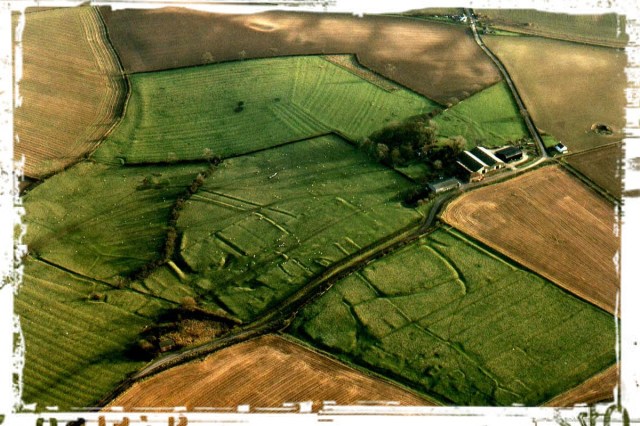
My page titled ‘Two Thousand Feet of History’ explains how an evening flight in a light aircraft over those silent fields revealed to me the spectral images of entire lost villages. There are over 250 in Lincolnshire alone !
I also explained the phenomenon which enables us to see them:
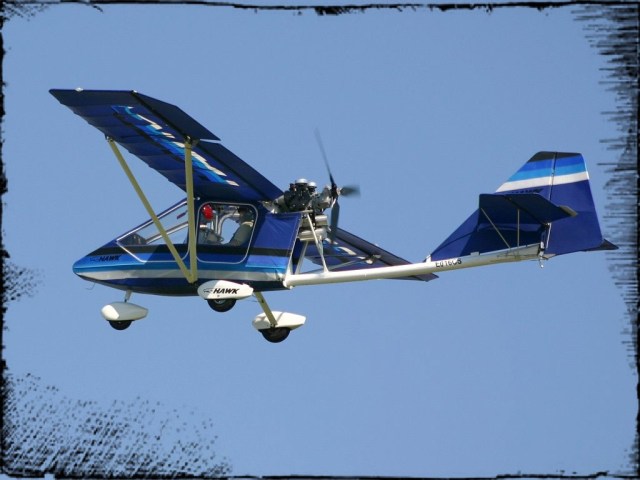
“Deserted medieval settlements survive only as disturbances below the topsoil and, like the bomb craters from the Second World War, are hidden at ground level. From the cockpit of an aircraft, however, the effect of different aspects of the earthworks upon ripening crops exposes these ‘ghost villages’, revealing buildings, enclosures and roads.
Ancient ditches and pits below the topsoil retain more water than the ground around them, allowing crops growing over them to grow higher. The reverse occurs where the foundations of buildings remain buried. Lack of moisture caused by the layer of rubble effectively stunts the growth of plants above. Low light, as from an early morning or late evening sun, creates shadows that are dramatic when viewed from the air.”
For motorists traveling the busy A18 Barton Street west of Grimsby, the route may be considered a mundane one, as this unremarkable stretch of ho-hum highway bisects bland arable farmland. There are fields to the left; fields to the right.
But is there really nothing of interest to see here?

What if those motorists’ vehicles were fitted with history detectors – sensors responsive to the residual life-force energies of our ancestral forebears?
Imagine, if you will, an on-board sonar-type device that responds audibly to such readings.
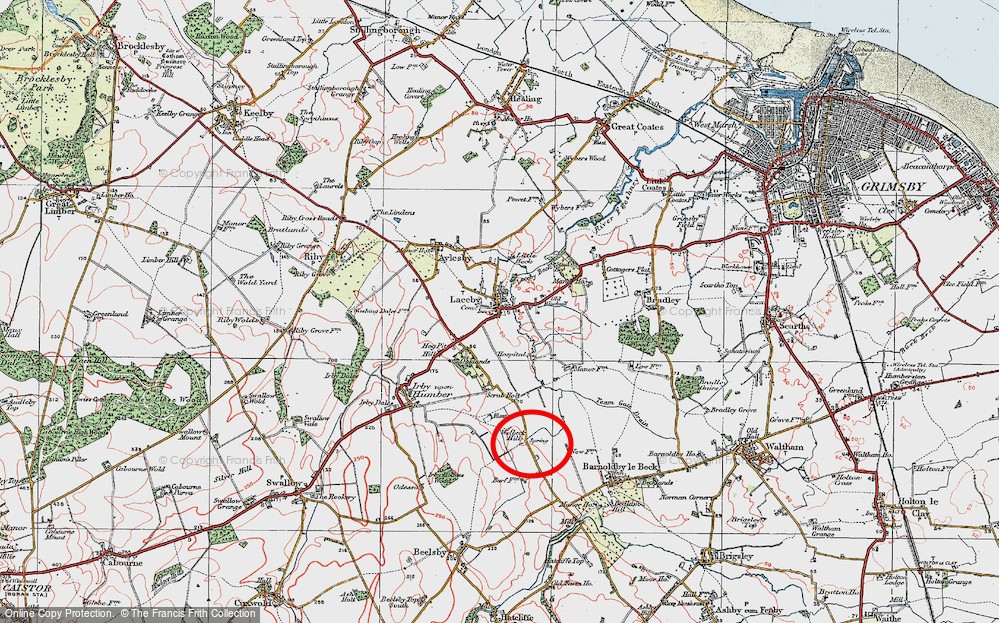
Equipped with such a device, at a point on that unremarkable road roughly half-way between the A46 and Barnoldby-le-Beck roundabouts, those sensors would be stridently sounding-off with an instantaneous echo – ping-ga, ping-ga, ping-ga.
So, why here? First, a little background information:
During recent weeks, regular Tuesday-morning rambles, organised by Centre 4’s Green Prescribing Initiative for Mental Health, and led by James Elliott – The Canoe River Cleaner – have encompassed the footpaths and bridleways around Laceby’s blow wells.
My previous post, ‘Lincolnshire’s Amazing Blow Wells,’ reveals that it is here that several of these artesian wells emerge from their subterranean chalk seams, to feed into and influence the character of the River Freshney.
Through Centre 4’s initiative and with James as our guide, several service users – including myself – have been given the opportunity to step out into nature, enjoy fresh air and companionship, engage with our environment and learn something new. And however long in the tooth we may consider ourselves to be, there’s always something new to learn.
For example, prior to our rambles, aside from knowing nothing of blow wells, I knew very little about the River Freshney, other than the fact that it flows through the nearby town of Grimsby.
I now know it is approximately 14 kilometres long, and its crystalline waters are supplied by springs located to the northeast, on the slopes of the Lincolnshire Wolds.
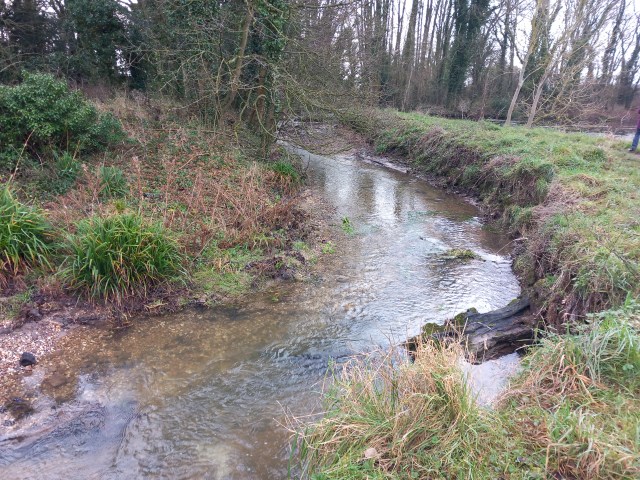
Opinions differ as to the the river’s true source. It is widely accepted, however, that the Freshney’s historical fount is a spot a little under two miles northwest of Laceby, where its headwaters rise at Welbeck Spring.
And where, on the nearby road, the onboard sonar was most reactive.
Not only do we have here a location of geological significance, it is one steeped in history. Indeed, ancient wordlore provides one clue to the spring’s status as the Freshney’s source:
The name ‘Welbeck’ is derived from the Old English ‘wella’ and ‘bekkr,’ which is translated as ‘the stream rising from the spring.’
The stream in this case is the Freshney.
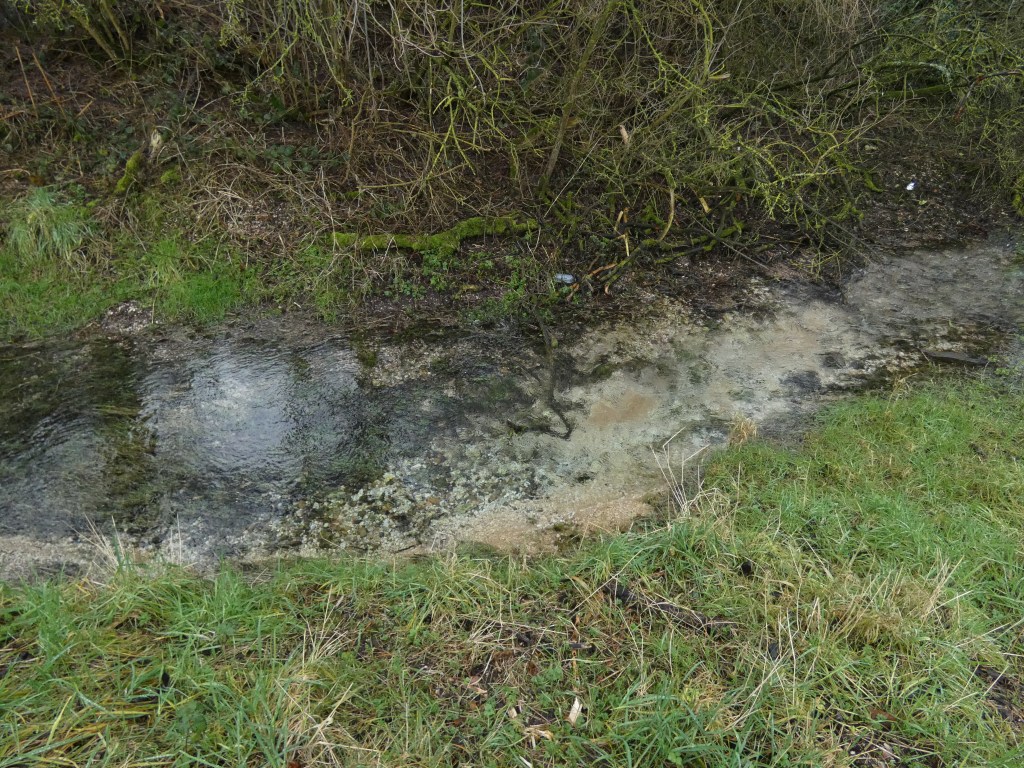
It is here, adjacent to that stretch of Barton Street where a dense thicket and adjoining hedge line snaking eastward suggests this to be the route of a water course. And it is here, in a hollow at the foot of that thicket where Freshney’s headwaters emerge. This, then, is Welbeck spring.
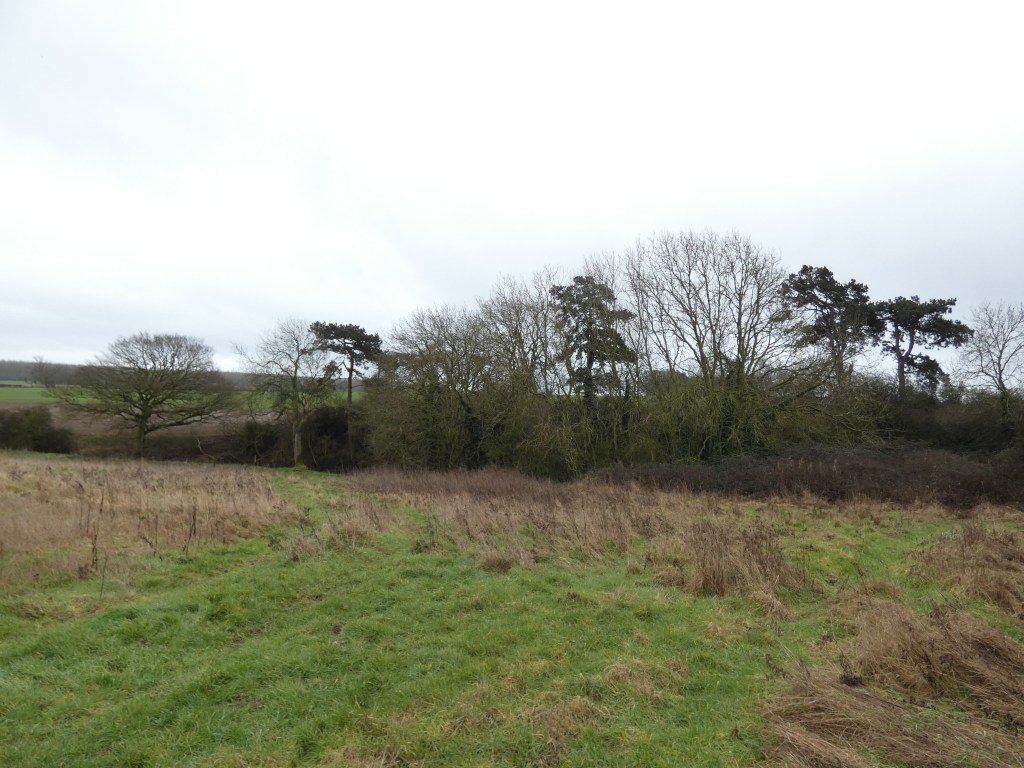
Two minutes walk from there, a roadside lay-by provides a convenient short-term parking spot for those wishing to explore on foot.
At this point, before venturing to the nearby spring, I recommend that visitors look to the west, to a low, sprawling hillock.
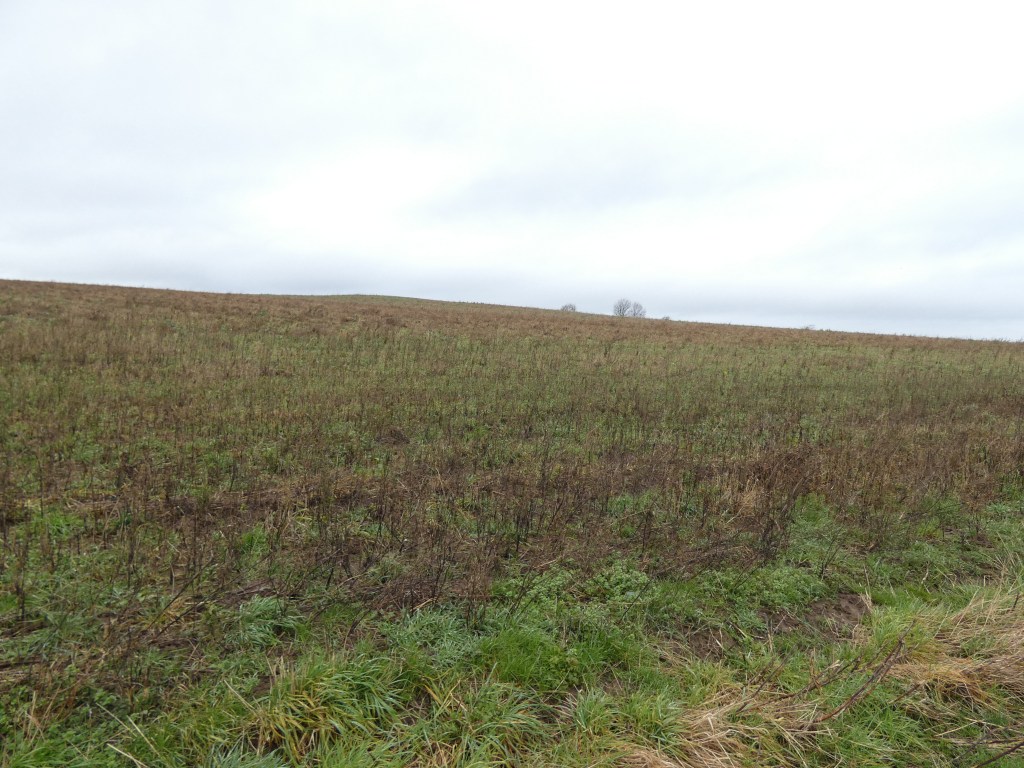
During ploughing in 1962, this unadorned and silent mound – known as Welbeck Hill -gave up ancient human remains. The resulting archaeological excavations unearthed an Anglo-Saxon cemetery consisting of three distinct burial areas. These were dated to around the mid 5th to 6th centuries.
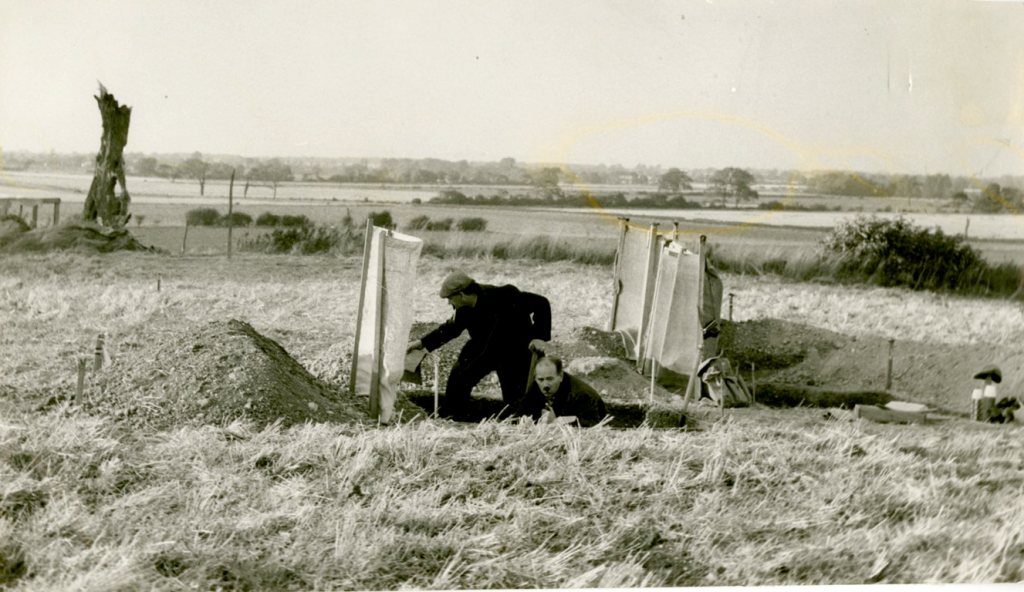
Whilst many among the populace at that time may have embraced the Christian religion, there were those who continued to maintain a ‘foot in both camps,’ by continuing with old, familiar pagan rituals and beliefs. Several graves attest to this, with evidence of artifacts buried alongside the deceased.
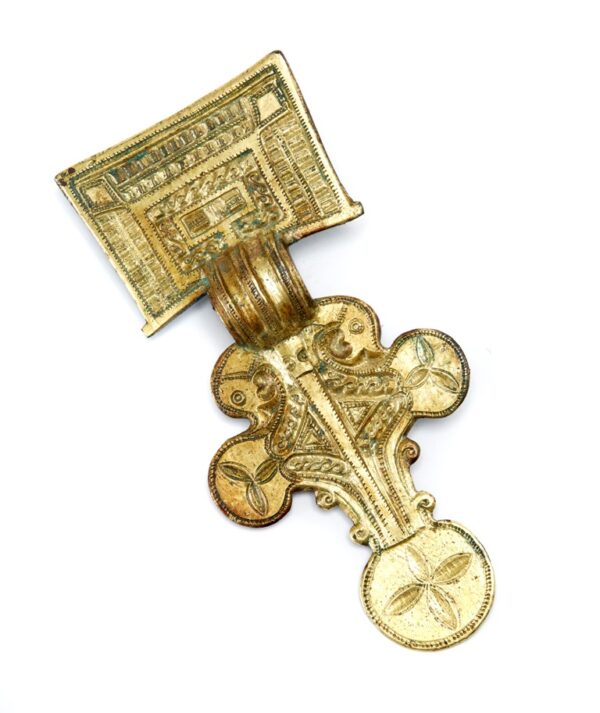
These ‘grave furnishings’ included knives, brooches and beads.
Overall, the hill yielded 76 graves and evidence of 5 cremations. One such grave was notable in that it contained the remains of a decapitated woman, her body placed on top of that of an ‘important old man’. The reason for this, and other such examples, is not fully understood and is debated among historians.
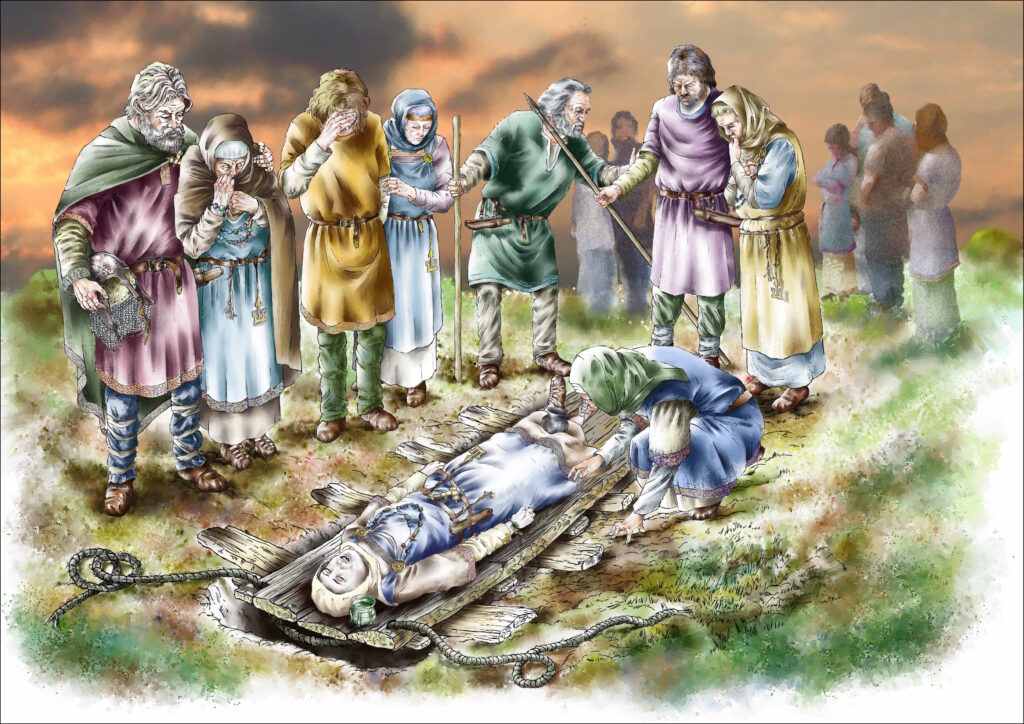
It is not altogether surprising then that this site of socio-cultural and religious importance is found next to a spring. Nor should it surprise us that bisecting the two is the Barton Street. For what is now blandly referred to as the A18, was once an important, prehistoric north-south highway.
Indeed, the Roman’s also recognised the route’s importance, by upgrading it to suit their needs. This Romanisation is reflected in the road’s ‘street’ suffix (Latin: Strata), as is also applied to Chester-le-Street, and Lincolnshire’s own Spital in the Street.
As James led our small group past the old burial ground, crossed the road and began the descent to the well site, my own ‘history-sensors’ were already sounding-off and ghostly images gathering at the edge of my vision.
Before we reached the hollow, we heard a sound we didn’t expect.
Welbeck Spring, whilst understood to be the Freshney’s water source, is one of several springs feeding into the river, and during winter months, Welbeck itself is known to be dry. In 1832 English topographer, George Oliver, wrote of it, stating that:
“… [ the spring] was ‘uniformly dry during the winter season, but in the month of February or March, a loud rumbling noise is heard in the ground for several days, and at length the water bursts forth in a hundred places as to fill in a few hours the whole area of the well or enclosure of earth where it is situated…”
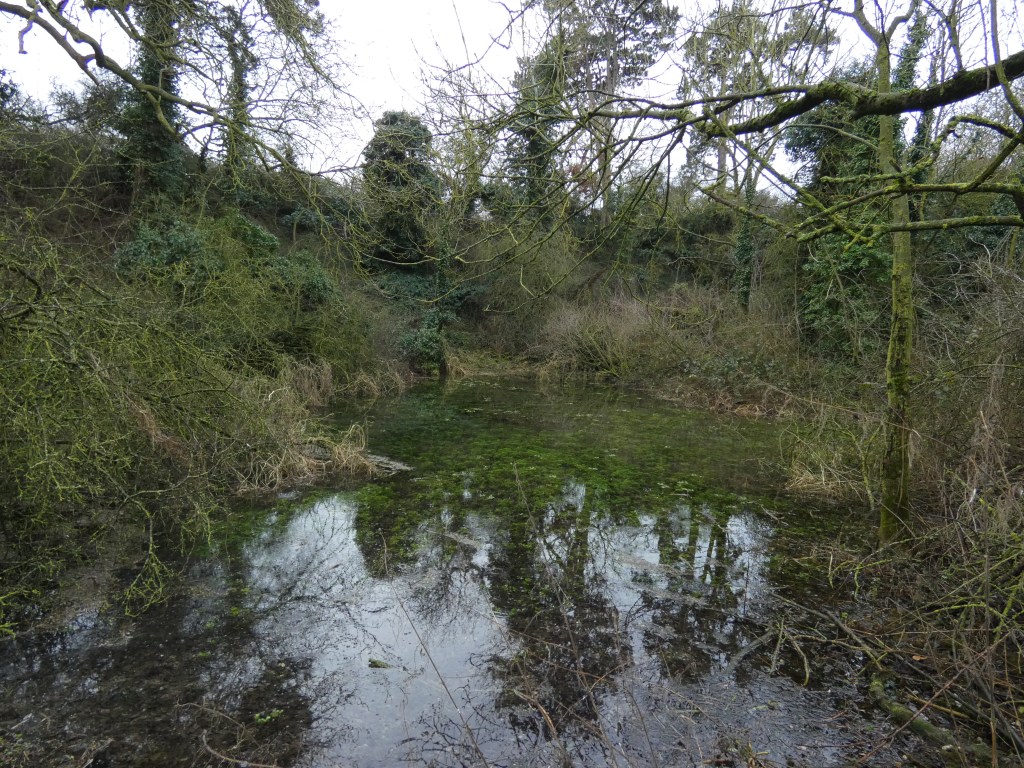
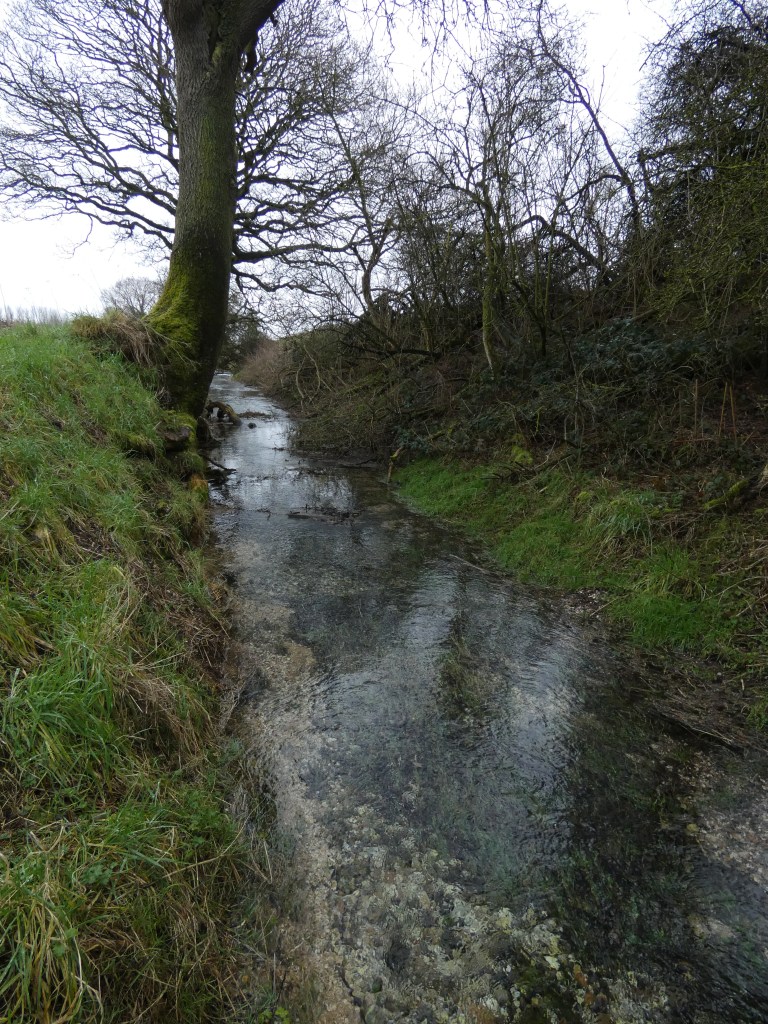
Yet, here we were, in January, and the hollow was vibrant with the sound of tumbling water. The pool itself was full, and its adjoining stream in full flow. And yet … aside from the burbling of water over the stony bed, there was a subdued hush here. Even sounds from the nearby road were muted, as though in reverence to this sacred site.
Nature, too, had lowered its voice. In the distance, Fieldfares chattered as they ranged along hedgerows, foraging for berries. Elsewhere, above a nearby woodland, a lone Buzzard called out as it sought out the thermals to carry it aloft.
Meanwhile, here in the hollow was a tranquillity, mystical in its quality.

It was clear to me that Welbeck spring was way more than a geographical feature, it was a site of deep spiritual importance, and this relevance had surely been recognised and honoured by our distant forbears.
We know that wells or springs have been considered sacred throughout history, revered either in a Christian or pagan context, and sometimes both. In addition, waters of these sites were (are?) considered to have healing qualities, through the presence of a guardian spirit or Christian saint. In some cases, these holy wells have been places of ritual and pilgrimage, where people have prayed and left votive offerings.
Accordingly, in much the same way as our Anglo Saxon ancestors furnished graves on nearby Welbeck Hill, I’m sure that similar pagan rites will have been practiced here, at the spring.
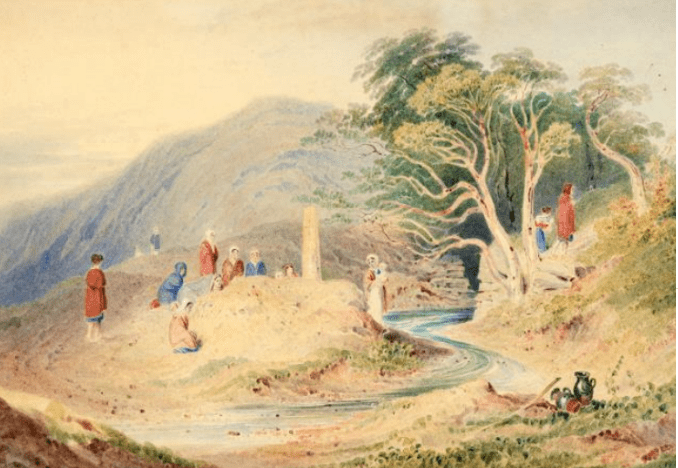
As we retraced our steps, up toward the road, these thoughts and more were swirling through my mind. I allowed myself one last look at the spring. Was this indeed a sacred site imbued with ethereal properties?
Turning toward the road once more, I felt sure that, at the corner of my eye, the ghostly shadows nodded in response.
 RAVEN MOON
This is excellent…everything I know about Welbeck but you have put it over so well. I was a young schoolboy archaeologist in the 60’s and was very privileged to be part of this ‘dig’ .
I have also been visiting the Spring for many years since ..in fact the last time only a few days ago with a friend…she feels the special feelings you describe each time we visit.
We will continue to visit …who knows we may bump into each other.
Brian Frith
LikeLike
Thanks, Brian. Our history and natural history are inseparable, as you know. So it’s good to have an opportunity to tell both stories in one piece of writing. Your friend no doubt feels connected … and that triggers a whole new story — that which lays beyond our tightly-limited, five-sense reality.
LikeLike