
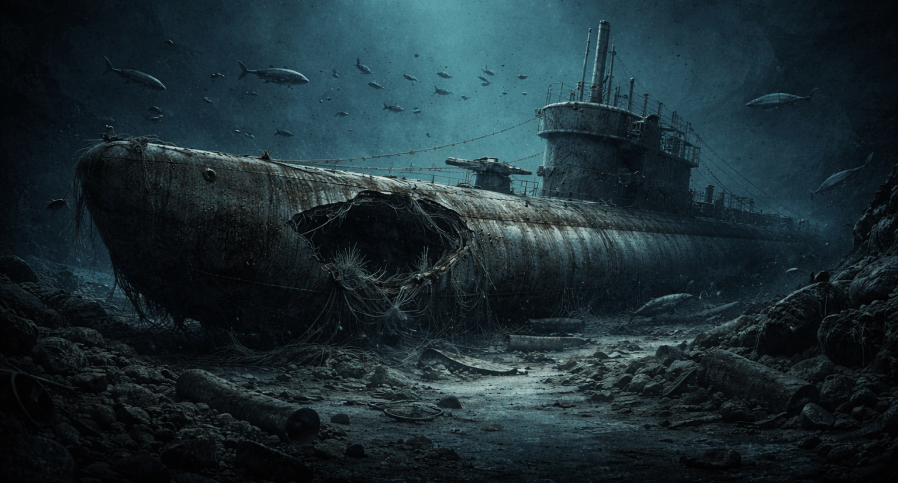

‘Out of the approximately 37,000 trained U-boat crewmembers in World War II, only about 6,000 survived the war to return safely to their homes in Germany.’
Hans Goebeler – ‘Steel Boats Iron Hearts’
FROM TIME to time on this blog I return to two very different passions and pursuits: the submarine war of 1939–45, and the strange, immersive power of computer games.
It was perhaps inevitable that the two would one day meet.
That meeting comes in the form of UBoat, released by Deep Water Studio and PlayWay S.A.
UBoat is a WW2 simulation PC game that doesn’t simply recreate a potent machine. It recreates a tempo.
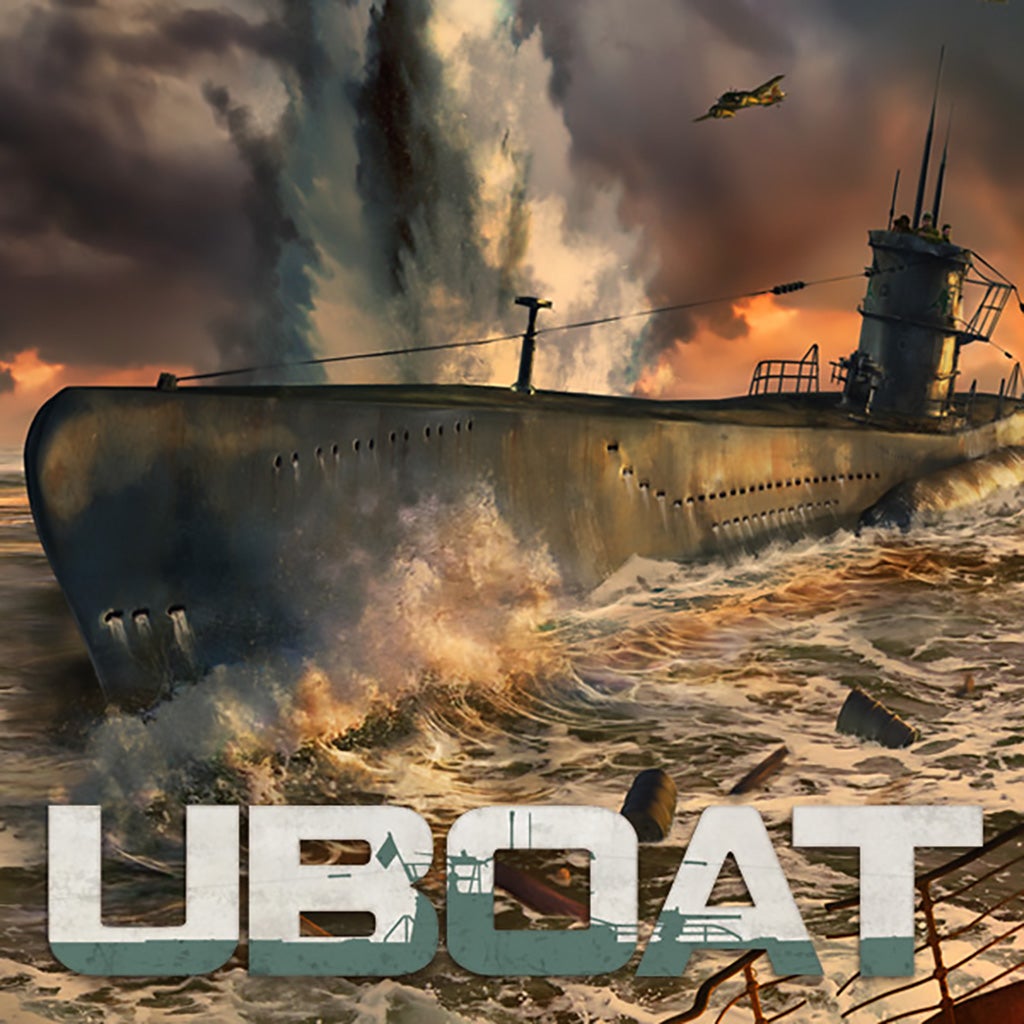
And in UBoat the tempo is everything.
Fatigue
THE WORKHORSE of Germany’s Atlantic campaign was the Type VIIC submarine — narrow, functional, and built with a grim economy of space.
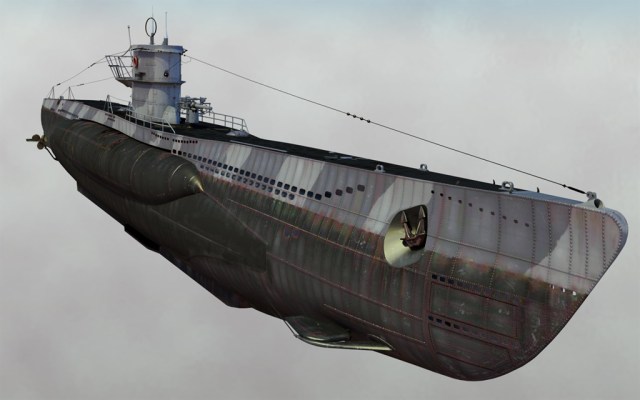
Primarily a weapon, crew comfort was beyond secondary. It was a hindrance.
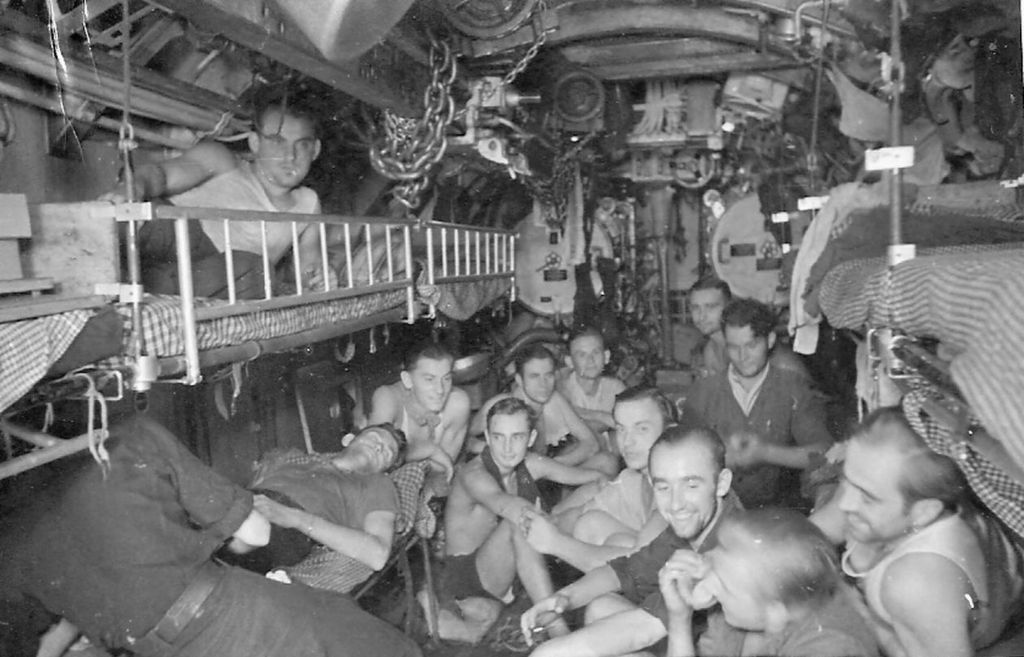
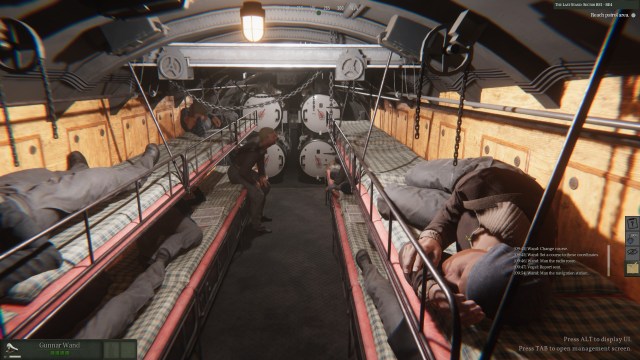
Photographs of the real boats show pinched gangways barely wide enough for a man to pass; a confusion of pipes and valves snake overhead; bunks are shared, one man replacing another as watches change. They are perpetually damp and foul-smelling.
UBoat captures this not as decoration, but as lived reality.
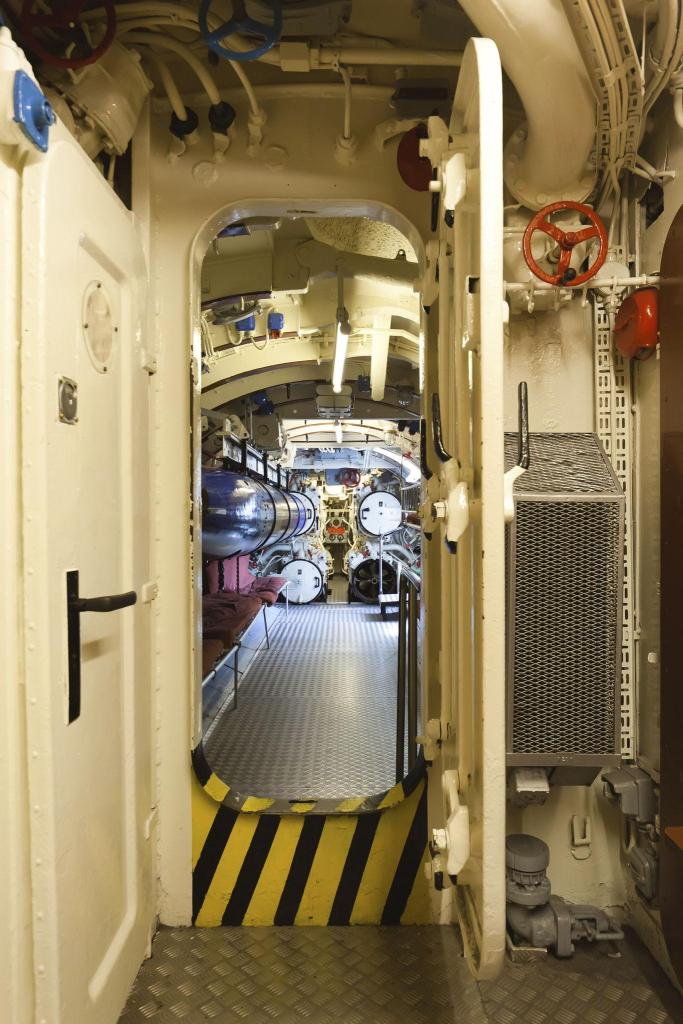
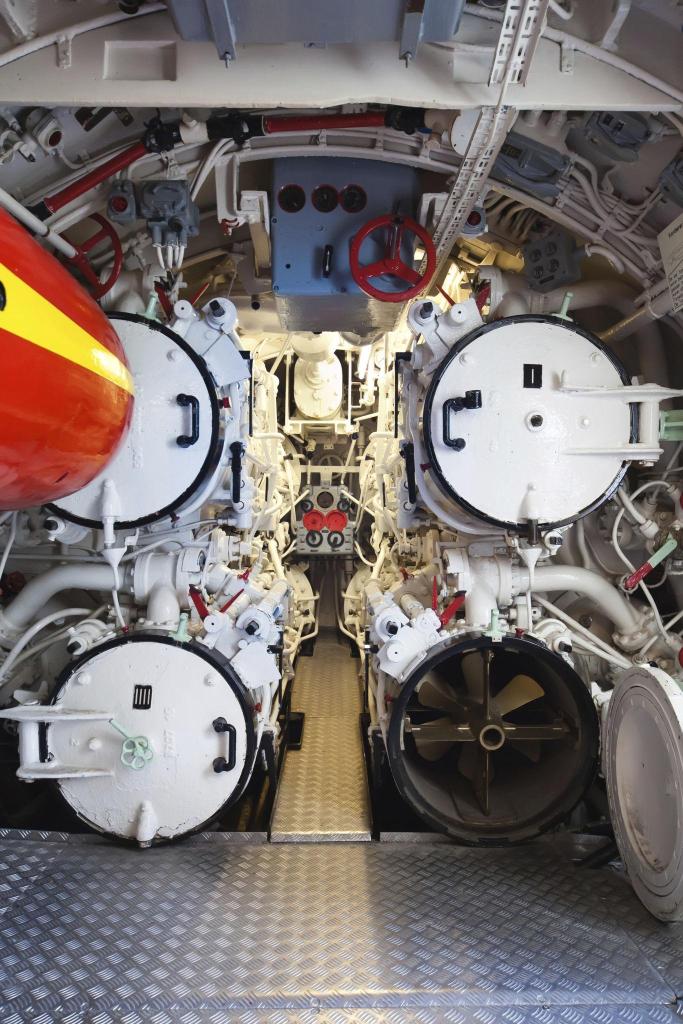
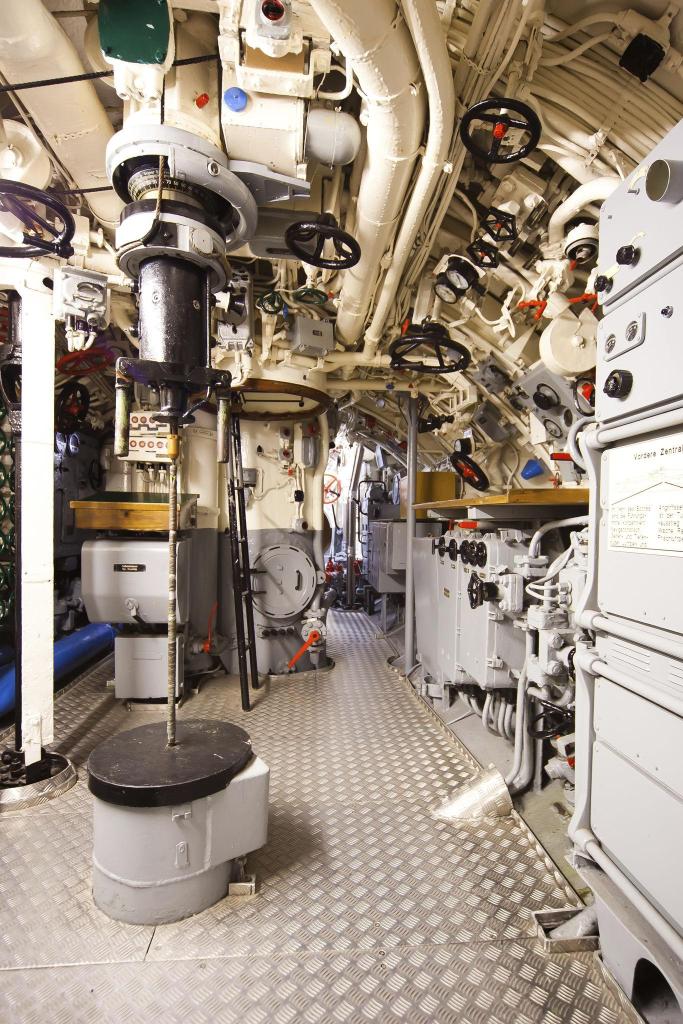
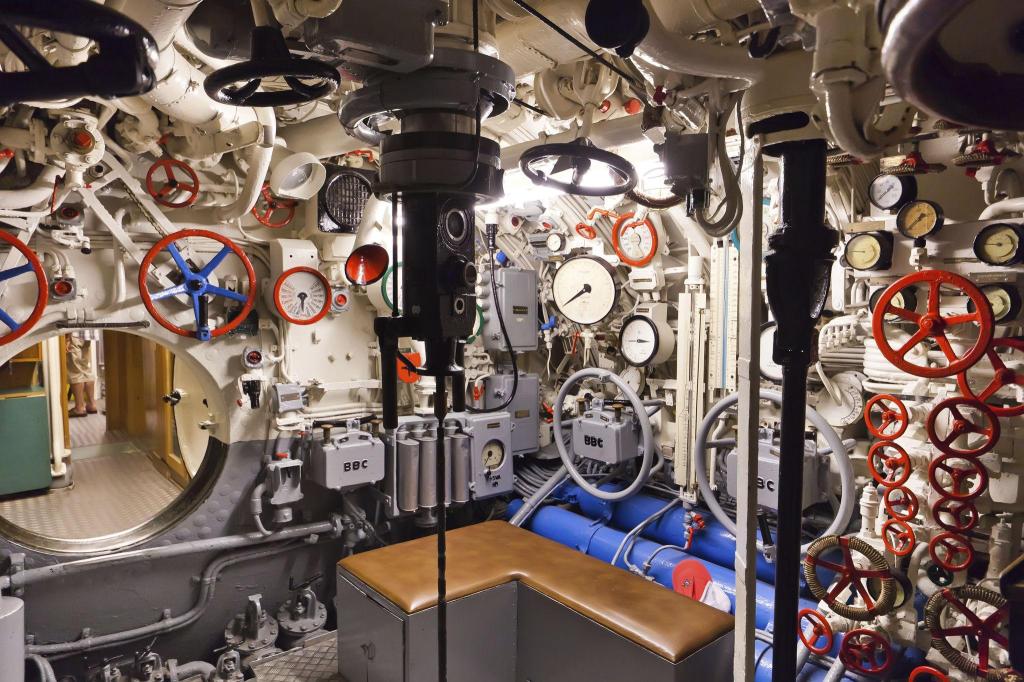
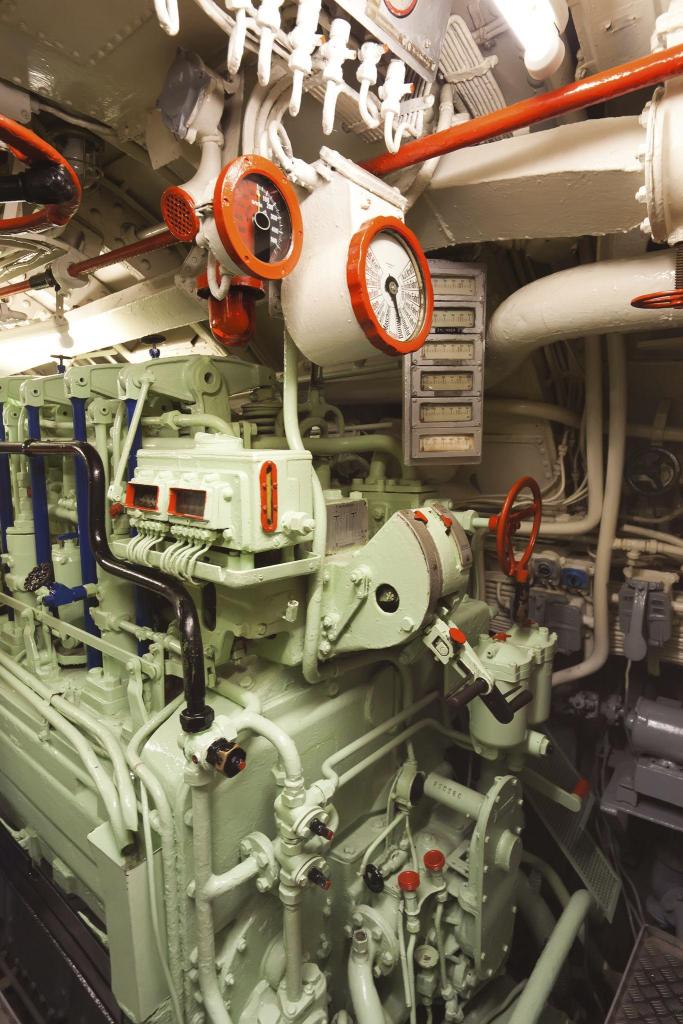
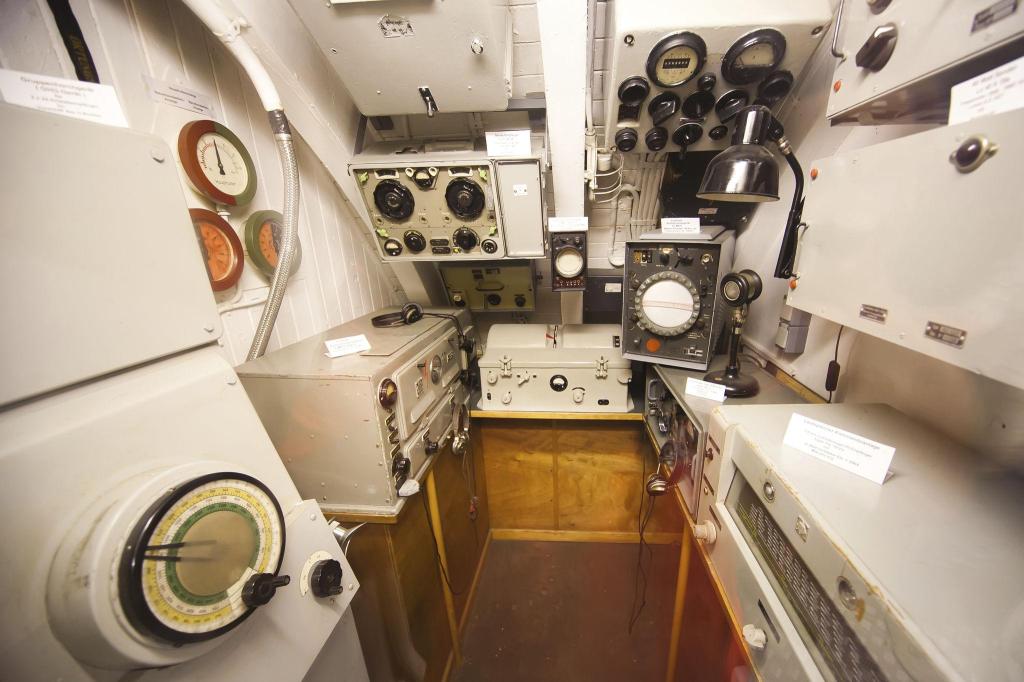
Onboard a German Type VIIC UBoat – Clockwise from top left: Bow torpedo room and for’ard crew mess – Bow Torpedo tubes – Control Room looking aft – Hydrophone Room – Diesel Engine – Control Room looking for’ard
When playing in first-person mode, you move through compartments that feel inhabited. Men sleep in shifts. Engineers wrestle with hammering, uncooperative diesels. Torpedoes must be maintained regularly, greased and re-loaded by hand. Their preparation takes time and precious energy.
Batteries drain. When submerged, air quality becomes fetid and runs low. Fatigue is not an abstract in-game statistic but an accumulating burden.
There is no glamour here. Only procedure, routine, and the persistent awareness that the cold sea presses in on all sides.
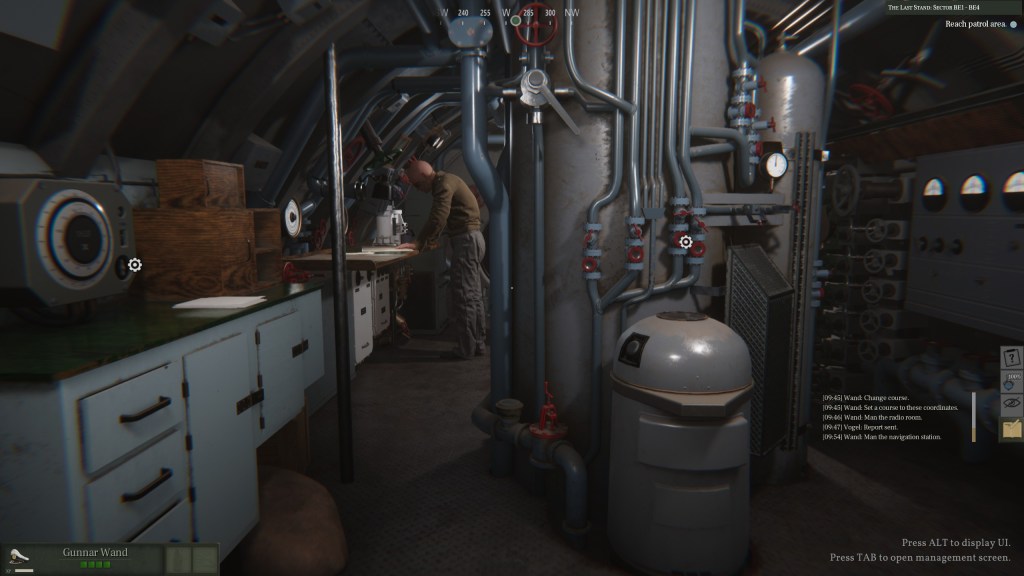
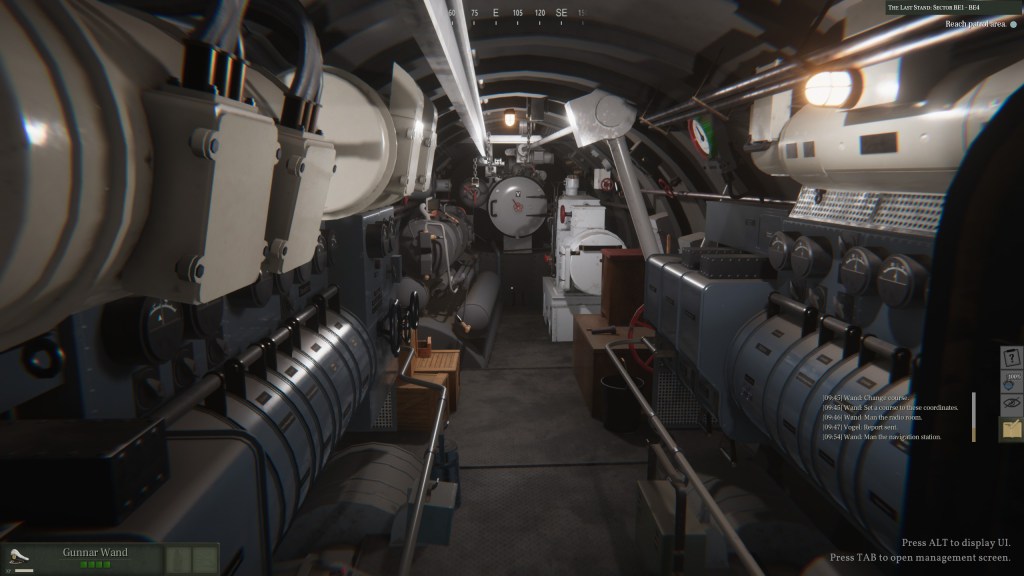
UBoat – In-Game images
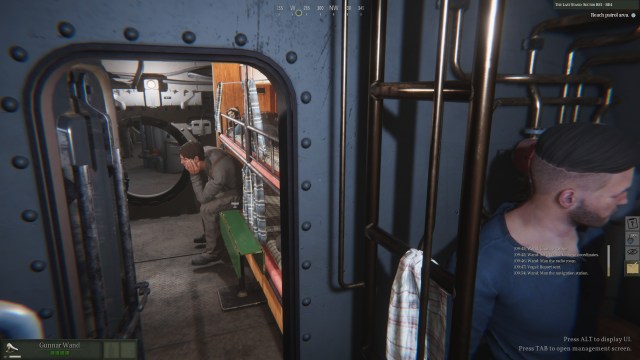
Stern crew mess, viewed from the cramped galley.
Control Room
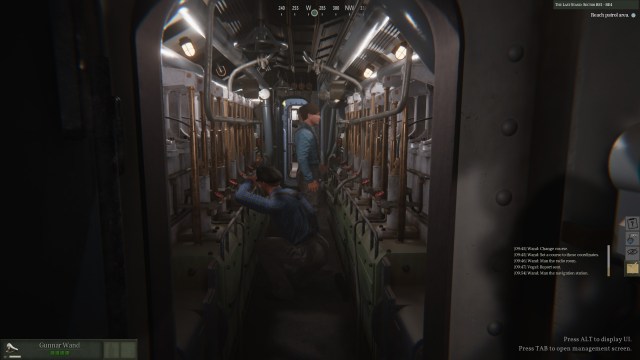
Diesel Engines
Electric Motor and Stern Torpedo Tube
Boredom
THE BATTLE of the Atlantic was not constant action. It was a wide, unchanging horizon. Grey on grey. It was an icy cold wind across inhospitable seas.
The game understands this.
(Right) On watch – In game image
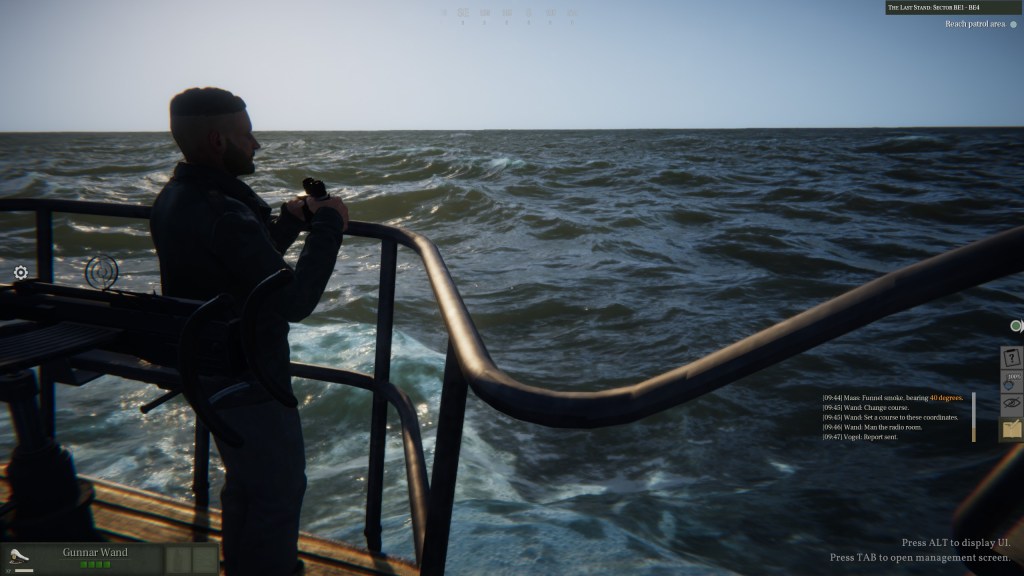
As a player, you may spend an hour — often more — scanning an empty seascape. Monitoring radio traffic. Visually surveying the horizon while on the surface, conducting hydrophone checks when submerged.
You change course regularly, sketching search patterns through designated patrol grids ― invisible plots on an ever-rolling ocean.
There are entire patrols in which nothing happens at all.
And this is not a flaw. It is accuracy.
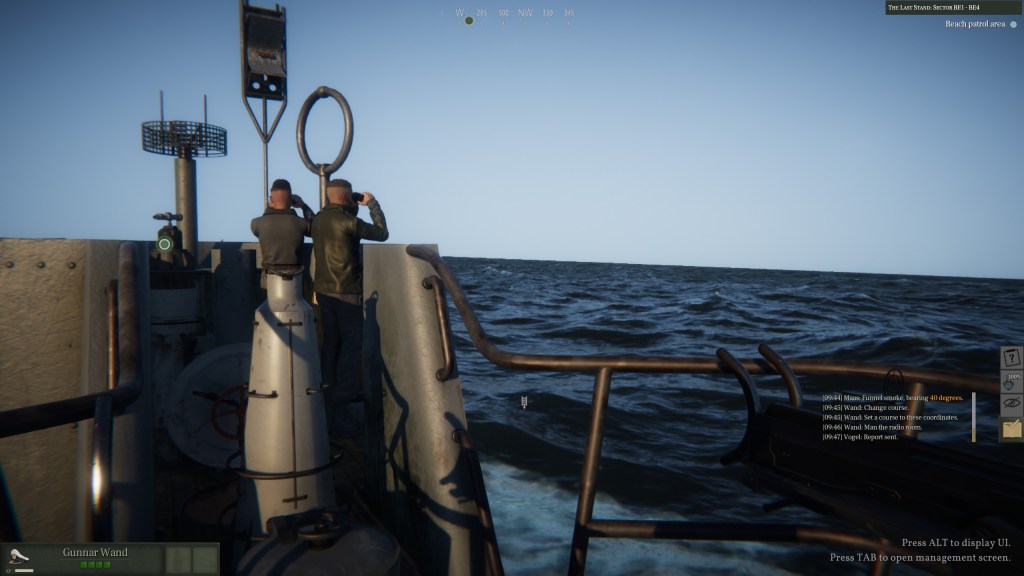
The historical U-boat war was characterised by vast stretches of mind-numbing monotony punctuated by violence so sudden and overwhelming that it erased the memory of calm. Patrol reports from the period speak of exhaustion, of boredom, of the creeping strain of anticipating the unthinkable.
UBoat reproduces this psychological framework with unsettling accuracy.
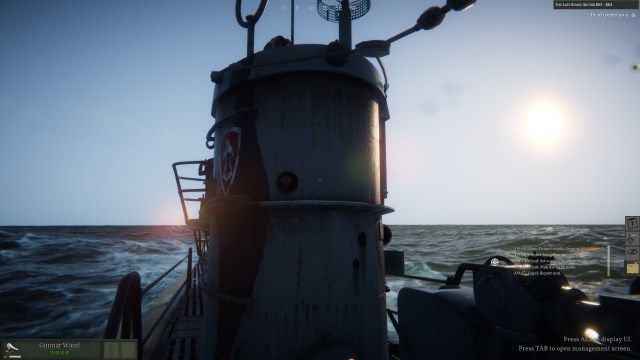
Panic Attack
THEN IT happens.
A smudge on the horizon.
Funnel smoke. An allied convoy.
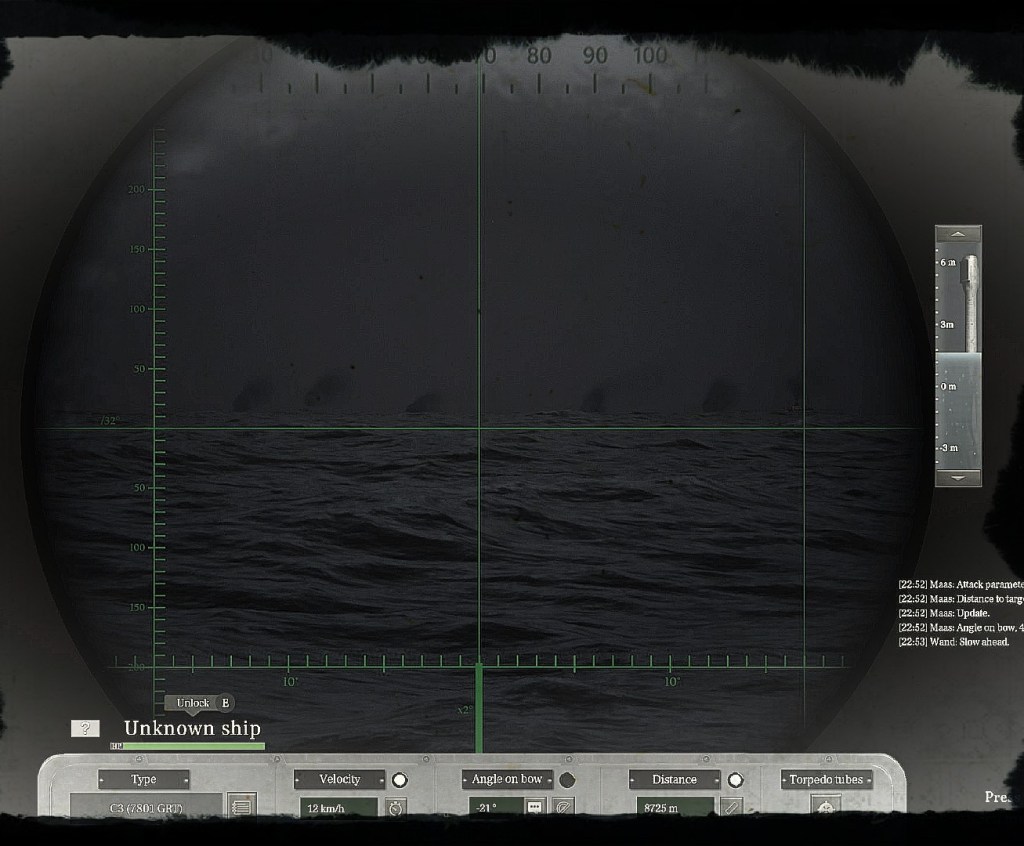
You shadow the convoy at the edge of visibility, calculating approach vectors. Eventually, you dive to periscope depth, sacrificing speed in the name of stealth. The reverberating diesels fall silent, replaced by the electric hum of battery power.
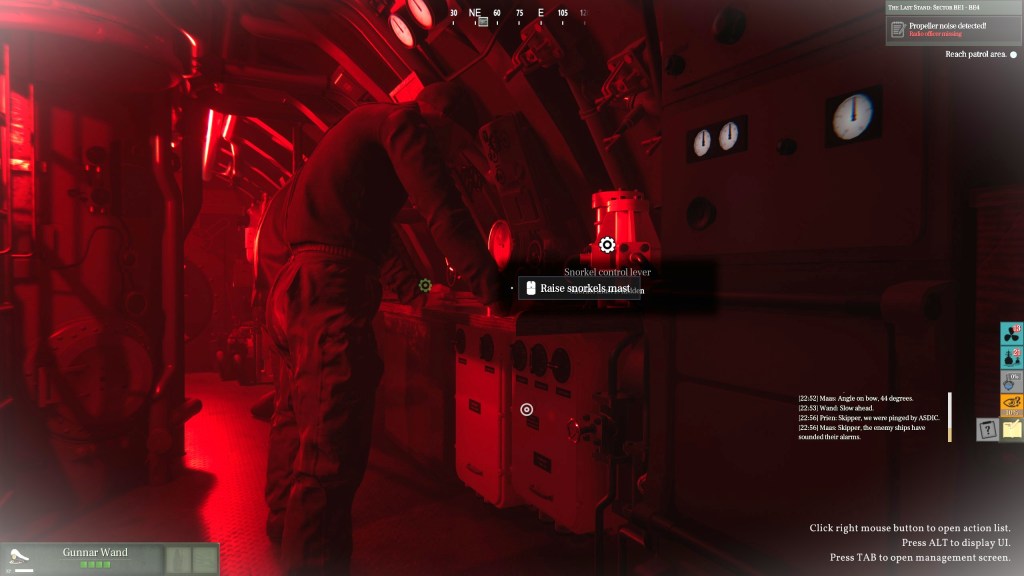
Meanwhile, inside the control room there is an almost sacred quiet.
Everything narrows to geometry … and nerve.
Torpedo solutions must be meticulously calculated on the fly as you trace your approach. Gyro angles set. Torpedo run-depths adjusted. Do you set for magnetic or impact pistol? A misjudgement means wasted ordnance — or worse, exposure.
At last, it’s time: You give the order to flood the torpedo tubes. One last check. Then, ‘Los!’ With a whoosh of compressed air, the boat lurches as deadly warheads run eager and straight toward their prey.
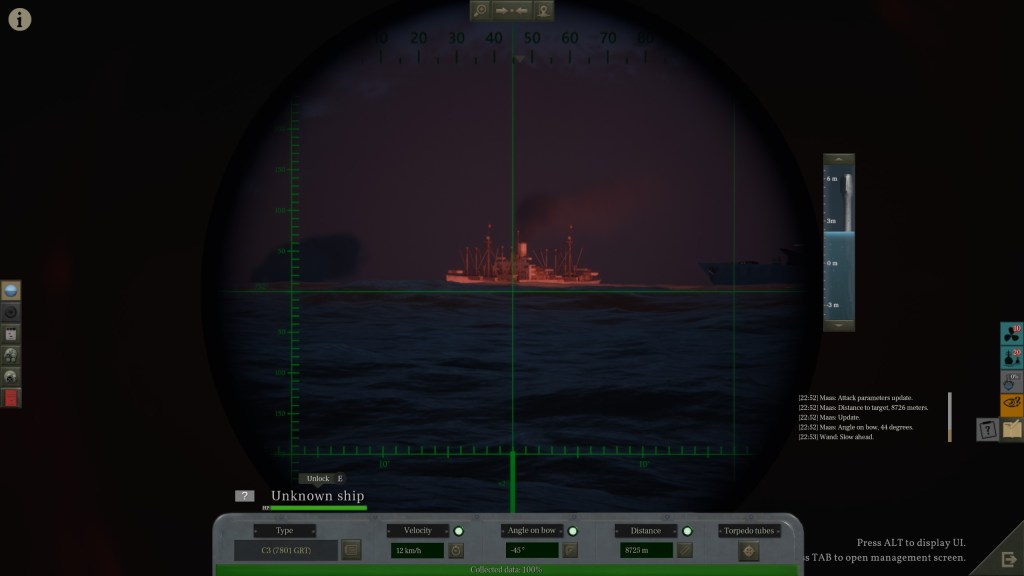
For a moment, there is triumphant anticipation.
And then the deadly escort vessels begin to turn.
Crisis
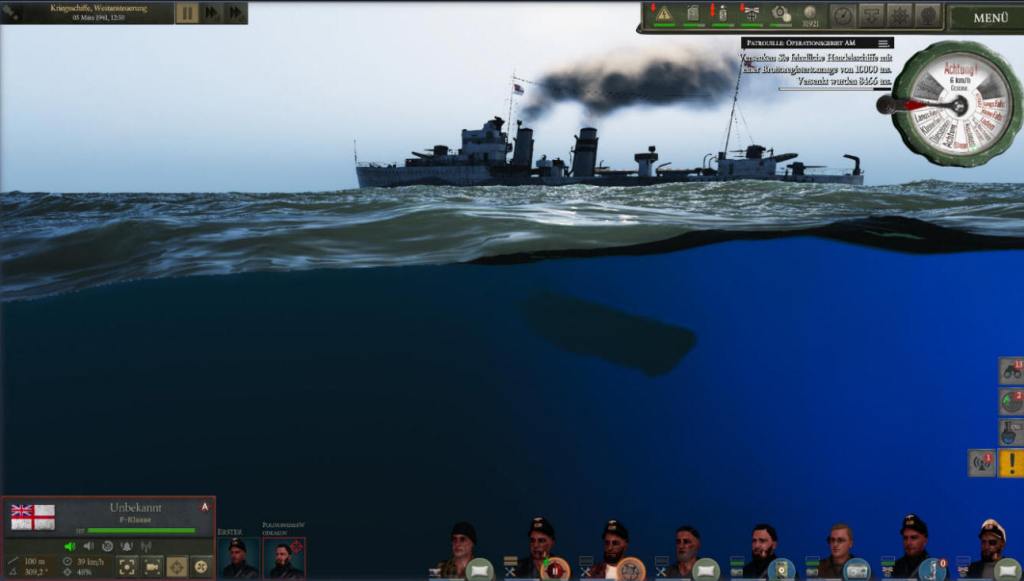
THIS IS where UBoat excels.
Destroyers close in. Sonar pings strike your hull like metallic heartbeats punctuating the desperate cat and mouse game now playing out. Above you, depth charges roll from racks and tumble into the deep, primed and set. The explosions do not feel theatrical; they are percussive, intimate. Deadly.
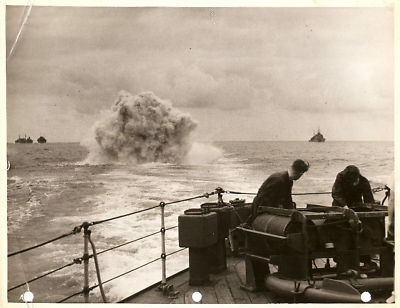
Lights flicker as deck plates ripple and buck ― then water gushes in where water should never be.
In a matter of minutes, calm command transforms into desperate crisis management. Orders become urgent, abrupt. Seal the compartment. Repair the bulkhead. Reassign the crew. Pray the hull holds.
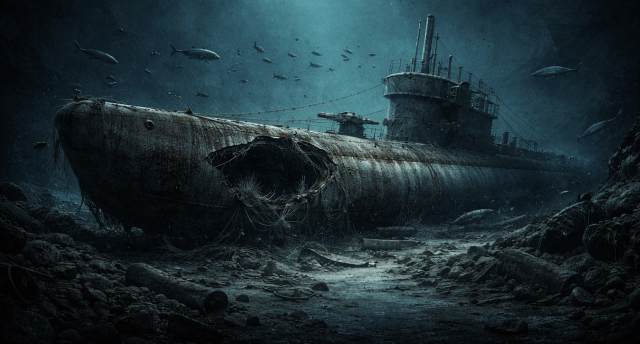
The emotional inversion is complete. You are no longer the jubilant predator of merchant shipping. You are a hunted vessel suspended in icy darkness, every rivet tested by concussion, each one the difference between life and death.
Historically, this was no exaggeration. From 1943 onwards, Allied anti-submarine tactics — improved radar, air cover, coordinated convoy defence — inflicted catastrophic losses. The Atlantic became less a hunting ground than a grave.
The game does not shield you from this reality.
Iron Discipline
WHAT DISTINGUISHES UBoat from more arcade-like titles is its insistence on process. Success depends not on reflex, but on discipline.
There are moments when the experience reduces to three essentials:
- Calculation
- Patience
- Nerve
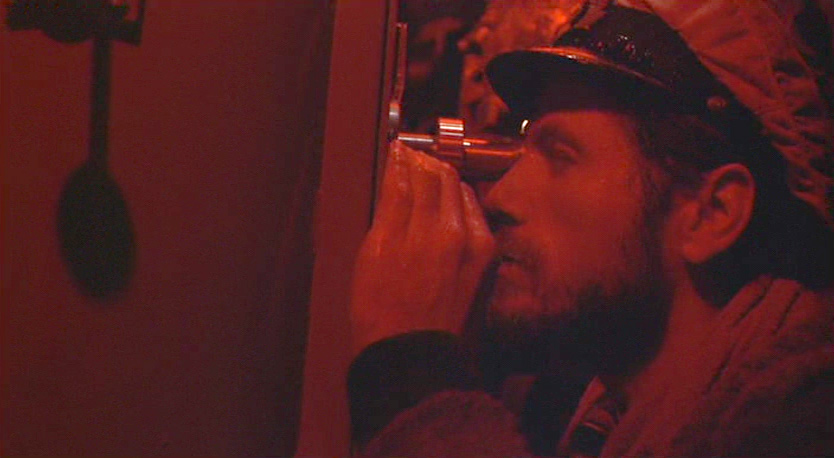
Attack too early and you are detected. Attack too late and the convoy slips away. Remain on the surface too long and aircraft may find you. Dive too deep and the pressure threatens the hull.
It is, in effect, applied mathematics under mortal stress.
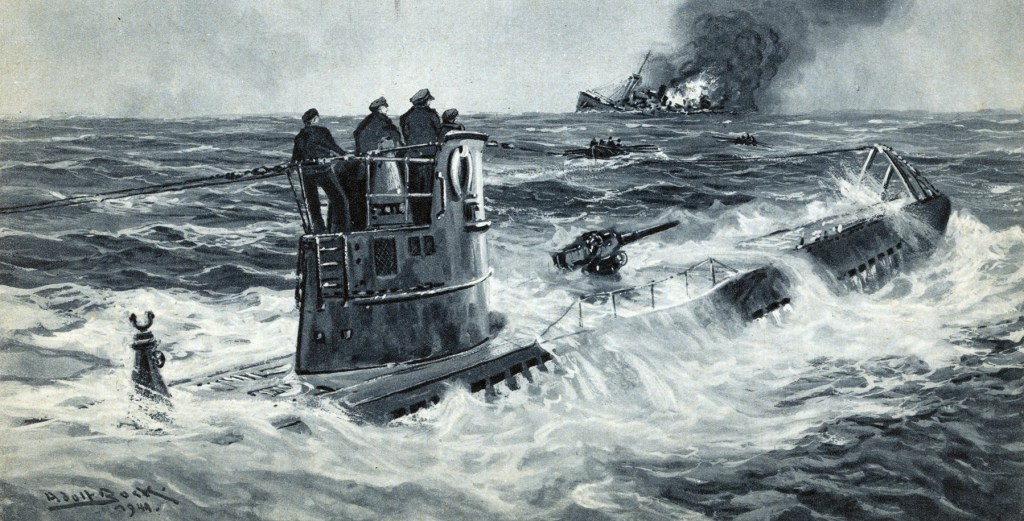
Steel Coffins
THE PHRASE was not coined lightly. Of the roughly 40,000 men who served in the German Kriegsmarine’s U-boat arm, a devastating proportion never returned. Survival rates were the lowest of any branch of service in the war.
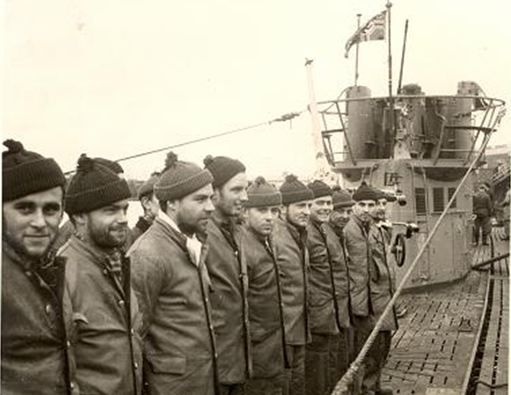
UBoat does not trivialise this. A single well-placed depth charge can cripple propulsion. A poorly managed repair can flood a compartment beyond recovery. Morale collapses. Systems fail.
Meanwhile, the hungry ocean waits.
There is a sombreness to the simulation that I find unexpectedly respectful. It neither glorifies nor sensationalises. Instead, it allows the player to inhabit — however imperfectly — the peculiar rhythm of submarine warfare:
Long hours of nothing.
After which everything is decided within minutes.
Relevance
IN PREVIOUS posts I have written about the Atlantic war as history; of the grinding attrition that ultimately broke the U-boat fleet. But statistics and text alone cannot convey atmosphere.
A well-crafted simulation can.
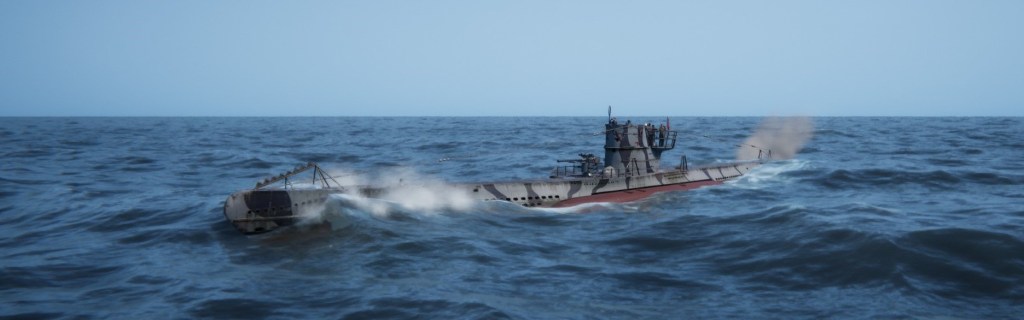
By forcing the player to endure the waiting, the lonely anxieties of command, sudden violence and the fragility of survival, UBoat bridges two of my long-standing interests. It demonstrates that a computer game, when designed with seriousness, respect and restraint, can function almost as interactive historiography.
It is not perfect. No commercial simulation can be. But in its long, drawn silence, its tension, and its abrupt descents into chaos, it captures something essential.
The Atlantic was vast.
The boats were small ― and fragile.
And beneath the waves, history turned on hasty calculations made in red-lit control rooms, by tired men who longed for home.

 RAVEN MOON