

Prudence in an Age of Lies
IF YOU’RE a regular visitor to this site, you will already be aware of my contempt for the mainstream media. And if you’re new here―first of all, welcome―feel free to click on ‘Media Manipulation‘ under ‘Tags’ in the sidebar and you’ll be presented with a series of my essays on that subject.
This latest post arose from a friend’s recent sharing of an emotive social media post about a cause he cared passionately about; one which, in turn, elicited a withering backlash from many of his followers.

First, I’ll start with something fairly obvious, but often unacknowledged:
A lot of what we see online is designed to wind us up.
Not inform us.
Not enlighten us.
Not even persuade us in any meaningful way.
Its sole purpose is to provoke a response.
Outrage travels faster than clarity; fear holds attention longer than calm reassurance. And in a digital world driven by click-bait, engagement, and algorithms, the most emotionally-charged material is the most profitable.
That doesn’t make you naïve if you fall for it. It makes you human.
‘Bots’ & Manufactured Emotion
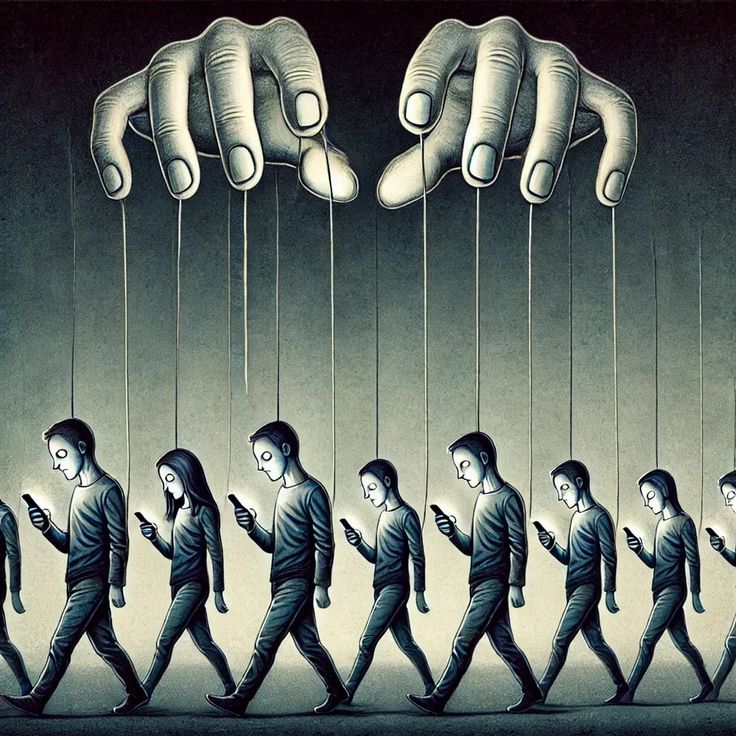
MUCH OF what passes for ‘debate’ or ‘opinion’ today isn’t either of those things at all. It’s emotional engineering.
Some of it is human. A shocking amount of it isn’t. Bots amplify division. Bad actors seed deliberately polarising issues. Headlines are crafted not to inform but to trigger—anger, fear, moral outrage, tribal loyalty.
So, before proceeding, it will be useful to understand what is meant by a ‘bot’ (short for robot):
In this context, a bot is an automated software account designed to behave as if it were a real person online.

In relation to media manipulation, they usually mean social or engagement bots, which are designed to:
- Post or repost content automatically
- Like, share, or comment at scale
- Amplify particular narratives, hashtags, or emotions
- Make ideas appear more popular or ‘consensual’ than they really are
More sophisticated bots can:
- Mimic human language patterns
- Argue, insult, or agree in comment threads
- Post at psychologically strategic times
- Coordinate with thousands of other bots
To a casual reader, they often look like real people with profile photos, opinions, and posting histories. Bots are exceptionally good at:
- Keeping arguments alive long after humans would have moved on
- Pushing emotionally charged content (anger, fear, outrage)
- Creating artificial momentum around divisive issues
- Turning fringe opinions into ‘trending topics’
And so, the moment you feel that hot surge of I must respond to this, it’s worth pausing.

Because that reaction?
That’s the product working precisely as intended.
Discernment isn’t about deciding who’s right. It’s about noticing when your nervous system is being hijacked. And yes, I mean hijacked.
Your Body Knows
HERE’S SOMETHING useful: your body usually registers manipulation before your mind does. For example:
- The clenched jaw.
- The tight chest.
- The urge to immediately share, comment, correct, or condemn.
That’s not intuition guiding you toward truth. That’s stimulation pushing you toward reaction.
Real insight tends to arrive more quietly. It doesn’t demand instant action. It doesn’t insist you pick a side right now. It gives you space to breathe.
And if something won’t let you breathe, be suspicious of it.
Not Rising to the Bait Is a Skill
There’s a strange cultural pressure now to have a take on everything. Silence is treated as indifference. Hesitation as ignorance.
But discernment often looks like simply not engaging.
Not reposting the inflammatory clip.
Not arguing with the stranger who’s clearly there to provoke.
Not letting a manufactured ‘issue of the week’ colonise your inner life.
This isn’t apathy. It’s autonomy.

Choosing where you place your attention is one of the few real freedoms left to us—and it’s one which many systems, platforms and broadcasters are actively trying to erode.
‘Awake’ Doesn’t Mean Angry
ONE OF THE subtle traps of awakening is mistaking constant outrage for awareness.
Yes, the world is messy. Yes, there’s widespread corruption―after all, power does corrupt. No question. Yes, manipulation exists. And yes, there are real injustices.
But if your version of being informed leaves you perpetually agitated, suspicious of everyone, and less able to feel compassion, something has gone wrong.
Perceiving reality without personal distortion doesn’t require constant fury. In fact, sustained anger often clouds judgement and makes us easier to manipulate, not harder.
Calm is not complacency. Calm fosters clarity.
Practicing Discernment
At its core, discernment is asking a few simple questions—over and over again:
- Who benefits if I react to this?
- Is this encouraging thought, or bypassing it?
- Does engaging with this make me more human—or less?

You don’t need to withdraw from the world to practise discernment.
You just need to stop letting every hook catch you.
The systems that thrive on division rely on one thing above all else: predictable reactions.
When you don’t give them that, you quietly step away from their game.

Global Improvement
And finally …
… not amplifying distortion is itself a contribution to a better world.
Remaining grounded is a form of resistance.
Refusing to become what the noise is trying to make you demonstrates integrity. Sovereignty. Strength.
Discernment doesn’t shout. It doesn’t dramatise. It doesn’t need to convince anyone. It simply stands in its truth and maintains its values.
And in times like these, that is way more powerful than it seems.

 RAVEN MOON