THE NORTH LINCOLNSHIRE landscape is quiet now—the fields of Stallingborough stretch calmly toward the Humber, as its lanes wind sedately through the village.
It is hard to imagine that this peaceful parish once gave rise to a woman whose unflinching courage challenged the very foundations of Tudor power.
Anne Askew, born not far from these fields in the parish of South Kelsey, became one of the fiercest voices of conscience in an age when dissent was so often fatal.
She did not wield a sword, command an army, or hold high office. Her only weapon was her unyielding conviction—yet it was enough to trouble the most powerful men in England.
Nonconformant
ANNE GREW UP surrounded by the turbulent uncertainties of Henry VIII’s England—an age when faith was no longer a stable inheritance but a confusing and ever-shifting battleground.
As extremist protestant writings circulated secretly, scriptural study could easily become a radical act at odds with official dictates.
This was an environment in which the lines between obedient orthodoxy and heresy were blurred.
For Anne, a fervent protestant married to an equally impassioned papist, Scripture was not merely words on paper but an immovable conviction.
She studied with intensity, questioned tradition, and spoke her mind with an incisive clarity that unsettled those, such as her husband, who would have preferred her to remain a silent, compliant young woman.
Boldness in England at this time, especially in a woman, was dangerous. But Anne refused to disavow her faith. “I had rather read five lines in the Bible,” she once declared, “than hear five masses in the temple.”
Such words, spoken openly, were as good as a death sentence.
Unshakeable
BY 1545, ANNE’S pronouncements had drawn the attention of the highest authorities. Summoned to London, she walked directly into the lion’s den—before bishops, lawyers, and agents of the King’s Privy Council.
They demanded she explain her beliefs about the Eucharist, the foundational question at the heart of Tudor religious conflict. Anne did not hesitate.
“As for that ye call your God, it is but a piece of bread … for a more proof thereof look in your book, and you shall find how that Christ made a sitting on the earth, and called it his body.”
Her interrogators were stunned. She spoke calmly, logically, and with scriptural precision. A woman—defying them openly.
They warned her that obstinacy meant death. Despite awareness of the appalling nature of that death, Anne calmly replied:
“I will not swear myself from the truth.”
Unbreakable
ANNE’S DEFIANCE ENRAGED two of England’s most powerful men: Sir Thomas Wriothesley, Lord Chancellor, and Richard Rich, a schemer famous for his merciless pursuit of heretics. Convinced she was hiding the names of influential Protestants, they were determined to break her—physically and mentally.
Torture of a gentlewoman was explicitly illegal.
They did it anyway.
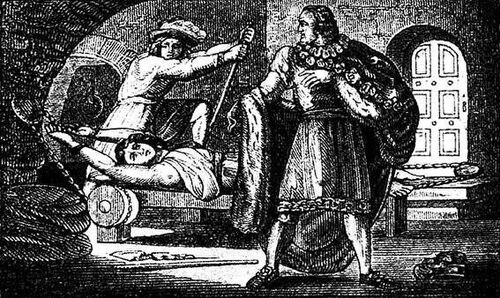
The Lieutenant of the Tower—horrified at such a prospect—refused to participate in the unlawful and brutal ‘examinations’. Undeterred, the two statesmen took his place. Wriothesley and Rich personally turned the screws of the rack, tearing the young woman’s limbs from their sockets.
Anne later wrote with astonishing composure:
“Then they did put me on the rack, because I would not declare unto them the names of my fellows… And thereon they kept me a long time, and because I lay still, and did not cry, my Lord Chancellor and Master Rich took pains to rack me with their own hands.”
By the time they released her, her joints were dislocated, her strength nearly gone. She had to be carried to her cell.
But her will remained intact.
Condemned
ANNE’S TRIAL WAS a formality. She was carried in a chair—too badly injured to stand.
Shocked Londoners whispered that she had been tortured unlawfully, but the authorities pressed on, determined to silence her.
Condemned to death by burning, she listened to the sentence with serene clarity. She already knew she would not recant. “I am not come hither,” she once told her interrogators, “to deny my Lord and Master.”
“I am not a heretic”
ON 16 JULY 1546, in Smithfield, Anne Askew was chained upright to the stake in a seated position—her body too damaged to stand.
Witnesses reported her calmness. Even the King’s Catholic chaplains tried one last time to save her if only she would renounce her words. Anne refused.
Her final recorded declaration was simple, unwavering:
“I am not a heretic.”
The fire consumed her slowly. Those who watched never forgot her composure, or the injustice of her death.
And then came the final twist of history.
Only three years later, under King Edward VI, the doctrines for which Anne had been executed were adopted as official state religion. What had been heresy under Henry VIII became orthodoxy under Edward.
Anne Askew died for beliefs England would soon declare its own.
The Men Who Tried to Break Her
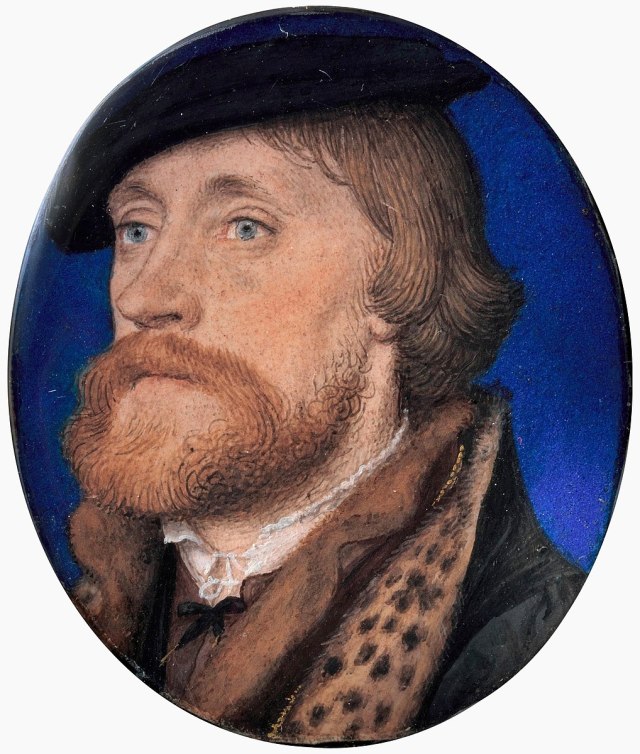
Sir Thomas Wriothesley (1505–1550)
Lord Chancellor of England, one of Henry VIII’s most feared political enforcers.
Zealous persecutor of Protestants despite the King’s shifting religious positions.
Personally operated the rack during Anne’s torture—an act both illegal and shocking to contemporaries.
Driven by paranoia: believed Anne was part of a conspiracy involving high-born Protestant women at court.
Legacy: Wriothesley’s brutality was notorious even in an age accustomed to state violence. History has judged him harshly, often identifying him as the primary architect of Askew’s suffering.
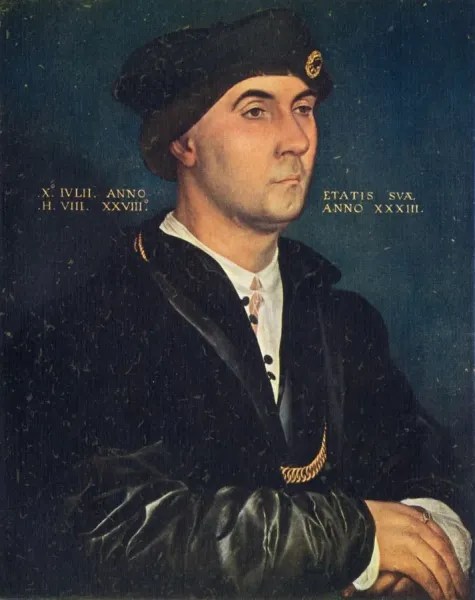
Richard Rich (1496–1567)
A master of opportunism, infamous for betraying Sir Thomas More and shaping Henry VIII’s harshest prosecutions.
Known for cruelty, duplicity, and political manoeuvring.
Collaborated in Anne’s interrogation, pressing her to name others and personally working the rack.
Rose in wealth and power through persecution, dissolution of monasteries, and political manipulation.
Legacy: Remembered as one of Tudor England’s most sinister figures—“Rich by name and richer by cruelty,” as later critics wrote.
Anne Askew’s Legacy of Defiance
TODAY, THE FIELDS near Stallingborough give no hint to the agony, courage, and moral fire that once shaped the young woman who once lived there. But Anne Askew’s voice—sharp, clear, and indomitable—continues to echo.
She stood against England’s most powerful men. She resisted torture. She refused to betray her conscience.
And in the end, an entire nation moved to meet her unshakable convictions.
Commemorative plaque – The Church of St Peter & St Paul, Stallingborough









 RAVEN MOON