

Introduction
A FEW DAYS ago I joined a dozen or so like-minded souls for a country ramble and litter pick, facilitated by Canoe River Cleaner, Jim Elliott, in partnership with Grimsby Community Organisation, Centre 4.
The walk, which started out from Centre 4’s hub on Wootton Road took us out onto open fields to the nearby village of Bradley.

En route, Jim engaged in his usual friendly banter with me. ‘Do I sense another blog post from this?’ he quipped. ‘No,’ I replied, perhaps a little too hastily. After all, I thought, Bradley is only a tiny, nondescript village partly hidden by the hem of Grimsby’s skirts. What could possibly be of interest worth writing about?
Plenty, it seems.
Bradley, Lincolnshire
BRADLEY NESTLES among gently rolling farmland a few miles south-west of Grimsby. It’s a quiet Lincolnshire village whose name derives from the Old English brād lēah — ‘broad clearing.’
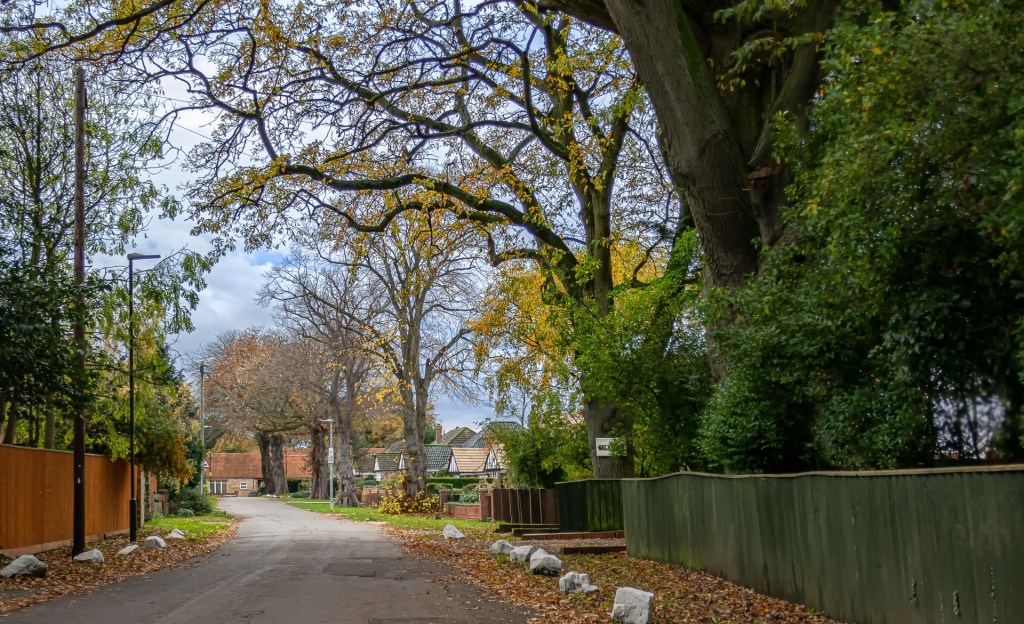
Though small in size (with fewer than 200 residents at the last census), the village has a history stretching back more than a thousand years. It is a story written in its hushed backroads, its stone church, parish records, and tins of jam once shipped across the British Empire.
Heart of the Village
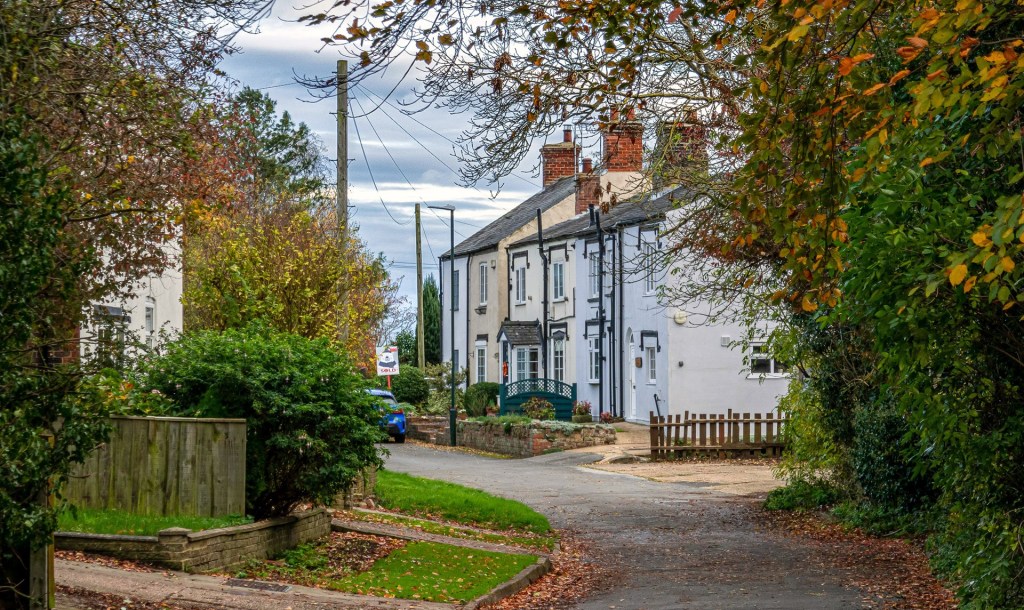
AS OUR SMALL group stepped into the dappled shade of Bradley’s tree-lined lanes we entered a green pocket where time felt unhurried. There, guided by the stone battlements of the church tower ahead, we strolled past a line of cottages on the left.
Built in 1947/8, each of these farm labourers’ cottages originally had a pig sty to the rear, as well as a small downstairs room used as for the slaughter, butchering and hanging of the carcases.
The Church — St George’s — is a modest yet beautiful structure that embodies centuries of local life. As we stood among the leaning headstones in the churchyard we speculated on the building’s age. As with many of our older churches that have been added to and altered through the centuries, dating its construction wasn’t easy.
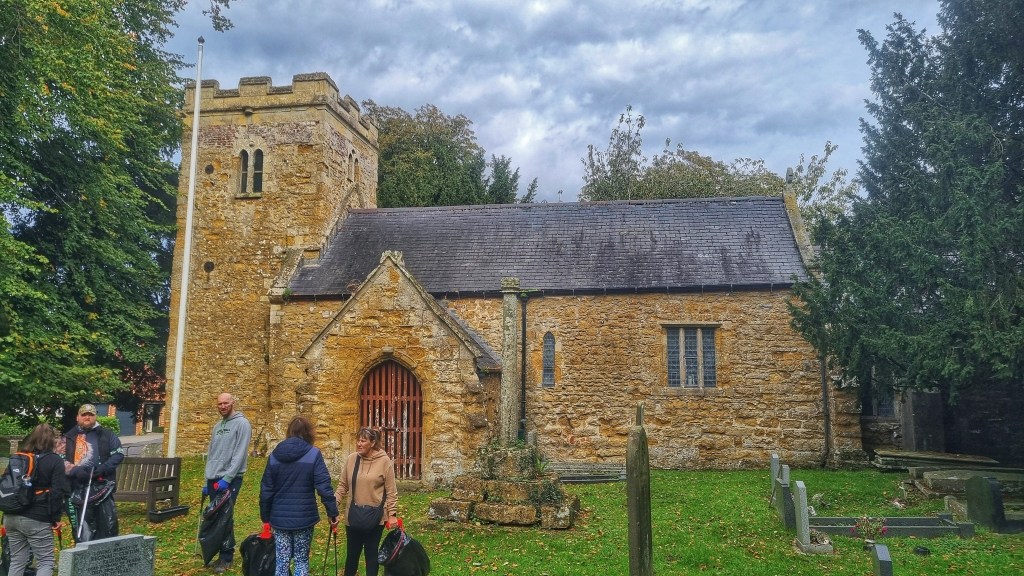
Subsequent enquiries revealed that church we see today, built of local limestone rubble with ashlar dressings, is early Norman in origin. The upper part of its tower has two-light belfry windows showing early plate tracery of the 13th century, with later restorations in the Victorian era.
The church possesses a simple nave and chancel, and its low west tower is crowned with battlements, and gargoyles that peer across the fields.
The small churchyard contains headstones dating back to the 17th and 18th centuries, many commemorating the farming families who shaped Bradley’s life for centuries: the Carvers, the Baxters, and the Elmores among them.
Moss-covered and tilting, these stones are a catalogue of a village’s soul, recording not just names but occupations, such as ‘yeoman,’ ‘wheelwright,’ ‘church warden’.
Parish Archives
BRADLEY’S PARISH REGISTERS, preserved in local archives and digital genealogical databases, stretch back to the early 1600s. They chart baptisms, marriages, and burials across centuries, forming an unbroken thread of community history.
The registers tell stories both intimate and social — of hard winters and good harvests, of families linked by marriage across neighbouring villages like Great Coates and Laceby.

During the 19th century, as nearby Grimsby expanded with the fishing trade, Bradley’s records begin to show new occupations: railway workers, labourers, and domestic servants, evidence of the modern world edging into this rural refuge.
These records, like the cemetery headstones, are testament that this little parish, with its single church and quiet lanes, has held its own place in Lincolnshire’s long human story.
The Sweet Taste of Industry
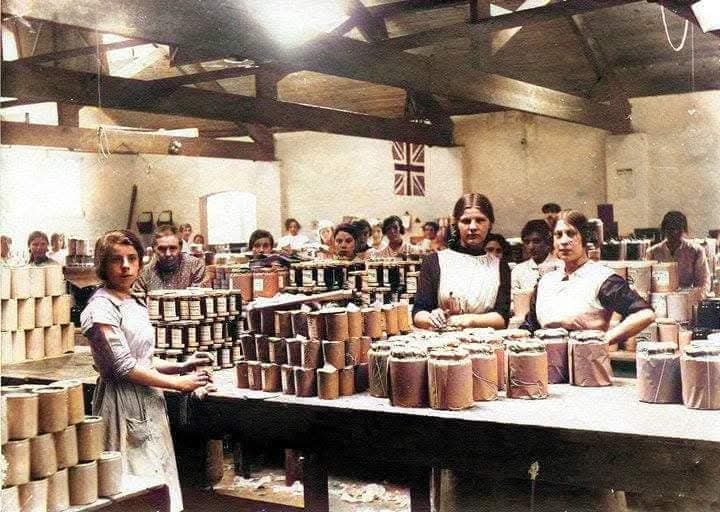
JUST AS BRADLEY was recording the life of its rustic villagers, one family name was spreading far beyond its boundaries — Tickler.

Thomas George Tickler (1852-1938)
Grimsby born Thomas George Tickler (1852–1938), lived at Bradley Manor. He was closely connected to the area’s agricultural roots, and built a jam-making enterprise that became one of Lincolnshire’s most famous brands. Tickler’s Preserves, established in the late 19th century, grew from a small fruit-processing concern into a major employer.
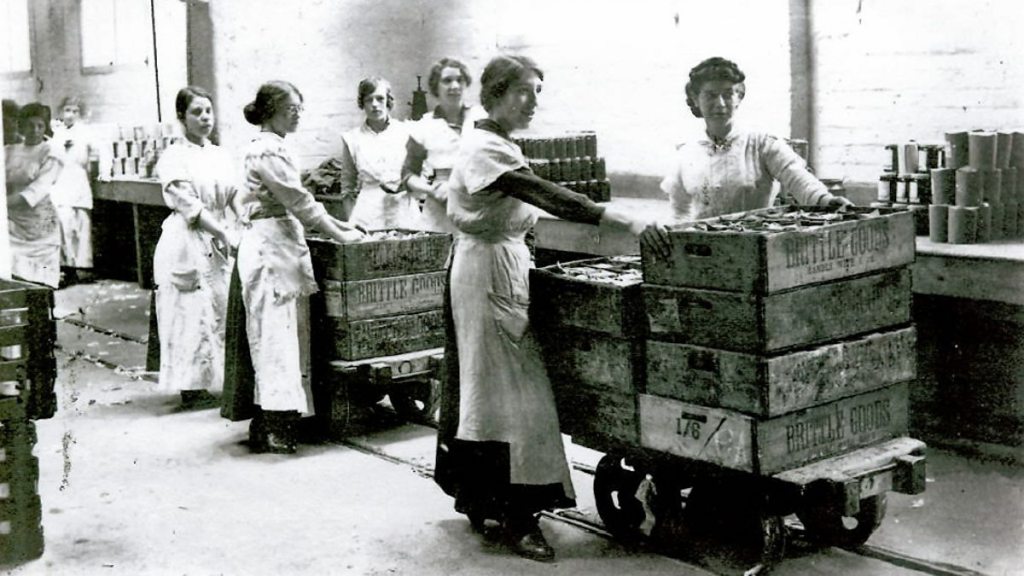
By the time of the First World War, Tickler’s was producing vast quantities of jam for the British Army. Soldiers on the Western Front came to know ‘Tickler’s Jam’ so well that empty tins were famously repurposed for everything from makeshift grenades to trench art.

Tommies fashion makeshift hand grenades using Tickler’s Jam Tins packed with guncotton, scrap metal and a simple fuse.

Tickler’s Jam! Tickler’s Jam!
How I love old Tickler’s Jam
Plum and apple in one pound pots
Sent from England in ten ton lots
Every night when I must sleep
I’m dreaming that I am
Forcing my way up the Dardanelles
With a pot of Tickler’s Jam.
Thomas Tickler wasn’t just a businessman; he was a civic figure — serving as Mayor of Grimsby and later as a Member of Parliament. Yet his enterprise was rooted in the Lincolnshire soil — literally, in the fruit fields and labour of nearby villages like Bradley. Families from the parish worked seasonally for the firm, linking village and town in shared prosperity.

Tickler’s contribution to the village was commemorated early in the 20th Century with a stained glass window in the Church’s north wall. Text in the window includes the Latin word lam — here, however, the ‘l’ has been delightfully fashioned into a ‘j’ to make it appear ‘jam.’
Quiet Continuity
OUR WALK THROUGH Bradley showed that little has changed. The lanes curve gently past hedgerows, the woods remain rich with folklore — locals still tell of ‘The Lady of Bradley Woods,’ a ghost said to wander in mourning. And St George’s continues to hold services, weddings, and harvest festivals, keeping the rhythm of the parish alive.

Victorian Post Box
Bradley may be small, but it carries within it the full tapestry of Lincolnshire life: ancient roots, quiet endurance, and unexpected connections to the wider world — even one that once spread its sweetness to soldiers far from home.
 RAVEN MOON
Really enjoyed reading this, as I was one of your fellow walkers/litter pickers.
Thank you
LikeLike
Thanks, Sarah. It was an enjoyable morning, wasn’t it? And sunshine, too!
LikeLike
Thanks for this lovely blog post about our village!
LikeLike