
Introduction
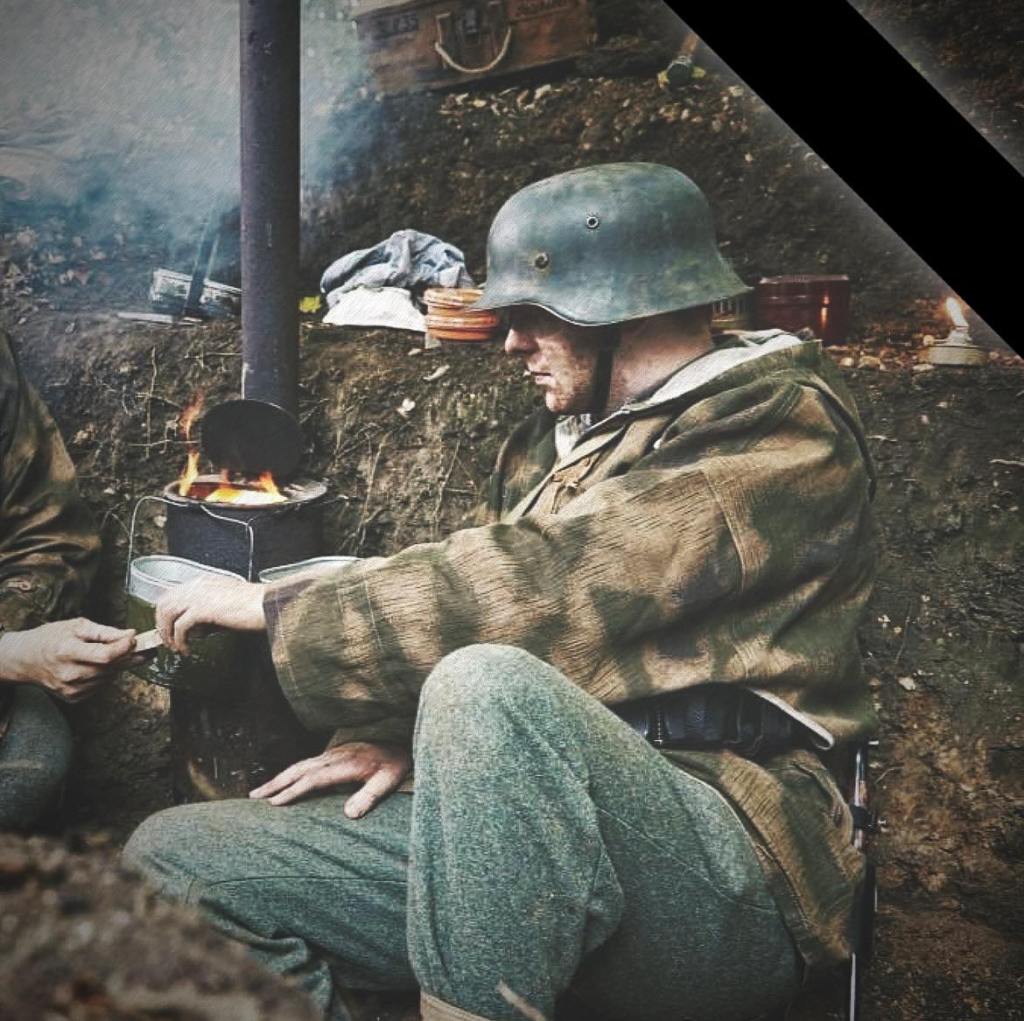
IF YOU’VE READ my posts ‘Fallen Eagle‘ and ‘Lost Souls‘ you will know that my son Josh was, for several years, a member of one of the UKs premier World War Two re-enactment groups.
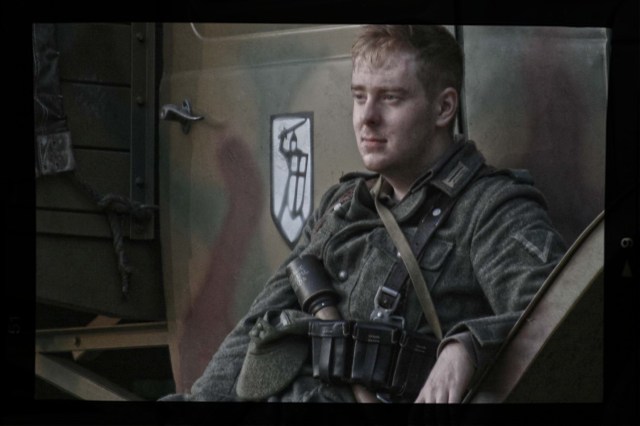
(Right) Josh portraying a Gefreiter [Lance Corporal] of the German 21st Infanterie
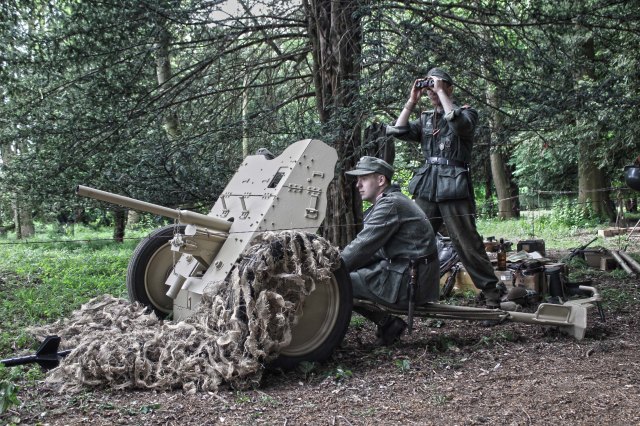
(Left) Manning the Pak 38 Anti-tank gun
Now sadly disbanded, the 21 Infanterie WW2 Re-enactment and Living History Society faithfully portrayed one of Germany’s infantry divisions which had fought a desperate rear-guard action on the Eastern Front in the latter phase of the war.
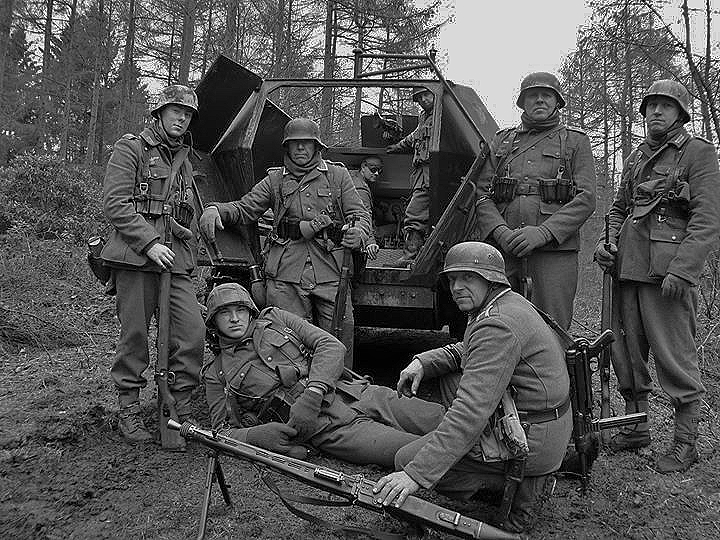
The group’s strict attention to detail, historical accuracy and authoritative portrayals gained them the respect of film and media companies, and also English Heritage. In addition to delivering battle re-enactment and living history displays, the group also provided an educational presence for the public at various events throughout the country.
Among those questions often put to the group by members of the public was this one:
‘Why did you choose a German army unit, rather than an allied one?’
I’m sure there was no single response to this, and the answer would vary among the individual re-enactors, but I know my son sometimes declared that he wanted to portray ‘the enemy’ in order to give visitors a balanced view.
Whilst this was certainly true, I think the uniform itself also played a large part in his choice of unit. For there can be no doubt that, among the warring nations of WW2, the German uniform had a unique and highly distinctive style. This was no accident.
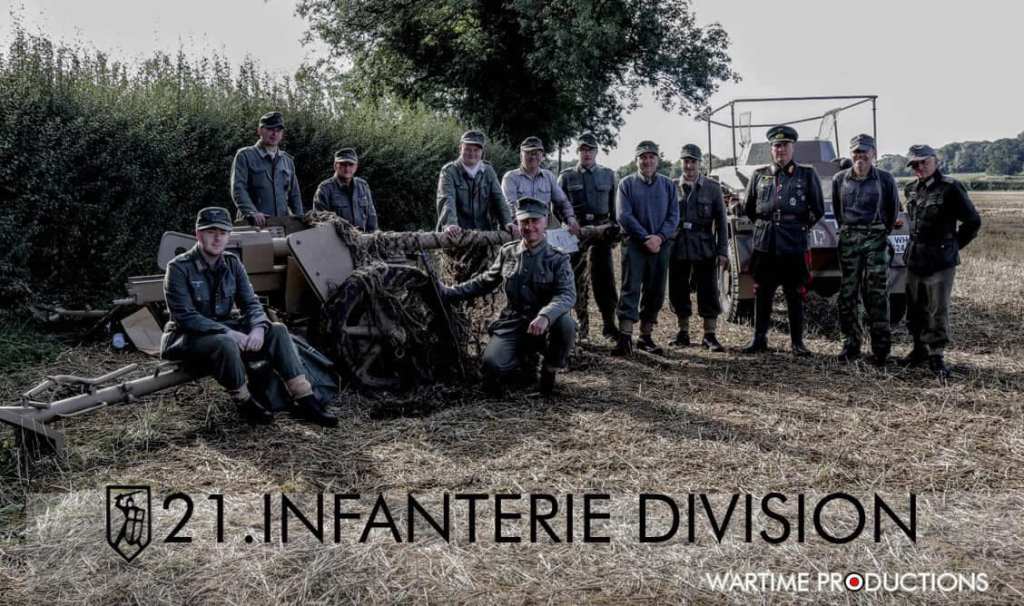
As the Nazi regime rose to power during the 1930s, its leaders quickly understood the value of presentation. As a result, its soldiers and paramilitary officers were not just armed; they were dressed to impress.
Central to this policy was a German clothing manufacturer whose name is still very much alive today:
Hugo Boss.
Dressing an Army
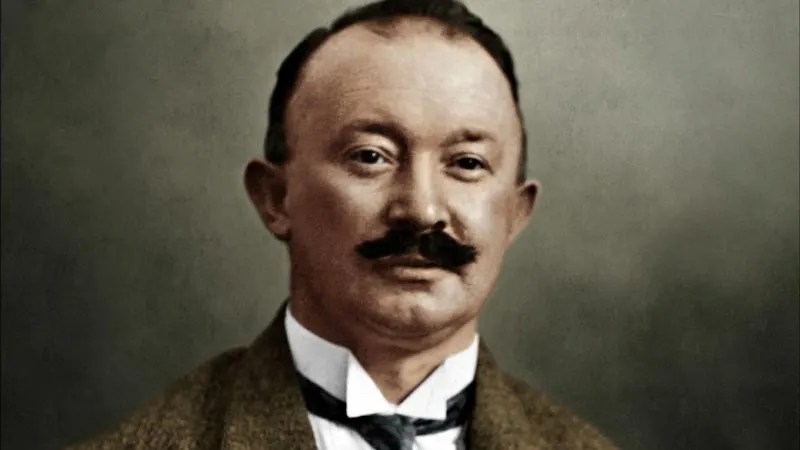
FOUNDED IN 1924, the Hugo Boss company was a modest tailoring business in Metzingen, Germany. At that time it was a small operation with only 30 employees.
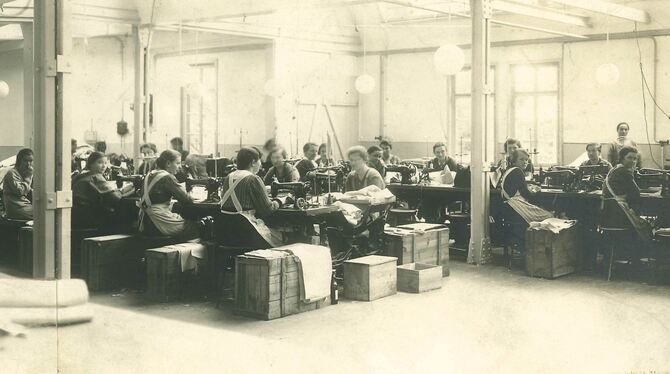
When the company began to feel the impact of the world economic crisis in 1931, Boss took up an offer to make uniforms for the Nazi party. And in the same year he became a card-carrying member of the National Socialists.
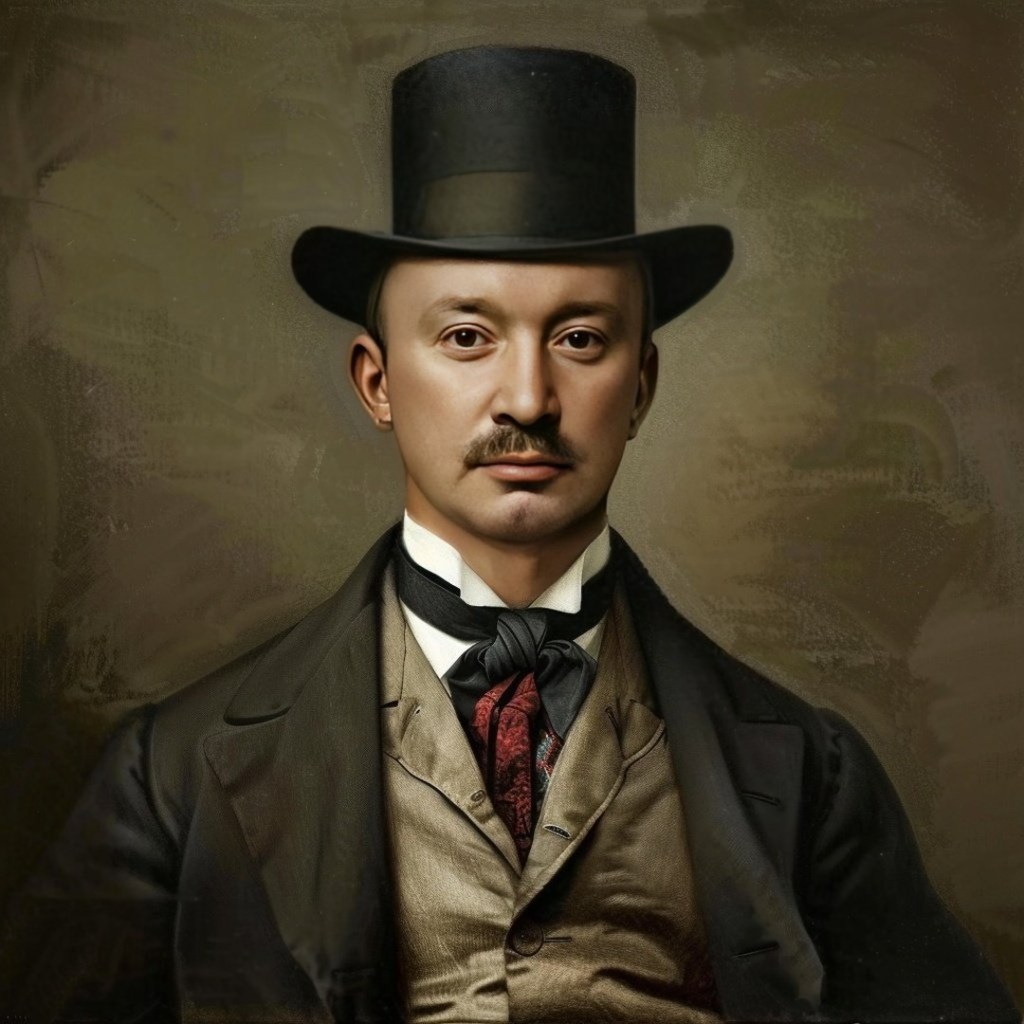
(Left) Hugo Ferdinand Boss – 1885 to 1948
Initially, Boss secured lucrative contracts to design and supply uniforms for the SS (Schutzstaffel), SA (Sturmabteilung) and the Hitler Youth movement. In 1938, however, military conscription was reintroduced in Germany and Boss refocussed his production on making uniforms for the Wehrmacht and Waffen SS.
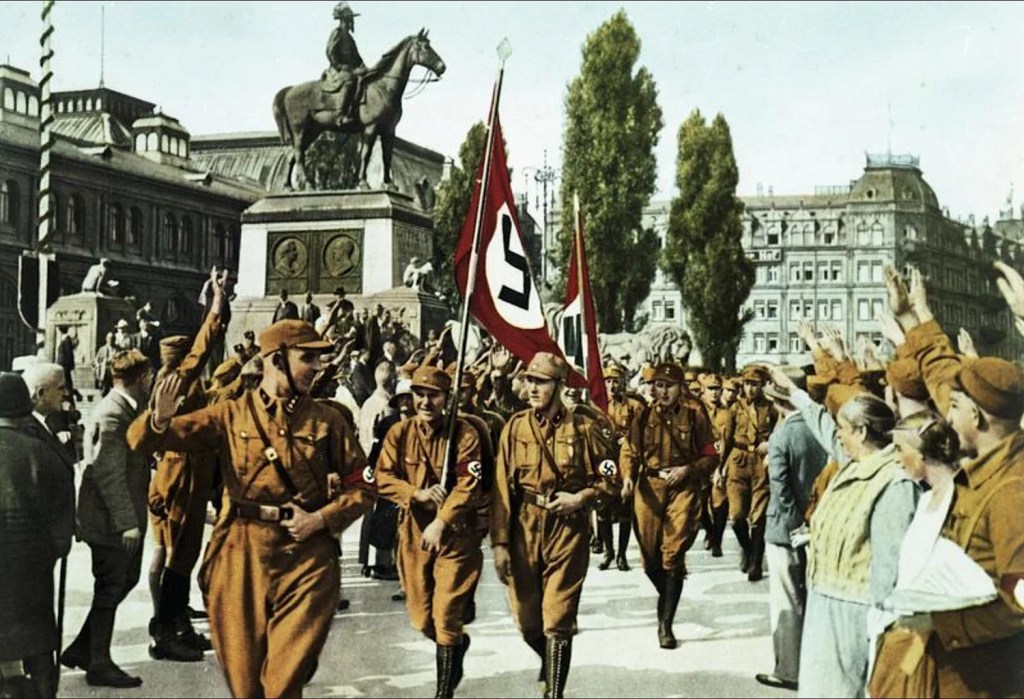
The designs were not solely the work of Boss—he worked alongside other stylists and military officials—but the sharp, tailored lines that became synonymous with the Nazi look came from his workshop.
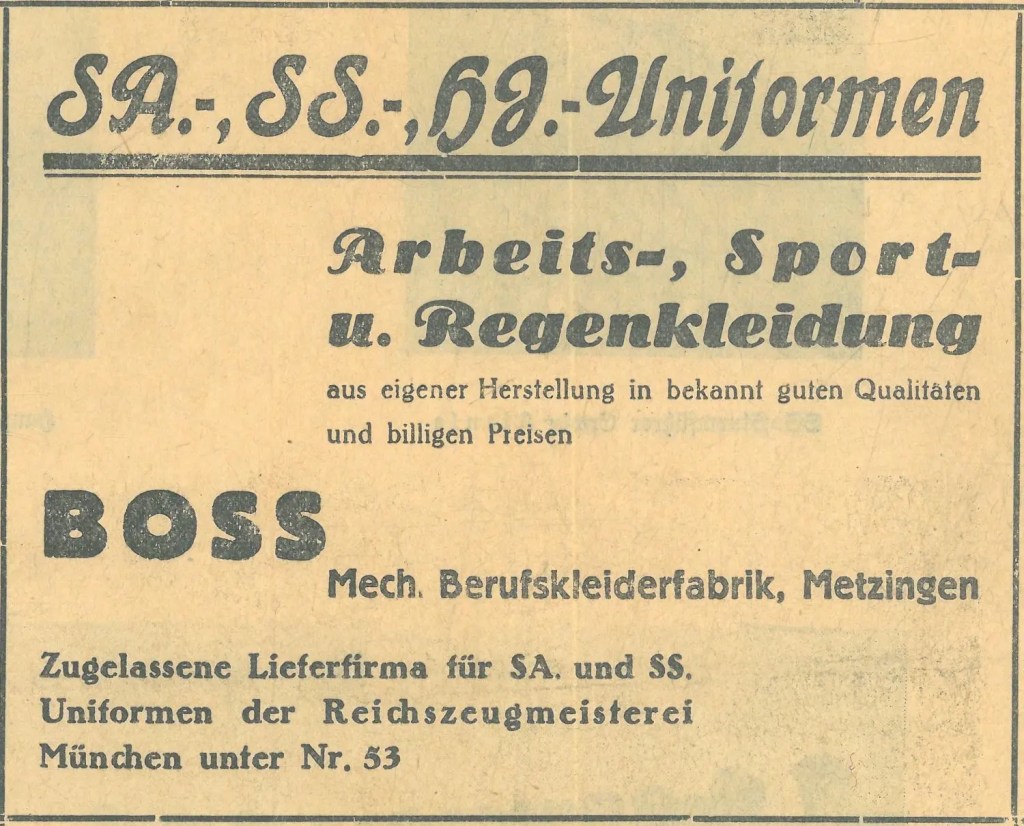
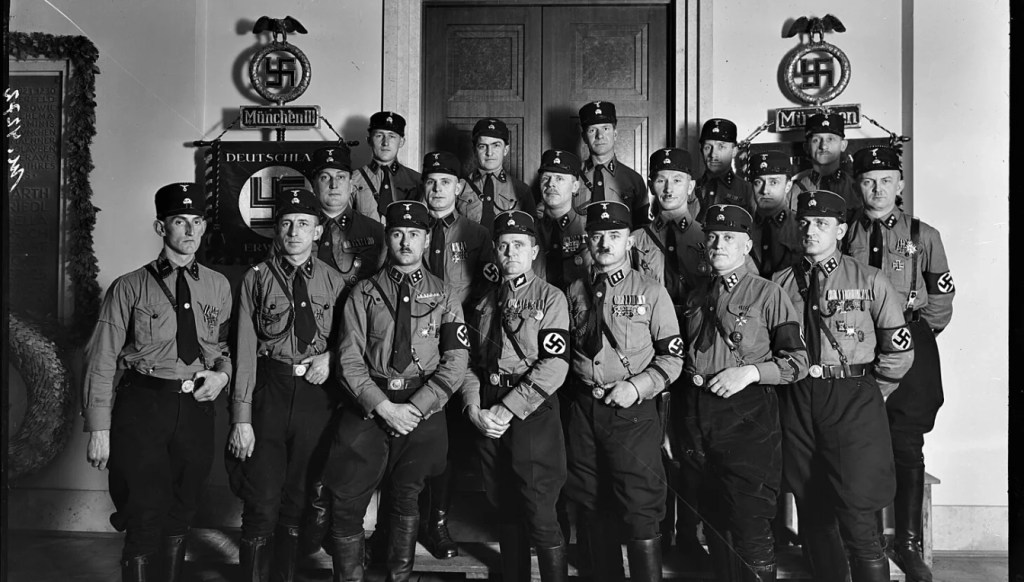
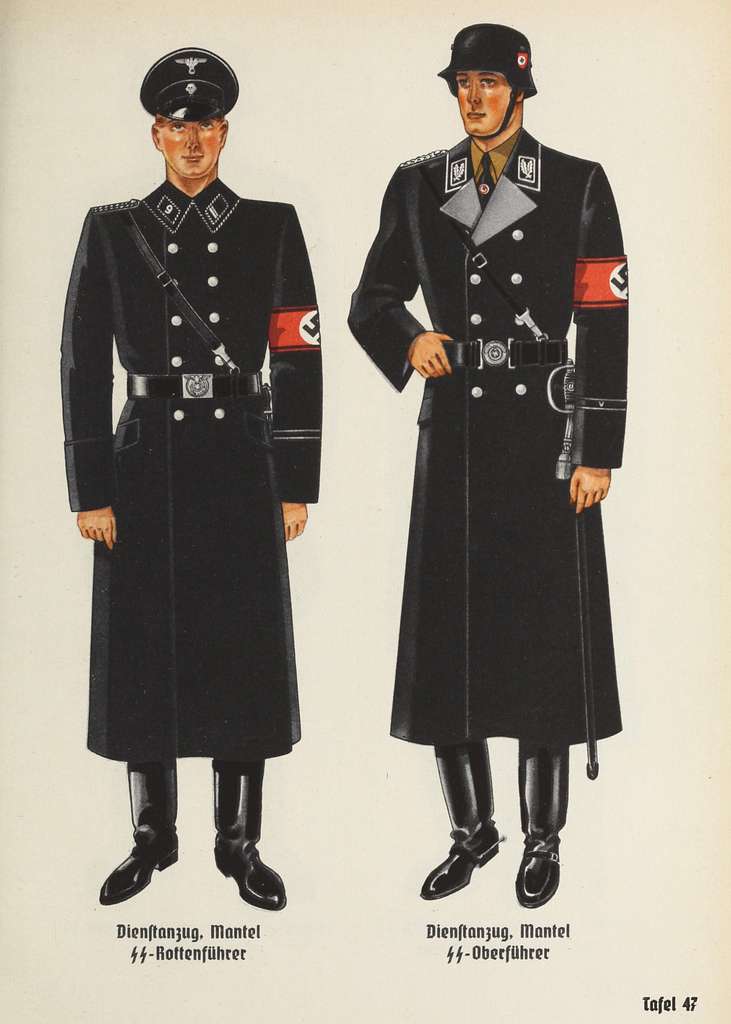
These uniforms weren’t merely functional. They were carefully crafted to project intimidation, order, and absolute authority. The black SS uniform, in particular, stood out with its striking silhouette, polished boots, and menacing death’s head insignia. They were, in essence, costumes of power.
Flamboyance vs Practicality
WHILE THE UNIFORMS projected strength and unity among the ranks, they were notoriously impractical on the battlefield.
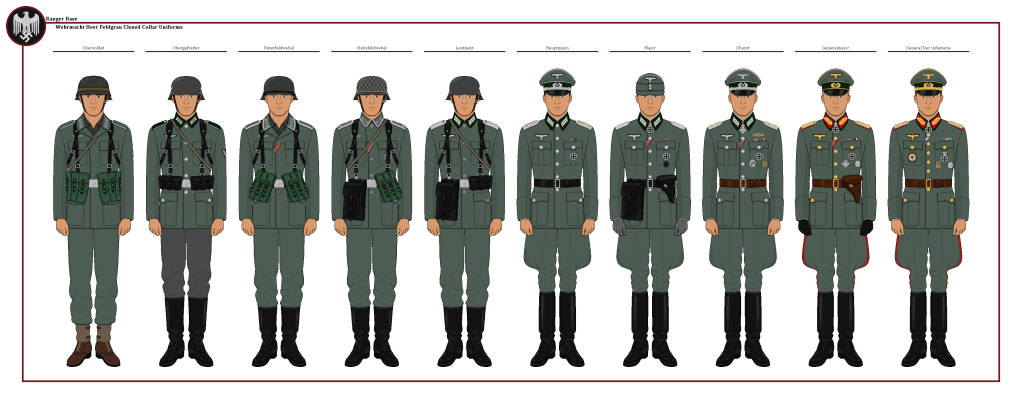
The SS and Wehrmacht uniforms were cut more like fitted suits than rugged combat gear. They may have looked sharp, but the tight tailoring restricted movement, making them less comfortable during long marches or in close combat.
Furthermore, heavy fabrics, high collars, and those restrictive cuts meant that German soldiers often struggled in varied climates—from the freezing Russian winters to the scorching North African campaigns.
Unlike their Allied counterparts, who wore simpler, more utilitarian gear, German troops frequently suffered because their uniforms placed appearance above comfort.
Not only did German uniforms often require high-quality wool, they necessitated complex tailoring, and fine detailing (piped collars, insignia, etc.), which slowed mass production. As the war dragged on, this became unsustainable, leading to shortages and the eventual shift to cheaper, simpler designs.
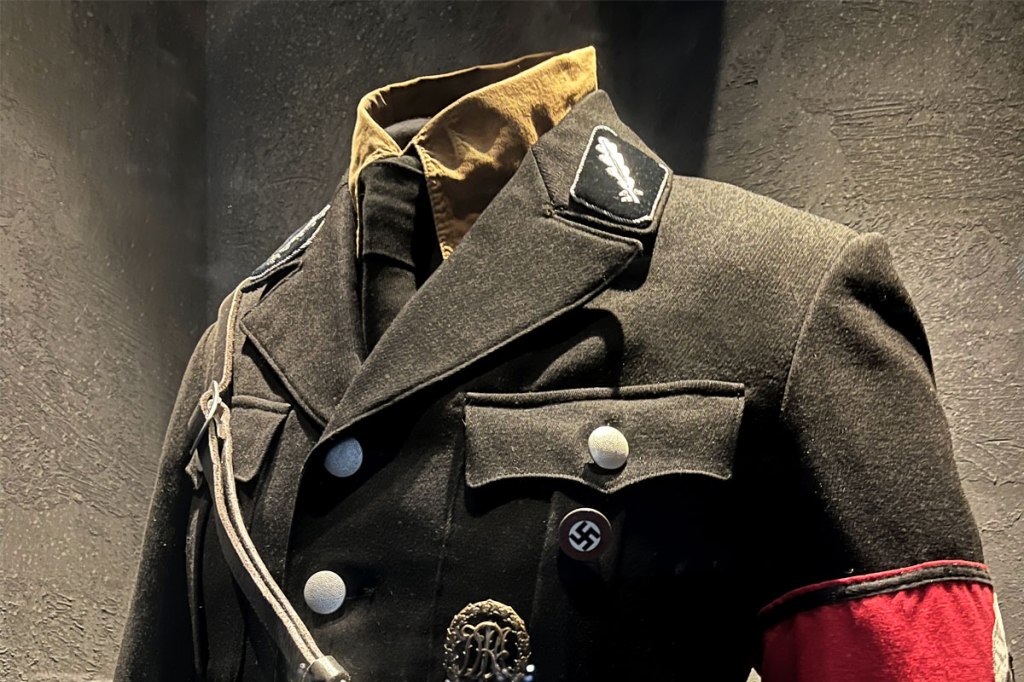
In short: the uniforms had been designed with visual power and ideology in mind, rather than functionality. Whilst they may have projected authority and subjugation, such unsuitable clothing often made life harder for soldiers having to endure mud, snow, and the chaos of war.
For the Nazis, however, that was almost the point—at least during the pre-war and early war period. Spectacle mattered more than the soldier’s discomfort. The uniform was no less than a psychological weapon, designed to instil both pride within the ranks and fear in their enemies.
The Fallout for Hugo Boss
WHEN THE WAR ended in 1945, Hugo Boss faced the consequences of his collaboration. He was classified as an “activist and supporter” of National Socialism in denazification proceedings. He was fined and temporarily banned from running his business due to his membership in the Nazi Party and his company’s use of forced labour during the war.
Boss died of a tooth abscess in August, 1948, and for a time it seemed that the Boss name might never recover.
But the brand reinvented itself. After Hugo Boss’s death, the business was inherited by his son-in-law, Eugen Holy. From the 1950s, under Holy’s leadership, the company shifted away from military and paramilitary uniforms and into men’s fashion.
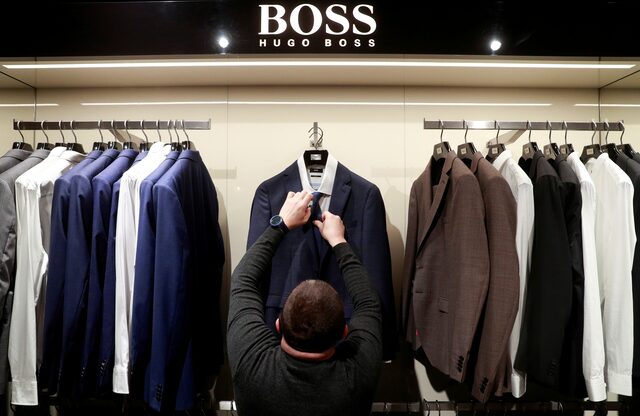
By the late 20th century, the company had become synonymous with sleek, modern suits—a far cry from the authoritarian tailoring of its past. Today, Hugo Boss is a global luxury brand, its dark wartime history acknowledged but often obscured by its contemporary image.
Power Dressing, Then and Now
THE STORY OF Hugo Boss and the Nazi uniform is a reminder of how clothing can be wielded as a tool of influence. What we wear can project authority, inspire loyalty, and intimidate opponents—but those same garments can also carry troubling legacies.
The sharp, sinister lines of the SS uniform demonstrate the dangerous intersection of style and ideology, where aesthetics served oppression.
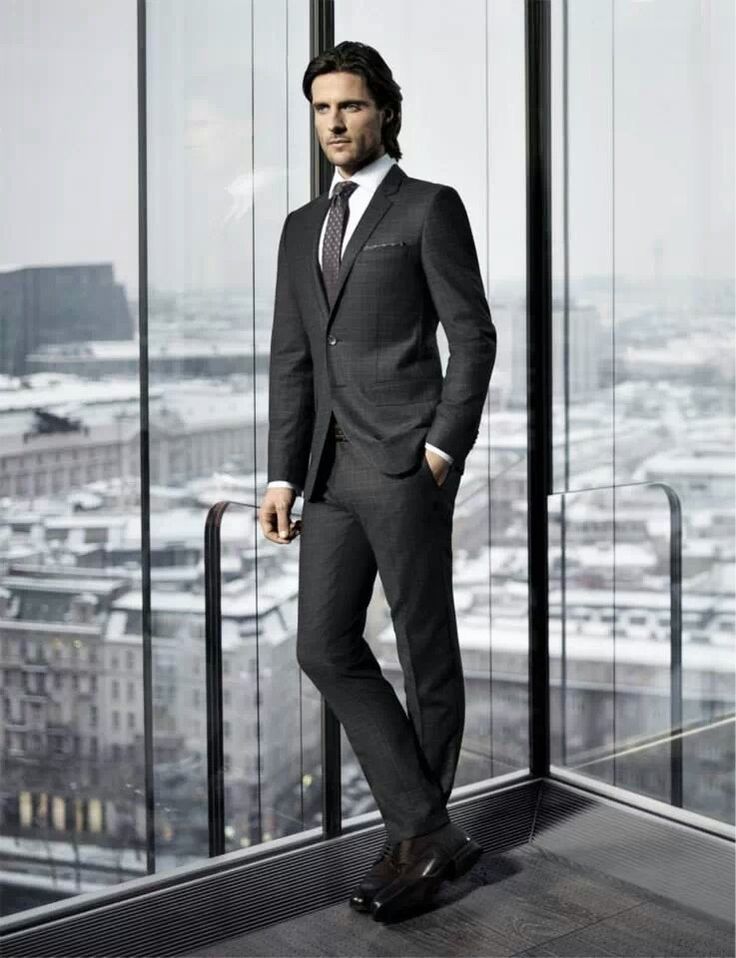
Meanwhile, the modern Hugo Boss suit, worn in boardrooms and at red-carpet events, shows how a brand can reforge itself, leaving behind—though never entirely erasing—the shadows of its past.
In the end, ‘power dressing’ is never just about fashion. It’s about the statement clothes make, and the power that they project—whether real or imagined.
 RAVEN MOON