I WRITE THIS post in gratitude to everyone who has helped me through the most harrowing experience of my life—friends and family, past and present, and allies both seen and unseen.
If the story that follows ends in victory (as I’m sure it will), it will be one I owe to all who supported and encouraged me along the way.

Sometime in early 2023 I decided to remodel my existing blogsite. As well as adopting a change of appearance, I renamed it. The site – which had originally been ‘Pebble Pathway’ – became ‘Raven Moon.’ Here, I explain the significance of the Raven.
THE STORY BEGINS with a Raven. One day, the bird appeared — dark, silent, and knowing. Here was a bird no longer resident in the county of Lincolnshire, and yet, here it was, perched boldly and purposefully only a few feet from my window – as if it had been sent.
I remember feeling its presence. There was a sense of recognition. Of a message being delivered without words.
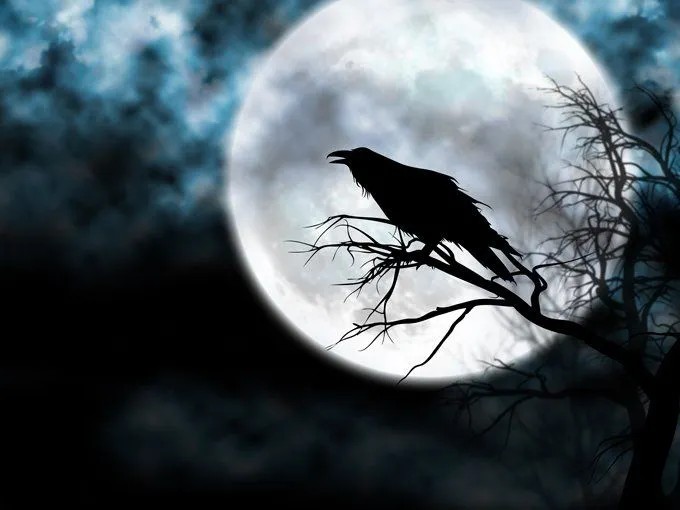
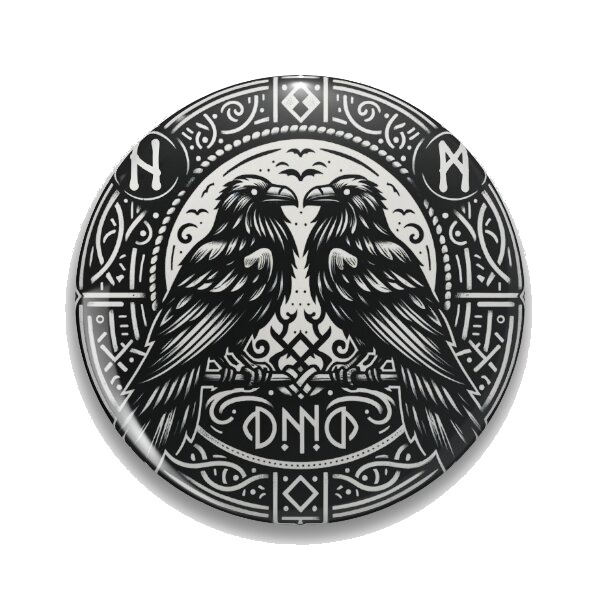
I’ve long been drawn to the deeper symbolism of things, and the raven — seen by our distant kinfolk as a harbinger of transformation, death, and rebirth — stirred something ancient in me. At the time, I didn’t understand what was coming. I just knew that something was shifting. A threshold was being approached.
That threshold would soon be marked by a cataclysmic nervous breakdown.
At the time of the raven’s appearance, I could not have foreseen the profound upheaval that lay ahead. Yet in hindsight, I now realise the bird’s visit marked a boundary between an old self and a self yet to emerge.
In my journal entry of June 1, 2023 I wrote:
‘… two evenings ago we were visited by a Raven to our garden. I was both delighted and amazed by this and felt there to be a deeper, spiritual meaning. The raven was sent to me, I’m sure.’
I reflected on this meaning at the time, and added:
‘As a spirit animal, Ravens appear to indicate a time of change and personal transformation … I am prompted to seek solitude, reflect, look inward and connect with my higher self and my guides.’
An Oracle card which presented during my reading of that night also suggested that I:
‘ … acknowledge my warrior-self … ‘Be fearless and stand strong.’
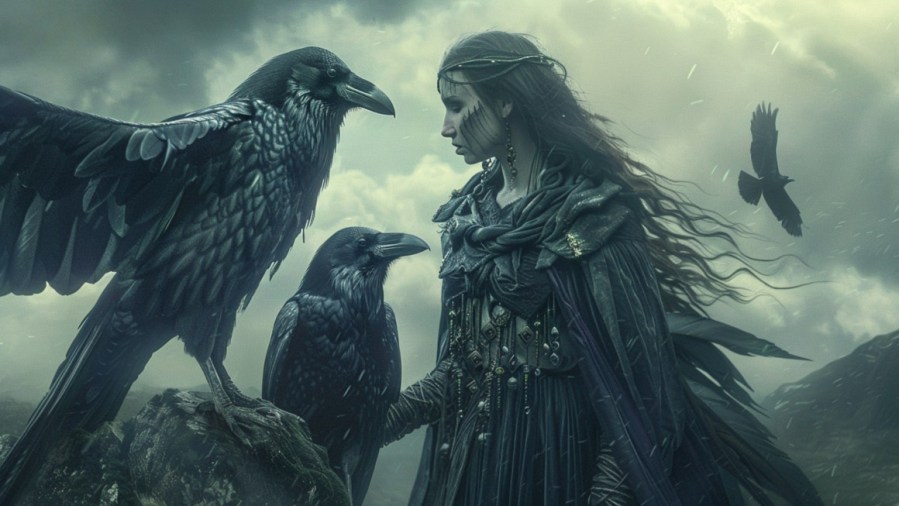
It is hardly surprising that I should consider the raven to have been a message-bearer. After all, ravens show up in such a role across many cultures.
In Norse mythology, Odin had two ravens, Huginn and Muninn, who flew across the world to bring him news.


The Celts also saw ravens as powerful omens, often linked to the goddess Morrigan, who could foretell death and destiny.
And in many Native American traditions, the raven is a shape-shifter and bearer of knowledge—delivering important messages from the spirit world.
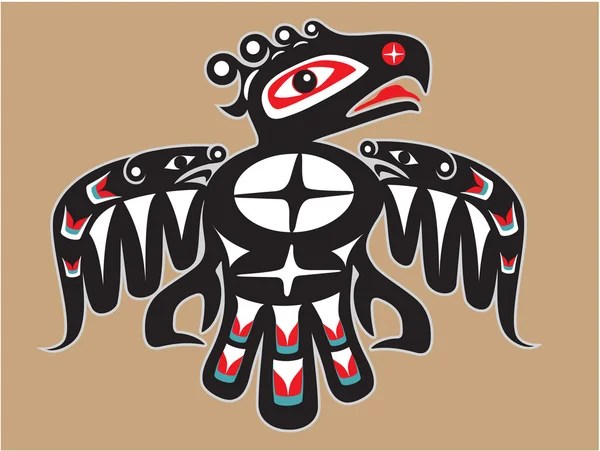

Here, then, we have a bird which carries a universal symbolism of mystery and communication.
At this point it may be useful for me to give a brief back-story – if only to place what follows in context.
LONG BEFORE THE raven, before the breakdown, I had lived for years with daily, uncontrolled epilepsy. Each day brought the risk of a seizure – often more than one. Each day, I faced uncertainty in my own body, experiencing events – often without warning – which disrupted not only my physical stability but also cognitive and emotional continuity.

Despite the unpredictability and intensity of these episodes, I consistently strove to function at the highest level I could manage, determined to maintain parity with my peers, contribute meaningfully, provide for my family and to live with integrity.
It was a struggle which demanded not only physical stamina, but also a psychological and moral resilience that not only went unseen, but I, too, was unaware of its magnitude – until it became impaired.
My efforts were driven by a deep internal commitment: to do my best and be my best, regardless of circumstances.
And irrespective of mistakes made along the way, I did do my best. I was my best, even when life made it excruciatingly difficult to simply function. And I did so, not because I had no choice, but because I had a spirit that refused to quit.
So when I say the breakdown was the hardest thing I’ve ever faced, I say that as someone who is qualified to judge. And in many ways, this long history of endurance became the foundation upon which later challenges would test and ultimately transform me.
The psychological rupture that would follow was not born solely from a life-long medical condition, but from moral confrontation.
AFTER TAKING deliberate steps to expose the operations of a global cult — a group headed by a man whose influence I believed was harmful – I became the subject of a retaliatory, high-profile legal action, a response both swift and punishing. The cult founder’s intent was unmistakable: to silence, discredit, and destroy me.
For two years I lived under siege. I was forced to defend myself, my good name and my family’s financial security whilst under immense and constant pressure, facing the threat of institutional and reputational obliteration. It was a sustained assault on every level: emotional, mental, spiritual.
The toll was cumulative. Whilst I had withstood years of sporadic, unpredictable and debilitating seizures, this latest sustained psychological assault ultimately became intolerable. My nervous system, already taxed by years of chronic disruption, could no longer sustain the burden. What ensued was a complete nervous breakdown — an experience not of weakness, but of human limitation finally breached.
It felt like drowning — the self I’d built so carefully was submerged, piece by piece, in overwhelming darkness. And within the darkest recesses of my mind—where pain became tangled with silence, my fear turned inward, sadness became absolute despair – followed by a profound collapse of my sense of self worth.

ONE OF THE most harrowing aspects of suicidal ideation is the fear of oneself.
Once my own mind had become both the source and the threat, safety was beyond reach. It’s a terrifying dissonance: my inherent instinct to survive clashed violently with the intrusive thought of ending life – an inner conflict which fuelled a deep and constant anxiety—not just fear of death, but fear of action, of losing control … and that I might become my own undoing.
This fear was isolating. Trust in myself had gone, completely. I viewed myself, as though from the outside, unsure whether I could trust the person within. I became a stranger, my own worst enemy—one capable of self-harm, of irreversible decisions. The ensuing terror paralysed me.
This did not merely define a crisis point—it left behind a psychological imprint, influencing how I viewed myself, filling my mind with shame, guilt and confusion long after the crisis had passed. And yet, within that fear there was also a flicker of hope: the fear itself was clear evidence of my will to live; part of my mind was still fighting to hold on.
And though my mind may be the battlefield on which my inner conflict would be fought, it was also a place that could heal.
WITHIN THE wreckage, something unexpected had begun to take shape, and what I didn’t know then but soon came to realise: breakdown is sometimes initiation in disguise.
Freed from the daily constraints of living in survival-mode, I was forced into direct contact with decades of long-buried pain and unprocessed trauma. I was forced to stop. To let go. To feel, acknowledge and process everything I had kept buried under the weight of responsibility, survival, and resilience.
In short, the breakdown became a crucible, burning away illusions of control and competence. What remained was raw, but ultimately, redemptive.
It was agony — but it was also a new beginning.
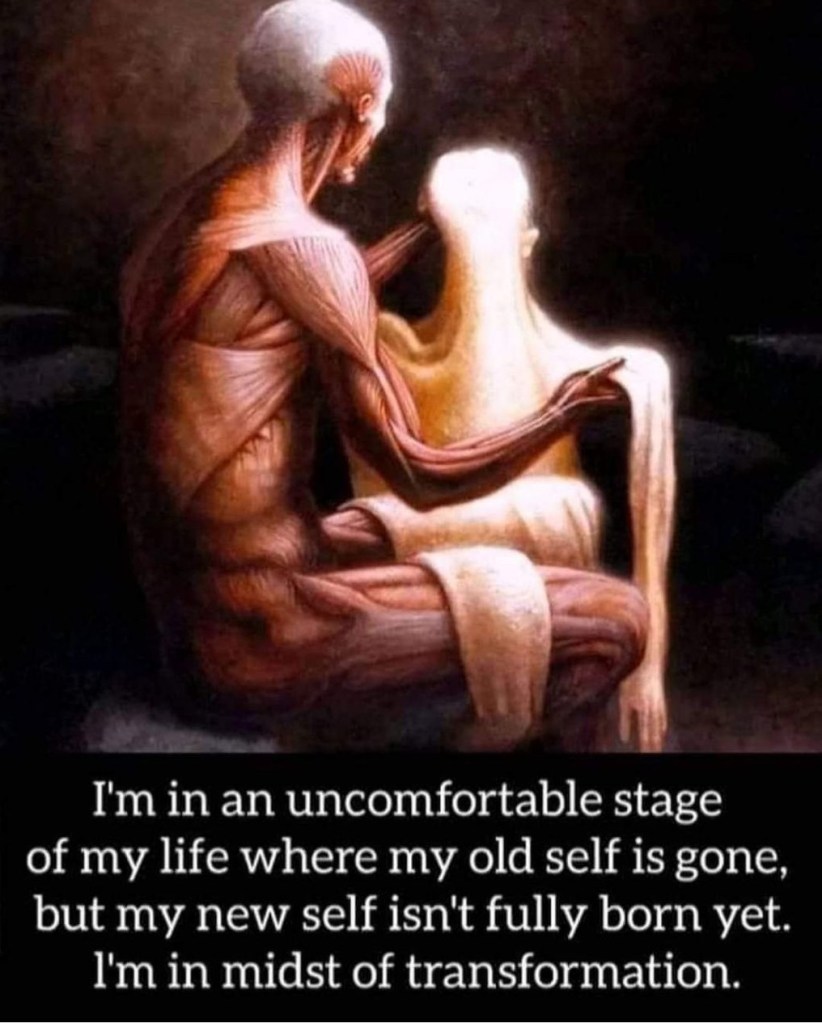
Paradoxically, the man who tried to destroy me set into motion something he couldn’t have anticipated. Yes, his attack broke me — but in breaking me, it also released me. From fear. From the persona I had built to cope with life. From the masks I wore for the benefit of others. From a lifetime of pushing through without rest.
The sustained and bitter legal assault and subsequent collapse functioned as the mechanism through which deeper healing could occur. In confronting systemic aggression, I came into closer alignment with core aspects of myself that had been inaccessible until everything else fell away.
The raven’s visit, I now see, was an omen — not of doom, but of rebirth.
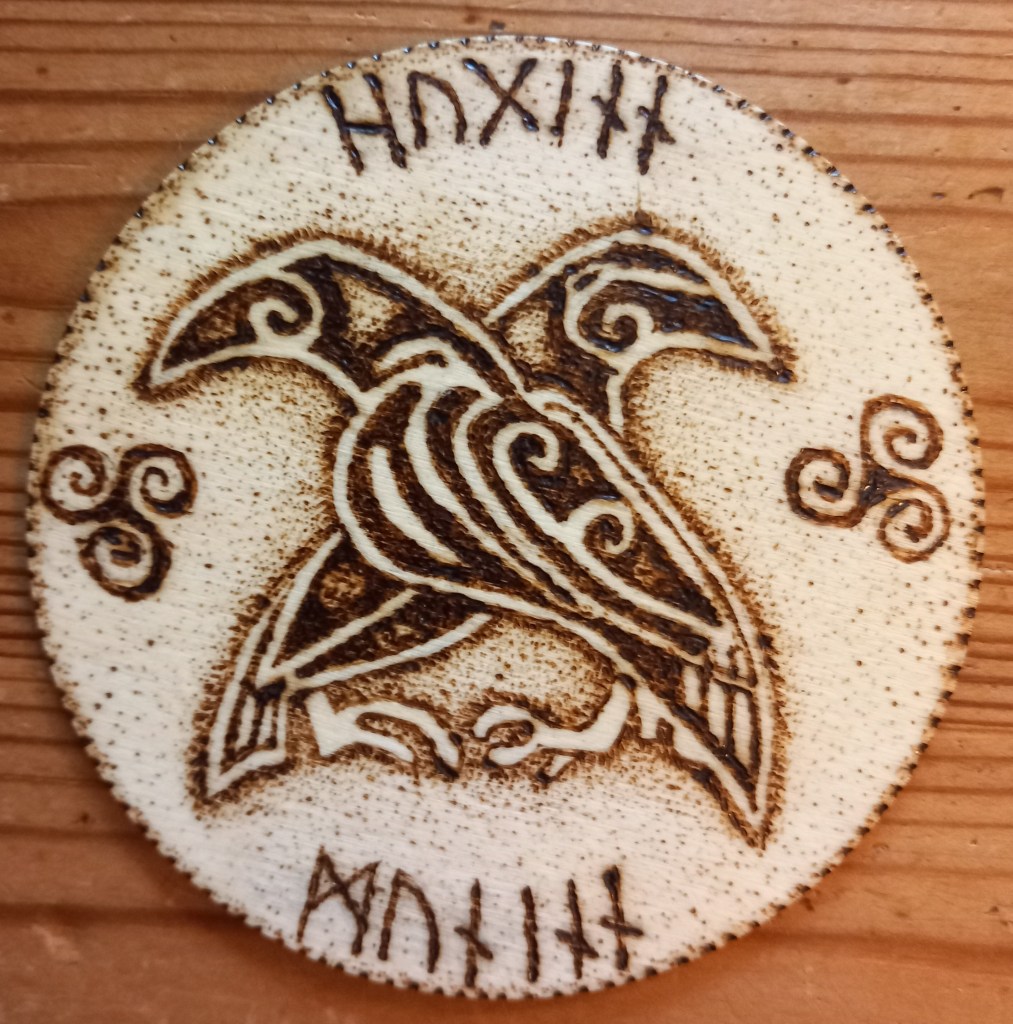
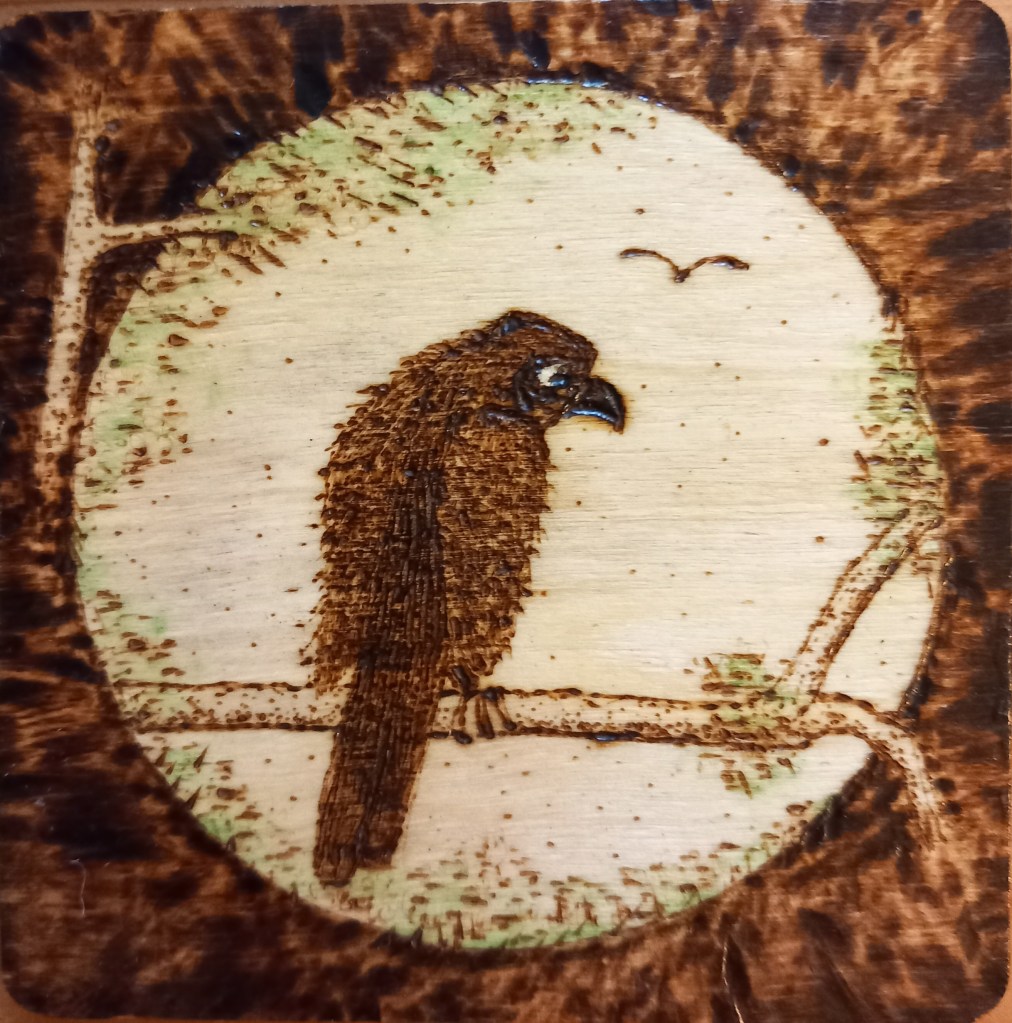
DURING MY recovery, thoughtful gifts from friends and family helped me maintain focus on the Raven’s healing and transformational energies (and prompted this site’s Raven Moon motif):
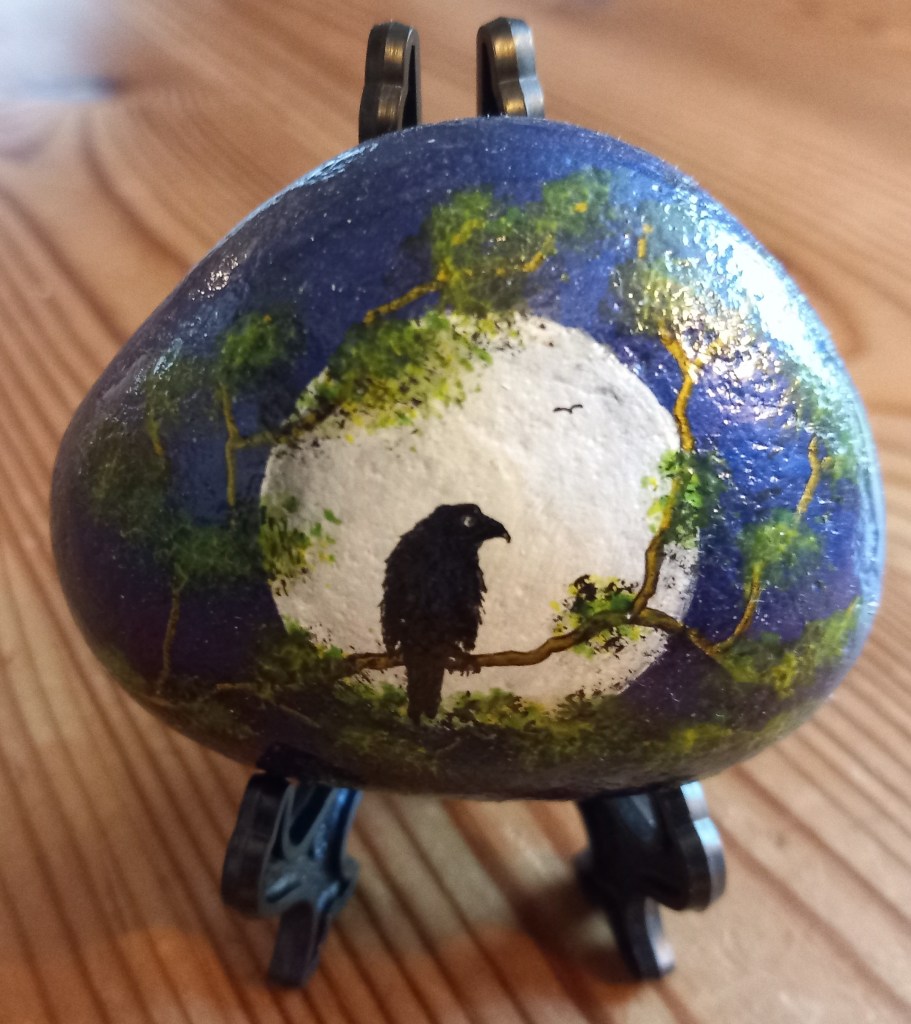

TO THE DRUIDS, Raven is ‘Bran,’ symbolic of Healing, Initiation and Protection:
‘Bran offers initiation, protection and the gift of prophecy. It marks the death of one thing, and the birth of another. The power of the Raven can also bring you the deepest form of healing, which is achieved through a process known as ‘the resolution of the opposites,’ making it possible for you to resolve conflicts that have long lain buried in your unconscious or in your past.’
Philip & Stephanie Carr-Gomm, chief and scribe of The Order of Bards, Ovates and Druids

EMERGING FROM this process has not been linear. Recovery – still very much work-in-progress – has been a slow process, one which has involved relearning, reassembling, and rediscovering. But through that slow reconstitution, a more integrated and truthful self is slowly coming into focus, I see that now — one no longer defined by suffering alone, but by the transformation that suffering precipitated.
The raven’s appearance now reads as an archetypal sign — a messenger not of destruction, but of initiation. It came as herald to a symbolic death, and to bear witness to a rebirth, one catalysed by truth-telling, suffering, and eventual release. I now understand that all of it — the epilepsy, the lawsuit, the breakdown — was part of the same journey.
This is not a story of triumph in the conventional sense (besides which construction remains ongoing). It is, however, a story which affirms that collapse can, under the right conditions, lead to renewal. And that healing — deep, systemic healing — often arrives in the guise of devastation.
To those enduring their own descent: know that the path through is rarely comfortable, but is, nevertheless, necessary. And sometimes, the raven appears not to bring ruin — but to open the door to your becoming.
We don’t get to choose how transformation comes. Sometimes it arrives gracefully, other times in a storm. Mine came as both — first a life of daily struggle faced with quiet resilience, then a legal assault, then total collapse.
And yet: I survived. I healed. I changed.
I have done so, not because I fought harder, but because I eventually surrendered — to the truth, to the pain, to the necessity of breaking open and allowing my body and mind to heal in it’s time, not in mine.
Now I walk forward not as someone ‘recovered,’ but as someone rebadged – much like this blogsite. We may not be perfect. But we’re enough.
FINALLY, a closing thought:
If you’re in the depths right now — know this: your suffering is not the end of your story. It may, however, be the beginning of a deeper one.
Sometimes the raven lands nearby not to bring doom, but to remind us that it is we who are meant to rise.
Although we might wish that destruction didn’t occur, we know that without it there can’t be construction and re-creation. The raven speaks of the dark and difficult aspects of life, which it is hard for use to understand.
Sometimes we must go through a process of disintegration and darkness, in order to emerge into the light of a new morning. We can come to a ‘resolution of the opposites,’ experiencing the reality that, in darkness there is light, and in light darkness.’
Philip & Stephanie Carr-Gomm, chief and scribe of The Order of Bards, Ovates and Druids

 RAVEN MOON