

If you were a British schoolboy between the 1960s and the early 1990s, chances are you either read The Victor or knew someone who did. I was such a schoolboy, and yes, I was an avid reader.
In its heyday, The Victor Comic was more than just a weekly bundle of newsprint. It was a badge of boyhood, a source of inspiration, and a time capsule that preserved the values of post-war Britain.
Whether you were thumbing through pages of wartime valour, cheering for the underdog in football stories, or dreaming of adventure in far-off jungles, The Victor had something for everyone.

My aim in writing this post is to show what it was that made The Victor such a beloved icon in British comic history—and why it still resonates with readers decades after its final issue hit the shelves.
What Was The Victor?
LAUNCHED ON January 25, 1961, by Dundee-based publisher D. C. Thomson, The Victor ran for an impressive 1,657 issues until November 21, 1992. It wasn’t the only boys’ comic on the scene—titles like The Eagle, Warlord, and Hotspur competed for similar attention—but The Victor carved out its own unique identity.
Each issue was 32 pages of tightly-packed storytelling: war sagas, sports tales, historical drama, and a splash of humour. One feature that set it apart from its rivals was its striking front covers.

Week after week, these covers featured dramatic true stories of British or Commonwealth servicemen awarded medals for bravery. The message was loud and clear:
‘Ordinary men can do extraordinary things.’
And that message wasn’t confined to the covers. Inside, you’d find a cast of recurring characters who epitomized courage, resilience, and grit.
They weren’t superheroes with capes—they were factory workers, soldiers, coal miners, and footballers. These were the kinds of characters you might find on your street or in your family.
A Working-Class Hero
ONE OF THE comic’s most enduring characters was Alf Tupper, the ‘Tough of the Track.’ A welder by trade, Alf trained on fish and chips, slept under railway arches, and still managed to outpace his snobbish, better-fed rivals.
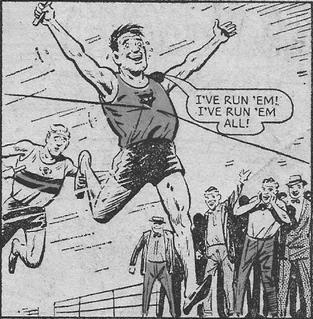
For many readers, Alf represented a defiant working-class spirit. He didn’t need fancy gear or posh support—just grit and guts.
Alf’s appeal was immense because he was relatable. In an era when British society was deeply class-conscious, Alf served as a hero who transcended those boundaries. He wasn’t just running races; he was running against privilege, proving that success was possible with hard work and determination.

That gritty underdog spirit resonated deeply with young readers—none more so than future Olympic bronze medallist Brendan Foster.

Foster was such a fan he later wrote the foreword to Victor: The Best of Alf Tupper, crediting Alf as a key inspiration in his youth.
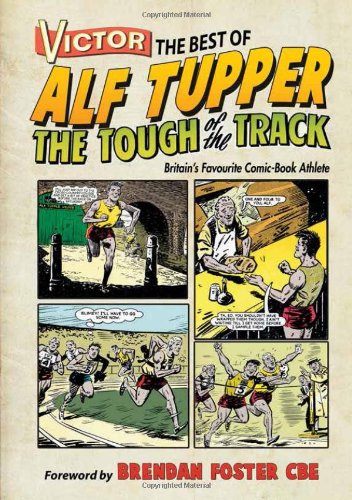
For Foster, Alf wasn’t just a comic character—he was living proof that determination, not privilege, was the real key to victory.
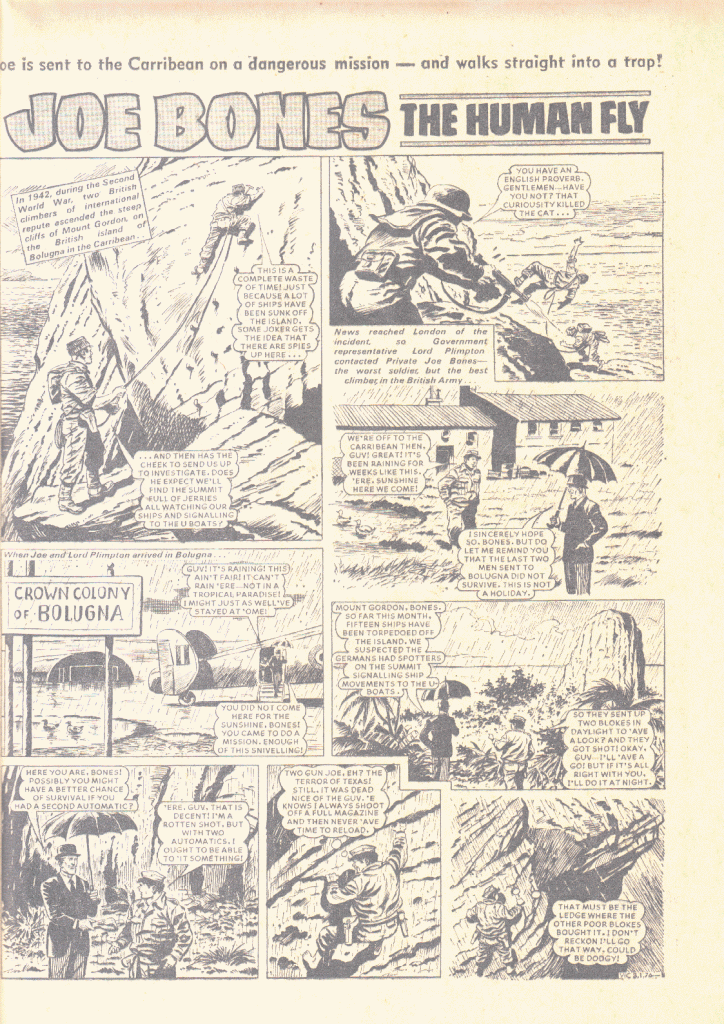
Alf Tupper wasn’t alone. Characters like Joe Bones the Human Fly and Cadman the Fighting Coward also embodied underdog grit.
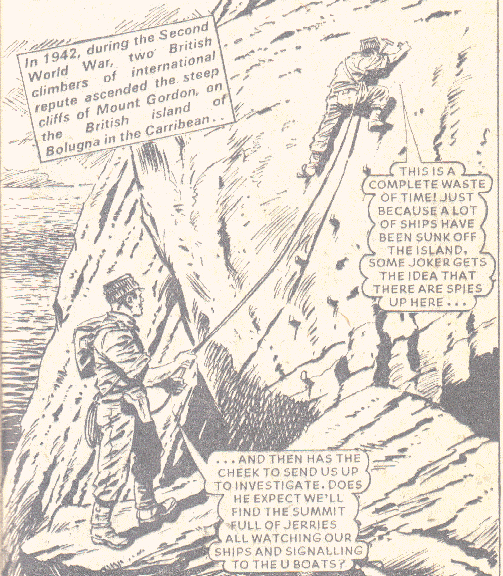
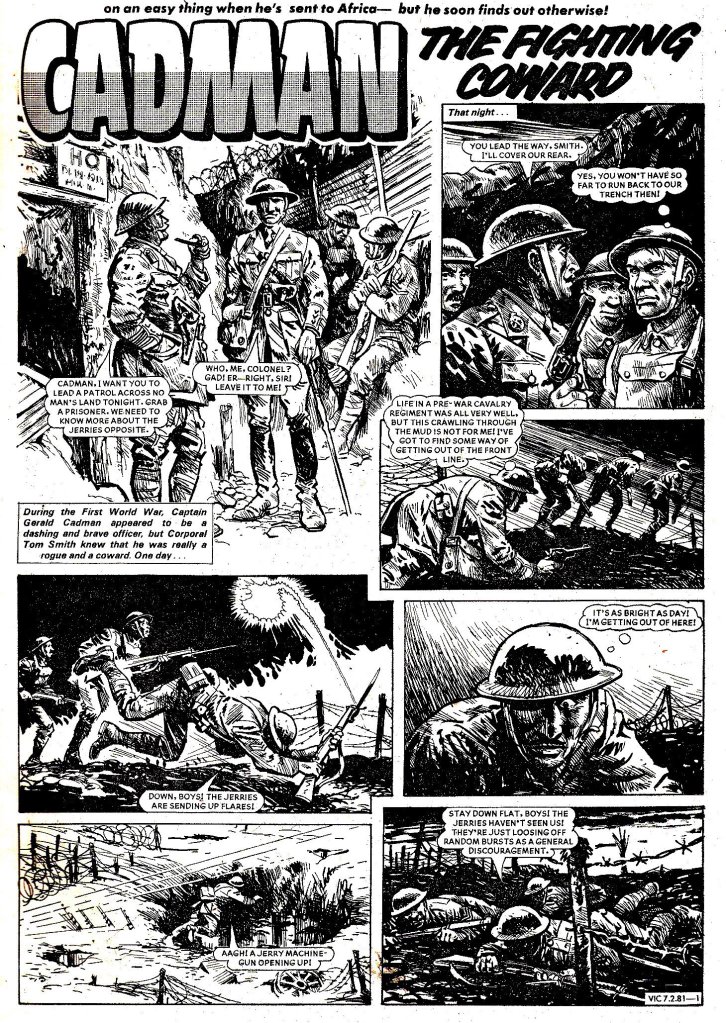
Joe Bones climbed sheer cliffs behind enemy lines during WWII, while Cadman, despite his cowardly reputation, somehow stumbled his way into acts of bravery. These weren’t just stories. They were parables for kids navigating a world where toughness wasn’t just physical—it was moral.
‘There was a certain tone to these stories—British stoicism, Empire, and that sense of adventure—that seemed otherworldly when you’re a kid in Bromley.
David Bowie

Anti-hero, Gerald Cadman (left), originally of Prince Rupert’s Horse “The Fighting 43rd”, was a cowardly and dishonest officer during the first world war.
His character was based on George Macdonald Fraser’s Flashman, a cowardly officer of the Victorian period.
Heroic Tales
THE VICTOR WAS steeped in wartime stories. From Spitfire pilots to commandos, it celebrated British military history with fervour. The timing made sense. The comic debuted just 16 years after the end of WWII—memories of the war were still vivid in many households.
But The Victor didn’t glorify war. It often portrayed its horrors, too. Its best stories didn’t focus on victory alone but on the sacrifices that made those victories possible. Soldiers lost comrades. Heroes questioned orders. There was courage, yes, but it came at a cost. It was this nuanced portrayal that helped shape a generation’s understanding of heroism.
The Victor also reinforced a kind of post-imperial British identity: proud, pragmatic, and resilient. For kids growing up in a country still healing from the war and adapting to a new world order, these stories offered moral clarity and reassurance. There was a right and a wrong, and the brave stood up for the former.
The Joy of Sport
While war stories dominated, The Victor was no slouch when it came to sports. , Unsurprisingly, football was a major theme. Characters like Gorgeous Gus (a toff who played in goal wearing a monocle) and Jimmy Grant (a more traditional footballing hero) kept fans turning pages. The stories captured the highs and lows of the game: missed penalties, locker-room rivalries, and unexpected comebacks.
But again, it wasn’t just about winning. These sports tales emphasized fairness, teamwork, and perseverance. In many ways, they were metaphors for life. Playing the game with honour mattered more than the scoreboard.
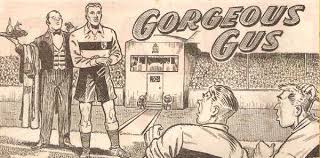
Jeepers! A footballer with his own dressing-room, creases in his shorts, a valet to attend him!
Ah, but this is no ordinary footballer, boys! This is Gorgeous Gus.
Adventure and Escapism
IN BETWEEN THE trenches and the football pitches, The Victor offered stories of pure escapism. Think jungle explorers, Roman gladiators, and even sci-fi adventurers.
Characters like Morgyn the Mighty (a super-strong castaway hero) and Toro, Space Samurai broadened the comic’s appeal.

These stories transported readers far beyond rainy schoolyards. For a few precious minutes, you could be a treasure hunter or a time traveller.
In an era before video games and smartphones, The Victor gave kids the ultimate power: the power to imagine.

‘The sense of exploration and exotic peril that you find in those old British adventure stories—that’s what I tried to capture with Indiana Jones.’
Steven Spielberg
A Moral Compass
PERHAPS THE MOST defining feature of The Victor was its moral core. Its stories were built on clear ethical foundations: bravery, loyalty, hard work, and humility. Bad guys rarely triumphed. Arrogance was punished. Cowardice could be redeemed.
This wasn’t just storytelling. It was moral education. In a sense, The Victor was a comic-book code-of-conduct, teaching boys how to be good men—or at least, good British men of the mid-20th century.
Some critics today might see its narratives as simplistic or jingoistic. But for its time, The Victor was remarkably effective at instilling values. And for readers (myself included), those values often stuck.

Enduring Nostalgia
IN ADDITION TO the weekly issues, The Victor Book for Boys annuals became a Christmas staple from 1964 to 1994. For many fans, the annuals were treasured more than the weekly comic—hardcovers you could return to again and again.
Even after its cancellation in 1992, The Victor hasn’t disappeared. Reprints, best-of compilations, and collector’s editions keep the flame alive. And with the resurgence of interest in vintage British comics, The Victor continues to win over new fans.
As a former reader, I know. It was never just about the stories—it was the eager anticipation of a new issue, sharing tales in the playground, and curling up in bed with a torch and a Victor Comic.
Why The Victor Still Matters
IN A MEDIA landscape now saturated with complex antiheroes and moral ambiguity, there’s something refreshing about The Victor’s straightforward storytelling. It didn’t need irony or darkness to make an impact. It had purpose. It believed in courage. It championed the underdog.
And perhaps most importantly, it gave generations of boys a gallery of role models. Not perfect ones, but brave, loyal, and decent ones. In that sense, The Victor wasn’t just a comic. It was a quiet guidebook on how to face the world—with your chin up, your boots on, and your heart in the right place.

 RAVEN MOON