

‘Nothing in the papers, not the most vivid & heartbreaking descriptions, have made me realise war like your letters.’
Vera Brittain, writing to Roland Leighton, her future fiancée, on 17 April, 1915

In his remarkable book ‘On Writing – A Memoir of the Craft,’ author Stephen King states:
‘If you want to be a writer, you must do two things above all others: read a lot and write a lot. There’s no way around these two things that I’m aware of, no shortcut.’
To me, this makes perfect sense. To enable me to maintain this blog with satisfactory content I therefore try to follow King’s advice. I read a lot.

To this end I always have a book in progress, sometimes two. My reading list for 2024, for example, numbered thirty-two books, most of which were new to me, but some were revisits. Of the latter, one such book from last year’s list ranks as being the most heart-wrenching of any that I’ve ever read:
‘Letters from a Lost Generation’
Edited by Alan Bishop & Mark Bostridge
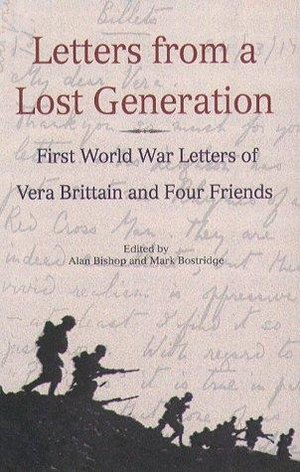
As suggested by its sub-title, ‘First World War Letters of Vera Brittain and Four Friends,’ the book is a written account of the war based on the personal experiences of the correspondents, and expressed through their touching – and at times painful – letters.
Generally speaking, any book which deals with the topic of the First World War will be laced with tragedy. After all, this was a devastating conflict in which the youth of several nations was slaughtered with unprecedented industrial efficiency. This book, with its emotionally moving letters, is perhaps more poignant than most.
Published in 1998, the work first came to my attention when it was serialised on BBC’s Radio 4. Although I was captivated by the dramas which unfolded through the personal and heart-felt letters between friends, my work commitments prevented me from hearing every episode. It was inevitable then that I would, one day, purchase the book.
Inevitable, too, as ever since the subject of The First World War was covered as part of the History curriculum at comprehensive school, it has been of interest to me. It was there that I learned of the events which led to war, such as the competition for empire, military superiority, and the mutual distrust pervasive throughout Europe at the time.
I could go on here to cover the single, outdated and insane battle plans of Russia and Germany which, upon the fateful assassination in Sarajevo, were put in motion with far-reaching and mind-boggling consequences, triggering a tumbling-domino sequence of events.
Such was the level of insanity in those decisions that led to conflict, and the genocidal strategies employed for the following four years, it is only apt that I summarise them by referring to ‘Goodbye-ee,’ the final episode in the tragicomedy, ‘Blackadder Goes Forth.’
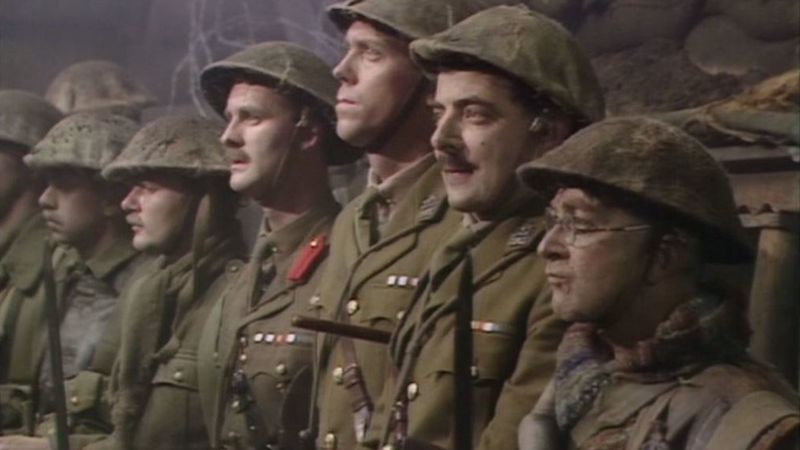
It was an episode which saw the characters finally go ‘over the top,’ prompting theatre director Mary Luckhurst, to write:
‘”Goodbyeee” went a good deal further than any other sitcom or comedy, by terminally sending pretty much the entire cast over the top in 1917, into a silence that has … endured ever since. Many millions of viewers were shocked, and almost all taken aback by the abrupt realization of tragedy amid much-loved national television and after riotous laughter to that sudden and bitter end … ‘

(Left: Tony Robinson in his role as Private Baldrick
‘… well this is sort of a war, isn’t it?’)
During the episode, Private Baldrick inquires as to the cause of the war. In reply, Captain Blackadder summarises:
‘… the real reason for the whole thing was that it was just too much effort not to have a war.’
‘… you see, Baldrick, in order to prevent a war in Europe, two super blocs developed: us, the French and the Russians on one side, and the Germans and Austro-Hungary on the other. The idea was to have two vast opposing armies, each acting as the other’s deterrent. That way there could never be a war.’
Understandably, standing in a trench dug-out on the front line, Baldrick is confused.
‘Except, well, this is a sort of war, isn’t it?
To which Blackadder replies:
‘That’s right … there was one tiny flaw in the plan … it was bollocks.’
Tragically, it was bollocks that caused the death of 908,371 of British service personnel. One of the fallen was my cousin, Robert Wand, a horseman from Hacconby, Lincolnshire, whose death inspired me to write ‘Robert Wand of Hacconby’ in December.
Four were the young men whose letters feature in the book.
What follows are some of my personal reflections from having read ‘Letters from a Lost Generation.’ The written exchanges of the five correspondents span four years, and their expansive content could well prompt lengthy and detailed discussion. For the sake of brevity, however, I touch on the experiences of just two individuals: Roland Leighton and Geoffrey Thurlow.
The book is one of tragedy and loss, both collectively and individually, and this impacted upon me. What moved me perhaps most of all was the youthfulness of those whose stories are revealed. The four young men were all born in 1895, and 1914 was their final year at public school. Each was bound to continue their education in either Oxford or Cambridge University – and each had a promising future ahead of him.
Events of August 4, 1914 changed all that.

Today we are familiar with the instant communication of texts, on-line messaging and emails. However, during the period in which Vera Brittain, her brother Edward and their three friends, Roland Leighton, Geoffrey Thurlow and Victor Richardson corresponded, letters were one of the few methods of keeping in touch.
The sincere and soulful missives of these five young people provide us with a valuable insight into the psyche of those of their socio-economic class, for among those 908,371 fatalities quoted above were Edward Brittain and his three friends, including Roland Leighton, Vera’s fiancée.

Vera herself would later immortalise these individuals in her most famous work, ‘Testament of Youth‘. The author is now also remembered for her expressed pacifism. However, this has clearly not always been the case. Indeed, some of her earlier letters reveal her to have been at that time both patriotic and pro war. This is exemplified in her letter to Roland, dated October 1, 1914. In it she wrote:
‘I don’t know whether your feelings about war are those of a militarist or not; I always call myself a non-militarist, yet the raging of those elemental forces fascinates me, horribly but powerfully, as it does you. You find beauty in it, too; certainly war seems to bring out all that is noble in human nature, but against that you can say it brings out all the barbarous, too. But whether or not it is noble or barbarous I am quite sure that had I been a boy I should have gone off to take part in it long ago; indeed I have wasted many moments regretting that I am a girl.’
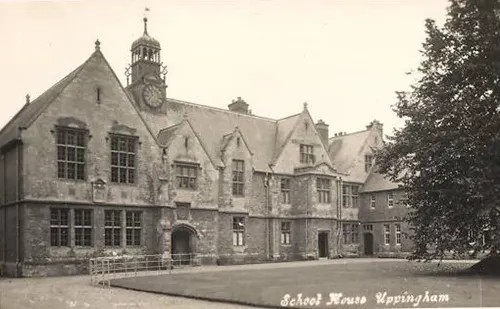
Such were Brittain’s views at that time. They are expressed in the first part of the book, in which letters are exchanged between her, her brother Edward and his close friend and fellow-student of Rutland’s exclusive Uppingham public school, Roland Leighton. Within these early letters they discuss school, literature and Vera Brittain’s struggle to get into Oxford University.
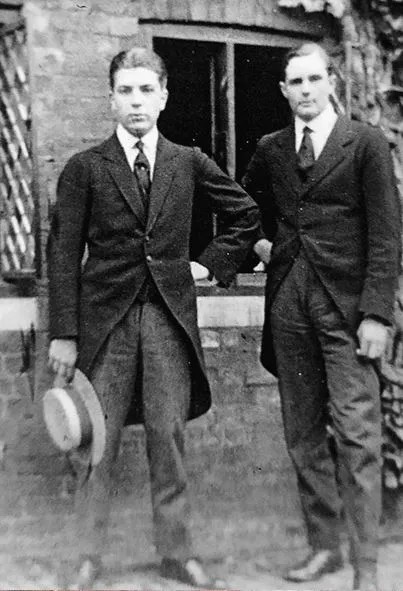
The tone of the letters changes, understandably, with the outbreak of war in August, 1914, and marks the beginning of part two of the book. Correspondence then covers Vera’s days at Somerville college, and the attempts of Edward, Roland and another Uppingham boy (for boys they were), Victor Richardson to gain commissions to enable them to get to the front line.

Reading these accounts through today’s lenses, and with full awareness of the horrors and futility of war on the Western Front, it seems both bizarre and tragic that the three young men, who only a year before had been at school, were by the autumn of 1914 expressing their frustration at being unable to join the slaughter.
As well as reflecting the repeated attempts of Edward, Roland, and Victor to gain commissions and get to the front, the letters at this point reveal how Vera gave up her studies at Somerville to become a VAD Nurse.
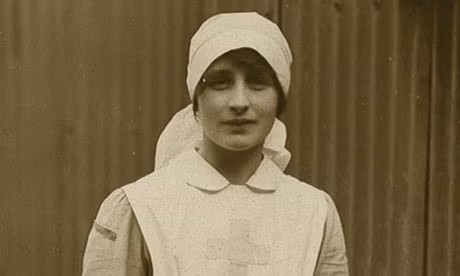
Notably, her blossoming relationship with Roland also comes alive through their letters.

Violets from Plug Street Wood -
Sweet, I send you oversea ...
(And you did not see them grow
Where his mangled body lay,
Hiding horror from the day;
Sweetest, it was better so.)
Roland Leighton – ‘Villanelle’
One long, sweet kiss pressed close upon my lips,
One moment's rest on your swift-beating heart,
And all was over, for the hour had come
For us to part.
Vera Brittain, August 1915
Theirs was a relationship which, when viewed from today’s vantage point, appears whimsical. Given that their betrothal was borne out of war, and they were unable to meet throughout their relationship for more than 17 days, it was necessary for them to resort to expressing their love freely – albeit poetically – on paper.
Lacking the experience of intimacy, on those brief occasions when they do meet, they are awkward and reserved. Their enforced and prolonged separation, and the extreme disparity of circumstances strains their romance, and the couple’s gradual estrangement and reconciliation in October and November 1915 makes sad reading.
Whilst subsequent exchanges through December reflected a period of renewed harmony, this, however, was the precursor to tragedy.
Vera was working at the London General Hospital when she managed to secure time off to coincide with Roland’s own scheduled Christmas leave. The pair excitedly arranged to meet in Brighton on Boxing Day.
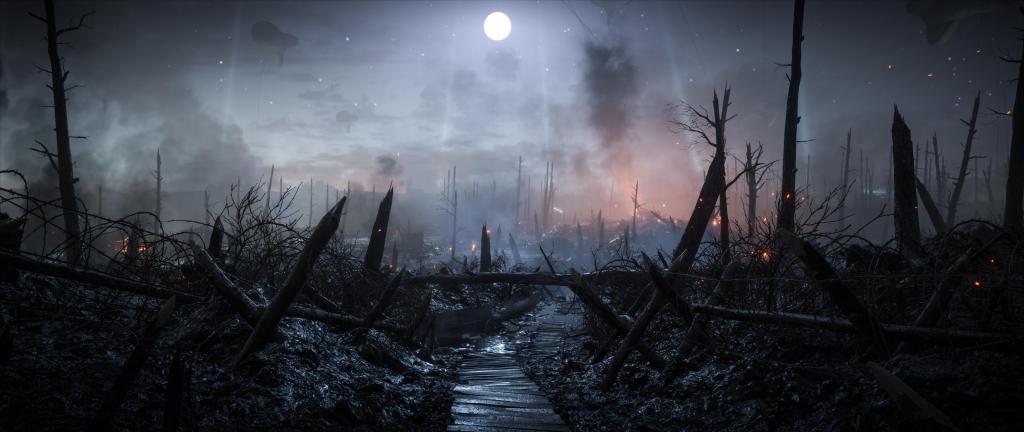
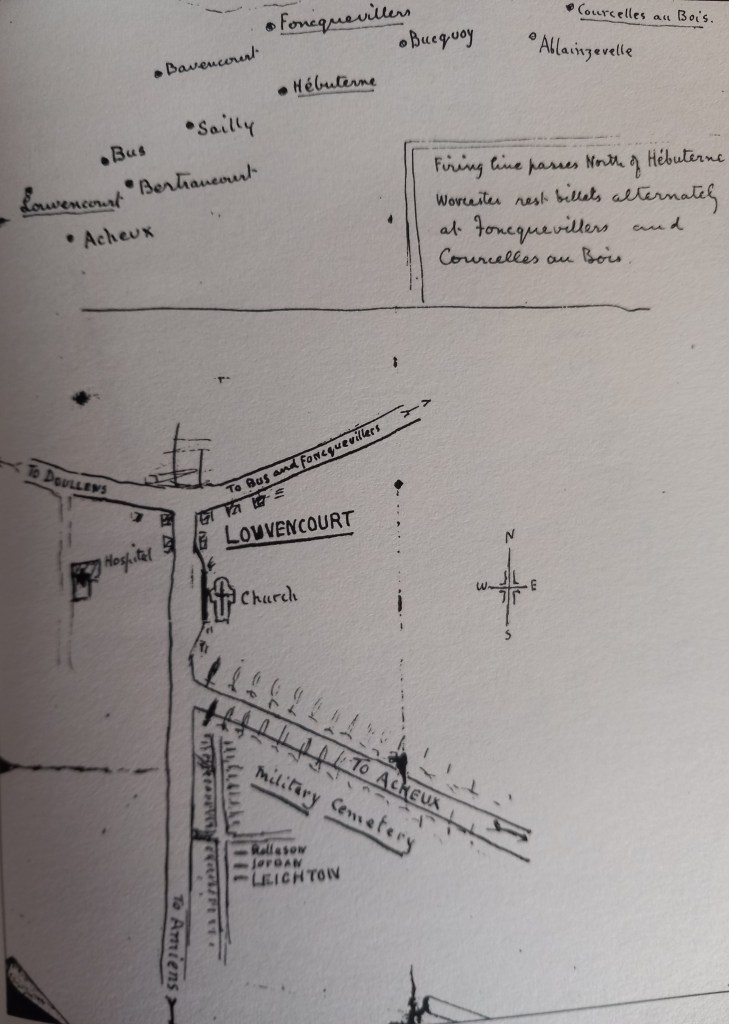
On December 22, however, Roland’s platoon – then in trenches at Hebuterne – was ordered to repair barbed wire in No-Man’s-Land. The night of the operation was brightly moon-lit, and the German lines were only 100 yards away.
Roland was shot and mortally wounded. He died on the night of December 23 at the casualty clearing station at Louvencourt.
Here, the book’s editorial states:
‘At the Grand Hotel, Brighton, on the morning of 26 December, Vera had just finished dressing when she was called to the telephone. She dashed joyously into the corridor believing that after so long she was to hear Roland’s voice. But it was his sister Clare, telephoning with the news of Roland’s death.’
After Roland died of his wounds, Vera embarks on a quest to find out more information about his death. The subsequent correspondence exchange between her, Edward and Victor Richardson also appear to elevate Roland to demi-god status, venerating his qualities and referring to ‘Him’ with a capital ‘H.’
When I read Vera’s letter to her brother, written on 14 January, 1916, I shared her sense of shock, for it was here that I not only learned that the belongings of deceased officers were packaged and sent to their grieving relatives, they were delivered in such a cruel and callous manner.
‘All Roland’s things had just been sent back from the front through Cox’s; … [Roland’s family] had just opened them and they were lying on the floor. I had no idea of the after-results an officer’s death, or what the the returned kit, of which much had been written in the papers, really meant. It was terrible.’
Vera then goes on to say how glad she was that neither Edward nor Victor were there to see it. However, rather absurdly, she then goes on to stylistically describe what she saw:
‘… you would have been overwhelmed by the horror of war without its glory. For though he had worn the things when living, the smell of those clothes was the smell of graveyards & the dead. The mud of France which covered them was not ordinary mud; it had not the usual clean pure smell of earth, but it was as though saturated with dead bodies – dead that had been dead a long, long time.’
She then describes graphically the bullet holes in his tunic, a small entry hole and a much larger exit …
‘… almost exactly where his backbone would have been, there was quite a large rent.’
As I’ve already stated, Vera Brittain is a renowned post-war pacifist. However, it is passages such as these that suggest (to me, at least) that, at that time and despite the loss of her fiancée, she harboured romantic ideals of war, finding it to be both fascinating and sublimely exquisite.
It is at this point in the correspondence chain that Geoffrey Thurlow enters, with a letter of condolence written to Vera, ‘from a farmhouse, France, 8 January [1916].’
‘Dear Miss Brittain,
Please pardon me for writing to you. I am very very sorry: may you be helped through this terrible time. There are times, I know, when letters are but empty things and I cannot write.
Yours sincerely,
Geoffrey R.Y. Thurlow’
Of the four young men featured in the book, Geoffrey is the only one who did not attend the Uppingham public school. Instead, he had been educated at Chigwell, Essex and University College, Oxford. A second lieutenant in the 10th Sherwood Foresters, he was a friend of Vera’s brother, Edward.
Following his initial letter to Vera, Geoffrey rapidly becomes a friend to her, and corresponds also with Edward and Victor.
Of all the letters in the book it is his that make the most poignant reading.
Born the youngest son of elderly parents, he became Head of School at Chigwell in his final year. Following his death in 1917, his school journal, ‘The Chigwellian,’ recorded:
‘He was a boy of the highest sense of duty and remarkable singleness of purpose, and for these qualities, as well as for his tact … and his charm of manner, he stands out prominently from among the many excellent Heads of School we have known.’
A non-militarist, Geoffrey had not rushed to enlist in the first months of the war, choosing instead to continue his education at Oxford. After only a term, however, he felt compelled to disregard his distaste for the war and, for the sake of patriotism, he volunteered.
(Right) Geoffrey, 1916

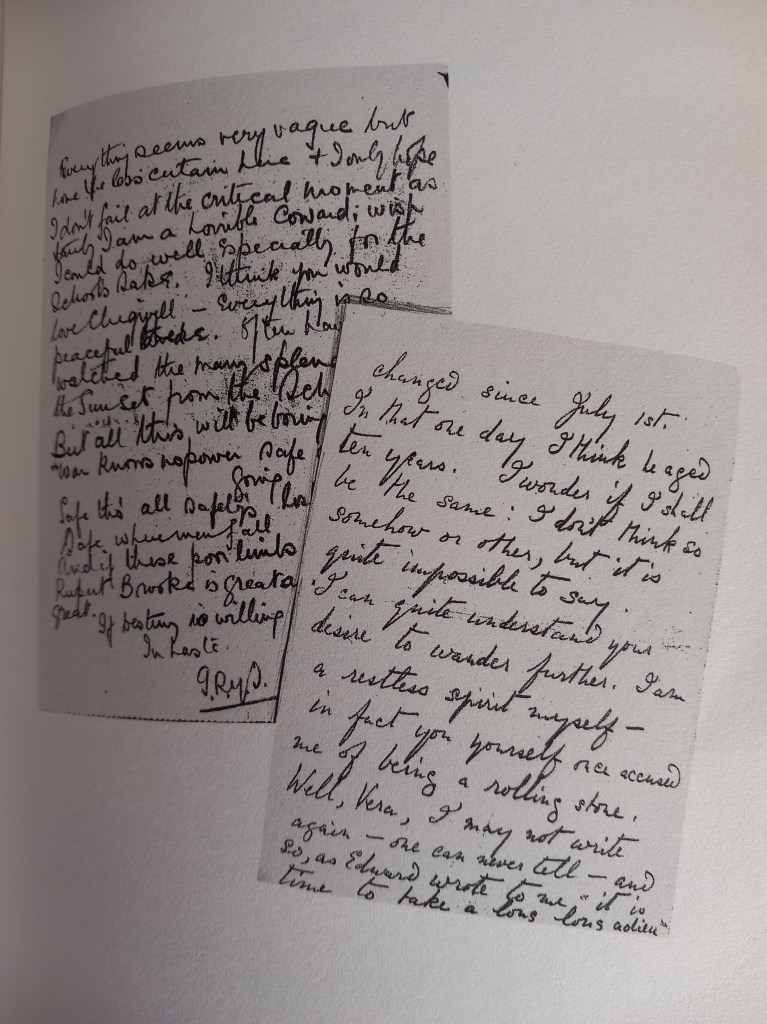
Whilst his own letters are spiced with humour, they are clearly the writings of a tortured soul, reflecting, as they do, his constant fear of becoming ‘too windy’ and failing to show courage in battle. Above all, he was desperate to do well for the good name of his school. In his final letter, sent to Vera on 20 April, 1917, he wrote:
‘I only hope I don’t fail at the critical moment as truly I am a horrible coward: wish I could do well especially for the School’s sake. I think you would love Chigwell – everything is so peaceful there.’
He also added a few lines of poetry:
War knows no power safe shall be my going
Safe tho’ all safety’s lost, safe where men fall
And if these poor limbs die, safest of all.
In closing he added:
‘Rupert Brooke is great and his faith also great.
If destiny is willing I will write later.
In haste,
G.R.Y.T.
Three days after writing his letter to Vera, Geoffrey was killed in action at Monchy-le-Preux, shot through both lungs by a German sniper, and subsequently buried in an unmarked grave.
The relationship between public school and the military, expressed by all the correspondents, appears to modern sensibilities to be an extraordinary one. This partnership is in part explained in the book’s introduction:
‘As a result of R.B. Haldane’s Army Reforms of 1907, Officers’ Training Corps (OTC) had been introduced into public schools as a gesture towards national preparedness for war. At Uppingham the introduction of the cadet corps was an idea that fell on fertile ground.’
‘No one, for instance, was allowed to take part in any inter-house athletic or sporting contest, or win a school prize without having first passed a shooting test.’‘The OTC provided the institutional mechanism for public school militarism … and contributed to the overwhelming willingness to march off in search of glory.’
This bizarre aspect of public schools moulded to become breeding grounds for unquestioning hero-wannabees, is again also exemplified in the writing of Richard Curtis and Ben Elton, in their tragicomedy ‘Blackadder Goes Forth,’ and appears, once again, in the final episode.
The opening scene begins with George (played by Hugh Laurie) reflecting on the fates of his old school chums. He tells us that Jocko, The Badger, Bumfluff, Sticky and Gubber had all been killed. So, too, had Drippy and Strangely Brown. It is then that he realises, as he himself is about to ‘go over the top’, that his own fated hour may be upon him:
‘Gosh, yes – I suppose I’m the only one of the Trinity’s Tiddlers still alive. Cor blimey – there’s a thought, and not a jolly one.’
Such perceived traditions of chivalry, selfless patriotism, honour and duty, that were wantonly promulgated by the nation’s public school system were, however, illusory. There was no glory in death.

The romantic ideals of conflict evidenced in some of Vera Brittain’s correspondence was not only shared by her fiancée, Roland, they were exceeded. In him, the jingoistic fervour prompted by his flag-waving, sabre-rattling public school appears to have taken seed and flourished.
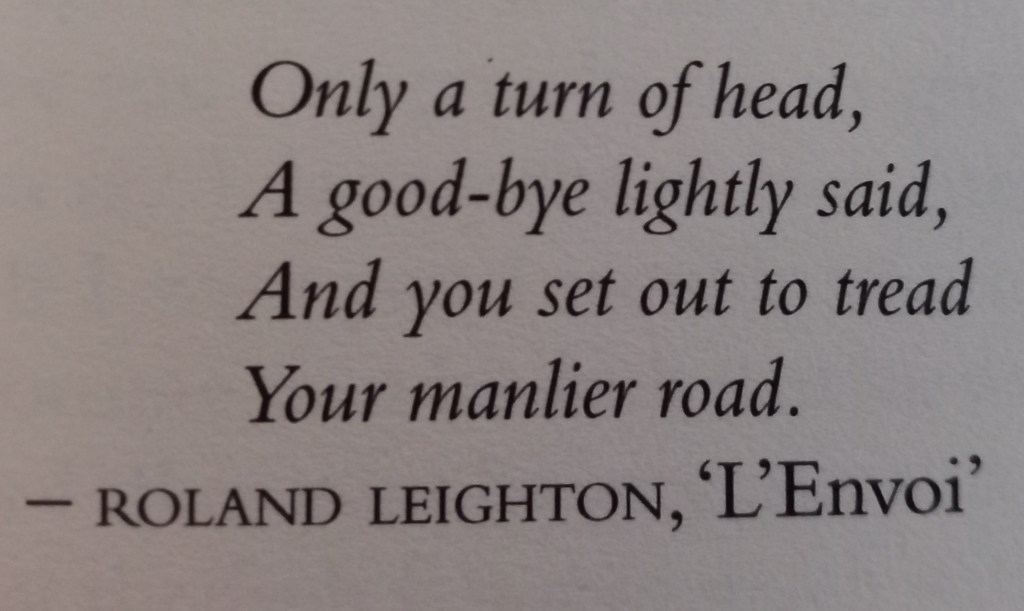
In Roland’s letter to Vera, written on 18th October, 1914 while awaiting assignment to the front, he returned to the previously-expressed possibility of him assuming a career in the army after the war:
‘I don’t think, you know, that I could after all endure to adopt the Army for a permanent career. It would – in peace time at any rate – be far too narrow. It needs the enthusiasm and inspiration of actual conflict to raise it from a mere trade to an art or an ecstasy … ‘
Uppingham’s OTC training fulfilled their purpose, and once assigned to Flanders, Roland’s letters demonstrate his suitability for his role despite the challenging environment in which he found himself. Indeed, he appears to have taken to life on the Western Front like a duck to water.
His leadership qualities had been in evidence at Uppingham, where he was an accomplished prizeman, Captain of his house and Colour Sergeant of the school’s OTC.
Roland was also a poet. Within his letters he juxtaposes the pastoral scenes of France with the ruinous and barbaric forces of war, and does so to great effect.

Not only is Roland able to recognise and express beauty to contrast with the mud, blood and shelling at the front line, his letters also display occasional contradictions in his personal views, too.
For example, in a letter to Vera dated 11th of September, 1915, he writes of his discovery of dead German soldiers in an old trench:
‘… in among this chaos of twisted iron and splintered timber and shapeless earth are the fleshless, blackened bones of simple men who poured out their red, sweet wine of youth unknowing, for nothing more tangible than Honour or their Country’s Glory or another’s Lust [for] Power.’
‘Who is there who has known & seen who can say that Victory is worth the death of even one of these?’
However, he speaks less kindly of two British soldiers when, in another letter to Vera, dated 2 December, 1915, he wrote:
‘Am just about to have a bath, & am writing this while my servant heats the water in a large biscuit tin …’
‘… I spent all morning at a Court Martial as prosecutor. Not a very nice job, as it was a capital crime and the two men concerned were only damned fools after all. But the president seemed an indulgent sort of person, and I think they will escape being shot. They really quite deserve it, though, from the point of view of cold justice …
… the bath is ready now. (Quite an event in its way; though it does sound silly to make a fuss about a bath, doesn’t it?)
With very much love, dear child.’
From 1914 to 1918, the four young men with who Vera corresponded became her life and focus as she, too, played her part in the conflict, albeit a passive one. For four painful years there was only war. And one by one, her correspondents fell. With Edward’s death in 1918, all those who could have possibly helped her to join her future to her past were gone.
After the war, in an article about her war service, Vera invoked the memory of Uppingham in the summer of 1914, as a symbol of the end of prewar innocence:
‘What does the date, August 4, 1914, immediately bring back to me? The huge figures of the war casualties and the cost of war expenditure vanish in a phantasmagoria of human scenes and sounds. I think, instead, of names, places and individuals, and hear, above all, the echo of a boy’s laughing voice on a school playing field in that golden summer.
And gradually the voice becomes one of many: the sound of the Uppingham School choir marching up the chapel for the Speech Day Service in July, 1914, and singing the commemoration hymn … There was a thrilling, a poignant quality in those boys’ voices, as though they were singing their own requiem – as indeed many of them were.’
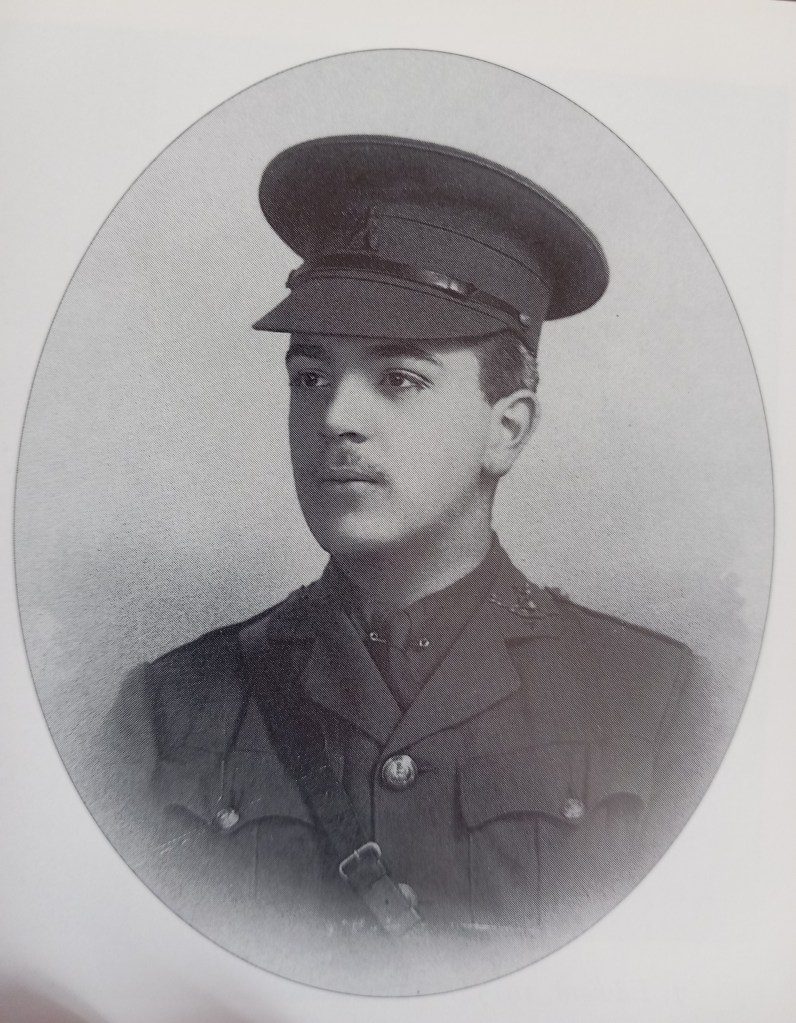
Roland Leighton (1895 – 1915) served as a second lieutenant in the 4th Norfolk and 7th Worcestershire regiments. He died of wounds in 1915.
(Right) Roland, circa 1913
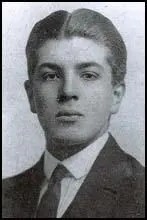
Victor Richardson (1895 – 1917) served as a second lieutenant in the 4th Royal Sussex Regiment and the 9th King’s Royal Rifle Corps. He died in London of wounds received in the battle of Arras, 1917.
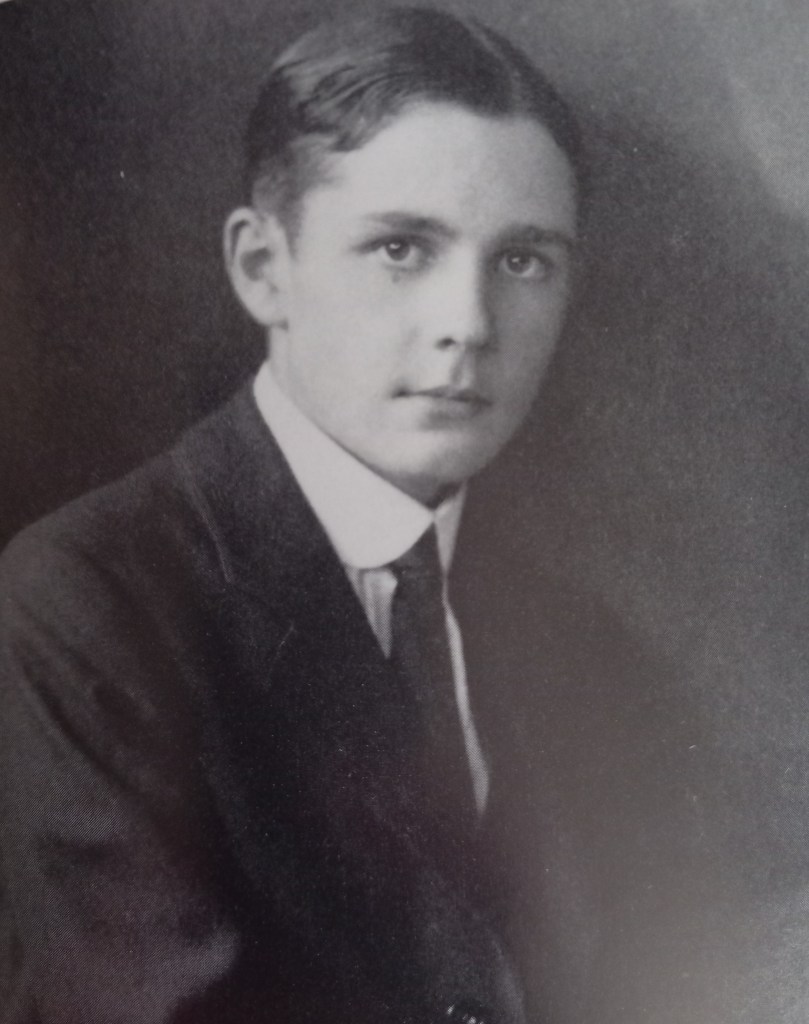
(Left) Victor Richardson as a schoolboy, circa 1912
Geoffrey Thurlow (1895 – 1917) served as a second lieutenant in the 10th Sherwood Foresters. He died of wounds at Monchy-le-Preux, 1917.
(Right) Geoffrey Thurlow as a schoolboy, circa 1912

Edward Brittain (1895 – 1918) served as a second lieutenant and captain in the 10th and 11th Sherwood Foresters. He was killed in action on the Asiago Plateau (Italy), 1918.

(Left) Vera and Edward Brittain at Melrose, Buxton, circa 1914
‘Death does not separate us from those we love. It is life that keeps us frustratingly apart.’
Sebastian Faulks – ‘Charlotte Gray’
 RAVEN MOON