
For the better part of three years I have been meeting, each month, with a group of friends in a small village in central Lincolnshire.
This midmost spot was chosen due to the group’s widespread distribution – attendees travel in from their respective homes in all three of the county’s sub-divisions, Lindsey, Kesteven and Holland; from saltmarsh to fen, from the Humber to The Wash.
Most of those who make up this group are holistic practitioners of various disciplines, and I could devote this post to summarising their amazing gifts and beautiful characters. I could also recount the set of circumstances which brought us together. But that is not the purpose of this post. That is a story for another time, perhaps.
Instead, I want to tell of a curious construction I would pass on each of my journeys to those monthly gatherings. It is a peculiar structure, and one that has fascinated me since I first saw it.
Only a few yards east of the A15 trunk road, on the section running between Lincoln and Sleaford, and near to its junction with the B1178, stands an unusual tower, sited in the grounds of a private residence.
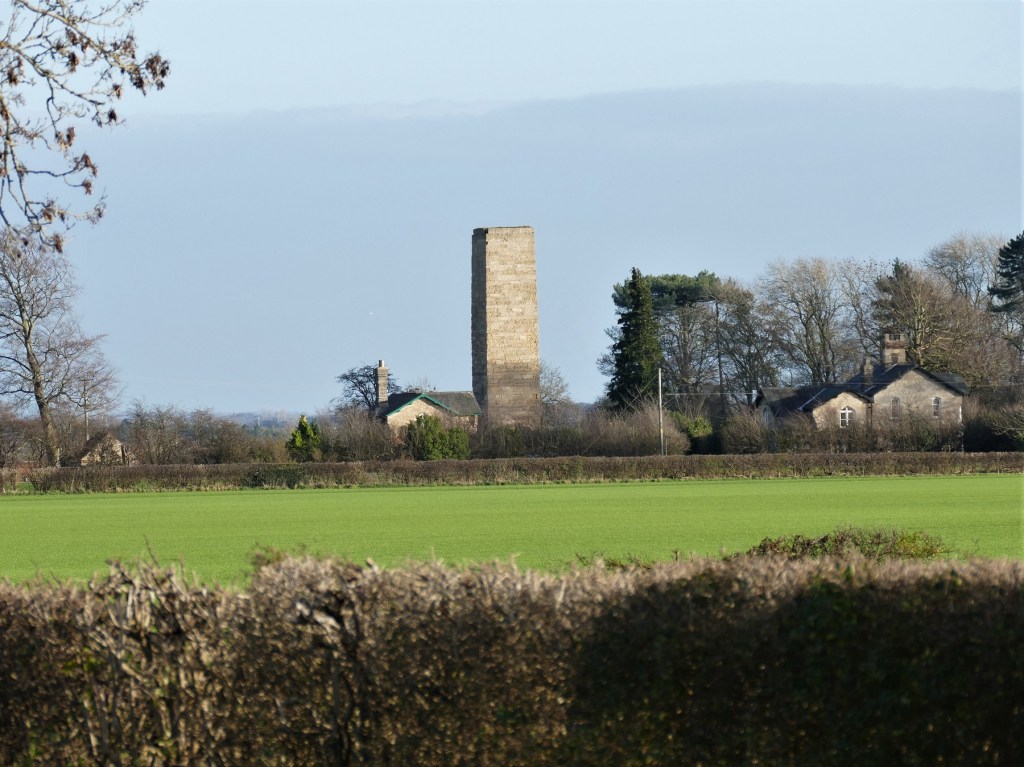
The structure itself may at first be considered unremarkable. But with an open, seemingly unfinished top, a door at its base and the appearance of being out of place in its surroundings, the structure possesses a curious mystique.
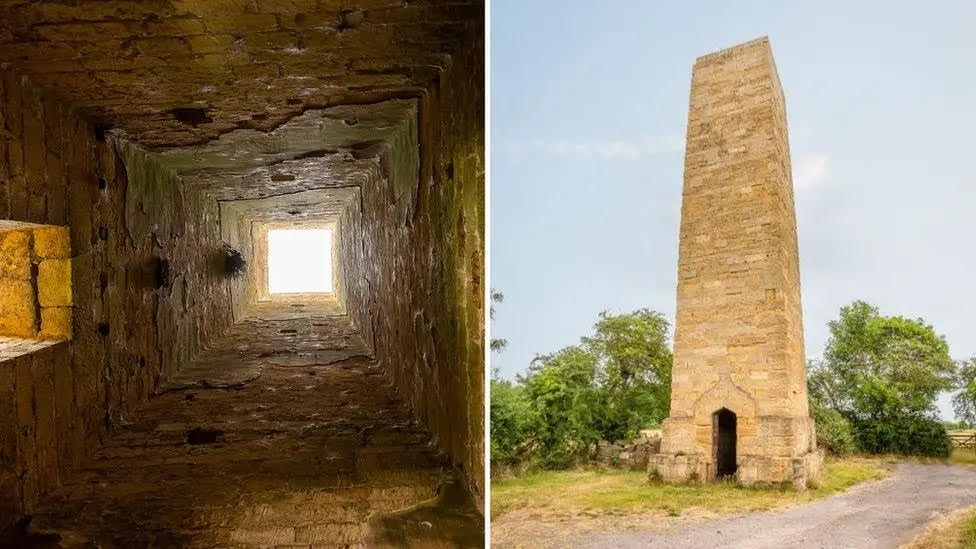
Square, stone-built and plain looking – aside from a decorative arch over its single door – the tower appears to have been built for function rather than form. Curious it may be; beautiful it is not. And each time I journeyed to meet with my friends and passed the structure, I would glance toward it, and speculate – though never the wiser for my idle suppositions.
It was while conducting research for an earlier post, ‘Thirty Million Trees’ (in which I tell of another singular pillar in the county, one sited east of Caistor), that I finally learned the secrets of my mystery tower.
Not only did I discover the structure’s original purpose, but also the identity of the one responsible for its construction. The tower – known as The Dunston Pillar – was in fact an inland lighthouse, and had been erected in 1751 as a beacon for travellers.
If the idea of a lighthouse thirty miles inland is not sufficiently strange, it is rendered more bizarre by the fact that it was the brainchild of a larger-than-life, eighteenth-century, Georgian playboy.
The man who would eventually become Sir Francis Dashwood was born, an only son, in 1708. His father, also Sir Francis, was a wealthy businessman who had made his fortune trading with the Ottoman Empire. His mother, Lady Mary Fane, had died when he was only two years old. When his father passed away fourteen years later, Francis junior inherited a substantial fortune, the family estate at West Wycombe in Buckinghamshire and his father’s Baronetcy. He was then just 16 years of age.
Like many who shared his privileged class, the young Sir Francis was schooled at Eton, before continuing his education by means of ‘the grand tour’ through the major cities of Europe.
There was little of the ‘grand,’ however, in this frivolous convention of the great and the good. The leisurely circuit of Europe’s fun spots was often little more than an extravagant jaunt. This was especially so for Dashwood. Even as a teenager, the young Sir Francis was known for his ‘base appetites,’ and whilst he may have visited the continent’s museums and galleries, it was the ale houses and bordellos that were more to his tastes.
It is believed that it was at this time, when in Italy, that young Francis was introduced to occultism, a subject which would become a fascination for him, and one which would shape his life and reputation.

Francis returned home once his wanderlust had been appeased, and there he began to restore his family estate. This included the commissioning of frescos and murals depicting the myths of Bacchus and Ariadne, which led to his membership of ‘The Society of Dilettanti.’ This connected him to serious art connoisseurs whose activities included the performance of quasi-religious rites in outrageous costumes, followed by bacchanalian carousing.
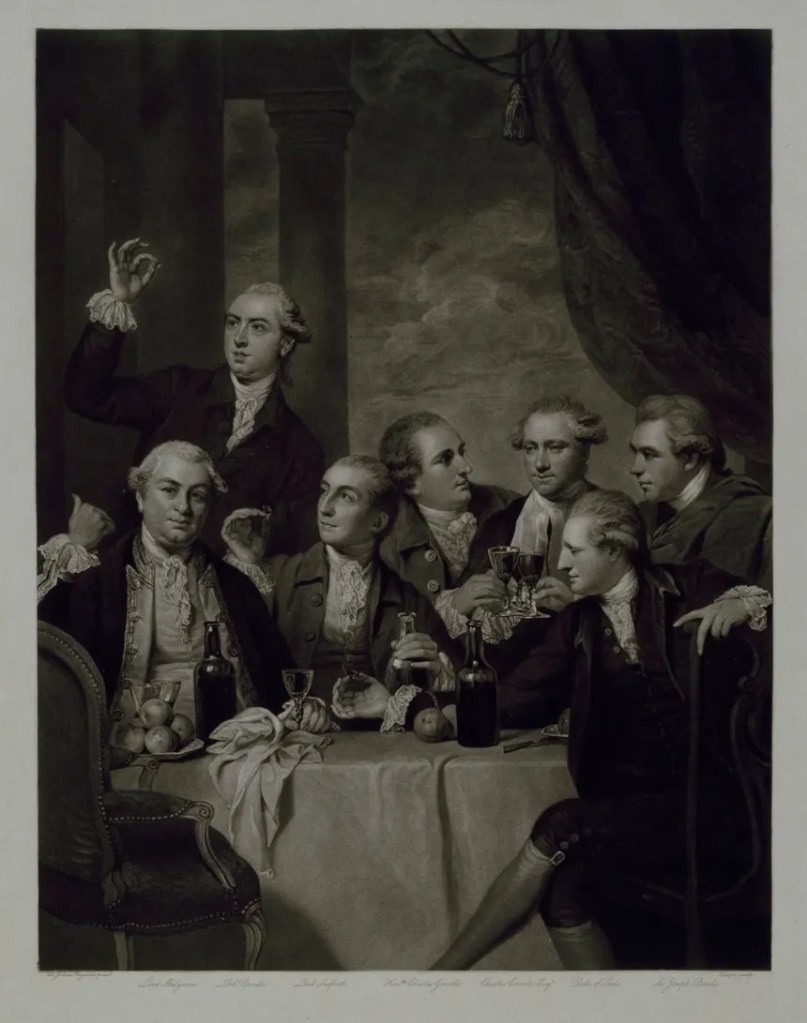
Dashwood was no doubt inspired, and his occult leanings led him to create his own sectist society known variously as ‘The order of the Friars of St Francis of Wycombe’, ‘The Monks of Medmenham’ or most famously as ‘The Hell Fire Club.’ The group was based around all of Dashwood’s key interests – sex, drink, food, blasphemy, the occult and the finer interests of arts and politics.
Regardless of his personal tendencies, he was Member of Parliament for New Romney and in 1741 was elected to the House of Commons. No surprise there.
This, then, is a heavily abridged, potted-history of Dashwood, 2nd Baronet of West Wycombe. Although colourful it has so far failed to provide any clues as to his association with the enigmatic tower by the A15. After all, what could prompt a frolicking Buckinghamshire Baronet to commission the building of a lighthouse miles from the sea, in Lincolnshire, 150 miles to the north of his home?
In short, marriage.
In 1745 Sir Francis married Sarah Ellys of Nocton, Lincolnshire. The match was a shock to Dashwood’s close friends, who saw his lewd and lusty lifestyle to be at odds with Sarah’s piety and her prudish demeanour. Whilst they do say ‘opposites attract,’ I suspect that the bride’s status as both the wealthy widow of Sir Richard Ellys, and co-heiress of Thomas Gould may have heightened the allure.
Whatever the enticement, the marriage to Ellys connected our playboy to Lincolnshire. His motive for commissioning Dunston’s Pillar, however, is less clear. There is an official explanation, of course, which requires us to first look at the character of its location at the time of its construction.
In the middle of the 18th century the area around Dunston was unenclosed, sparsely-populated heathland. It is believed that, during dark nights, travel in that area was fraught with danger, as nocturnal travellers ran the gauntlet of highwaymen, robbers and other ne’er do wells.

Today, with the busy A15 only yards from the tower’s door, such a panorama is hard to imagine. At that time, however, there was no such road, and the area was remote, a windswept, open heathland crossed by narrow pathways and rough tracks.
So it was, then, that in 1751, Dashwood facilitated the construction of ‘Dunston Pillar’, supposedly as a beacon:
‘… [to guide] the peasant, the wayfaring stranger, and the horseman with his dame on pillion.’
At 92 feet in height and of stone construction, the tower loomed over the surrounding heath, and was topped by a 15 foot high lantern. Described a few years later as an ‘exceedingly lofty tower,’ an inner staircase led to the top where, each evening, the glass lantern was lit.
On the face of it, a casual appraisal of the pillar’s ‘official’ purpose as a guide beacon for travellers may appear rational. However, with scrutiny this theory appears less likely.
Who were the nocturnal travellers so in need of a heathland beacon? As we have seen, the area was sparsely populated and those few who lived there would have been farm workers who would use those valuable hours of darkness for rest before another day’s labour. And any who were forced to venture out at night would be familiar with the landscape, its tracks and paths.
Furthermore, nocturnal travellers journeying between Lincoln and Sleaford would almost certainly have used the road existing at that time, which ran through Ruskington and Metheringham. For such as these, the Dunston Pillar was of no earthly use.
Should a beacon have been necessary at all, then surely a logical site would have been at a convergence of routes or a noted junction. In this case it will have served as a waymarker, delivering at least some practical benefit. This, however, was not the case. Its position on the open heath appears to have been entirely random.
All things considered, Dunston Pillar was an inland lighthouse of little perceived use, haphazardly-sited on a remote Lincolnshire heathland and built at great expense by a man famous for carousing and not generally associated with acts of charity. So, what was it for? Was it simply a gentleman’s folly?
Gentleman’s follies have no purpose other than as an ornament. Often they have some of the appearance of a building constructed for a particular purpose, such as a castle or tower, but this appearance is a sham. Equally, if they have a purpose, it may be disguised.
In view of Dashwood’s notoriety as a Georgian libertine and occultist, it would be tempting to conclude that his enigmatic pillar had a more esoteric purpose to that which was claimed. So, what do we know for certain?
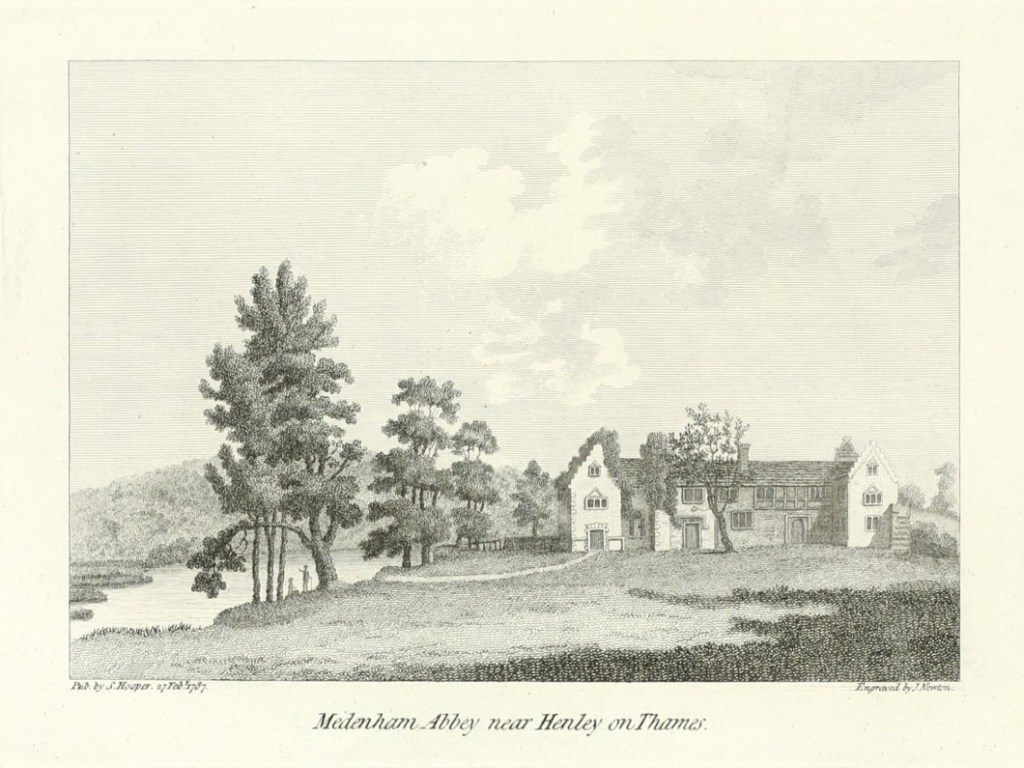
Back in Buckinghamshire, at the time the tower at Dunston was being constructed, Dashwood’s Hell Fire Club was flourishing, drawing prominent figures from the worlds of art, politics and business. To provide a suitable setting for its meetings, the Baronet had even acquired and extensively restored a disused 12th-century Cistercian Monastery a few miles from his West Wycombe estate.
Here, the club enjoyed exceptional notoriety, with meetings in the abbey believed to include occult rites and sexual depravity.
Sexual acts, supposedly depicting ancient rites, were allegedly carried out on the altar, in which well-known ladies of society role-played their respective parts.
Whilst Dunston’s stone-built pillar was far less flamboyant, positioned around its base was a ‘neat square court’ with small pavilions at each corner, offering rooms for refreshment and entertainment amid pleasure grounds. Its location, near to the Ellys’ Nocton estate, quickly became a fashionable meeting place.
It’s not known for sure whether Dashwood established his ‘Lincoln Club‘ around the time that the Dunston Pillar was erected. Was the lighthouse connected in some way to the Lincoln Club? It is believed that through these gentlemen’s clubs, Dashwood extended his influence and power. And like The Hell Fire Club in Buckinghamshire, the Lincoln Club’s members included Members of Parliament, Peers of the realm, and the landed gentry.
By providing lavish and lurid parties for these people, Dashwood may well have been able to influence significant political and financial decisions through carefully orchestrated friendships and perhaps exploitation. So, was Dashwood Georgian England’s precursor to the infamous Jeffrey Epstein, and were his West Wycombe monastery and the bizarre inland lighthouse at Dunston iterations of Epstein’s notorious island?
We shall never know.
As a beacon its role was brief – a momentary glimmer in the passage of time. In 1788 construction commenced on the road we now know as the A15, passing only a few scant yards from Dunston’s ‘lighthouse’. On completion of the road, any purpose the tower may have served as a guide to travellers was rendered all but useless. The lantern was last used in 1808, and a year later it fell from the pillar in a storm.
In 1810 Robert Hobart, the 4th Earl of Buckingham had the lantern replaced with a statue of George III. This was to commemorate the King’s fifty-year reign. The pillar was inscribed:
THE STATUE UPON THIS PILLAR
WAS ERECTED AD 1810
BY ROBERT EARL OF BUCKINGHAMSHIRE
TO COMMEMORATE THE FIFTIETH ANNIVERSARY
OF THE REIGN OF HIS MAJESTY
KING GEORGE THE THIRD

When the 14 foot high statue was installed, what should have been a cause for celebration was marred by tragedy when John Willson, the mason employed on the project, fell to his death. He was buried in the churchyard at Harmston, where his headstone can still be seen. His epitaph reads:
‘He who erected the noble King
Is here now laid by death’s dark sting.’

In much the same way as the pillar’s beacon was a temporary feature, so too was King George. By 1931 a storm had ‘amputated’ his right arm, and this was later found alongside the royal sceptre in a hedge bottom at the pillar’s base.
Ten years later, Britain was again embroiled in a world war, and Lincolnshire’s skies were the domain of RAF bombers.
Such was the density of air traffic in the area, the Royal Air Force considered the column to be a danger to aircraft coming in and out of Coleby Grange Airfield. This prompted the Ministry of Defence to rule that the whole tower be demolished. Following further discussions, however, it was agreed that it be taken down to a height below the maximum tree line, a reduction of about one-third of the original extent.
Whilst contractors were instructed to dismantle the top-mounted statue with the greatest care, and to number the pieces of the statue and masonry from the tower, the operation was more difficult than envisaged. When pieces of the statue fractured and fell away during the process, it was likened to ‘Humpty Dumpty.’ There were even quips about ‘putting King George together again’.
However with the nation at war, reassembly of the shattered king was low on the list of priorities, and the fragments were stacked in the base of the pillar and its door secured. Here they remained until 1953 when the owner of the pillar, Mr Parker, began to press for restoration.
His requests gained little traction and he eventually gave the fragments to the Lincolnshire Local History Society.
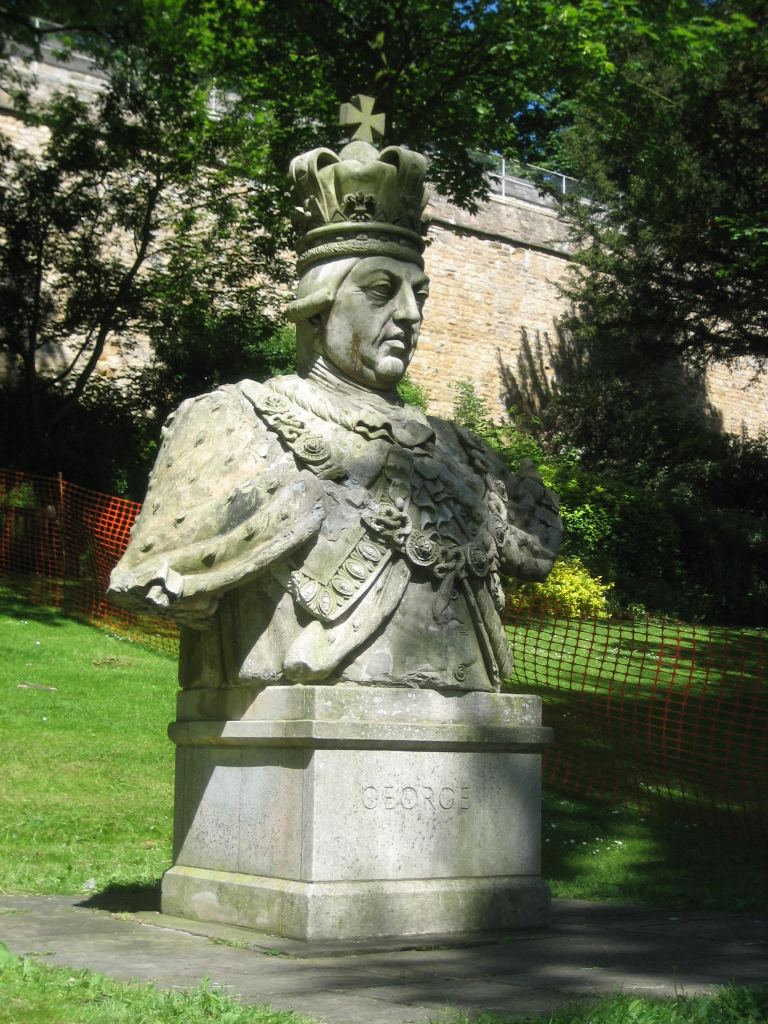
Various plans for reconstruction were drawn up over the ensuing years but it was not until 1974 that George was ‘put together again‘ and his imposing (albeit incomplete) bust installed in the grounds of Lincoln Castle.
Meanwhile the truncated remains of the pillar, now a Grade II listed building, can still be seen in private grounds, alongside the A15.
 RAVEN MOON