

More than forty volunteers assembled behind a public house in Scartho recently, intent on planting thirty trees.
As they braved the seemingly ever-present North Sea breezes, spades in hand, they were not only doing something pretty amazing for the environment in their small corner of the world, they were maintaining this region’s long-standing eco-philosophy, the evidence for which may be seen only a few miles away.
More on that later.
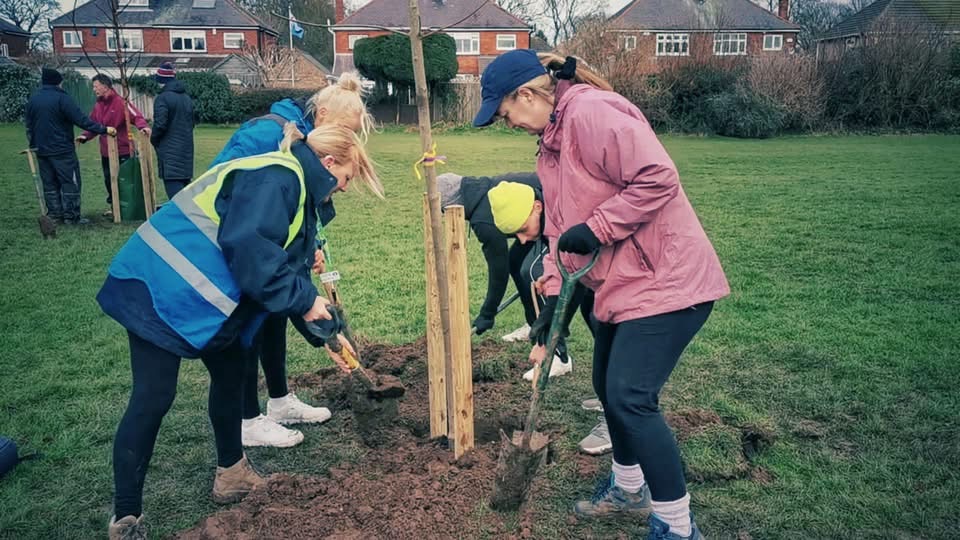
The volunteers’ thirty saplings are now safely bedded-in. As they continue to grow, they will help to positively transform the immediate surroundings.
Benefits they deliver extend way beyond the beauty they provide to the landscape, however, and include social, communal and environmental factors – all of which are proven and well-documented.
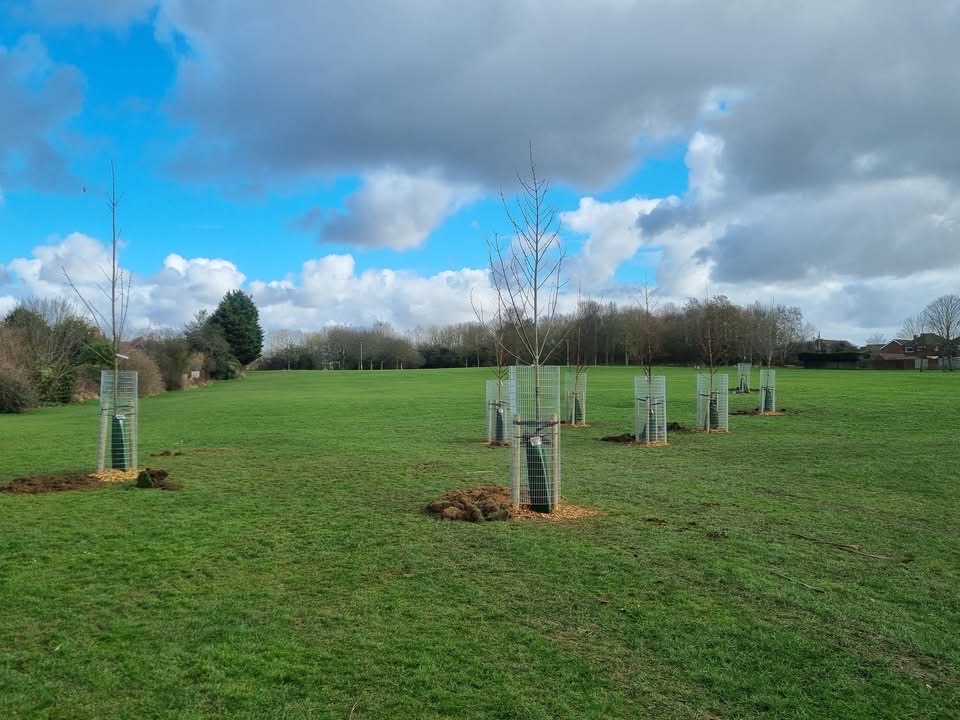

In my view, this simple, down-to-earth approach, conducted by a local, ‘grass-roots’ conservation group will benefit the environment far more than any government headline-grabbing campaign to introduce electric cars or to achieve ‘carbon neutrality’ – whatever that may mean.
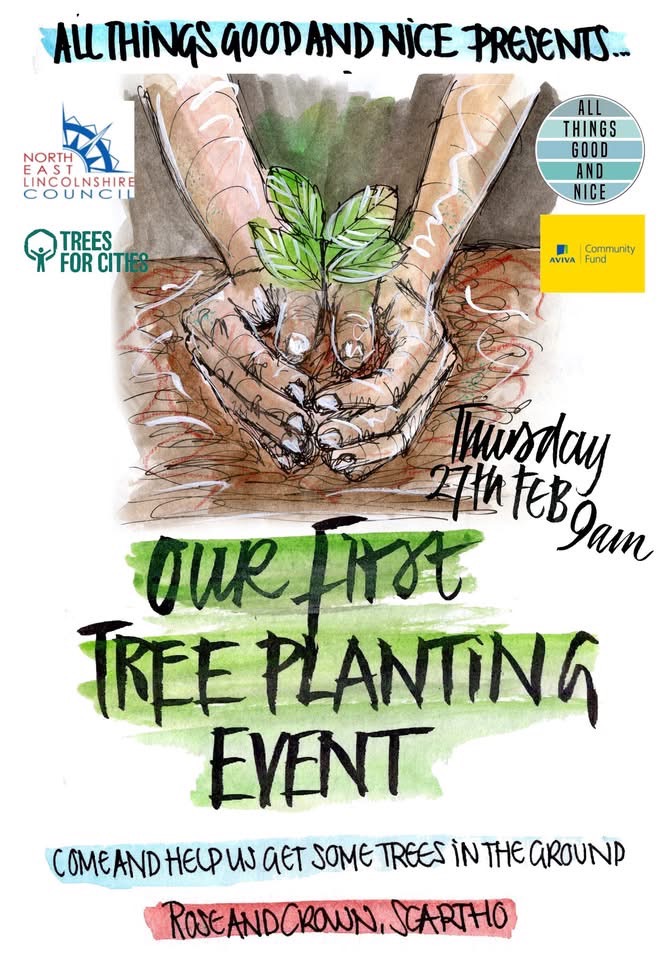
Conducted in support of North East Lincolnshire Council’s ‘Greening up our Place’ programme, the ambitious and forward-thinking tree planting initiative was driven by independent environmental conservation group ‘All Things Good and Nice,’ and followed a successful Crowdfunding campaign.
There were, of course, a myriad of conservation initiatives the group could have chosen. So, why trees?
This is a question which All Things Good and Nice founder, Jim Elliot, strives to answer on his website:
‘Tree planting brings people together, and we all love that snuggly feeling of doing good whilst making connections with like-minded people who simply want to make our planet that little bit better.
It raises awareness. Things need to change from a climate perspective, and what better way to help bring about that change than inspiring others as well as getting some trees in the ground and being part of the solution.
Put simply, trees help in a tonne of ways, including filtering the air we breathe and keeping the atmosphere rich in oxygen [for which, through photosynthesis, they draw in carbon dioxide from the atmosphere].
They also increase biodiversity, and when you imagine a mature tree supports hundreds of different species of insects, it’s easy to work out the benefits to the food chain.’


So, how does the ‘All Things Good and Nice‘ approach to conservation align with the long-standing initiative I alluded to earlier?
Another ambitious project, this one spanning several generations, has positively transformed the character of the region. The story, which tells of the planting of millions of trees by the Earls of Yarborough, is embodied on the well-known local landmark, Pelham’s Pillar.
Visible for miles around, the monument sited in Cabourne High Woods east of Caistor rises 128 feet from a high ridge of the Wolds, and is symbolically guarded by two lions, one of which watches as the other sleeps.
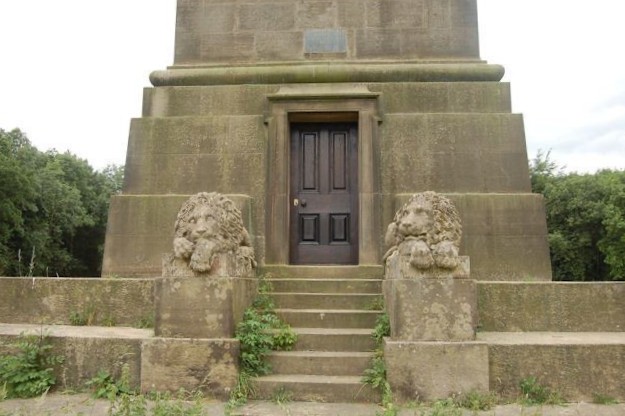
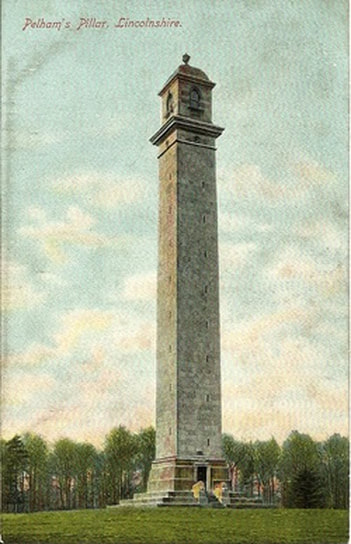
Pelham’s Pillar was designed by Lincoln architect Edward James Wilson, and dedicated to the astonishing feats of Charles Anderson-Pelham, the 1st Earl of Yarborough, who between 1787 and 1823 planted 12,552,700 trees.
The lords of Yarborough began the task of growing trees for use and beauty two years before the French Revolution. And they have continued to plant each year since then – by the thousand, tens of thousands and hundreds of thousands.
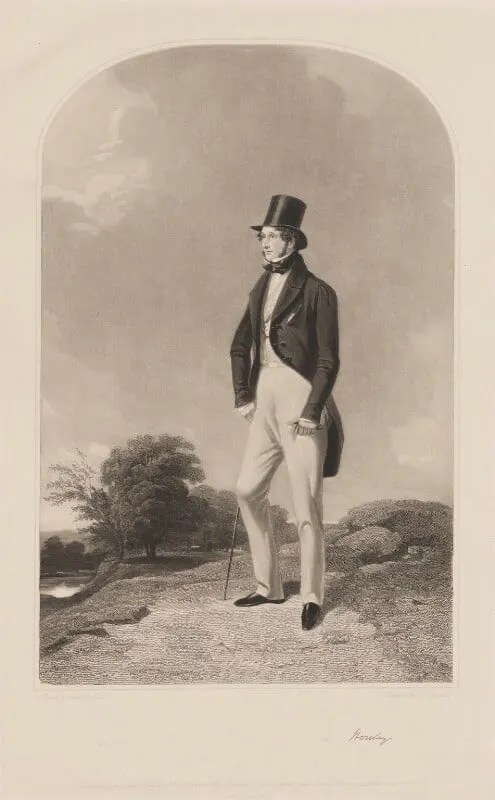
1st Baron Yarborough
1749 to 1823
The rate of planting has been nothing less than extraordinary. A casual appraisal of annual achievements may at first suggest that planting activity has been influenced by our nation’s military successes:

In the year of Nelson’s victory of St Vincent (1797), for example, planting reached a staggering total of 668,801 trees.
Another milestone event appears to have motivated the Yarborough’s enterprise, and in 1816, the year after the victory at Waterloo, the rate of planting achieved a record of 680,451 trees.
This frenetic pace had not been maintained throughout, however, and the annual rate fluctuated. In 1804, for example, the year before the battle of Trafalgar, only 10,652 trees had been planted.
As to the Yarborough’s tally, when Arthur Mee published his gazeteer of the towns and villages of Lincolnshire in 1949, he stated that the total number of trees planted (at that time) exceeded thirty million !
Today, two centuries after embarking on their programme, the family continues to ensure there shall always be a continuance of new growth in Lincolnshire.
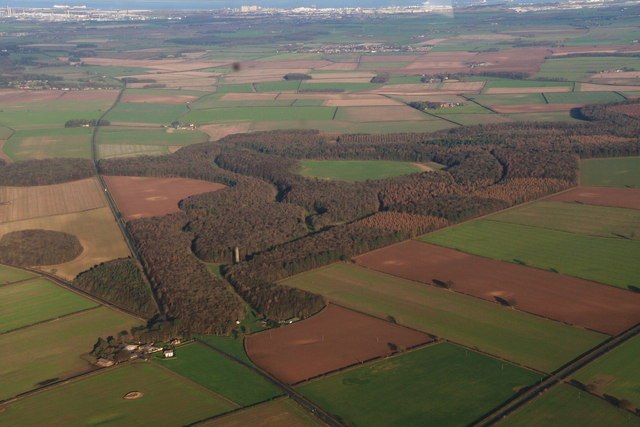
The Yarborough’s legacy is a magnificent curving belt of biodiverse woodland stretching from Brocklesby Park, near Kirmington, extending uphill to the celebratory Pillar a mile and half from Caistor. Planting and subsequent management has been meticulously controlled, with care given to species selection.
Here there are trees of every kind: oak and ash, acacia and Spanish chestnut, beech and hornbeam, fir and pine, larch and spruce, elm and cedar. There is even a giant Sequoia, bought as a seedling for £5 in 1856, and which now stands at over 100 feet high.

As noted earlier, the Yarborough’s tree-planting heritage spans generations, and is ongoing. As such, the story portrayed on Pelham’s pillar is an unfinished one.
So too, it must be said, is that of ‘All Things Good and Nice,’ who by boldly declaring their February 28 planting event to be ‘the first,’ appear committed to continue.
And that can only make the world a better place.

 RAVEN MOON
Another beautiful piece of writing. I had no idea about how many trees had been planted on the Yarborough estate. I drive through it every day and am always grateful for the greenery in my local surroundings, but hadn’t really thought about the fact that this was part of an intentional and well-considered planting programme. Another great read, Steve! X
LikeLike
Thanks for reading and for your comment. I’ve lived here most of my life, yet when I research items for my posts I learn so much more. I, too, travel past ‘Pelham Wood’ (as I’ve always known it). On Sunday we saw over 20 fallow deer there – hence the picture in the blog post.
I have permission of Brocklesby Estate to view the church there as there’s much of interest. If inspired, that too will be a future post.
I think the next one, however, will be about a Lincolnshire lighthouse — inland, miles from the coast. Researching that now.
Thanks, again.
LikeLike