
The young boy standing centre stage in William Frederick Yeames’ iconic painting ‘And When Did you Last See Your Father?’ was modeled on the artist’s young nephew. When it came to depicting the boy’s style of dress, however, it was to one of Thomas Gainsborough’s most famous portraits that Yeames turned for inspiration.
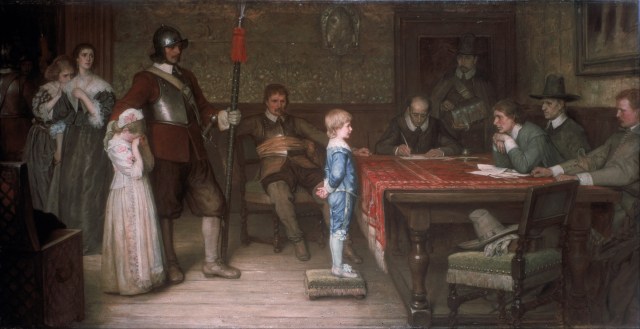
In my post ‘A Child’s Dilemma,’ I explained how the Yeames painting had fascinated me as a child, and has continued to do so. I also revealed that a volume of world famous paintings, which I would regularly peruse many years ago, also contained Yeames’ influential sourcework: Gainsborough’s painting, ‘The Blue Boy’.
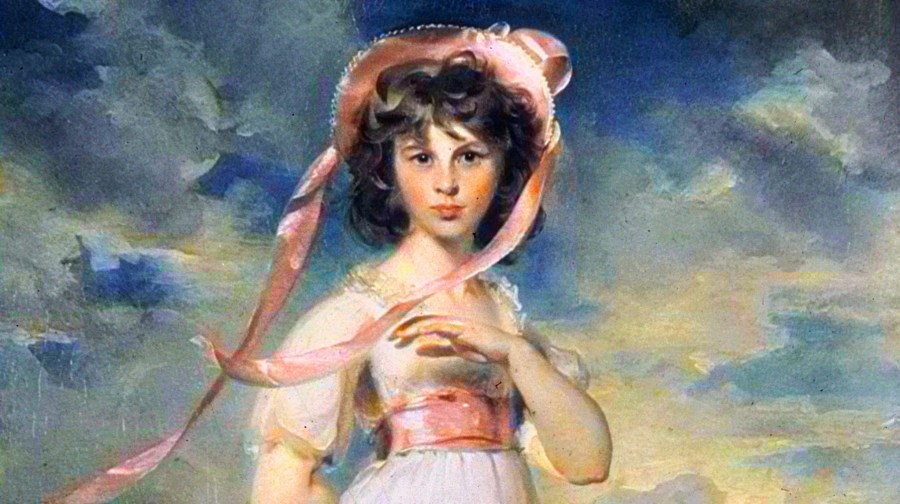
Of the many works showcased in the book there was another which imprinted itself upon me from an early age. It depicted a young girl, and was painted in 1794 by the English portrait painter, Thomas Lawrence. The traditional title of the painting is ‘Pinkie.’
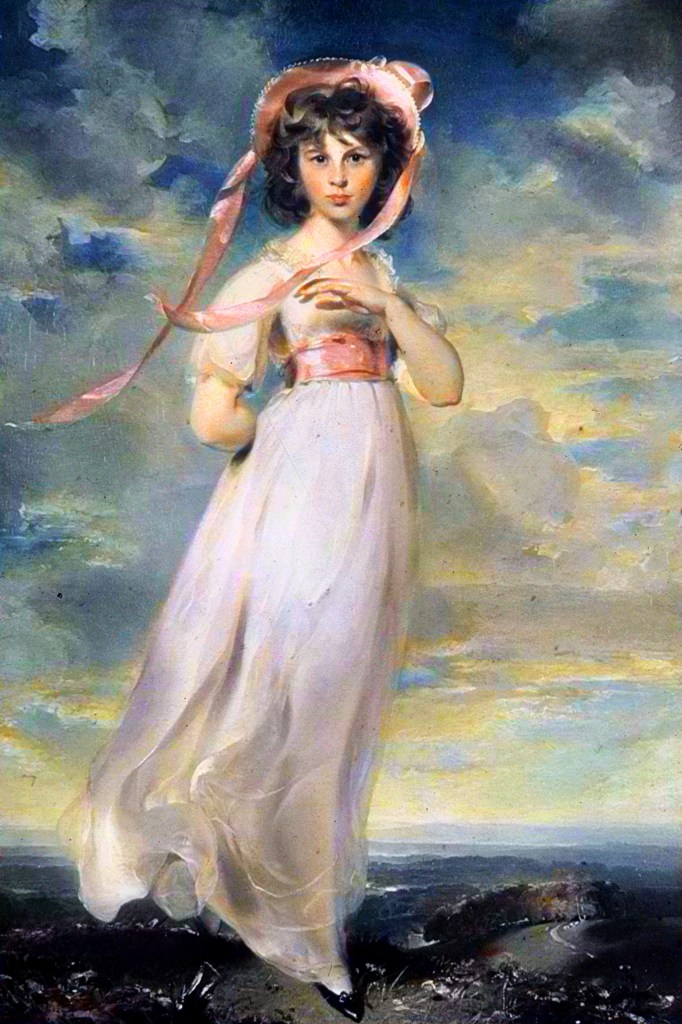
I don’t know what it is about ‘Pinkie’ that endeared itself to me. The chosen colours, style and elegance are not formats I tend to value in works of art. Whilst the artist has sought to employ clouds, a wind-riffled dress and flowing ribbons to add liveliness to the image, it lacks life. Despite the bright colours it appears desolate.
I believe it was the girl’s expression and steady, direct gaze which drew my eye. After all, I was a young boy and here we have a pretty girl. But there was more to it than that.
It is immediately apparent, on viewing the portrait for the first time, that the young girl displays an elegance borne out of a privileged social position – but is that sadness in her dark eyes? Or is the look one of sulkiness, or boredom, perhaps?
Who was Pinkie? And what is her story?
First of all, if my memory serves me well, I am sure that ‘Pinkie’ and ‘The Blue Boy’ appeared in consecutive pages within our old encyclopaedia.
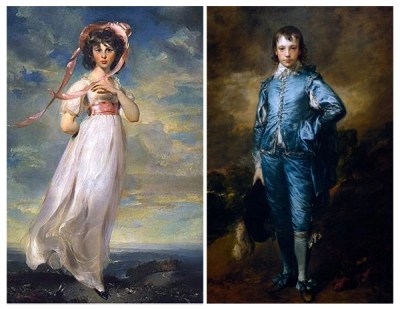
If so, this would be fitting as both works are held at the Huntington Library of San Marino, California, where they share the same gallery.
Such are the similarities in style and appearance that visitors to the library often assume that the two works are not only by the same artist, but the subjects are related to one another. In reality, there is no relationship, and almost twenty years separate the two portraits, with Gainsborough’s painted c. 1770, whilst Lawrence created his work later, in 1794.
As to the young girl’s identity, her name is Sarah Goodin Barrett Moulton. She was born in 1783, in Jamaica, to a successful merchant from Madiera, Charles Moulton, and his wife, Elizabeth. Sarah was their only daughter and the eldest of four children.
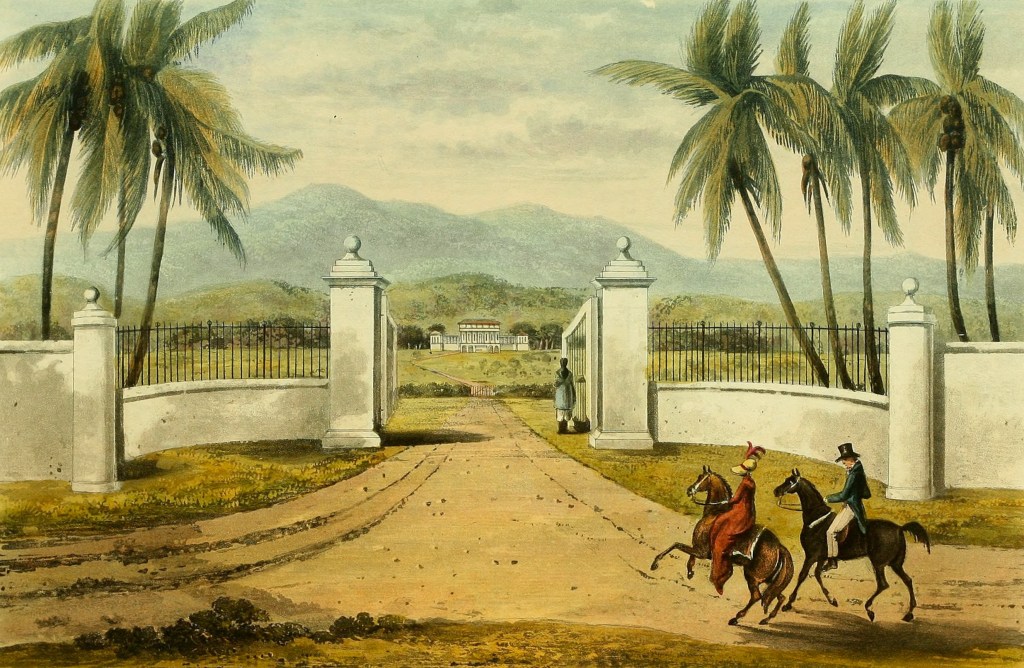
Sarah, who was known by her family as Pinkie or Pinkey, was a descendant of Hersey Barrett, who had arrived in Jamaica in 1655 with Sir William Penn. At that time, Barrett’s trade of sugar cane and rum were lucrative commodities, and by 1783 the Barretts were wealthy landowners and slave owners.
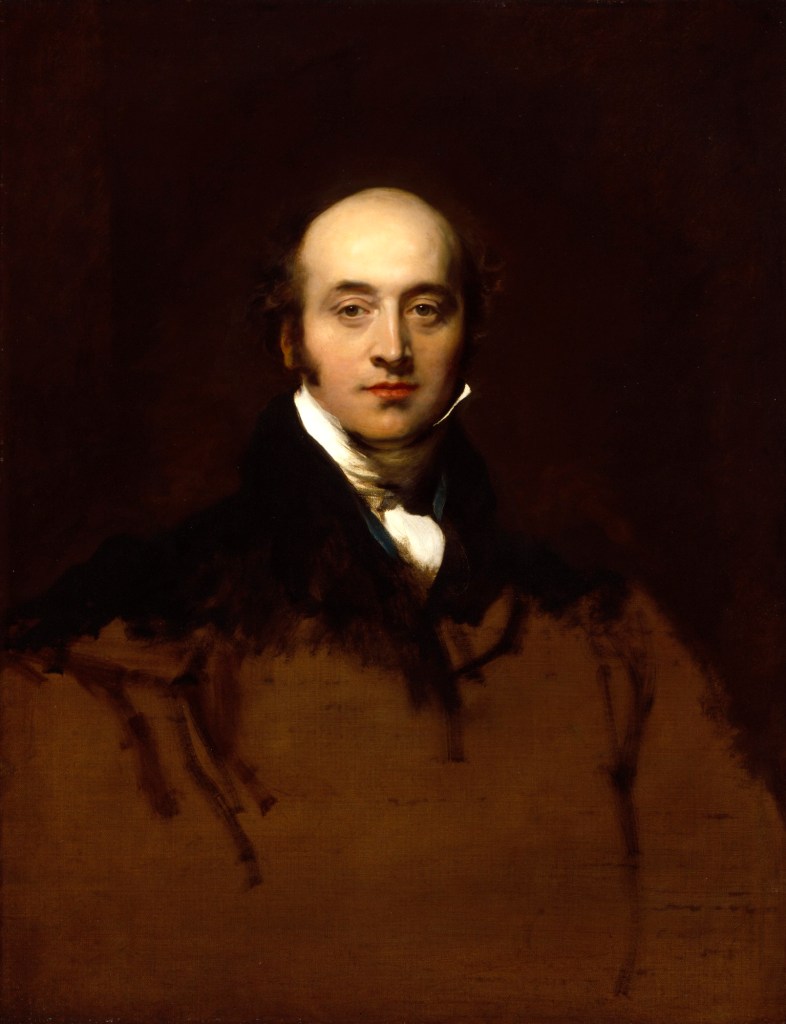
In his painting, Lawrence has captured an unmistakably solemn expression. Sarah’s countenance may possibly have been down to an unsettled childhood, for by the time she was six, her father had abandoned the family, leaving her mother to raise the children.
In September 1792, Sarah and her brothers Edward and Samuel sailed to England to obtain a better education. Mrs Fenwick’s school at Flint House, Greenwich was popular among Jamaican colonial families, and it was to here that Sarah was sent.
Sarah’s grandmother, Judith Barrett, had remained behind in Jamaica, and clearly missed her granddaughter. This was evidenced in November 1793 when she wrote to her niece, Elizabeth Barrett Williams, then living on Richmond Hill in Surrey, asking her to commission a portrait:
‘ … [of] my dear little Pinkey … as I cannot gratify myself with the original, I must beg the favour of you to have her picture drawn at full length by one of the best Masters, in an easy careless attitude’.
It is believed that Sarah probably began sitting for Lawrence – who was painter-in-ordinary to George III – at his studio in Old Bond Street, in February, 1794, soon after the receipt of the letter.
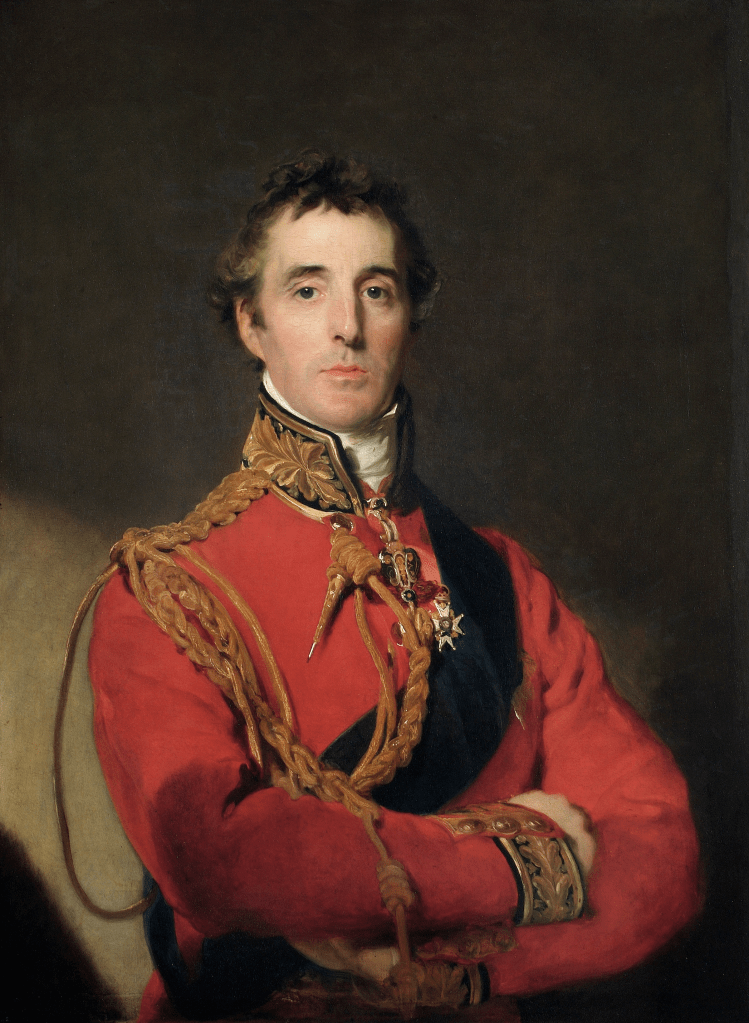
(the work was later used for the £5 note)
Did Sarah’s grandmother know, somehow, that she would never see her ‘dear little Pinkie’ again? This we will never know. What is known is that, on April 23, 1795, only a year after artist Lawrence applied his final brush strokes, his young subject, Pinkie, was dead. She was twelve years old.
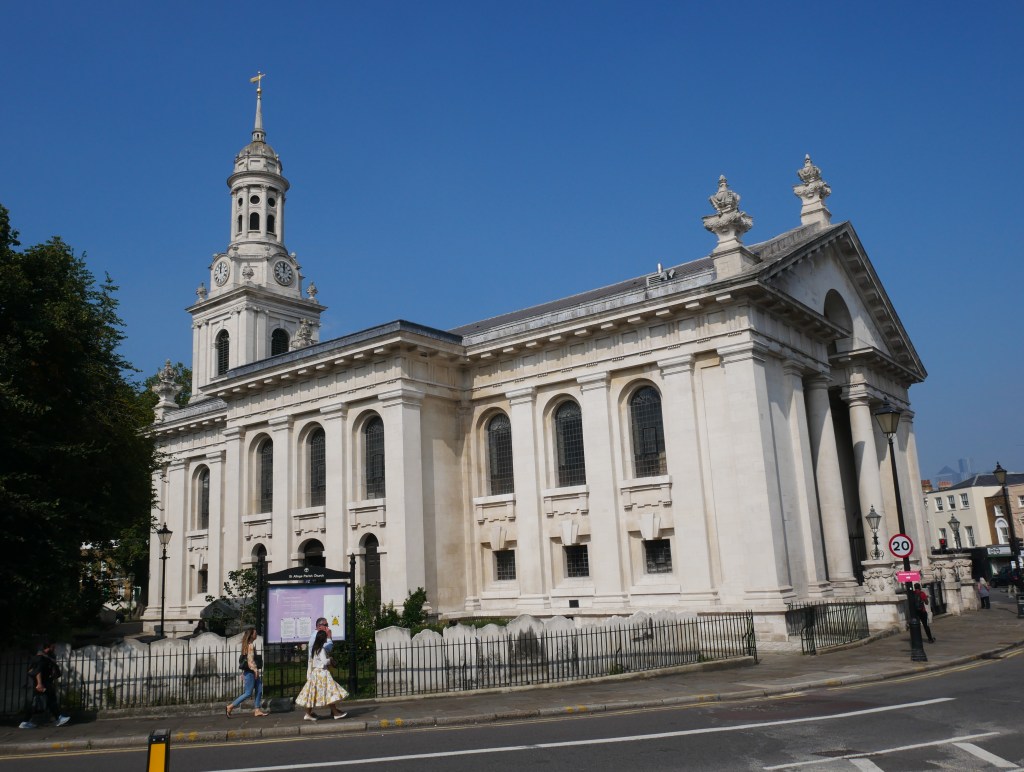
She was buried on 30 April, 1795 in the doctor’s vault under the parish church of St Alfege, Greenwich. It isn’t known what caused her death, only that she had recently recovered from ‘a cough.’
The young girl’s story, then, is a tragically short one.
Thanks to her grandmother, Sarah has been memorialised in Lawrence’s work. That said, art can never truly replicate life.
Whilst elegant, vibrant and youthful, the soulful subject in Pinkie, the painting, will only ever be a collection of fading pigments on cold canvas in a cheerless gallery. For me, it is a portrait that embodies a sense of unease, with its breeze-blown ribbon drifting away from the girl, like a departing spirit.
 RAVEN MOON