

By the time the sun rose over the Taff valley in South Wales on the morning of October 21, 1966, it had been raining there almost non stop for three weeks. In that time, six and a half inches of rain had fallen, saturating the hillsides.
Drenched, too, was the number 7 spoil heap, towering over the mining village of Aberfan. The heap, which had been sited (with mind-blowing incompetence) on ground from which natural springs emerged, was begun in the year of my birth, 1958. By 1966 it had grown to 111 feet high, far in excess of the Coal Board’s own guidelines.
At 09:15 that Friday October morning, 140,000 cubic metres of liquified spoil broke away from the heap and plunged downward at a speed of up to 21 miles per hour toward two farmhouses. It destroyed both, killing the occupants, and surged onwards to the village, where it demolished and engulfed the Pentglas Junior School and 18 houses.
The school day had just begun.
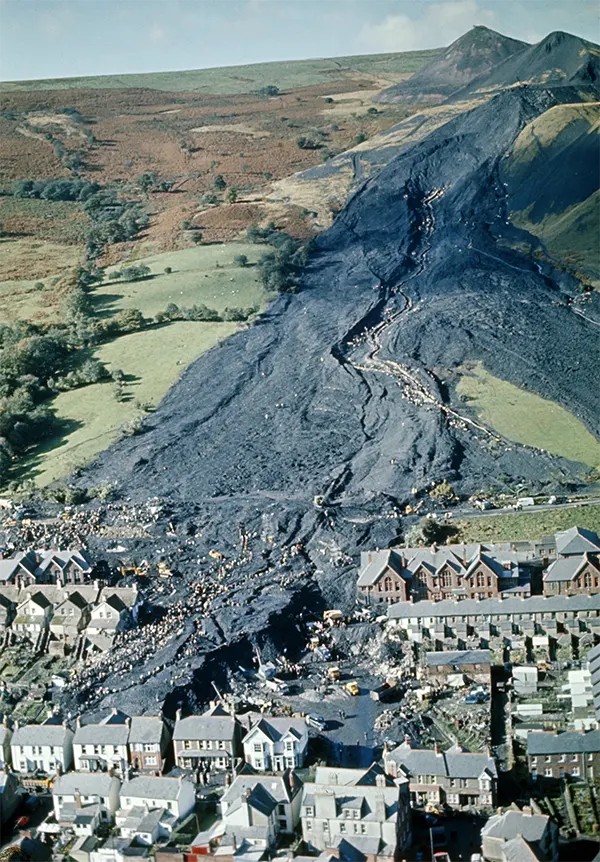
The disaster claimed the lives of 116 children and 28 adults. For those who remained in that small, close-knit community, life would never be the same again.
Over the ensuing days, the bodies of the 144 victims were recovered from the debris. Their spirits had departed the earth plane to begin a new phase on their soul journeys.
That fateful Friday morning, as Aberfan’s stunned residents and miners desperately dug into the spoil with garden tools and bare hands, hauling survivors and broken bodies from the debris, I, my family and all that we possessed were in transit, on what was a portentous journey for us.
Earlier, while the surging spoil heap was dividing Aberfan – those who die from those who grieve – we were saying ‘goodbye’ to our friends before leaving the south Lincolnshire village of Billingborough, and the only home I had known. We then headed north. Our destination that day was Immingham, then a village, now a town, located two miles south of the Humber Estuary.

‘… set amidst a backdrop of quayside cranes and petrochemical plants …’
No more would I meet my friends beneath ‘the big tree’ on Fen Road, play in the barns there and roam the fields. David, Julian, the two Roberts, Susan and Janice would no doubt continue, but I would no longer be with them.
Of those few, my best friend had been David.
These many years later I remember him well. I remember his father, too, a withdrawn, taciturn man who would often sit in shadows in their living room, quietly reading the newspaper. When he spoke, it was in a quiet voice, his accent strange. On the rare occasions he addressed me by name he would elongate the vowels, and switch the ‘V’ for an ‘F’ – Steeef. I can hear him now.
David’s father was a Ukranian – as were several other men in the village.
Pressed into fighting for the Nazis during WW2, they’d been taken as prisoners of war and held at the nearby POW camp at Horbling. There, under guard, David’s father and his comrades worked the fields each day.

By the time war ended, and they were prisoners no more, their homeland was under Soviet control, behind what Winston Churchill would come to call ‘The Iron Curtain.’
Had my friend’s father returned home, having once been a soldier in the service of Nazi Germany, it would have led to his enslavement in a brutal Siberian labour camp, and an untimely death.
Instead, he left his old life, family and homeland behind him and began anew in the south Lincolnshire village. He gained employment, married and started a family, giving back to the community that had accepted him and treated him kindly, as was his due.
Having left the village behind us, our journey that morning was one of a little over sixty miles, though the distance was pretty meaningless to me at the time, being only eight years of age. As I watched the unfamiliar landscape sweep by from the rear seat of my father’s Rover I may as well have been journeying to the moon.
The route took us down a long, arrow-straight road which seemed to go on forever. Although I did not know it at the time, that road was the A15. Neither was I aware that this unimaginatively-named highway had been laid over what was Ermine Street, a road originally constructed by Roman engineers two millenia ago.
Running from London to York, Ermine Street was one of the main arteries of Roman Britain.

As I headed northward that day, I was following a path once trod by scores of heavily-encumbered legionairies, many of them bound for the town they called Eboracum.
With them will have been untold numbers of auxillaries, most of them men from warmer climates. Of these, a considerable number will have continued their journeys beyond York, northward to the inhospitable wall at the furthest edge of the Roman Empire.

Of these men, serving on the desolate, windswept border post, some would write home, requesting warmer socks. Evidence of their correspondence would be discovered later, in the form of thin, wooden tablets, at the auxillary fort of Vindolanda, south of Hadrian’s wall.

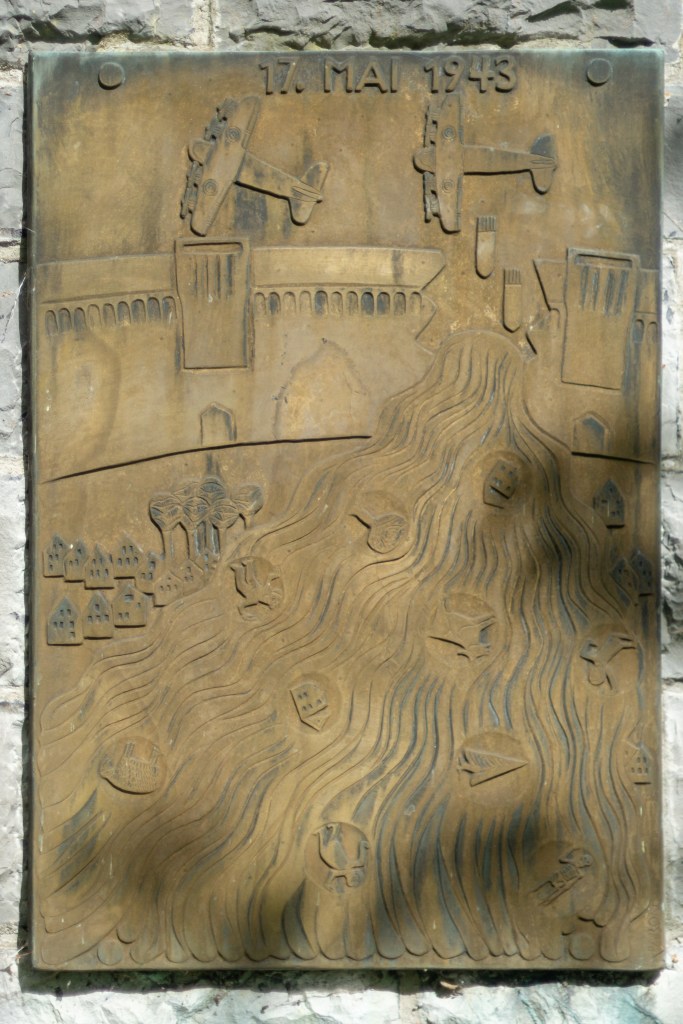
Shortly after joining Ermine Street we drove past an RAF base. I was delighted to see that, by the entrance, was a Lancaster bomber. The base was Scampton. I would later discover that it was from here that the Dambusters’ raid had been launched in May, 1943.

Benefits of the attack, the purpose of which was to destroy several strategic dams in Germany’s Ruhr valley, are now disputed, the subject a controversial one. What we do know is that, as a consequence of the attacks, almost 2,000 people died. Of those, very few were enemy combatants.
Like the unfortunates at Aberfan, they were victims of events beyond their control, their lives cut short by a devastating and indiscriminate deluge. They, too, were taken from the earth plane by tragic circumstance, to travel onward on their soul journeys.
Among the airmen who departed from Scampton that night, bound for the Ruhr, fifty-three also continued their journeys into the after-life. They never returned home.
This, too, was unknown to me as I continued north.
Relocating due to my dad’s employment was bitter-sweet. Whilst there was an element of excitement about the move, leaving friends behind and having to start over was not a comfortable prospect. After all, I’d never had to do such a thing before. The only friends I’d known were those I’d farewelled that morning.
For my parents, our move was a fork in the road of life, albeit a significant one. At such times you either go left or you go right. There’s never a bad decision, as all are viewed to be correct at the time. Some simply don’t turn out as hoped.
Like any journey, there are potholes, speedbumps, slow, upward inclines and giddy down-slopes. There are junctions, too; decisions that must be made – potential outcomes balanced and judged.
The first few weeks following our move was a period of dislocation for me. Immingham seemed a world apart from the south Lincolnshire fenland village I’d left behind. Gone were the quiet, familiar streets and friendly faces. This new place, set amidst a backdrop of quayside cranes and petrochemical plants, seemed cold and inhospitable.
Had those young Roman auxillaries experienced a similar sense of isolation and displacement as they stood, their feet cold, in the wind and rain on an outpost on the edge of an empire?

In time I became accustomed to my new home, and forged many friendships. I settled into school, and it was there I would develop an enduring interest in history. I learned about Roman Britain, the Dambusters – and the full, sad story of Aberfan.
I developed hobbies and interests, too, some of which would not have been possible in the small, fenland village. One such was ‘ship spotting.’

Armed with binoculars, notebook and pen, and ‘The Observers Book of Ships‘, I would often cycle to the Humber foreshore, where I would observe and identify the shipping, including the mammoth, ocean-going tankers moored at the oil terminal there.
I noted their flags, ports of registration, and the shipping lines to which they belonged.
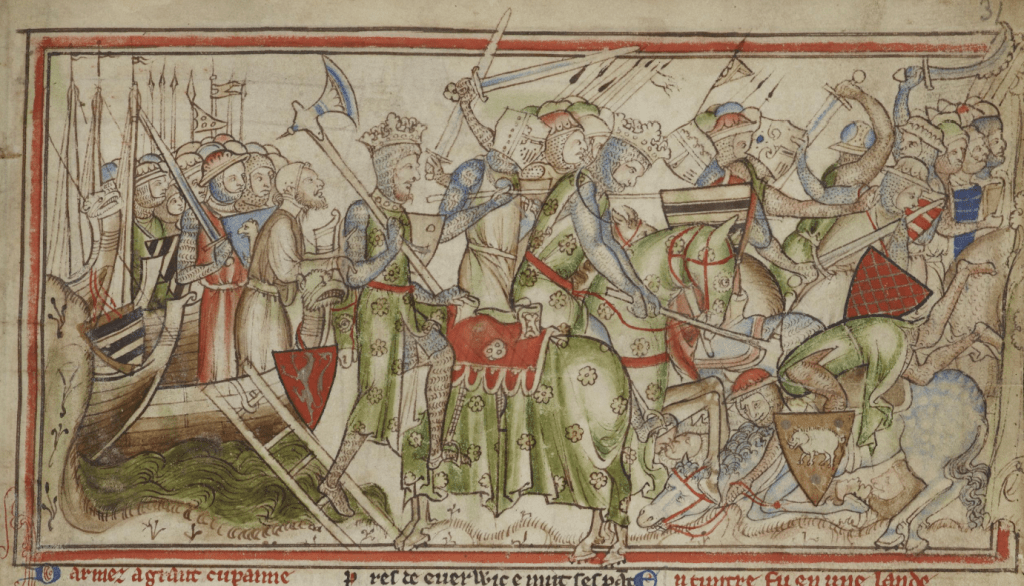
Had I been at my vantage point on that beach 900 years earlier, I may well have observed a fleet of longships sailing upriver bound for the Ouse, and on toward their eventual destination – a landing point at Riccall, Yorkshire.

This huge invasion force had crossed the North Sea, led by the king of Norway, Harald Hardrada. They would eventually be met, to the east of York, by the army of Harold Godwinson.
There, in September, 1066, in a bloody battle at Stamford Bridge, Hardrada would be slain and his army wiped out, signalling the end of the Viking age.
As I settled into my new home I also learned of another, significant historical event, one with an immediate, local connection.
Our new address of Pilgrim Avenue was, to me, as inconsequential as any other street name.
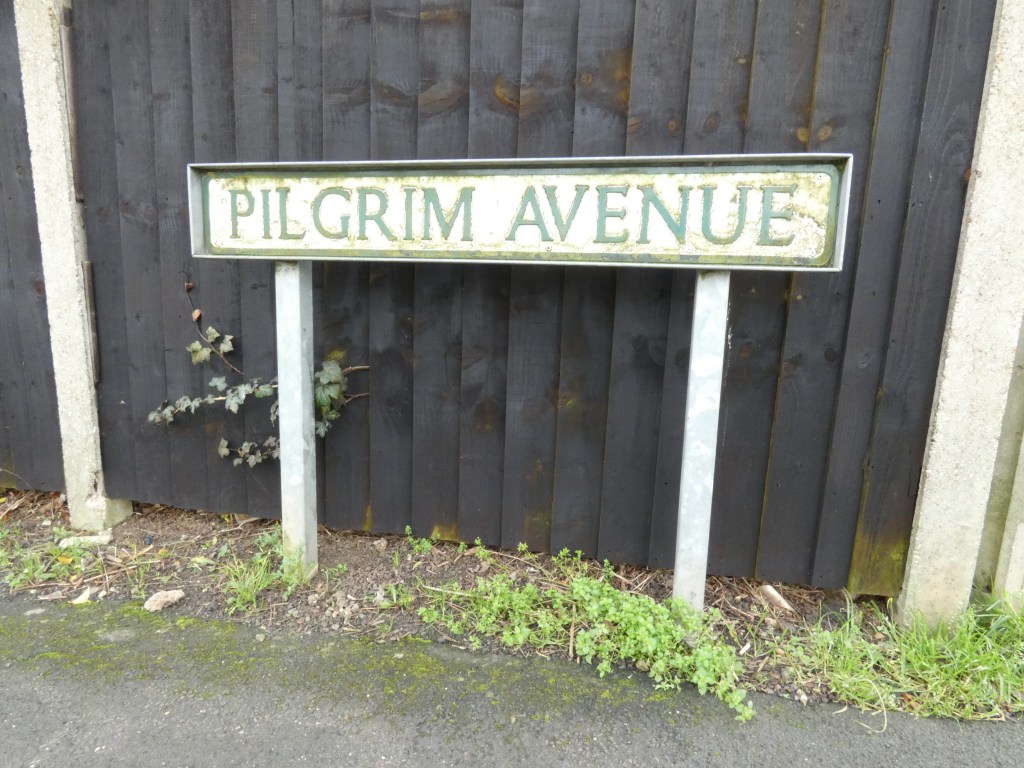
The address gained relevance, however, when I discovered about Immingham’s past – for that’s when I learned about the Pilgrim Fathers, and the important part this particular village had played in their story.
On entering Immingham from the west, visitors are immediately met by a large public house, ‘The Bluestone.’ With its entrance on Bluestone Lane, the pub is fronted by an unusual focal feature – a large boulder having an unusual blue-grey hue.

For those wishing to make sense of this apparent emphasis on blue stones, the answer may be found less than half a mile away, quite appropriately, down Bluestone Lane. There, sited in a park by the church is a monument … one that is topped by another curious, blue stone.
An engraving at the monument’s base not only explains the significance of the stones, it reveals that this parkland location is not the structure’s original site. It states:
“From this creek the Pilgrim Fathers first left England in 1609 in search of religious liberty.
The granite top stone was taken from Plymouth Rock, Mass. And presented by the Sulgrave Institution of the USA.
This memorial was erected by the Anglo-American Society of Hull 1924.”
A smaller, more recent plate above expands on the original:
“This monument was moved from its original site, known as Immingham Creek, and re-erected in this position, May, 1970.”
And above this, the stone itself is inscribed:
“Pilgrim Fathers
Immingham to Holland
1609To Plymouth Rock
New England
1620”

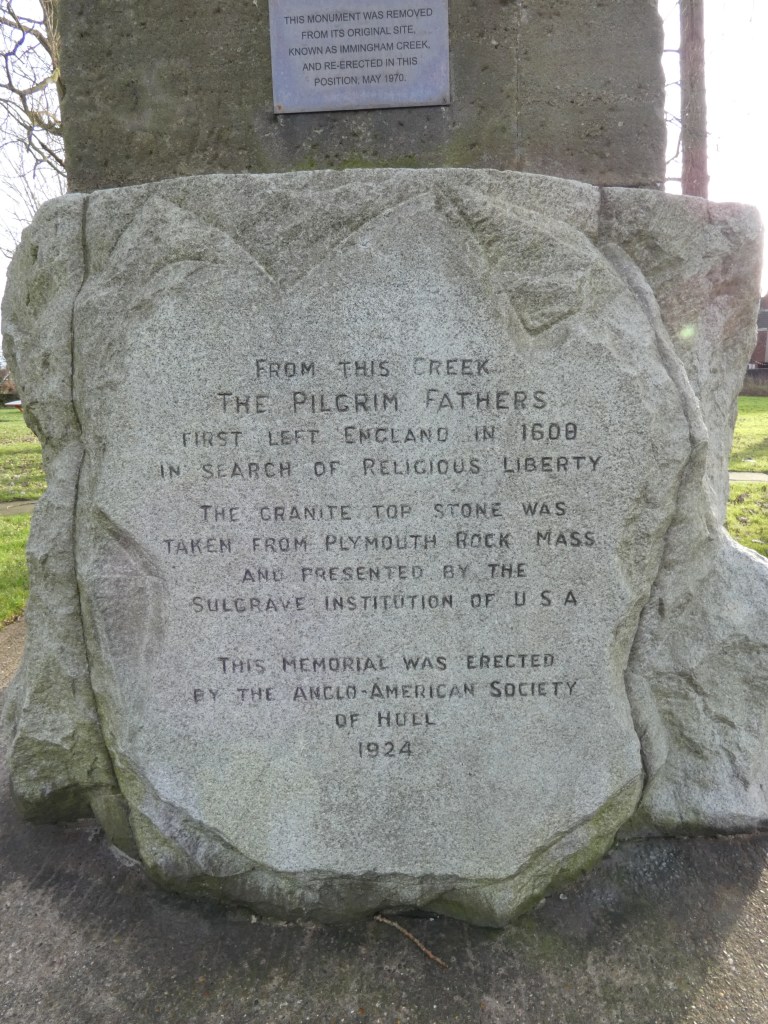
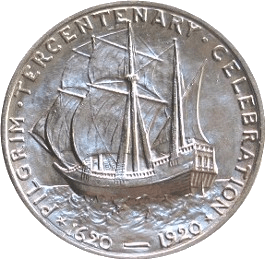
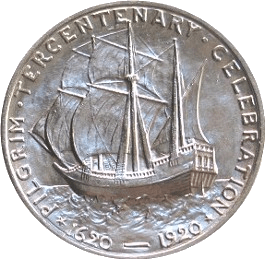
And so, in 1609, those who would eventually become the founders of a nation on the other side of the Atlantic, departed England from a small creek two miles from my home.

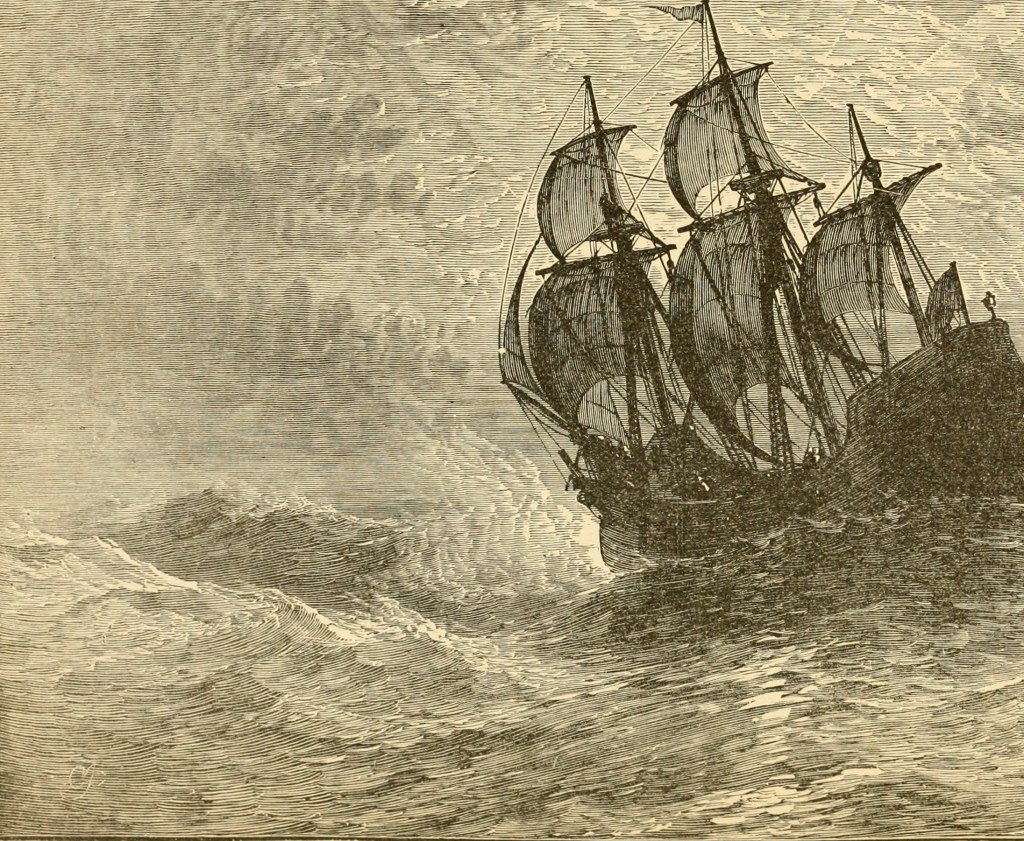
The Pilgrim Fathers’ initial journey, across the turbulent waters of the North Sea to the Netherlands, took them in the opposite direction to that once travelled by Hardrada’s longships. What is more, as they sailed it was beneath skies which would, on a May night in 1943, resonate to the sound of aero engines, as the men of RAF’s 617 Squadron headed out on their daring and historic raid.
My intention, upon first sitting to write this post, went no further than to chronicle the two events of October, 21, 1966. One was personal, the other a tragedy of national importance, the synchronicity of which rendered that, too, personal.
As I wrote, it became clear to me that a life’s journey is not one travelled in isolation. Our paths are as complex and interwoven as threads in a tapestry; a tangled weft and weave of interconnected strands.
In travelling my own life-thread I have touched – and been touched by – those of innumerable others, and as I continue on my journey, I do so in the wake of countless more.
 RAVEN MOON