

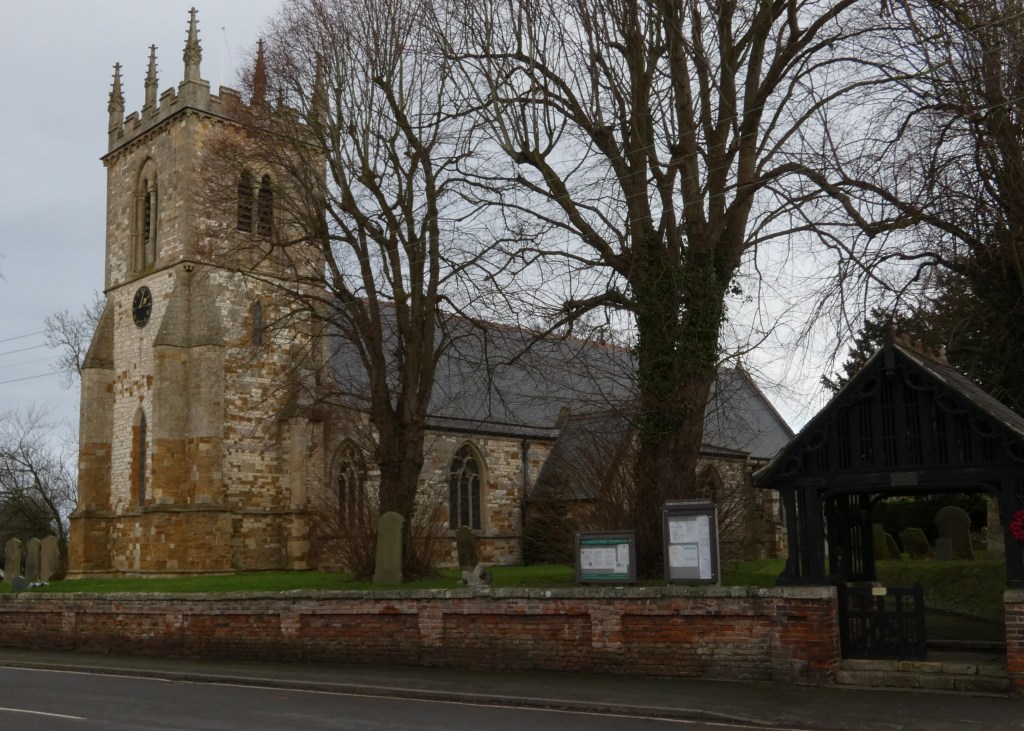
Signage on the approach roads to Thornton Curtis proudly proclaims the small North Lincolnshire village to be the home of a Tournai Font. Despite having jouneyed through the village countless times, I’d never been tempted to examine the said relic – until several days ago.
It was one afternoon during the recent hiatus between the Christmas and New Year festivities that my wife and I decided to escape the confines of home and explore the small village church, where we hoped to finally discover what made a tournai font so special that its presence should be announced to passers by.

For me, the interval between Christmas and New Year is an odd period of suspension during which the world seems to be on hold. It is a colourless, charmless downtime, neither one thing nor another. One event has passed, another is yet to occur.
This ‘betwixt and between’ phase is one our ancient forebears, the Celts, may well have referred to as a ‘time between times,’ such as those occurring each day at dawn and dusk.
These periods, that were neither one thing nor another, were held in awe by our ancient kinfolk and deemed to be sacred. Regarded as thresholds between worlds, they were considered to be potent periods of magical potential.
“This is a time that is not a time
In a place that is not a place
On a day that is not a day,
Between the worlds, and beyond….”
And so, on a grey and cloudy December afternoon, we travelled the short distance to Thornton Curtis, in search of a Tournai Font.

In view of my opinion of the closing days of December, and the comparison drawn to those mystical, pre-Christian beliefs of our ancestors, it is perhaps fitting that our destination – the church at Thornton Curtis – was locked and inaccessible.
Instead, as the late afternoon sun headed toward the western horizon, in this ‘time that is not a time,’ destiny placed us on another path. It was one which led us to an ancient, Bronze Age barrow.
A notice in Thornton churchyard’s noticeboard, titled ‘Wootton Howe,’ directed us south.
The landmark to which we then headed was, we were assured, to be found two miles south of Thornton Curtis, in a field to the west of Wootton village.
Set amidst farmland, Wootton Howe, also known as Galley Hill or Howe Hill, is an inconspicuous geological feature topped by trees. So unobtrusive is the formation that we had never noticed it until our attention had been directed to it that afternoon. Strange then that the chalky knoll is considered to be one of the most ancient landmarks on the south bank of the Humber.
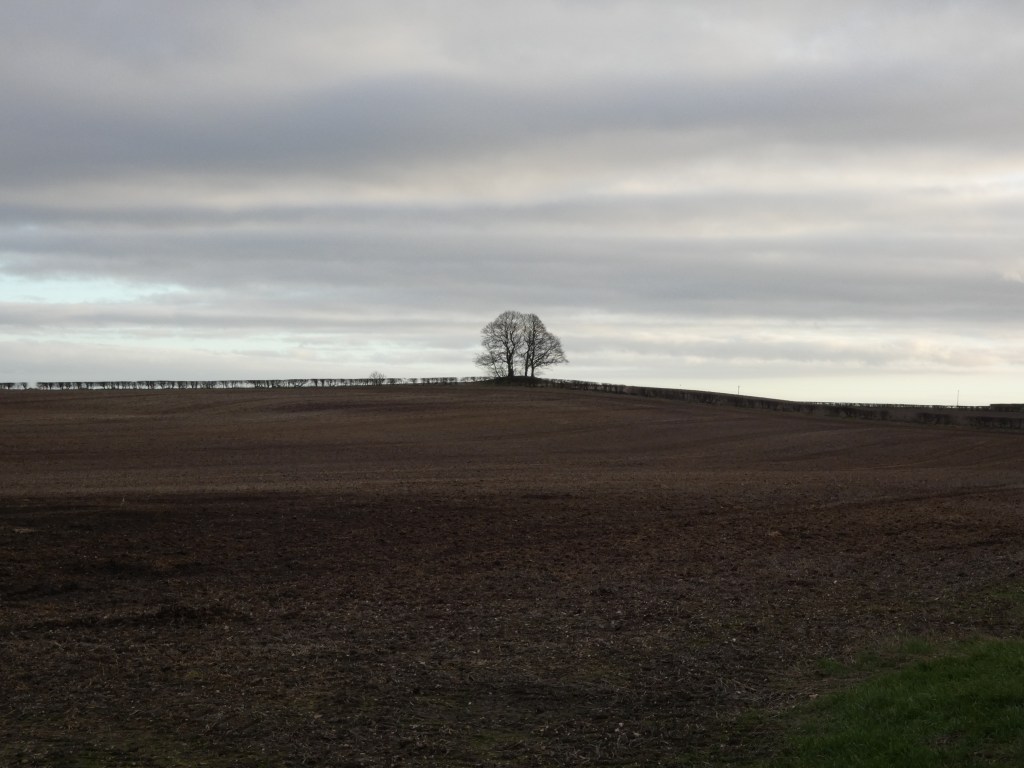
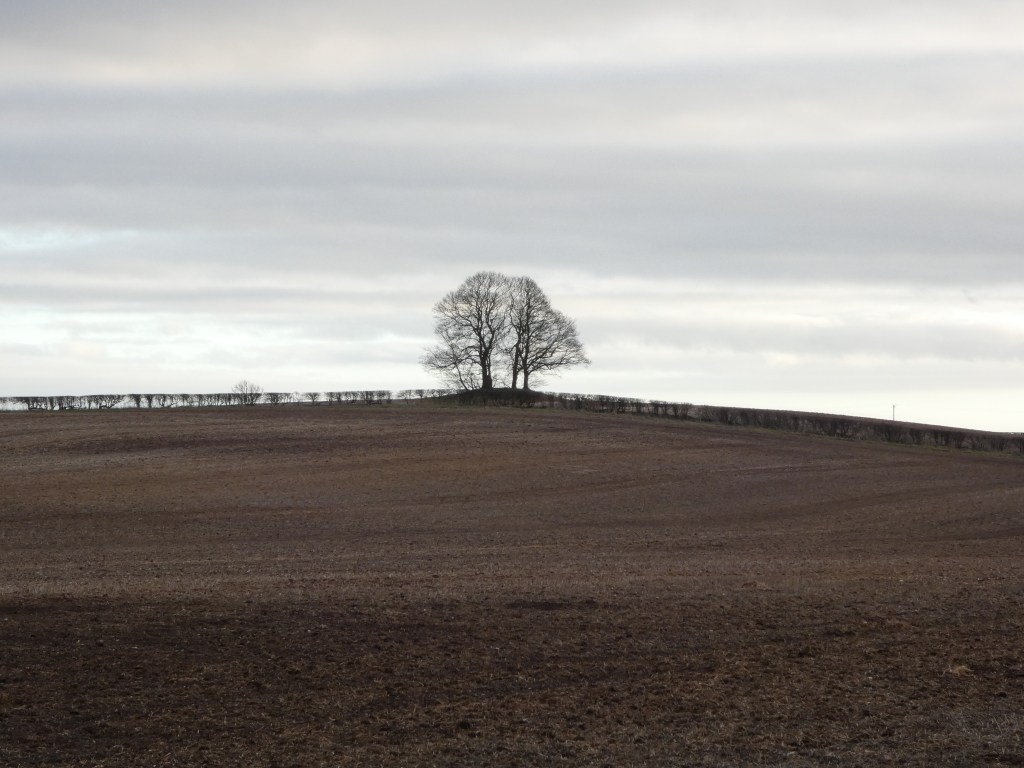

The mound is believed to be the remains of a Bronze Age Barrow – a place of burial – dated between 2600BC and 700BC. Now much diminished through natural erosion and centuries of ploughing activity, this would once have been a significant marker, its elevated position giving a commanding view of the Humber Estuary.

I’ll now try to give some context to the age of this modest monument:
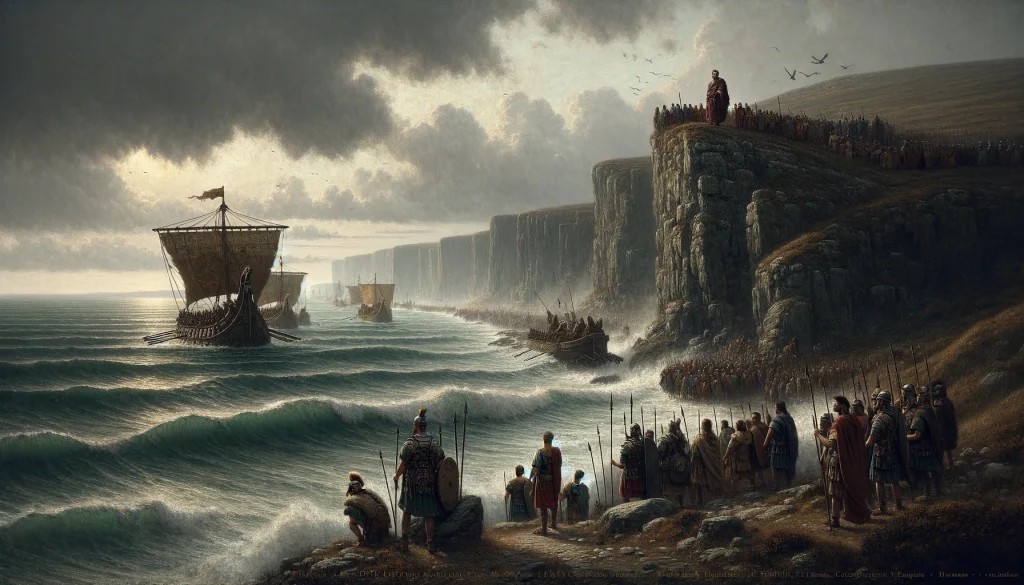
By the time Roman general, Agricola led his campaign of conquest across Britain, Wootton Howe may well have existed for nearly 2,700 years, a subtle mound in the local landscape.
This then was the ancient Bronze Age Barrow of Wootton Howe. Such is its antiquity, the medieval Tournai font in Thornton’s 12th-Century church is, by comparison, a late newcomer to the area. It is also one that I’m yet to see, its story to be told at another time.

 RAVEN MOON