

When deciding on illustrations for my previous post, ‘The Battle of Riby Gap (1645),’ one of my selections was the well-known painting by William Frederick Yeams, titled ‘And When Did you Last See your Father?’
Had I been restricted to using only one picture in that post, in which I told of a minor civil war battle, it would have been that one.
I had first come across the work many years ago, I was probably only 8 or 9 years old at the time. It was one of many contained in a children’s encyclopedia of world famous paintings.
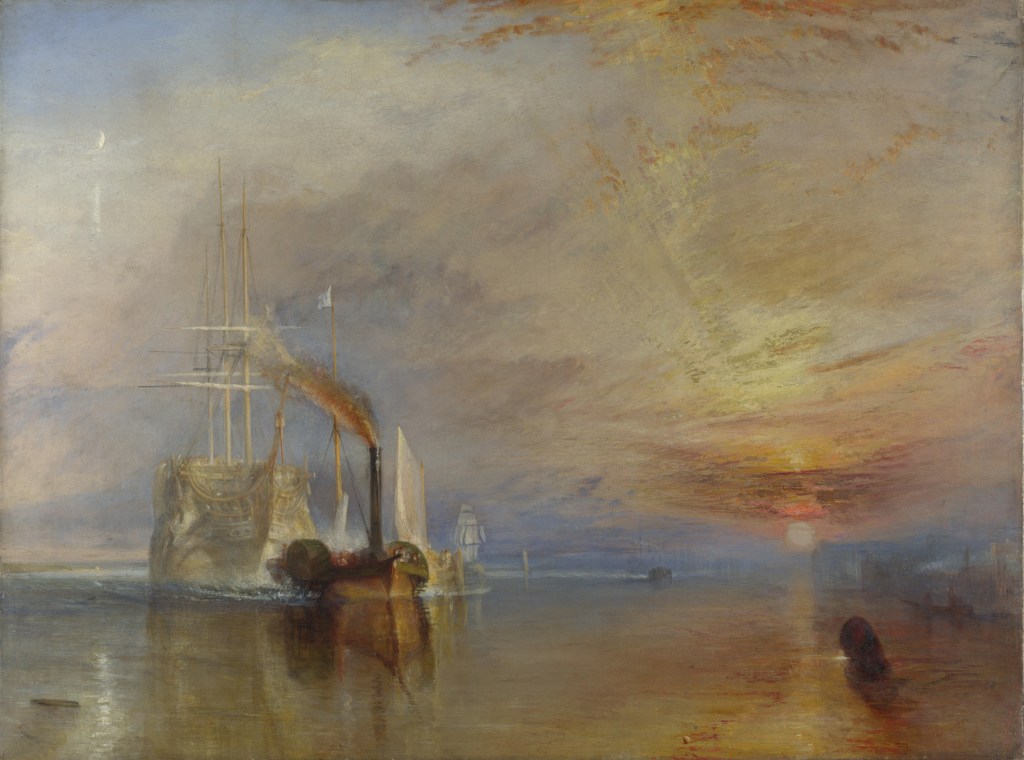
The volume contained several artworks which captured my imagination. One, for example, was Turner’s ‘The Fighting Temeraire,’ which portrays an ageing warship being towed up the Thames to be broken up.
I cannot say what aspect of this work first impressed me all those years ago. Now, I’m captivated by the artist’s use of colour, and how the main subject of the work – the Temeraire itself – is shown off-centre and spectral.
Another of the book’s most memorable examples was the beautiful ‘One of the Family,’ by Frederick George Cotman. Such is the heart-warming simplicity and rustic charm of this work that I never cease to be captivated by it.
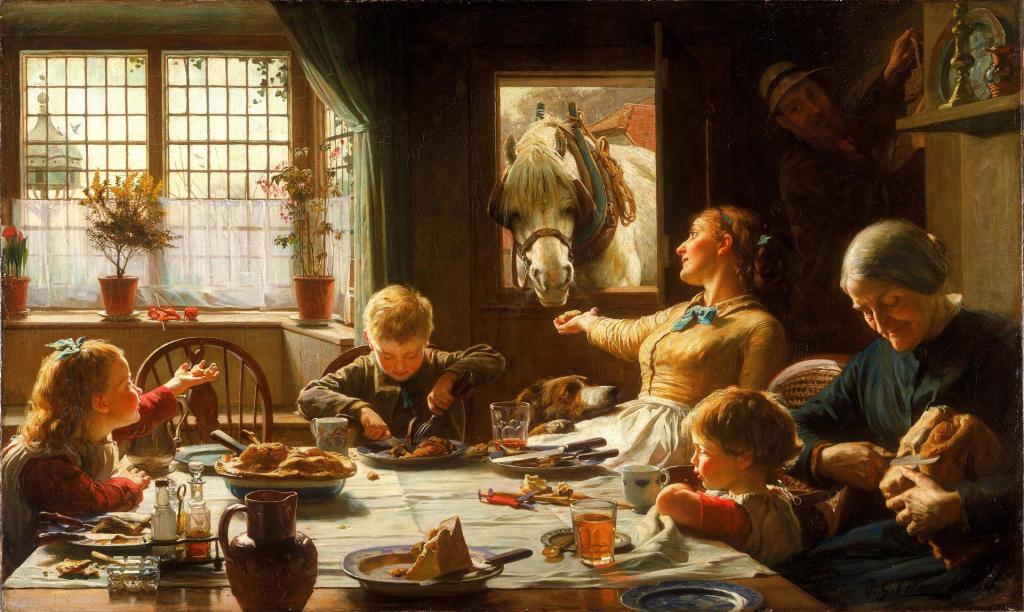
‘One of the Family’ is a painting which, for me, doesn’t prompt intellectual thought over the painter’s use of colour or symbolism, it is quite simply a delightful scene to observe and enjoy. It never ceases to make me smile.
In particular, I love how the young lad in the centre eagerly attacks his meal, oblivious to all around him, as his rosy-cheeked sister offers scraps to the horse, heedless of the distance between them. Meanwhile, Grandma hacks at a loaf with a breadsaw in a manner that chills me every time I see her.
Uplifting as they were, however, the most inspiring of the book’s many paintings was that which I used for my previous post; one in which artist Yeams’ depicts an unfolding drama, set in a manor house during the English Civil War.
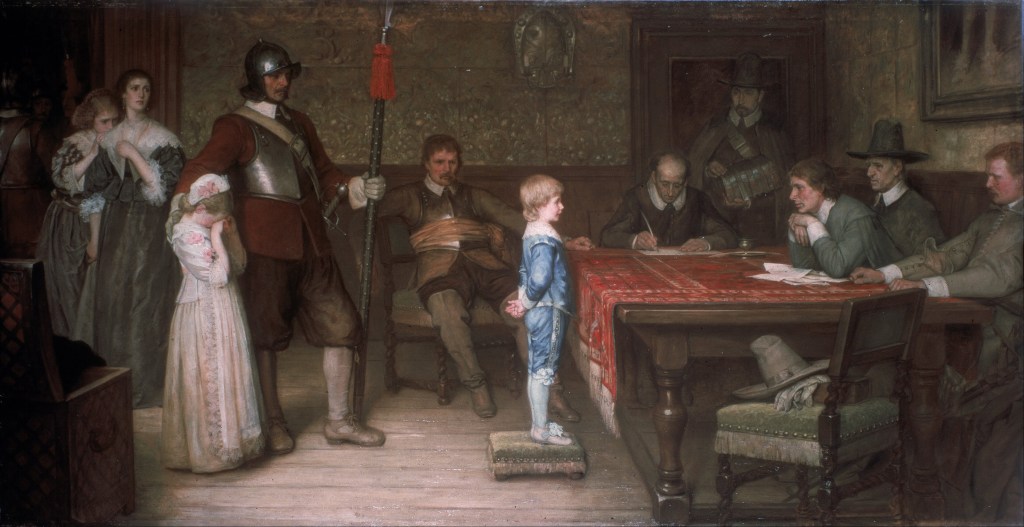
Yeams cleverly portrays not only a snapshot in time, but one that immediately prompts several questions:
What’s going on here?
Why is anxiety written across the young woman’s face, and why is the young girl crying?
And perhaps the most compelling question of all …
What happens next?
From the styles of dress, we immediately gather that here we have a force of Parliamentarian Roundheads occupying the home of a Royalist family.
This is clearly the household of a gentleman of means; a man loyal to the King, and possibly even a Catholic – both of which render him an enemy to those who have invaded his home.
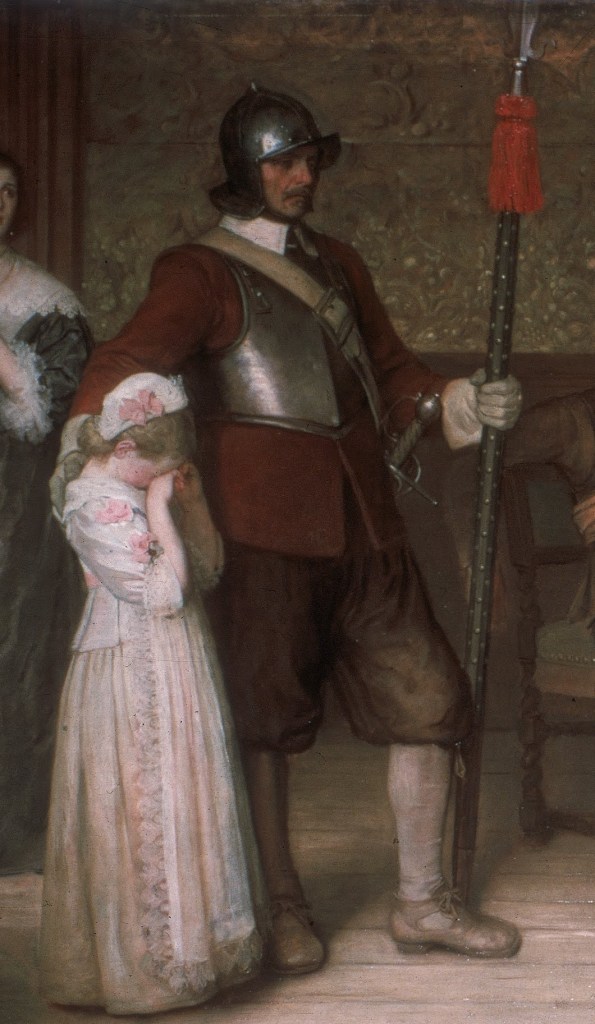
It is likely that the Roundhead Sergeant – as denoted by the halberd in his left hand – has arrested the family and is presenting them to his superiors for interrogation. He stands with one arm on the shoulder of a young girl who is clearly distressed at the turn of events.
Is the sergeant’s arm there to comfort the girl? Or is it to restrain her while she waits her turn to be questioned?
This is just another of the many conundrums posed by the detailed tableau.
The interrogating officer appears relaxed and even kindly as he focusses his attention on the young boy occupying the centre stage. The man has clearly just asked the question upon which the painting is titled, and now awaits the reply.
The atmosphere is charged, the scene a tense one.
The boy’s mother, standing to the left, with who may possibly be her elder daughter, appears distraught as she anxiously awaits her son’s reply, her hand over her heart. She is helpless, separated from her young children by the stern-faced soldiers.
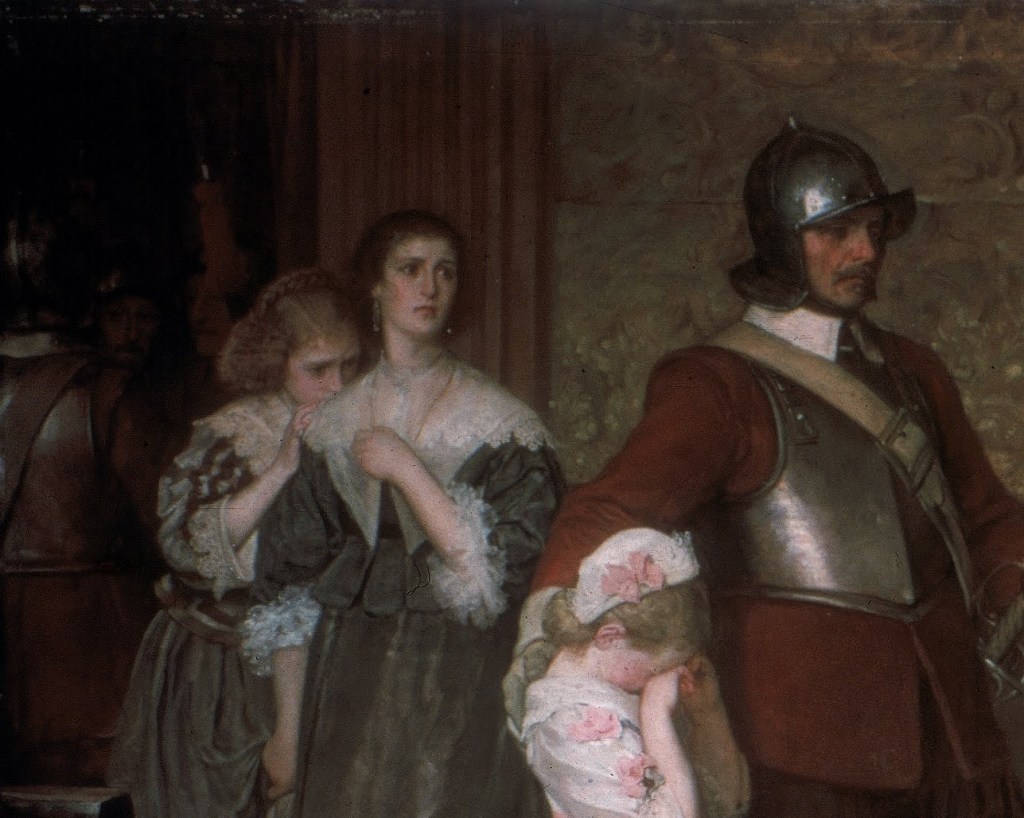
A good wife and mother, she has instilled in her children the importance of honesty, and truth. And now she watches as her young son deals with the dilemma of a difficult choice.
Does he uphold those values instilled in him – in which case he may betray his father, placing him in mortal danger? Or does he tell a lie?
And, if he lies will the interrogating officer, and the solemn men seated with him see through that lie? In which case, has he, the boy, condemned his family to torment?
Although the artist has painted a scene which appears calm and non-threatening, it is obviously a frightening experience for the Royalist family. Repercussions arising from this drama may be devastating for them, and even fatal for the man the Roundhead soldiers seek – the young boy’s father.
As if these issues were not sufficiently menacing, there is also another, more subtle threat here.
One man stands in the shadows at the back of the room. He has an ill-natured aspect. In his hands is a chest. This is not something he has brought to the property. Almost certainly, it belongs to the Royalist fugitive.
What does the chest contain?
Could it perhaps be the family’s wealth, now in the hands of Cromwell’s men, to be confiscated and used to fund their war effort?
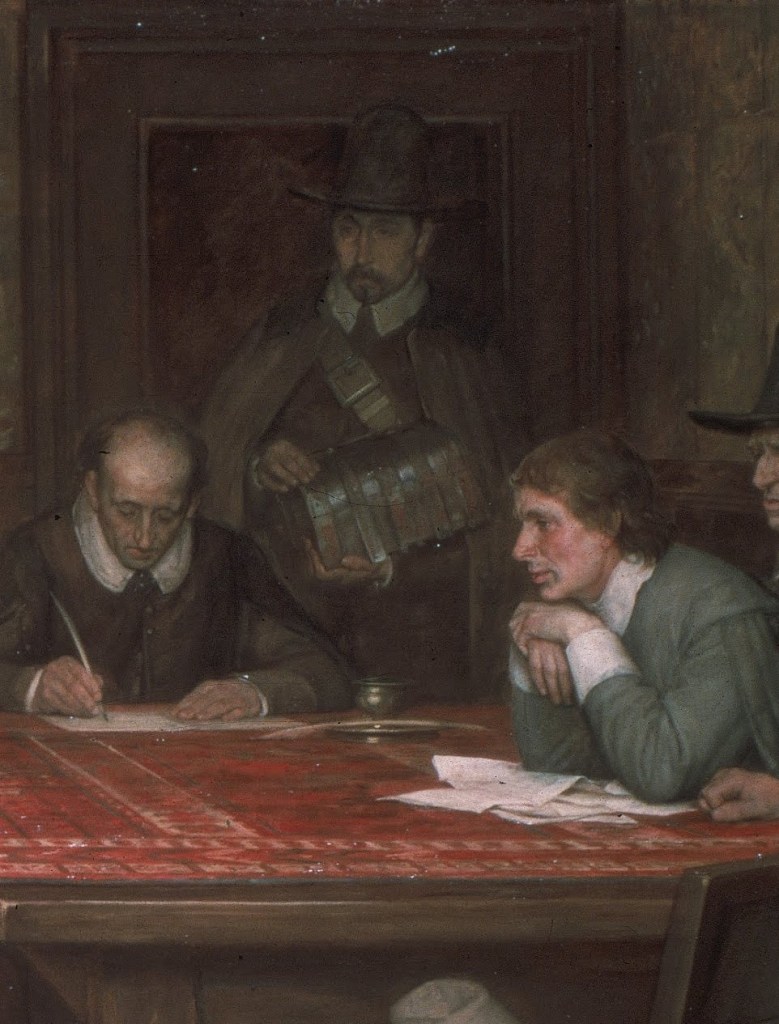
Or does it hold forbidden books, pamphlets or texts, prohibited by the puritan parliament? Worse still, contentious communications, the substance of which may be a death sentence for the correspondents.
These are all immediate questions raised by this snapshot in time, a cleverly-crafted work which fires the imagination.
The scene has generally been understood to be a work of fiction. There are some, however, who believe the artist has deliberately based it on events experienced by the family of lawyer and keeper of the Great Seal of England, Bulstrode Whitelocke. Bulstrode’s house at Fawley Court near Henley was ransacked by both Royalist and Parliamentary forces during the war.
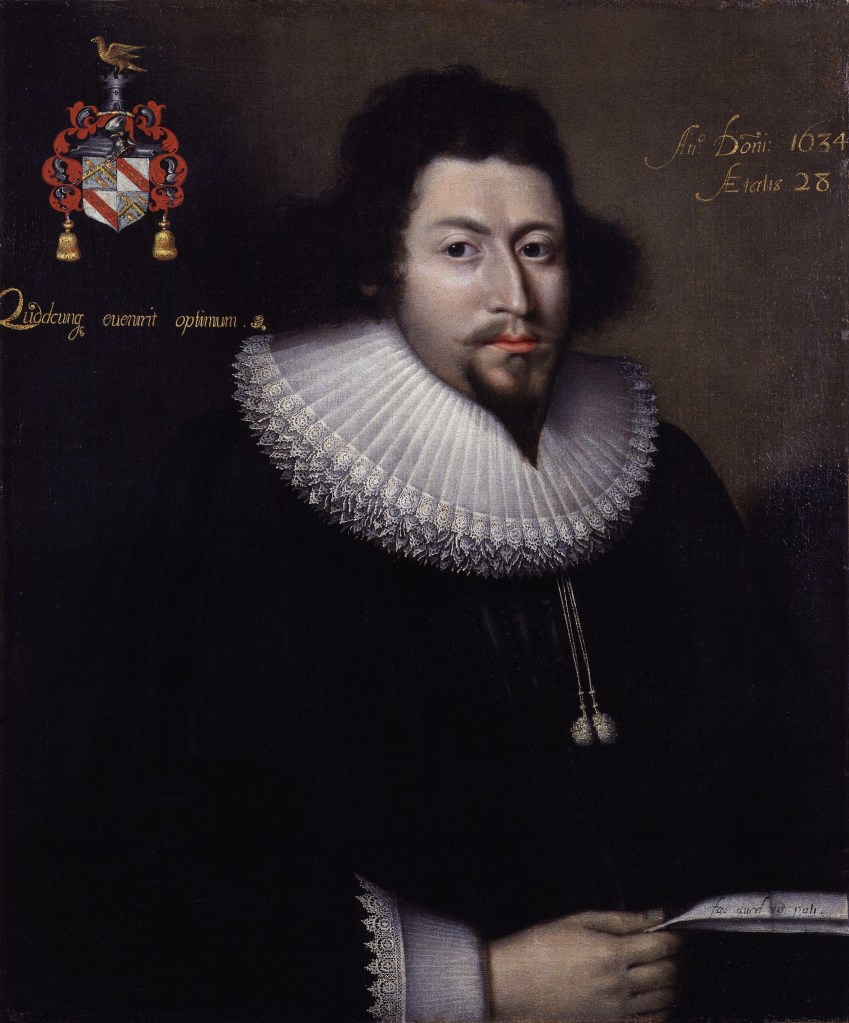
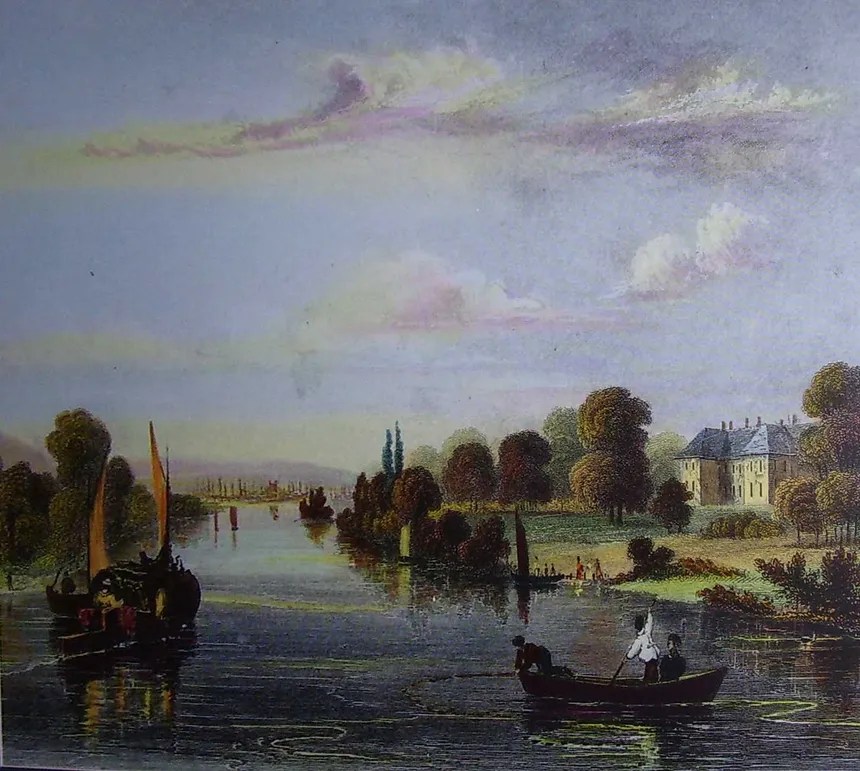
In truth, we will never know whether this painting is a depiction of a real event or whether it is pure fiction. It does, however, provide a glimpse into one aspect of a conflict which tore England apart in the seventeenth century, dividing people on grounds of politics and religion.
Painted in 1878, at a time when Victorian ideals saw children as the embodiment of virtues such as truth and honesty, the artist strove to reflect the paradox in presenting false information for the sake of a ‘greater good.’
Yeams, was inspired to create the work by the candid and innocent nature of his nephew, who was living with him at the time, and who acted as a model for the painting. Yeams depicted the boy having blonde hair, to further emphasise the innocence of childhood.
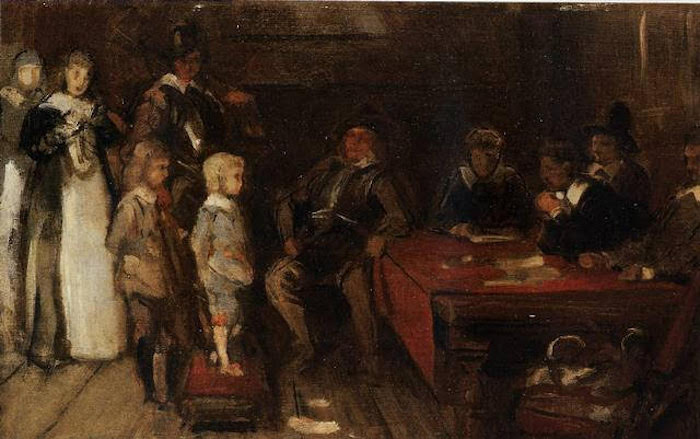
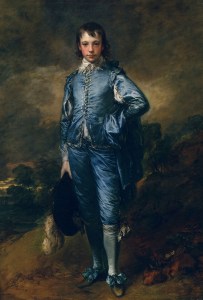
For the boy’s style of dress and overall appearance, Yeams was influenced by Gainsborough’s most famous painting, ‘The Blue Boy,’ which was long thought to be a portrait of Jonathan Buttall (1752–1805), the son of a wealthy hardware merchant.
‘And When Did You Last See Your Father’ is not only a stimulating work of art, it is the most well-known example of a genre popular in late Victorian painting, known by the term ‘Problem Picture.’
The genre is characterised by the deliberately ambiguous depiction of a key moment in a narrative that can be interpreted in several different ways, or which portrays an unresolved dilemma. The viewer of the picture is invited to speculate about several different possible explanations of the scene.
One of the genre’s earliest examples was John Everett Millais’ ‘Trust Me.’
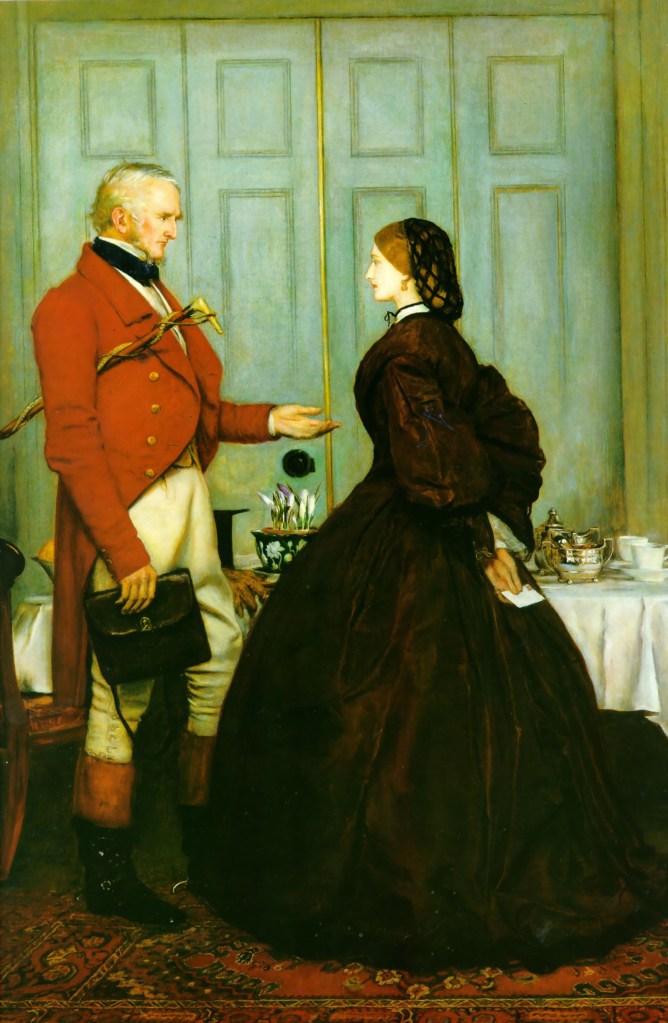
This depicts an older man demanding that a young woman hand him a letter she has received. Either character might be uttering the words of the title. The significance and content of the letter is left to the imagination. As is their relationship; in view of their ages, they might be a married couple, or a father and daughter.
As we have seen in Yeams’ example, the painting is poised at the moment the child is about to answer the Parliamentarian’s leading question. And it is this immediacy that makes the picture so provocative.
What does happen next?
 RAVEN MOON