

“Every war is ultimately a civil war for we are all brothers and sisters, one to another.”
Dillon Burroughs
When I was a lad in my early to mid teens I would regularly obtain books from the village’s lending library. These were novels, mainly. Of the few non-fiction books I borrowed, there was one I withdrew several times.
The book was this one:
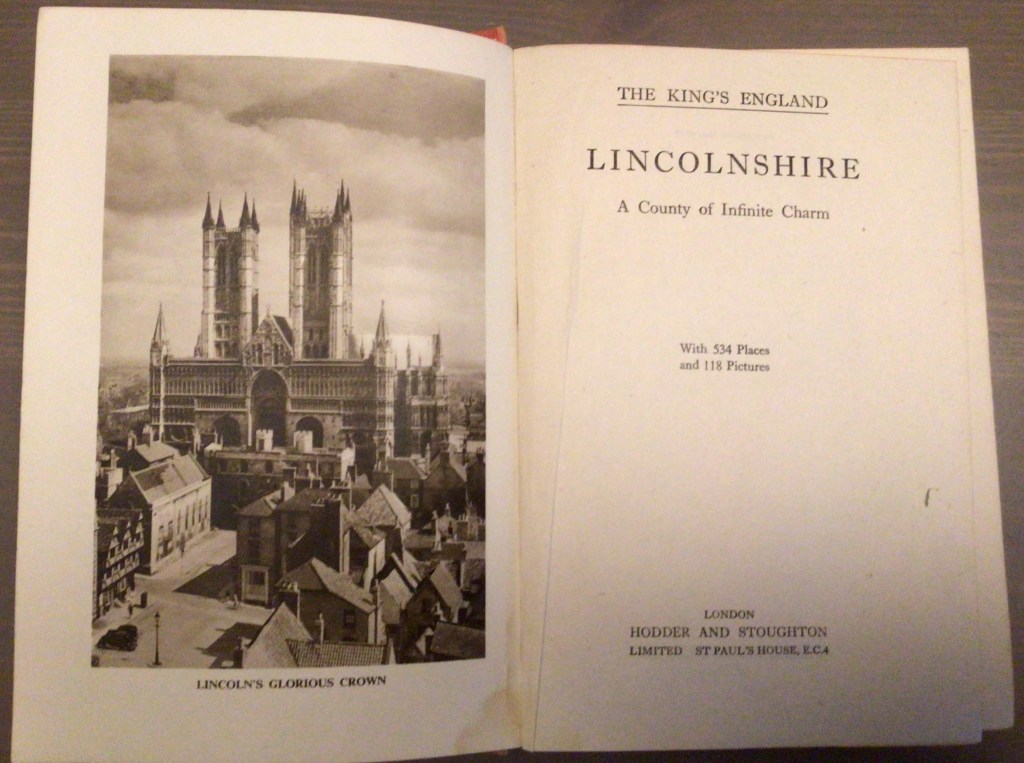
Published in 1949, ‘The King’s England – Lincolnshire’ is a gazetteer of the towns and villages that comprise the county’s three administrative sub-divisions of Lindsey, Kesteven and Holland.
Each entry contains a brief summary and history of the location – though a significant portion of each is devoted to the church, its history, architecture and items of note.
Through the pages of the book, I was fascinated to learn about the villages in my locality. This included my home village of Immingham, with its close links to the Pilgrim Fathers and its connection to Plymouth, Massachusetts. (This may possibly be the subject of a future post.)
One particular entry piqued my interest at that time, and has continued to do so. It concerns the nearby village of Riby.
Now, more than fifty years since first gaining an insight into Riby’s fascinating past, I’ve decided at last to research that event, one to which the book devotes only a half dozen scant lines, and to write my own findings here.
I’ll begin with an introduction to the village from the book:
“Riby. A village of the byways which won a name for itself some years ago because of its fine flocks and herds, it is graced by the fine park of Riby Grove and its long avenue of limes.”
It was not the mention of Riby’s herds, the avenue of limes, nor its 14th-century church that captured my attention, but those few brief lines closing the entry, as though added as an afterthought.
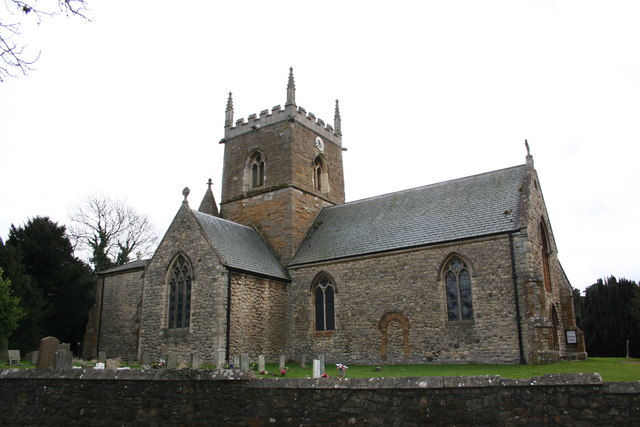
Despite their brevity, they provided a clue to a singular and bloody event, one which was worthy of further investigation.
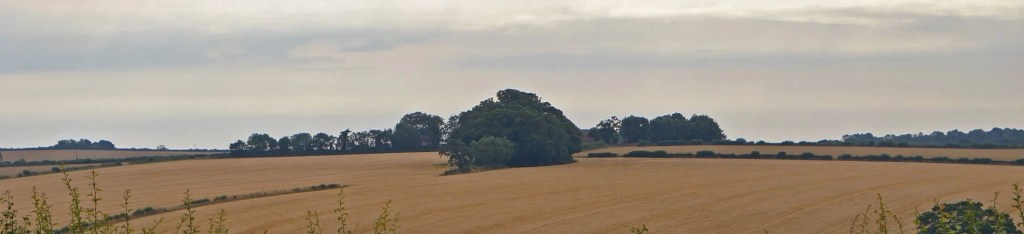
Motorists travelling along the busy A18 Barton Street, between Laceby and Keelby, do so between flat, open fields, criss-crossed by hedgerows and dotted with woodlands. Crows fly low and straight above the farmland, and in summer months, the trees and shrubs are alive with songbirds’ joyful sound.
Arable land here displays a variety of crops. Some fields are verdant pastures, home to large flocks of sheep, just as they will have been for centuries.
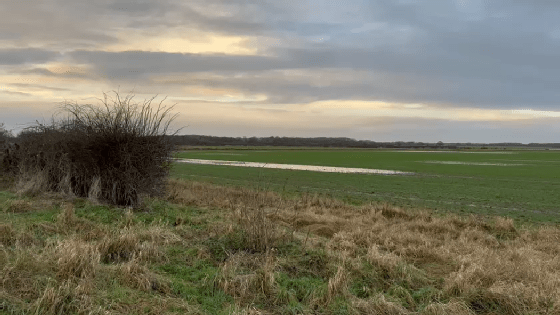
Equidistant between the villages of Keelby and Riby, travellers looking eastwards toward the distant tower of Stallingborough’s church are presented with a small expanse of deciduous woodland set amidst the open fields. This is Suddle Wood.
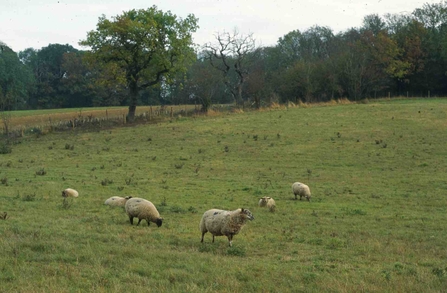
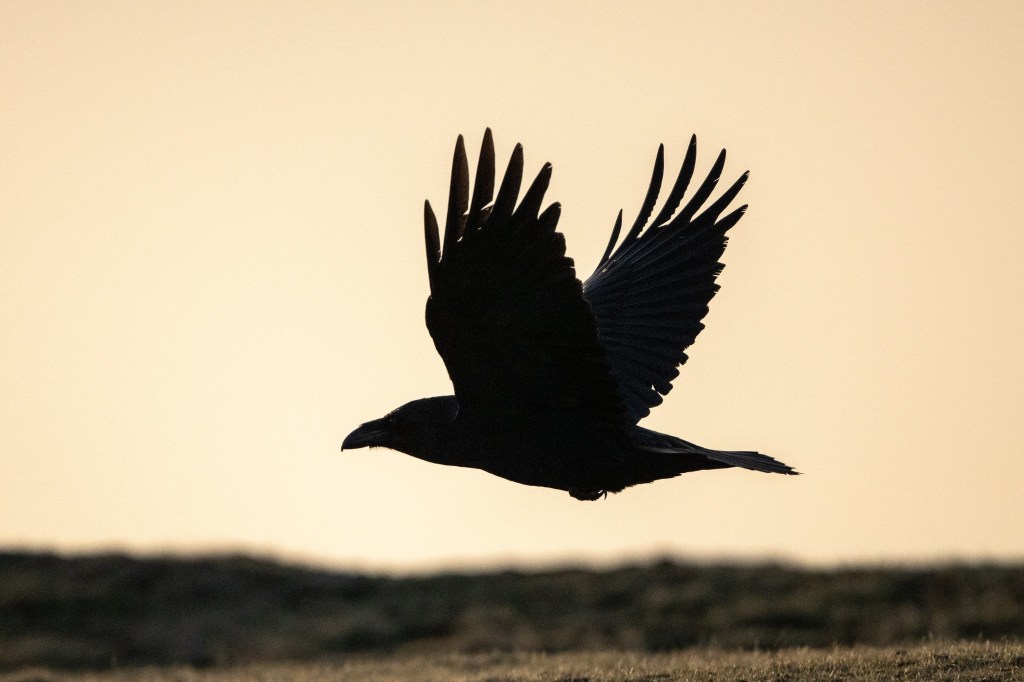
It is hard to say whether sheep were cropping those fields on June 18, 1645. Crows would most certainly have been there, and will have been witness to the carnage that day.
Songbirds were no doubt present, too, though their song will have been silenced; muted by the sound of pounding hooves, the clash of steel upon steel, the re-percussive din of musketry and the screams of men.
The brutal event of that mid-summer’s day would come to be known as ‘The Battle of Riby Gap.’
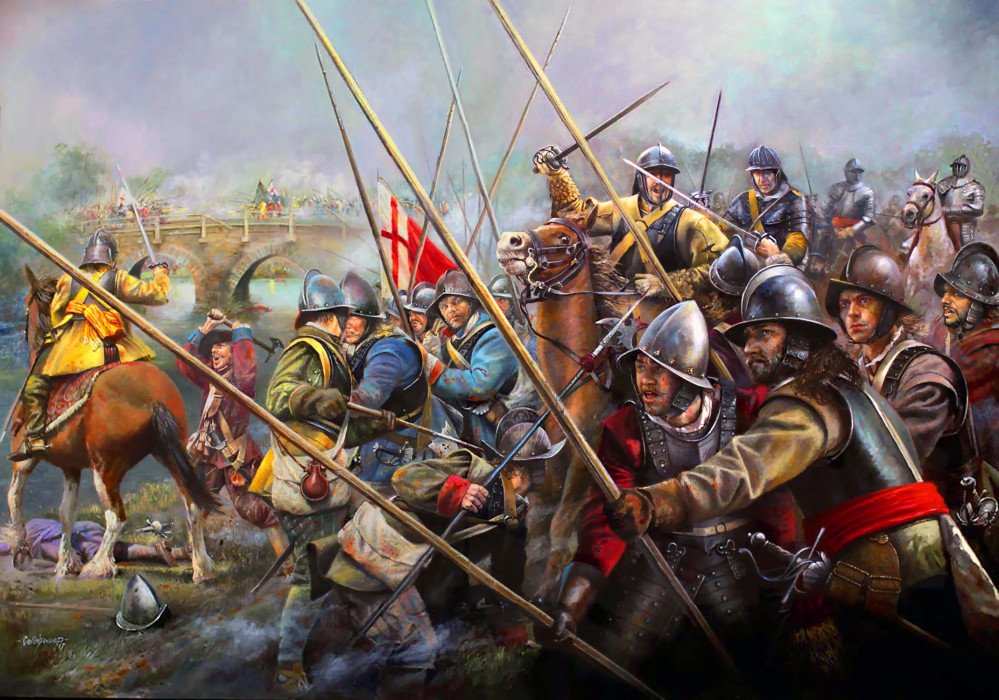
There can be no doubt that the English Civil War, which began in 1642, was the most devastating conflict of the nation’s history. Hard-fought, and bloody, it was conducted entirely on our home soil, the struggle dividing society at every level, splitting families, villages, towns and counties across the land.
Between 1642 and 1646 there were several large military campaigns and many medium-to-large battles, of which much has been written. The war was also fought locally, in thousands of small skirmishes and sieges on castles, towns and manor houses.
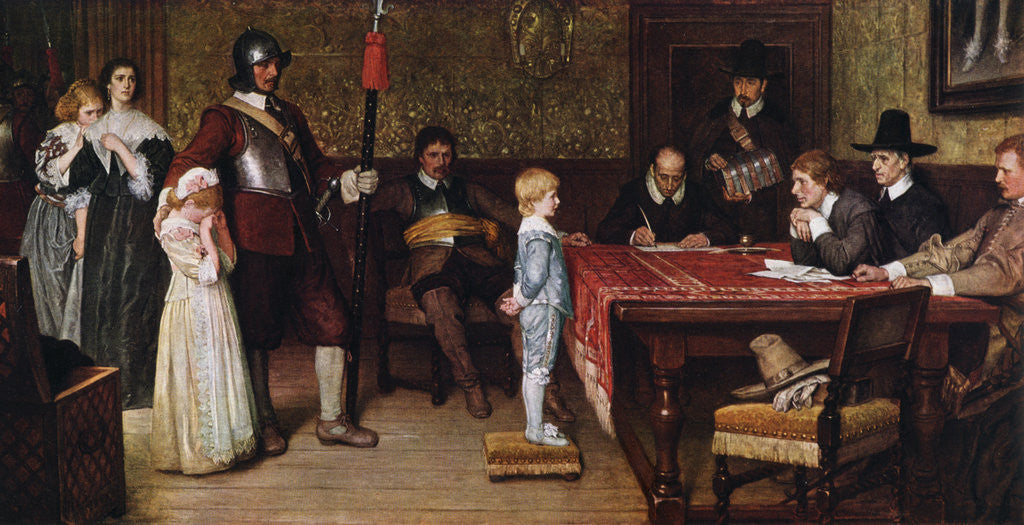
by William Frederick Yeames
Divisions ran deep and fighting became personal and unrestrained.
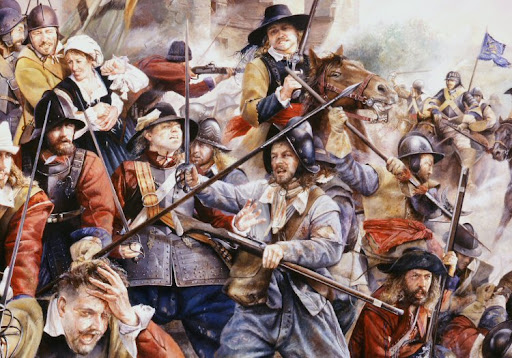
Countless atrocities were inflicted by soldiers, bent on the control of territory and the plunder of resources to advance their cause.
Wounding, death, psychological damage, looting and destruction were wrought on a huge scale. Towns and countryside were stripped of provisions by armies on the move or to support local garrisons. Law and order collapsed, as acts of violence and destruction went unpunished.
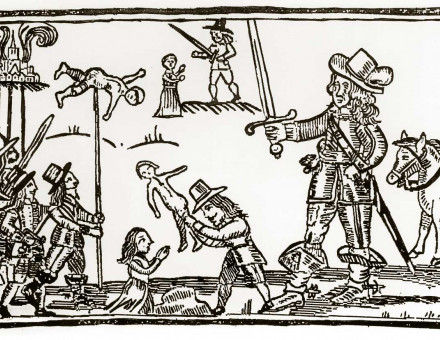
It is estimated that as many as one in four adult men, from a total population of about 4.5 million people, took up arms and up to 200,000 civilians (men, women and children) and soldiers lost their lives from fighting and diseases spread by moving armies – amounting to 4.5% of the population.
Proportionally, this represented as great a loss as that of the First World War (1914–18).
Some regions clearly favoured one side over the other, having either declared for the Royalists, as was the case in the northeast, Wales and the southwest, or for the Parliamentarians in the southeast.
The most hotly-contested regions, however, were the midland shires. Lincolnshire was one of them.
This then was the county in June of 1645.
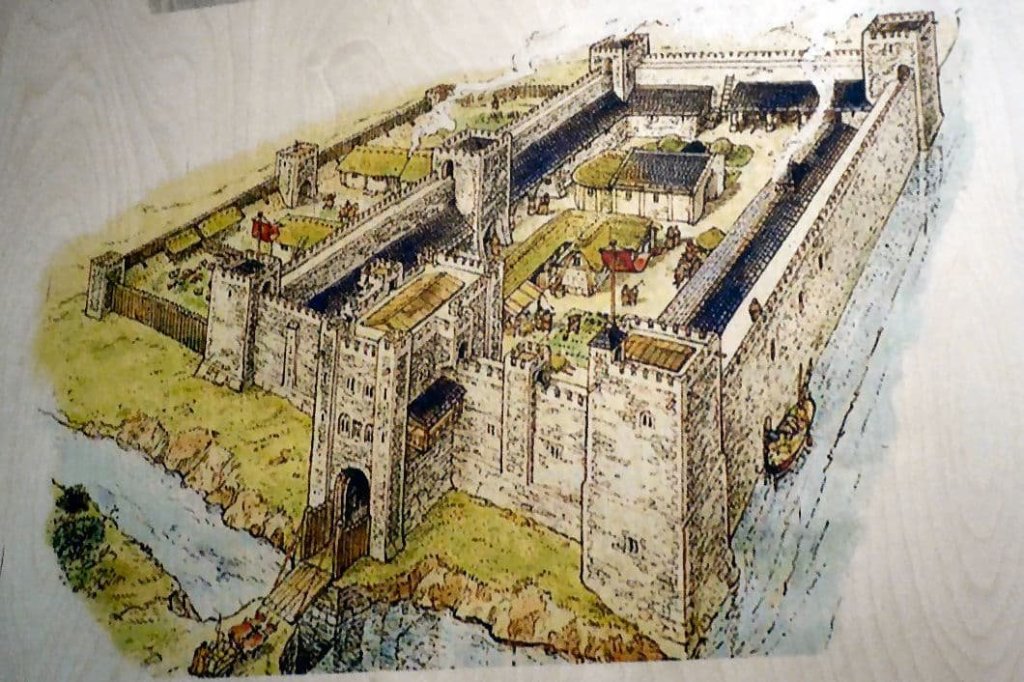
At that time, Royalist forces under the command of Colonel Foster were attempting to hold on to Newark Castle, arguably the side’s most vital stronghold in the area. Whoever held Newark could exert control over the region.
Meanwhile, the Parliamentarian army in the area, led by Colonel Harrison, sought to capture the castle, and so swing the balance of power in their favour.
Things at that time were not going well for the King’s forces, and the Newark Royalists were in dire need of additional supplies and funds to support them and their aims.
A raiding force of 250 horsemen, under the leadership of Captain Wright was dispatched from Newark. They headed northeast toward the Lincolnshire town of Caistor, looting and ransacking villages as they went.
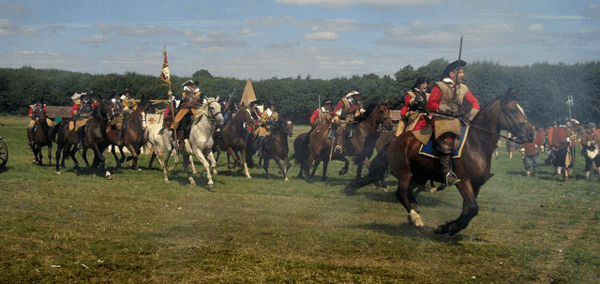
Once at Caistor, Wright’s cavalry halted to rest and recuperate before continuing with their mission. Their goal was the capture of Stallingborough from Sir Edward Ayscough. This they achieved, supposedly with ease.
Wright then considered his next objective. Grimsby, 7 miles away was one option. The town was then under Parliamentary control. An assault was, however, beyond his modest force’s capabilities. A far softer target was the market town of Horncastle, further to the south.
He and his men set off.
They had not gone far out of Stallingborough before they were confronted by a Parliamentarian force, led by Colonel Harrison. Despite being heavily outnumbered, Harrison engaged with Wright’s cavalry at Riby Gap.
This decision, although brave, was foolhardy. Not only were parliament’s forces outnumbered, they were outmatched, consisting mainly of poorly-trained militia-men.
Unsurprisingly, the superior Royalist force won the day.
During the skirmish, 9 men lost their lives. Some of the fallen were buried the following day at Riby. Others, including Harrison himself were buried at Stallingborough.
Riby’s parish registers reflect that two men, Charles Skelton and William Willoughby later died from their wounds, and were buried on June 20th and July 1st, respectively.
Theirs weren’t the only combatant deaths that June. On the 14th, only four days prior to the fateful encounter at Riby Gap, 15,000 men under the leadership of Thomas Fairfax had engaged King Charles’ army of 10,000 in a bloody clash at Naseby in Northamptonshire, resulting in a decisive victory for the Parliamentarians. It was one from which the Royalists never recovered.
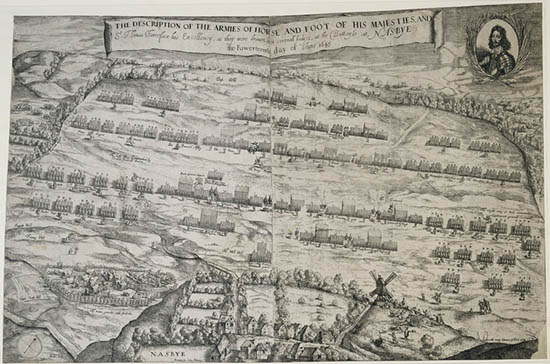
As I sit here writing this in December, 2024, having access to innumerable historical accounts, and blessed with hindsight, I am left wondering:
When Captain Wright led his men out of the Castle’s gates bound for Lincolnshire, was he privy to news of the Royalists’ devastating defeat at Naseby? And by the time he and Harrison met at Riby, were both men aware that the grand cause, opposed by one and pursued by the other had already been decided?
One thing is certain, the English Civil War was a struggle which would forever alter the relationship between monarch and parliament.
It began when the King raised his standard at Nottingham and continued through to 1646 when he surrendered at Newark. The Royalist defeat led to Charles’ eventual execution three years later, at which time The Commonwealth of England was created.
The new-found republic was to last only eleven years.
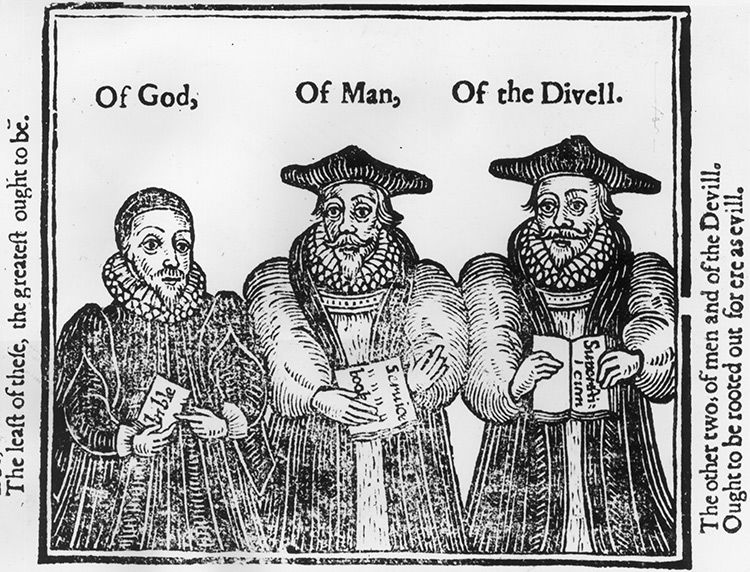
Unable to reconcile their political, religious and social differences, parliament was incapable of governing the land, and following the death of Oliver Cromwell in 1659, the monarchy was restored.
This raises another, hypothetical question in my mind: had Wright and Harrison been able to foresee the ensuing sequence of events when they met on the field at Riby Gap, would they have bothered to fight at all?
I do believe they would.
For such was the irreconcilable nature of the English Civil War, in which opposing factions fought, not for conquest, but over deep-seated divisions in politics, religion and ideologies.
 RAVEN MOON