
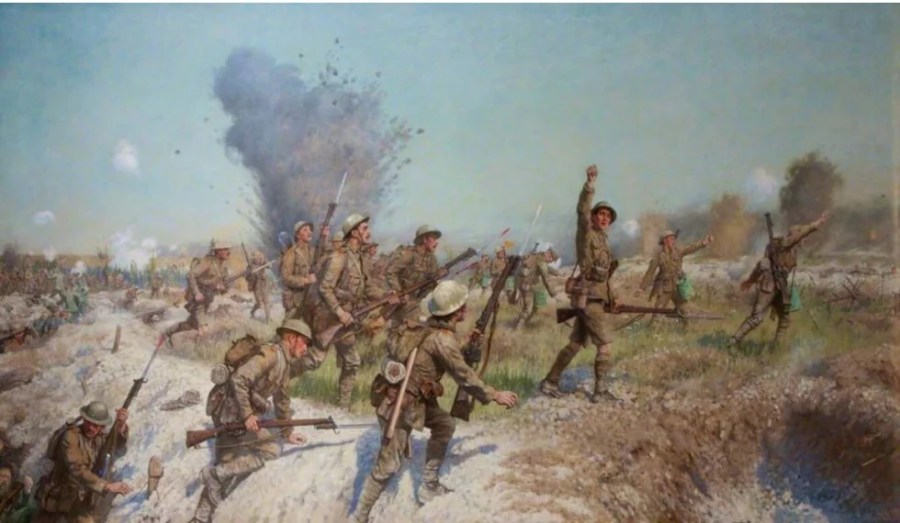
From little towns in a far land we came,
To save our honour and a world aflame.
By little towns in a far land we sleep;
And trust that world we won for you to keep!
Rudyard Kipling
Several years ago I began researching my family history. Whilst thoroughly enjoyable, the hobby was one which generated a great deal of paperwork. My burgeoning files expanded the deeper I explored, and grew ever-larger with each new discovery.
Each revelation brought with it a new-found, albeit distant relative, and a new, unique story, each one tickling the imagination and prompting thought.
Through each record, whether civil, parish or governmental, such as the ten-yearly census, I followed the lives of my ancestors, from beginning to end. And whilst death is clearly shown to be the only true certainty in life, when that comes all-too early such a premature loss is a tragedy.
Among the 1,286 individuals who currently form my own tree, one is of Robert Wand. Robert was my 2nd Cousin, 3 times removed.
Robert was baptised in the Lincolnshire parish of Hacconby on 5th August, 1883, the youngest of six sons to Richard Wand and Sarah Ann (nee Ellis). His father was an agricultural labourer.
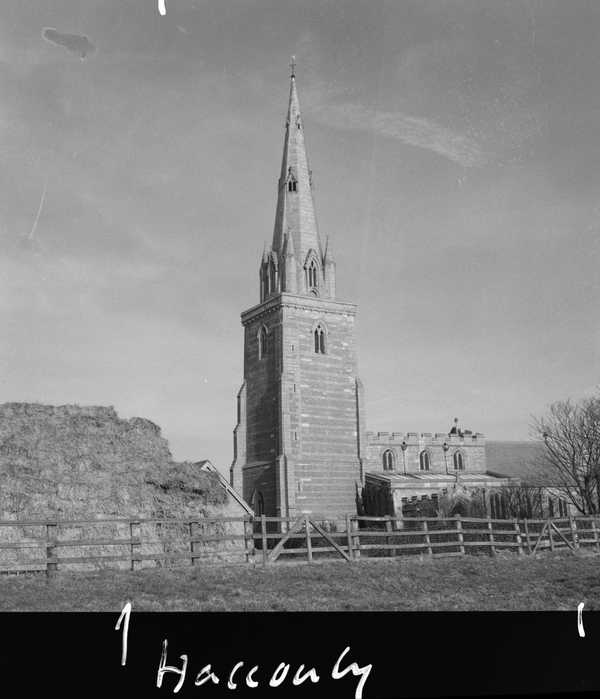
Robert’s first appearance on a census record was in April, 1891, where he was listed as a nine year-old scholar. By the time of the next census in March, 1901, Robert had left school and gained employment as a horseman on one of the local farms.

On August 5, 1914, Britain declared war with Germany.
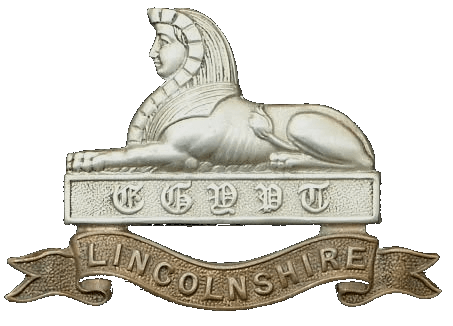
Robert answered his nation’s call, and on 8 September, 1914, he travelled to the nearby town of Bourne, where he enlisted in the Army, joining the Lincolnshire Regiment.
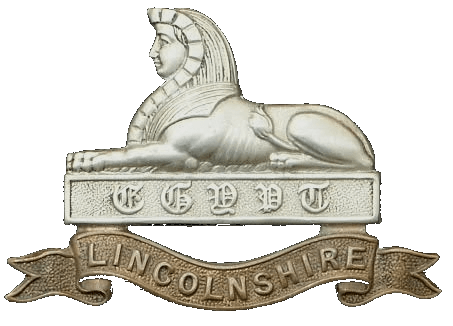

In his book, ‘The History of the 6th (Service) Battalion Lincolnshire Regiment, 1914 – 1919,’ the author, Colonel F.G. Spring states:
‘The 6th Service Battalion, Lincolnshire Regiment was one of the first battalions of Kitchener’s army to be raised, and also the first service battalion of the Lincolnshire Regiment.’
He also praised the quality of recruits, adding:
‘Our own battalion contained a fair sprinkling of of regular officers, whilst the men were of the best natured in the country. Recruited chiefly from Lincolnshire, a large proportion were agricultural labourers, already accustomed to an outdoor life and very fit.’
Family history research can at times seem little more than names, dates and places. Sometimes, however, records provide greater insight. His army record, for example, reflects that Robert’s appearance was typical of many males in my family.
He is described as being 5’5.1/2” tall, with brown hair and brown eyes. This simple description renders him far more than fading records on paper. Here we have a human being.

The Autumn of 1914 provided a long, unbroken spell of fine weather, ideal for training the new recruits. This training continued into and through early 1915, at which point the battalion was moved to Salisbury Plain, where more advanced training was carried out.
In June, 1915, the men of the 6th were reviewed by The King, and soon afterwards they received their orders to prepare for active service.
At this point, I am uncertain as to the chronology. Records clearly show that Robert was with the 6th (Service) Battalion of the Lincolnshire Regiment. However, on 1st July, 1915, when the 6th embarked at Liverpool bound for Gallipoli, he was not with them.
It is clear that Robert did not take part in the horrific campaign in the Dardanelles, as records reflect that, on 10th September, 1915, he was posted to France.
I can only presume that his experience as a horseman was deemed to be of more value on the Western Front and he was transferred to another battalion. This, however, is speculation.
What we do know is that Robert soon became a casualty as, on 4th October that same year, he suffered a gunshot wound to the left forearm. He was hospitalised for five days, an all-too brief respite, after which he returned to his unit.
Having studied the Regimental diaries, I can only presume that Robert’s wound may have been obtained during the allied attack on Loos, an action in which the Lincolnshire Regiment played a part. But again, this is speculation.
On 28th January, 1916, the Regiment’s 6th Battalion left the bloody disaster that was Gallipoli and sailed for Egypt. It remained there until 2nd July when it embarked once more, this time aboard the vessel Huntspill bound for France.
The Huntspill steamed into the wide bay of Marseilles on 8th July, 1916. By this time the mutually ruinous bloodbath known as the battle of the Somme had been raging for over two months.
Soon after their arrival in France, the men of the 6th reach the front lines, at which point my cousin Robert rejoined them.

Colonel F.G. Spring explains how the allied advance at the Somme had stalled:
‘But at the northern end, the seemingly impregnable stronghold of Thiepval, crowning the summit of a steep hill which rises above the valley of the Ancre, had successfully resisted all attacks. So long as Thiepval was in enemy hands the whole advance was held up. Little imagination was required to realise what the battalion would shortly be up against.’
On 2nd September, the battalion marched to Bouzincourt. Here they were only four miles from Thiepval, the enemy’s stronghold.
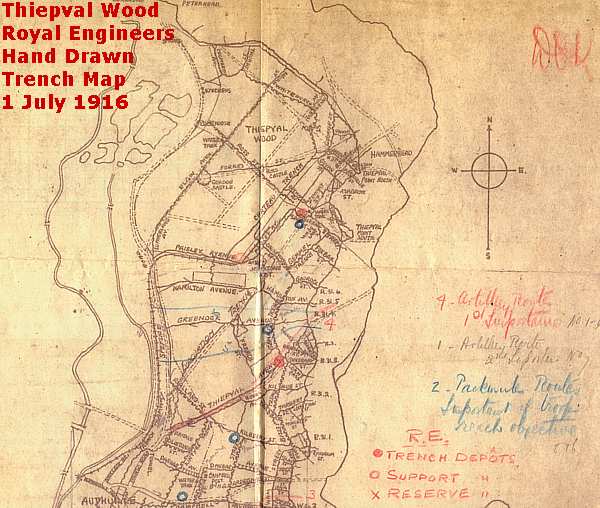
When the Yellowbellies joined the frontline troops, they were holding a line, parallel to that of the enemy, at distances varying from 70 to 300 yards. Each side were occupying what remained of the old enemy trenches.

These battle-scarred and dilapidated defences did not possess the depth of interconnecting support trenches typical of those of the latter part of the war. They were single lines. They were inadequate. And they were packed with men.
It is difficult to say whether Robert was among the men jammed into those trenchworks. In the book named above, Colonel Spring notes that, on 12th September, the battalion relieved the 9th Sherwood Foresters in the line near Ovillers, a mile and a half south of Thiepval. He also notes the enemy bombardment that followed:
‘The trenches were almost obliterated, and the bombardment was continuous. Casualties were heavy.’
I cannot say whether those brief and dispassionate lines describe the event that killed Robert. It is certainly plausible. What I do know is that, on 14th September, 1916, he sustained grievous injuries from shrapnel and died from his wounds. He was 33 years old.
No amount of sanctimonious sabre rattling can ever justify the killing of one stranger to satisfy the whim of another. By rights, Robert Wand should have been allowed to continue his life amidst Lincolnshire’s wide open acres, tending horses on the farm. Instead, he volunteered to serve his country – and paid the price.
For that sacrifice, he was awarded a medal …

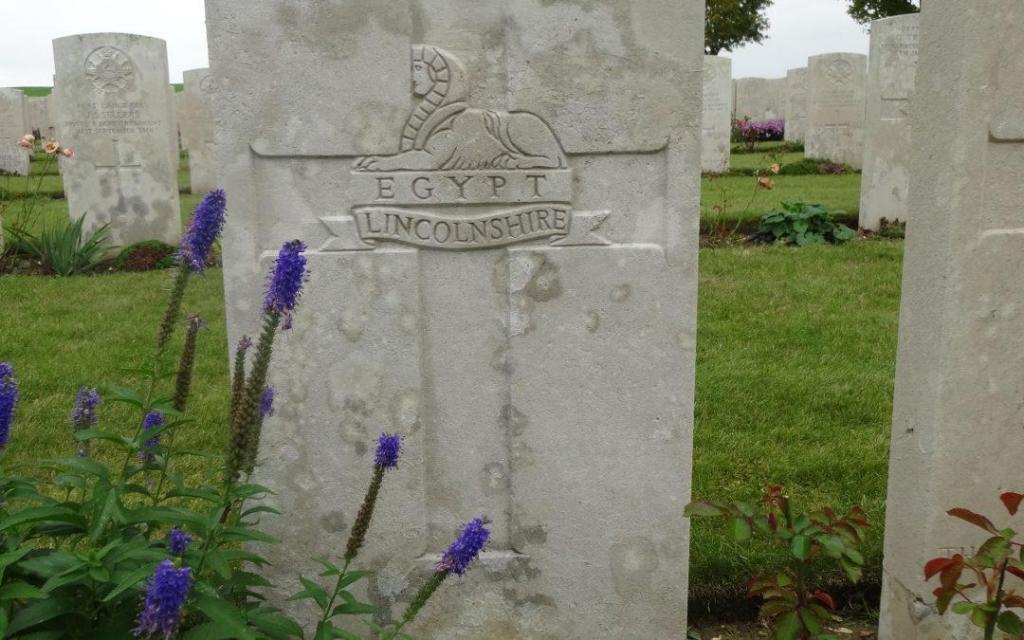
… and given a tiny plot of land in a foreign field.

 RAVEN MOON