
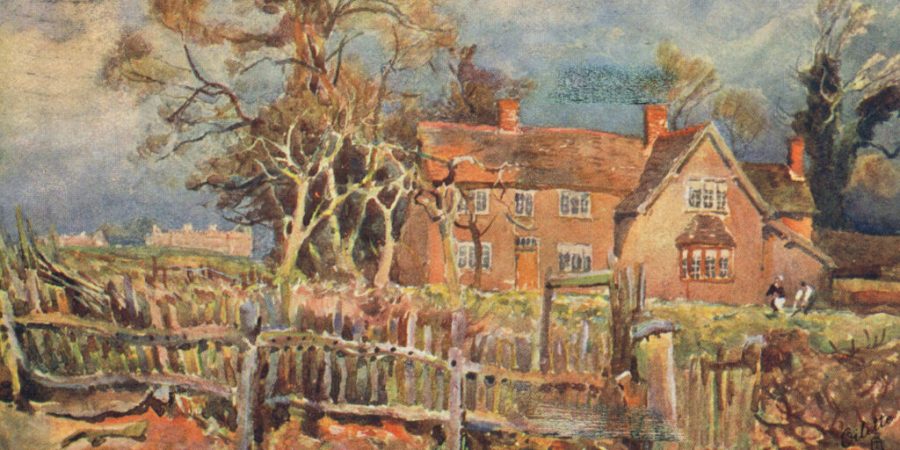
I have already declared on here that I’m an avid reader of novels. Of those I’ve read over the years, I’m sure I could count on one hand the number that were written by women.
That statement may be interpreted as sexist, but it is in no way meant as such. I’m not discrediting female authors or implying they are any less talented than men. It’s just that I find their work to be somehow different to that of male authors. I confess, however, those contrasts are indiscernible and impossible to evaluate.
What I do know is that, whilst we’re assailed by constant efforts to persuade us otherwise, men and women are wired differently. It’s as simple as that.
Differences in our hormonal formulas – a predominance of Oestregen in women, and Testosterone in men – serve to create more than just biological differences. They effect our emotions, the way our brains work, how we think … and, consequently, how we write.
These biological disparities must also impact on how we, as readers, receive and interpret that writing. I’ve simply found that I’m more comfortable reading novels written by men.
But, like all principles, there have been exceptions to that rule.
One example was a novel I read as a young boy and which helped inspire in me a lifelong love for history. This was ‘The Eagle of the Ninth,’ by Rosemary Sutcliffe. A more recent example has been ‘Wolf Hall’ by Hilary Mantel.
Another was ‘Middlemarch,’ by George Eliot, the pen name of English novelist, Mary Ann Evans.

Not only was this the work of one of the few female authors I’ve read, it was also one of the few classics of English literature to lure me into its pages.
That lure was provided, not by a sudden urge to immerse myself in a bygone language, but by an outstanding six-part BBC adaptation, which aired in 2001.
Whether you love the BBC or loathe it, it has for many years excelled at producing historic costume dramas. These have inevitably engaged the collective public imagination. But, however well-done they may have been, and however faithful their interpretation of the source material, I found many to be woolly romances.
Prime examples have been those based on works by authors such as Jane Austen and the Brontes. Many were, in effect, little more than antique soap operas.
Middlemarch was different.
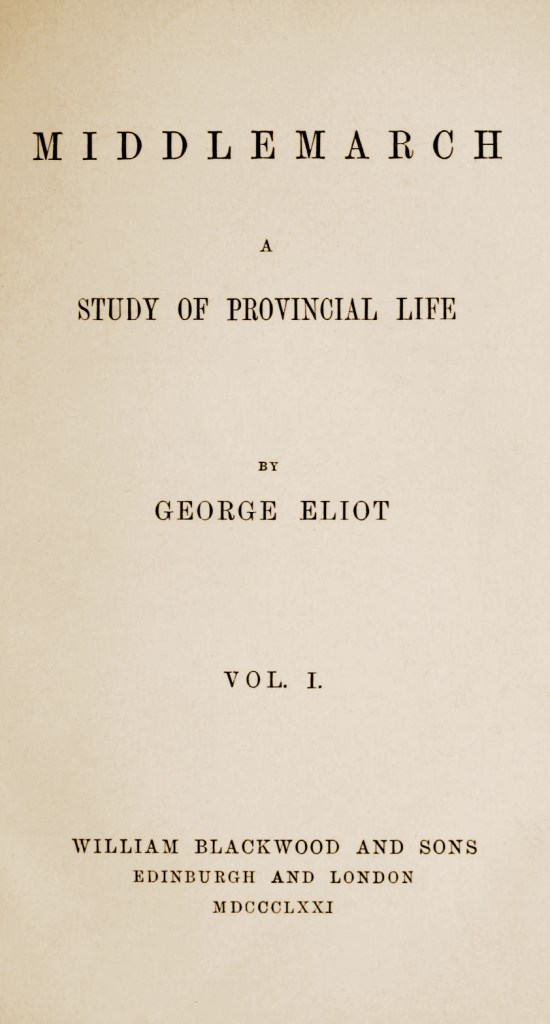
Written in 1871/72 and subtitled ‘A Study of Provincial Life,’ Middlemarch was not simply a work of fiction set in an English midlands town, it was, like much of the author’s work, an astute social and political commentary.
The novelist, Virgina Woolf, described Middlemarch as ‘… one of the few English novels written for grown-up people.’
It was not only Eliot’s critique of the happenings of the day, and her intricate, multi-stranded plot lines that engaged my own imagination, but the era in which it was set and the complex characters which took to the stage.
At the time the TV series was broadcast, I had already spent several years researching my family history. Consequently, through visits to county archives, churchyards and cemeteries, much of my time had already been spent in the period covered by the drama – 1829 to 1832.

For me, therefore, when Middlemarch appeared on our screens, with Dr Tertius Lydgate arriving at the bustling midlands town by stagecoach, the setting appeared to cast light on the lives of those ancestors I’d discovered in my research.
The costumes, language and backdrop added an additional and welcome dimension to the burgeoning reams of dusty and colourless genealogical records filling my shelves.
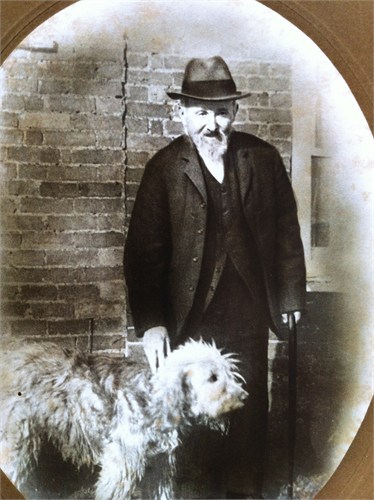
It must be said, however, that the characters who took centre stage in Middlemarch were of an entirely different social strata to my own distant family, almost all of whom had been lowly, agricultural workers toiling in the fields of south Lincolnshire.

Nevertheless, my ancestors will have undoubtedly come into contact with the series’ support cast, such as shopkeepers, pub landlords, doctors and parsons. It was therefore good to see these people ‘in the flesh’.
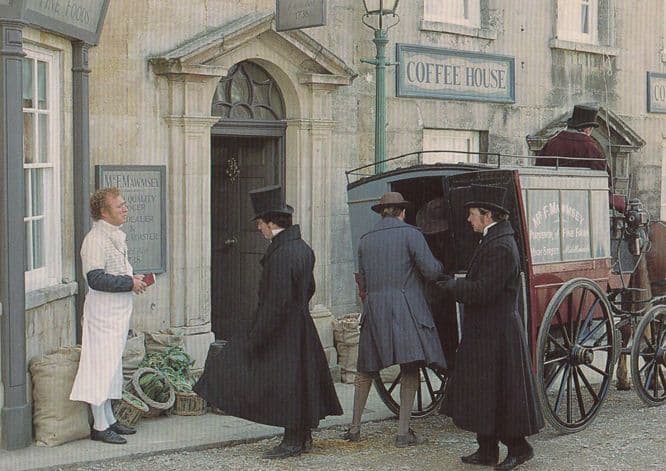

One other aspect of the TV series which helped make the drama personal was the fact that the production company had chosen Stamford, Lincolnshire for its portrayal of Eliot’s provincial town.
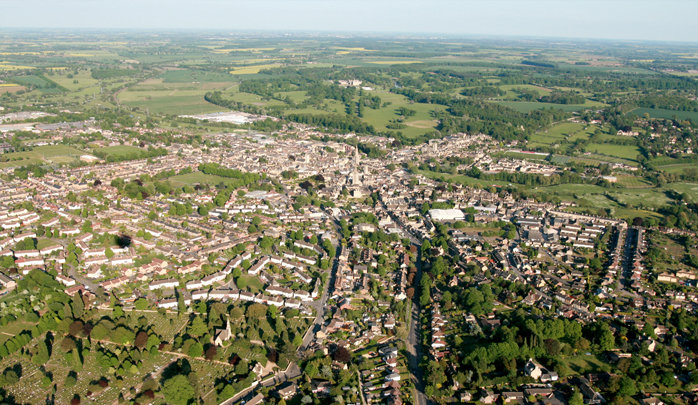
Stamford’s stunning sandstone architecture no doubt contributed to the choice of location.
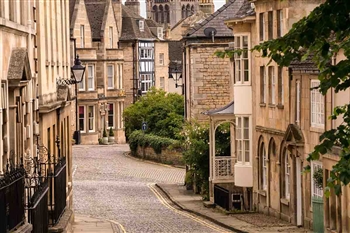
This aesthetic remains a typical feature, not only of the town itself, but the wider area of south Lincolnshire, including my home village of Billingborough. The setting was therefore familiar and emotive.

It may have been the excellent dramatic on-screen portrayal that prompted me to later read Middlemarch. It may equally have been the sense of ‘connection’ to the characters and their lives. Suffice to say, I read the book, and whilst the language was a touch archaic and did not provide the ‘easy read’ of contemporary novels, I enjoyed it.
Furthermore, like any book upon which a screenplay later comes to be based, it contains so much more than what can ever be presented on screen. As such, I can recommend it.
What follows is not a personal review of ‘Middlemarch,’ the novel, but an overview of it. A word of warning, however, my appraisal does contain spoilers.
Middlemarch is unusual. Although it is primarily a Victorian novel, it has many characteristics typical to contemporary ones.
At the time of its publication, critical reaction to Eliot’s masterpiece work was mixed. A common accusation levelled against it was that it possessed a morbid, depressing tone.
Furthermore, many critics did not appreciate Eliot’s habit of scattering obscure literary and scientific allusions throughout the book.

In their view, a woman writer should not be so intellectual. Eliot, however, disdained what she saw as the ‘silly, women novelists’ of the day.
In the Victorian era, women writers were generally confined to writing the stereotypical fantasies of the conventional romance fiction. Not only did Eliot deplore the constraints imposed on women’s writing, she disliked the stories they were expected to produce.
Her disdain for the tropes of conventional romance is apparent in Middlemarch in her treatment of the marriage between Rosamond and Lydgate.

Both Rosamond and Lydgate view courtship and romance in terms of ideals taken directly from conventional romance.
This brings me to another problem with the mainstream fiction of the day, in that marriage tends to mark the end of the novel.
Eliot, however, strives to depict its realities.

For many critics, Middlemarch was too depressing for a woman writer. One possible reason for this view was that Eliot had refused to bow to the conventions of a happy ending. She demonstrates that an ill-advised marriage between two people who are inherently incompatible never becomes completely harmonious. In fact, it becomes a yoke.
Such is the case in the marriages of principal characters, Lydgate and Dorothea.
In Dorothea’s case, her husband’s death by heart attack saves her from a life of regret. Lydgate and Rosamond, on the other hand, marry young and in haste and then repent their decisions.

Of those major life choices which govern the narrative of Middlemarch, marriage is one which Eliot takes very seriously. In her portrayal, short, romantic courtships lead to trouble as both parties entertain unrealistic ideals of each other. They marry without getting to know one another.

The author demonstrates that marriages based on compatibility work better. Moreover, marriages in which women have a greater say are stronger still, such as the marriage between Fred Vincy and Mary Garth.
Here, Mary is adamant that she will not marry Fred if he obeys his father’s wishes and becomes a clergyman. Her steadfastness therefore saves Fred from an unhappy entrapment in an occupation he doesn’t want.
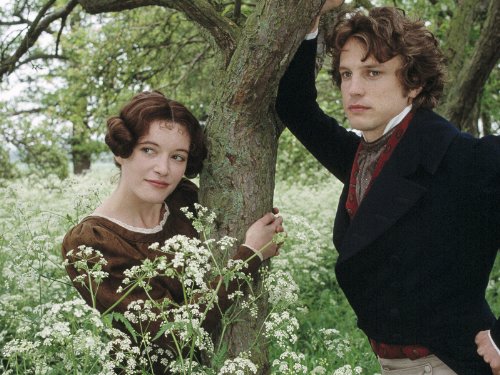
(Rachel Power and Jonathan Firth)
Conversely, Dorothea and Casaubon struggle continually throughout their brief marriage because Casaubon attempts to make her submit to his control. The same applies in the tempestuous marriage between Lydgate and Rosamond.
The choice of an occupation by which one earns a living is also an important element in the book. Here, as with marriage, Eliot illustrates the consequences of making the wrong choice. She also details at great length the consequences of confining women to the domestic sphere alone.
Dorothea’s passionate ambition for social reform is never realized. She ends with a happy marriage, but there is some sense that her end as merely a wife and mother is a waste.

Rosamond’s shrewd capabilities degenerate into vanity and manipulation. She is restless within the domestic sphere, and her stifled ambitions only result in unhappiness for herself and her husband.
Eliot’s refusal to conform to happy endings demonstrates the fact that Middlemarch is not meant to be entertainment. She has dealt with real-life issues, not the fantasy world to which women writers were often confined.
Her ambition was to create a portrait of the complexity of ordinary human life: quiet tragedies, petty character failings, small triumphs, and quiet moments of dignity.
The complexity of her portrait of provincial society is reflected in the nuances of individual characters.
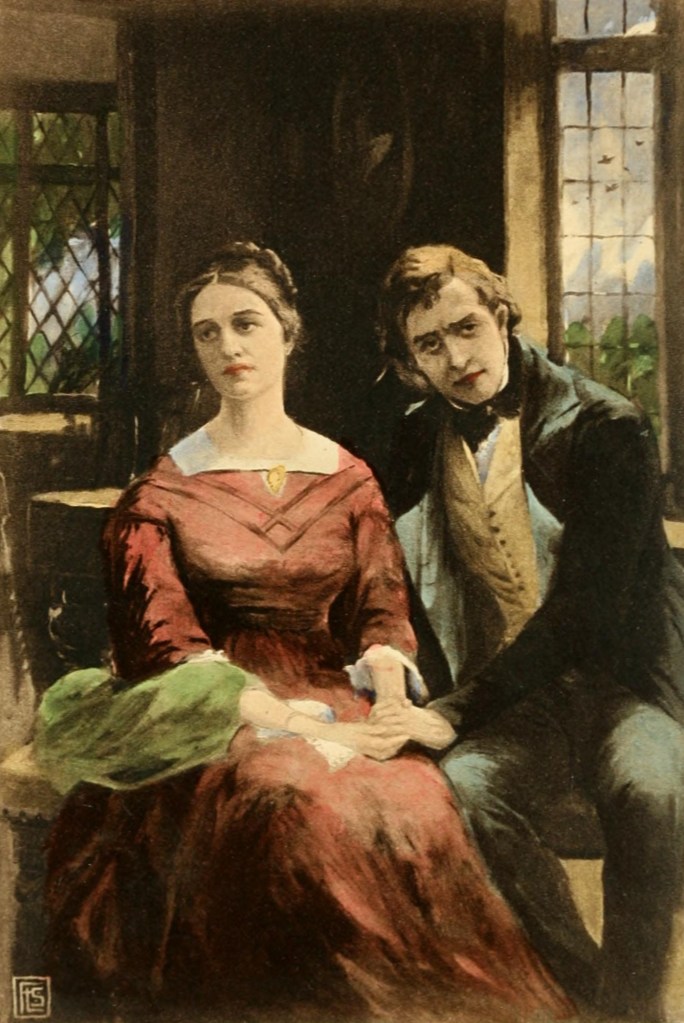
These contradictions in the characters of individuals become evident through the shifting sympathies of the reader. For example, one moment, we may pity Casaubon, only to judge him harshly the next.
Middlemarch stubbornly refuses to behave like a typical novel. Whilst the drama is a collection of relationships between several major players, no one person occupies the centre of the action.
In this, ‘ … a study of provincial life‘, it becomes clear that no single person can represent that life. It is necessary, therefore, to hand that role to a wider and varied cast.
Eliot’s work was fairly experimental for its day in both form and content, more so as it was the work of a female novelist. What is patently clear, however, is that, for all the harsh realities it portrays – or perhaps because of them – this work of fiction has withstood its ultimate test, and that is the test of time.
 RAVEN MOON