
My August 5 post, ‘The Worst Journey in the World,’ is an account of my father’s World War Two service in the Royal Navy. It covers the period from 1940, when he began his training at HMS Royal Arthur, Skegness, through to his demobilisation in 1945.

Within that time he served in Africa, taking part in the bombardment of Mogadishu and Kismayu, and also in the Arctic circle, where he saw action on the arduous aid convoys to Russia. This was a campaign Winston Churchill later declared to be ‘the worst journey in the world.’
Excluded from my account was a posting of six weeks duration, of which my father once revealed to me that he ‘hated every second of every hour of every day.’
So, what could cause him, a man who would later endure several bitter Arctic convoys, to proclaim those six weeks to be utterly loathsome?
His ordeal began sometime in 1941 (records are sketchy) when the vessel upon which he served, the heavy cruiser HMS Shropshire, was docked at Simonstown, South Africa.

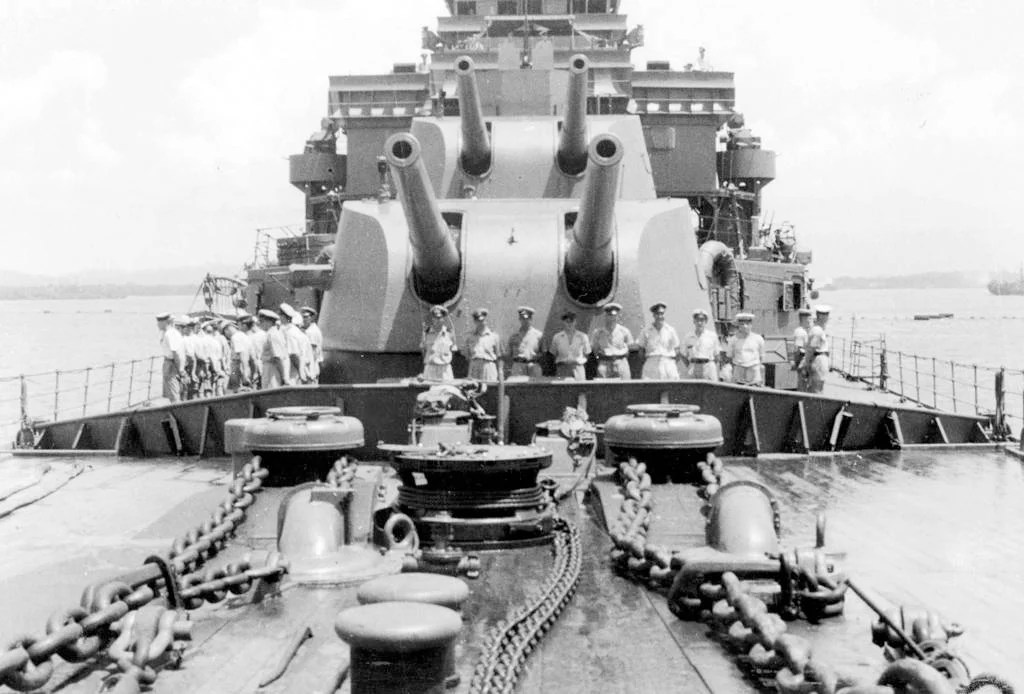
Shropshire was an impressive, heavily-armed warship of 13,000 tonnes, having a complement of 1,000 men. My father’s role on board, outside of action stations, was as one of the cooks in the ship’s well-equipped galley.
The Royal Navy vessel that was to be my father’s temporary ‘home’ had, at that time, recently undergone a refit and was about to embark on sea trials lasting six weeks.
My father received news of his unexpected assignment when he was informed that the cook serving aboard that other vessel had been hospitalised due to acute appendicitis, and that he was to be the man’s replacement for the duration of the trials.
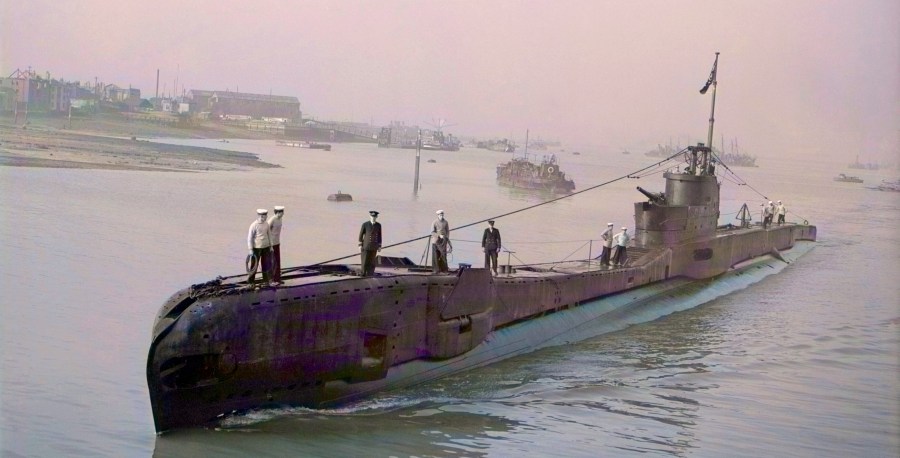
Having grown accustomed to life aboard Shropshire, a huge, 193 m long warship, my father was about to experience a drastic and unsettling transfer, for the vessel to which he was temporarily assigned was HMS Taku, one of the Royal Navy’s ‘T’ Class Submarines.
The dissimilarities between the two vessels could not have been more extreme.

With its considerable length, displacement tonnage and a beam of 20 m, HMS Shropshire provided one of the most stable platforms possible in rough waters.
In stark contrast, at only 84 m long, a displacement of a little over 1,000 tonnes and, most significantly, a beam of only 8.08 m, the Taku handled the seas’ swell with the grace of a dead pig.
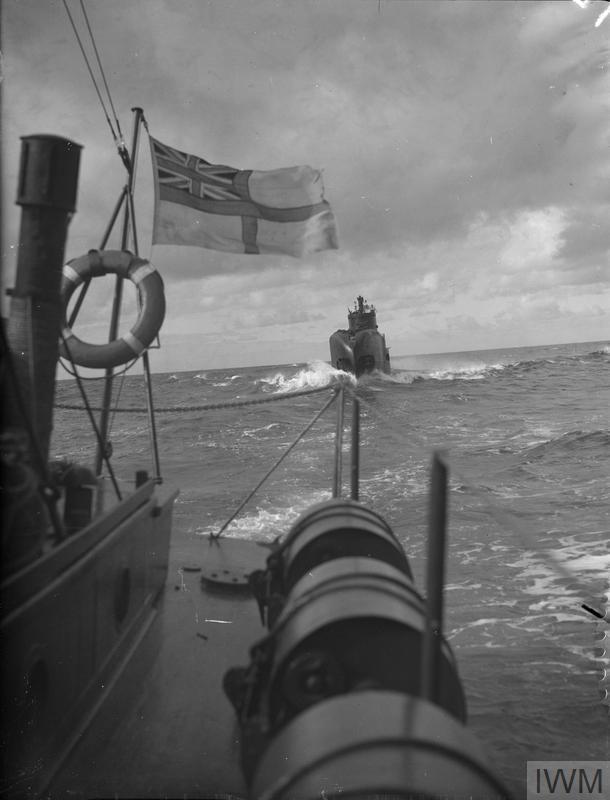

The boat’s poor stability while on the surface was to make cooking difficult, adding one more hindrance to the catalogue of challenges facing my father as the vessel’s cook. I’ll expand on these later.
My father remained fairly tight-lipped when it came to sharing his wartime experiences with his family. He would happily relate a funny story or two, but as to the unpleasant episodes of this period of his life he remained, understandably, reticent. To gain an understanding of his life aboard the submarine I have therefore been obliged to conduct my own research.
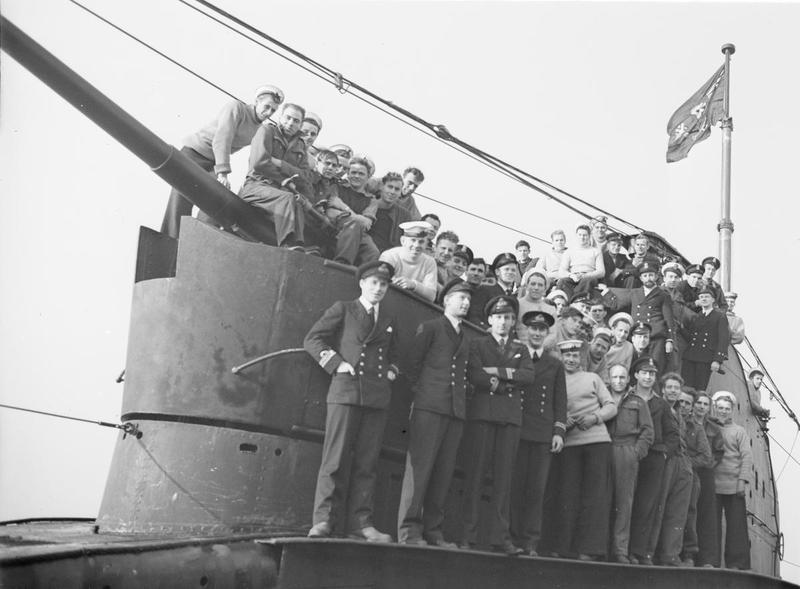
What follows is therefore a generic overview of the conditions aboard a British World War Two submarine; conditions my father will no doubt have experienced. Such are the many radical contrasts between the heavy cruiser and submarine, it is difficult to judge which would have struck my father as the most disagreeable.
One of the characteristics I remember of my father was his attention to cleanliness. He was not one who minded getting his hands dirty, but he was always keen to clean up as soon as possible once the job was done. Personal cleanliness and hygiene were paramount to him, and he always ensured he was ‘well turned-out’.
I’m sure this quality will have equally applied to him in 1941, and from what I have learned during my research, it is evident that a World War Two submarine was no fit place for a man such as he. It is little wonder that he loathed his time as a submariner.

Whilst aboard the cruiser Shropshire, my father had his own hammock, slung in the mess. Although not exactly seclusion, this represented his own space and was highly valued. Taku afforded him no such privacy.
Submarines at that time had hammocks or bunks for only a half to a third of the boat’s crew.
The necessary, though far from ideal, sleeping arrangement was summed-up by the revolting term ‘hot-bunking,’ as crewmen coming off duty would have to climb into the stink of a comrade’s recently-vacated bunk as he himself went on watch.

It was inevitable that, during a patrol, those bunks would quickly cultivate a noxious odour, as washing facilities were negligible. There were no showers on board and only minimal supplies of fresh water were available for washing. Soap was provided as a token gesture but was, therefore, little used.
If this were not objectionable enough, boats possessed only two to three toilets, these shared in Taku’s case by a complement of 59 men. Use of these facilities was inadequate, uncomfortable, messy and complicated.
During the early part of the war, toilets in our submarines could only be used when the boat was close to the surface – and not at all when in proximity to enemy vessels. Emptying them was a tiresome process, fraught with problems.
The procedure required the careful and orderly opening and closing of a number of valves which, if done incorrectly, would result in crewmen ‘getting their own back’ as the contents were ejected due to the pressure outside the hull.
At those times when toilets could not be used, highly unpopular ‘sanitary buckets’ were provided. Given the instability of submarines, it requires little imagination to understand why this provision was so disfavoured.
Despite the certainty of ‘soiling’ through this and other essential functions during patrols, there was no provision for the washing of clothes, aside from the inadequate option of handbasins in the toilets.
Had handbasins been used for clothes, however, there was no way of drying them. Not only were there no drying facilities, submarines’ lack of insulation and air conditioning led to them being perpetually damp. Their bulkheads continually ran with condensation, and compartment floors became covered with a mixture of bilge water and oil.
These conditions contributed to an oppressively foul atmosphere from which escape was impossible. The rank odour of unwashed bodies, along with the toilets’ stink, and those of diesel exhaust and stale food, combined to create a noisome and unhealthy potpourri.
Aside from the disparity in the two vessels’ size, tonnage and living conditions, one fundamental difference not yet explored was the plain fact that HMS Shropshire was a surface vessel, whilst Taku was a submarine. My father’s temporary home, therefore, was one that frequently dived into the deeps.

At that time our navy’s submarine force followed a fairly standard routine. They would spend the day submerged, surfacing once darkness had descended. While submerged, a third of the crew would be manning the boat, the remainder sleeping, resting or conducting minor maintenance.
To avoid using too much of the battery power while under water by having to repeatedly adjust the trim of the boat, the crew were instructed to keep their movements and exertions to a minimum. This had the additional benefit to air quality, as long periods spent submerged led to significant CO2 contamination.
The befouling of air quality limited the time spent submerged to approximately thirty hours. Although various solutions were tried, such as CO2 absorbers and the release of bottled oxygen, these were woefully inefficient. Consequently, the noxious stench, foul living conditions and contaminated atmosphere in the region’s tropical heat combined to create conditions that were nothing less that brutal.
As my father lay in his malodorous bunk, I’m sure he must have longed to swap the sweating bulkheads with the familiar fertile fens of home, and the chance to once more breathe good, clean air beneath Lincolnshire’s magnificent cloud-stacked skies.

But this was wartime, and he had forgone the opportunity of a safe position in a Grantham engineering works, choosing instead to enlist in the military for the duration of the country’s ‘emergency’. He had no option but to endure.
These, then, were the vile conditions facing my father as he joined the Taku’s complement.
The difficulties he faced as the vessels cook were no less challenging, and were entirely at odds with his experiences aboard the Shropshire, with its well-appointed galley.
Taku’s ‘galley’ – if it could be called one – was little more than a restrictive section of slender corridor fitted with cooking appliances, such as stove and oven. My father’s workspace was therefore not only tiny but was bisected by a busy gangway running from stem to stern.
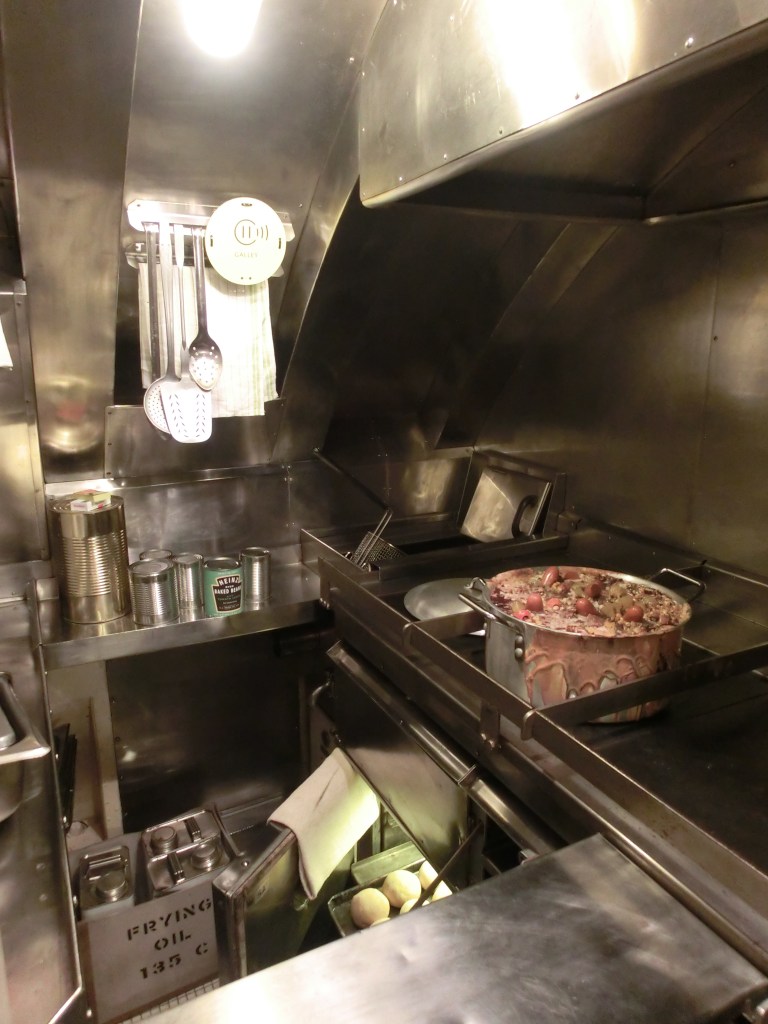

The poor cooking facilities were equalled by a similarly inadequate food provision. The boat was equipped with only one refrigerator, and bread and fresh vegetables were stuffed into every conceivable corner of the boat. However, in the submarine’s perpetually damp and noisome atmosphere, this quickly rotted or went stale. Food which remained edible was tainted with the smell of diesel.
Once supplies of fresh food ran out, meals were produced using tinned food, a monotonous arrangement that soon became as popular among crewmen as their sanitary buckets.
As we have seen, poor stability rendered cooking difficult while the boat was on the surface. Fortunately, the kitchen appliances were electric and therefore usable whilst submerged.
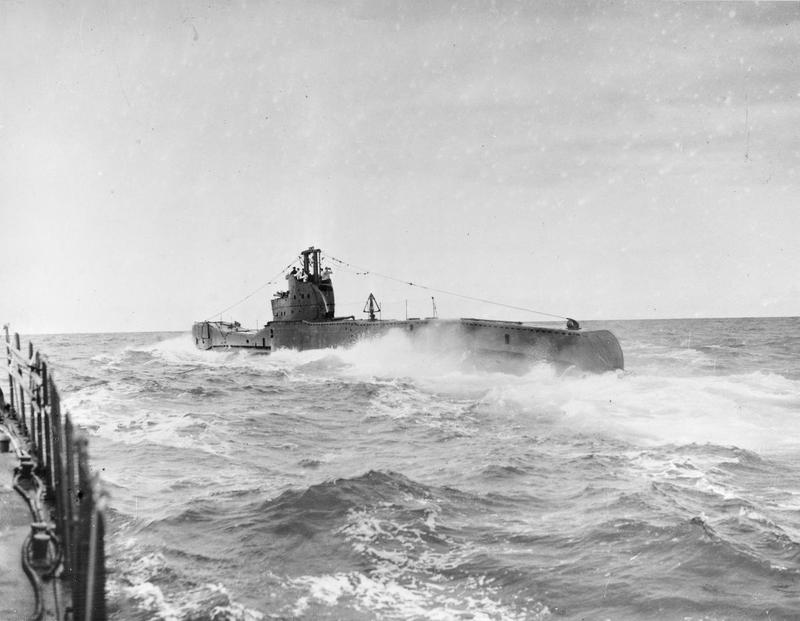
The surfacing of the vessel after nightfall was understandably welcomed by the crew, as this made for fresh air, the ability to smoke – and, of course, the issuing of the daily rum ration.
Breakfast was served shortly after surfacing, lunch three hours later and dinner four hours after that.
During this time, the boat’s batteries would be recharged as its powerful diesel engines took over propulsion. And, as dawn broke on the eastern horizon, the order would once again be given for the boat to submerge once more into the depths.
Such was the experience of British submariners during the early years of World War Two.
At the end of its sea trials, Taku returned to port, where my father gratefully disembarked to rejoin the familiar ‘comforts’ of HMS Shropshire, its mess, galley – and his own hammock.
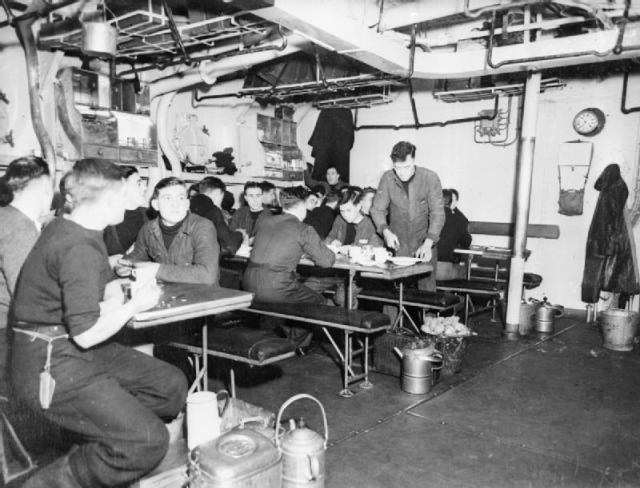
The cruiser was again in Simonstown, assigned to the navy’s Africa station – but that was about to change. It was 1941 and Russia was desperate for munitions and supplies to continue its fight against Axis forces – and the only way for the allies to provide them was by sea.
Shropshire left Africa and steamed northward to the Hebridean naval base at Scapa Flow.
From there she sailed west to Iceland. Here, she joined the first of her aid convoys, destined for the Russian port of Archangel in the Arctic Circle.
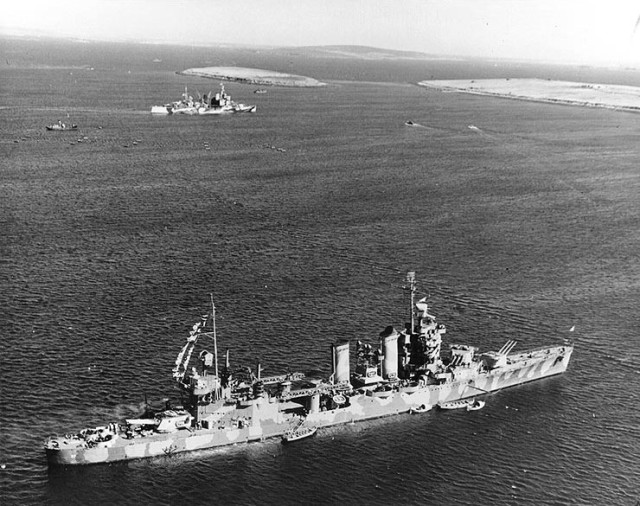
This, ‘the worst journey in the world,’ was one rife with peril as each convoy would be shadowed by Germany’s own ‘Silent Service,’ its U-Boat fleet.

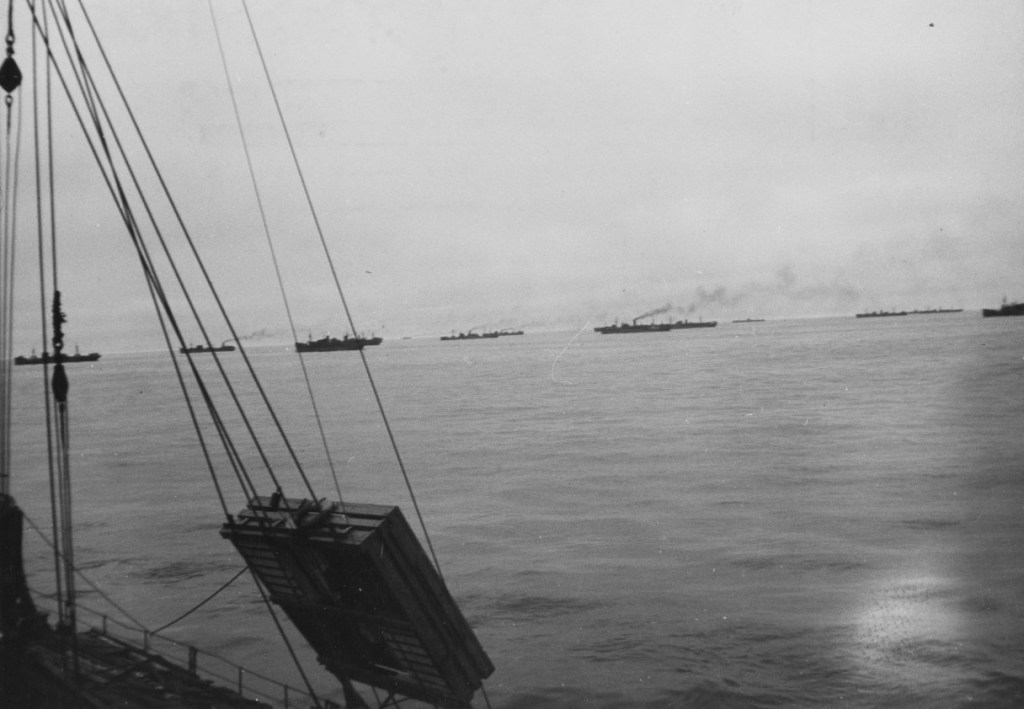
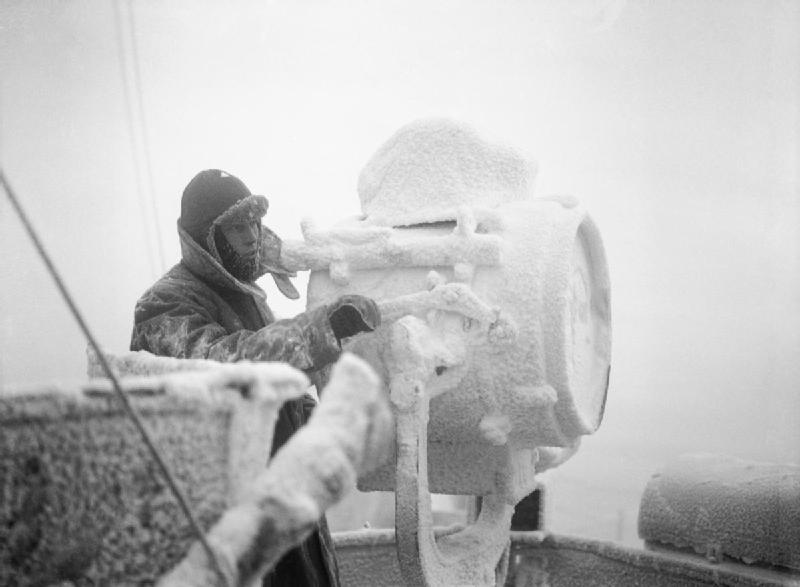
As these convoys steamed east into the treacherous Arctic waters, the trailing enemy hunters radioed ahead, constantly relaying the allied vessels’ course and speed to waiting packs of deadly, enemy U-Boats.

These signals allowed the ‘Wolf Packs’ to adopt their optimum positions, so as to intercept the convoy at ninety degrees to their targets.
From here, they launched their deadly torpedoes, night and day, picking off the allied ships, one by one.

It may be viewed as inconceivable, therefore, that having faced these ruthless Arctic Convoys, and five long years of wartime service, the period my father would continue to view as most detestable in his experience were those six weeks spent as a reluctant submariner.
This must surely be ample testament as to the appalling conditions endured by our submarine crews at that time.

 RAVEN MOON