
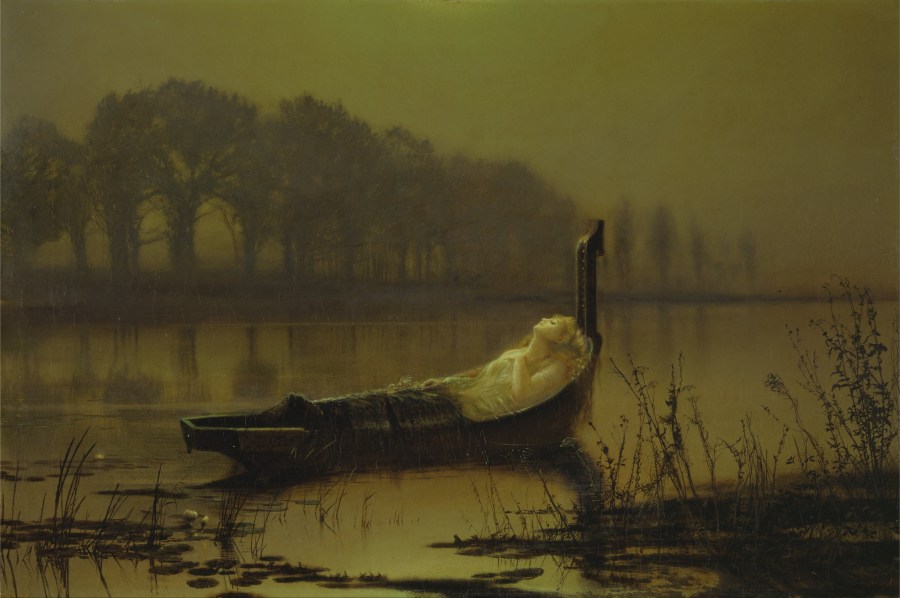
Here I continue the Arthurian theme of my previous essay, titled The Hero Within. As I stated in that post, the story of King Arthur has long captivated me, and I’ve loved to read about mist-shrouded Avalon.
In the story of England, it is here – in Arthur’s Camelot, with its many colourful and legendary characters – that our nation’s history becomes blended with the mystique of mythology.
It is here, in this esoteric episode of our history, that the veil between worlds draws thin.
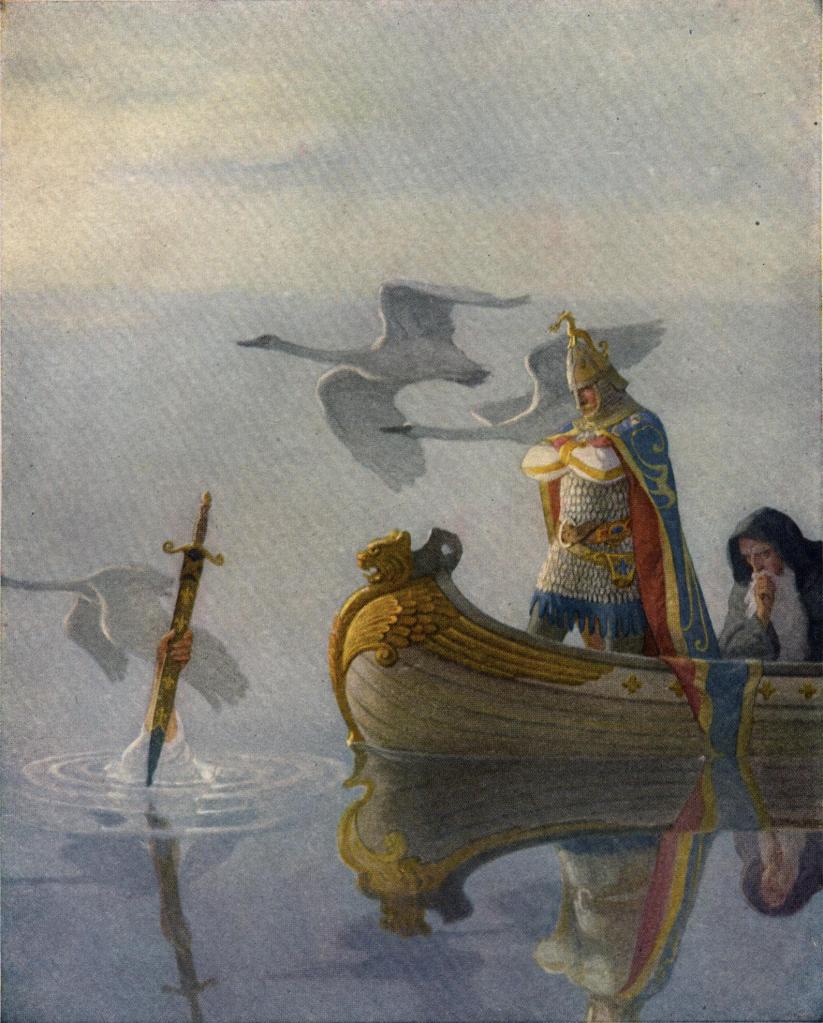
Despite my curiosity, I’ve done little more than approach the Arthurian legend through the pages of fiction. On an academic level I therefore remain unenlightened.
It has, however, served to influence our home’s decor to a degree.
Several years ago, when decorating what was then our lounge (and is now the dining room), my wife and I spent time pondering over a ‘theme’ for the room. We had already given one of our rooms an ‘art deco’ style. However, for this, one of the original rooms in our old harness-maker’s cottage with its low ceiling and exposed beams, we eventually opted for a medieval approach.
We then set about sourcing suitable furnishings that would help impart the required chivalric atmosphere. This would come to include a large tapestry of Edmund Leighton’s impressive painting ‘God Speed’.
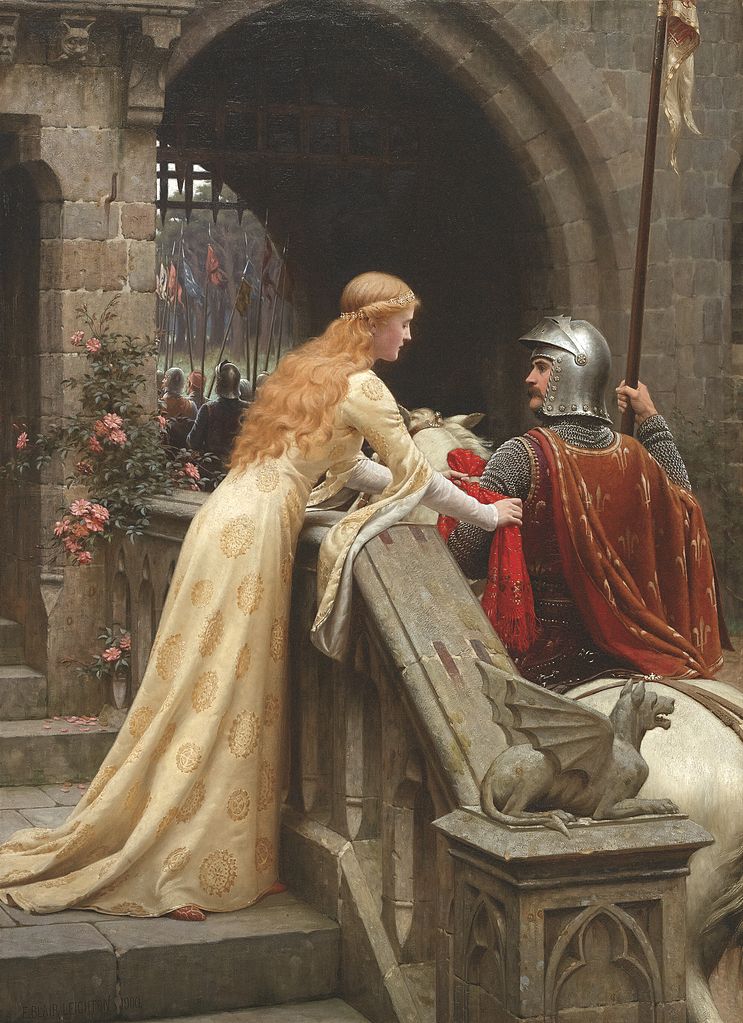
The item matched our tastes perfectly and fitted well with other Pre-Raphaelite artwork in the house by artists such as John William Waterhouse.
When it became necessary to choose artwork for the chimney breast – the room’s focal point – we knew our selection would have to be something special. When we saw ‘The Lady of Shalott,’ painted by Waterhouse in 1888, we knew we’d found what we were looking for.
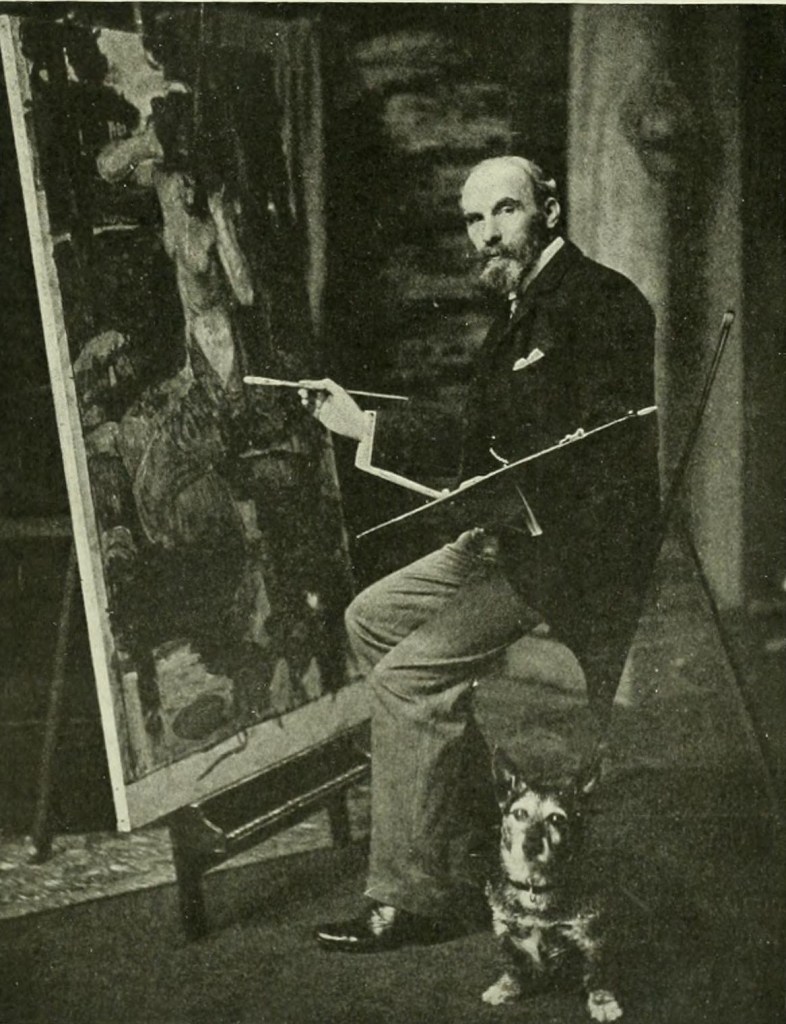
There is something remarkable about the painting, with its central character, a beautiful red-haired woman dressed in white, set against a dark, sombre backdrop of autumn colours. The painting portrays her drifting in a boat among reeds, her expression as enigmatic as that of the Mona Lisa. To me, she has a look of loss, sadness and vulnerability.
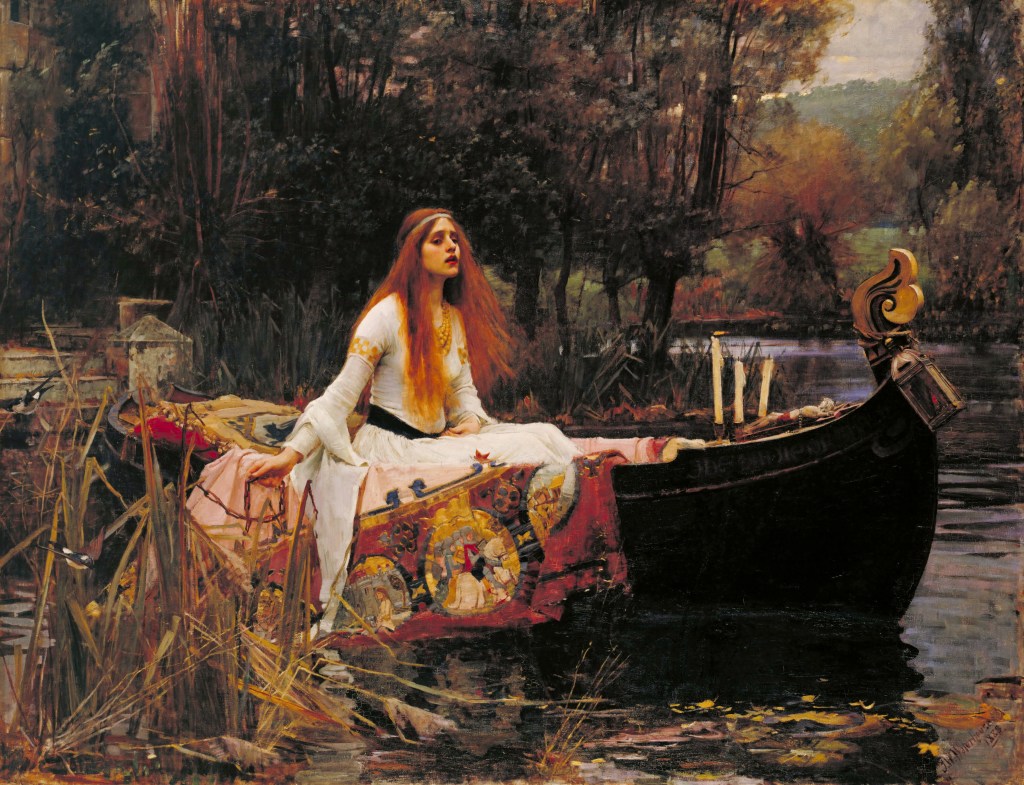
The painting was perfect for the room, and since we first hung it there I have spent a considerable amount of time gazing at the forlorn figure in her boat. The work is captivating, and I would often find myself drawn to that central figure and the russets, browns and golds that surround her.
Such was my focus on the lady in the boat that it was only much later that I began to notice other details; the two swooping swallows in the front, left foreground, the crucifix placed deliberately in the boat’s bow. And the three candles.
Two of the candles have been snuffed out by the breeze. This is hardly surprising. Who places candles in a boat in this way? I realised, however, that in keeping with much of this style of art, their inclusion was probably symbolic.
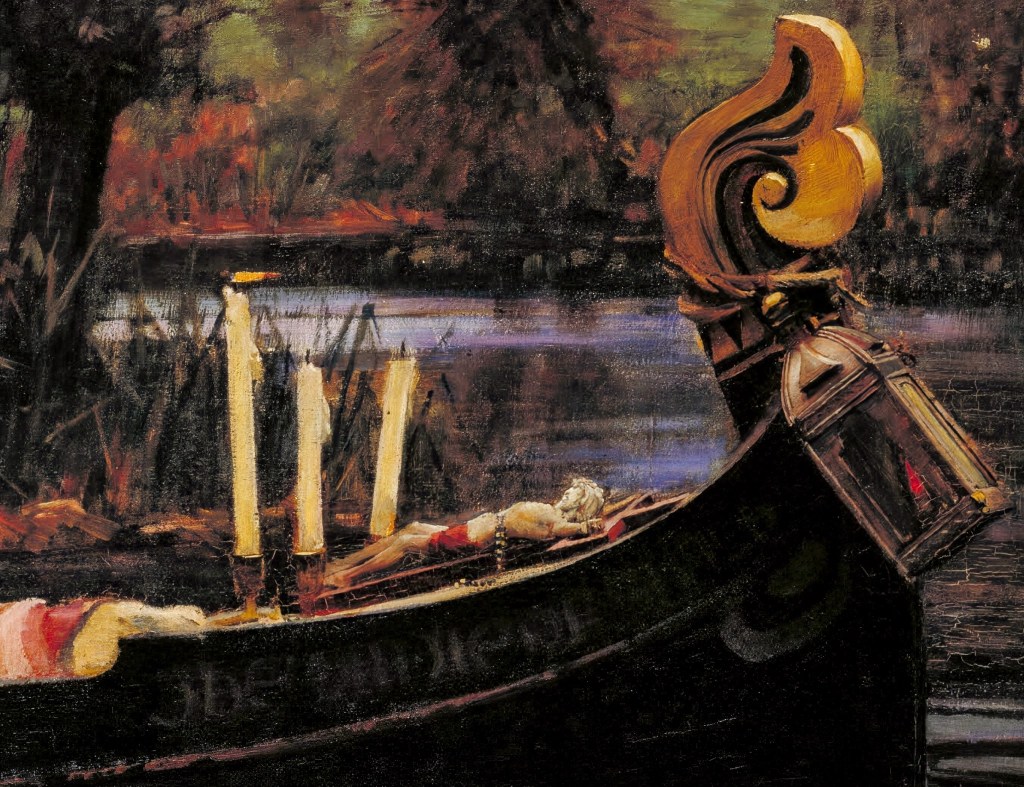
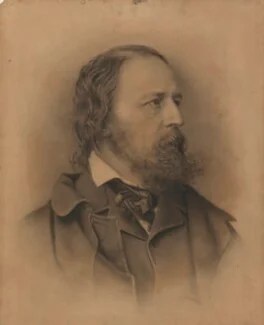
So, what do those three candles represent? And who was The Lady of Shalott? I knew that fellow Lincolnshireman, Alfred Tennyson, had written a poem of that name, but who was she? Why is she adrift amongst reeds? And why is she so unmistakably sorrowful?
In short, what’s her story?
A few days ago, and more than ten years since we hung the painting, I decided at long last, to find answers to those questions.
First of all, the painting was influenced by Tennyson’s ballad, specifically Part Four of the poem, which goes:
And down the river's dim expanse
Like some bold seer in a trance,
Seeing all his own mischance
With glassy countenance
Did she look to Camelot.
And at the closing of the day
She loosed the chain, and down she lay;
The broad stream bore her far away,
The Lady of Shalott.
Tennyson’s poem also reveals the lady’s true name, telling as it does the story of Elaine of Astolat. Elaine, we are told, is a damsel who lives in an island castle, near Camelot.
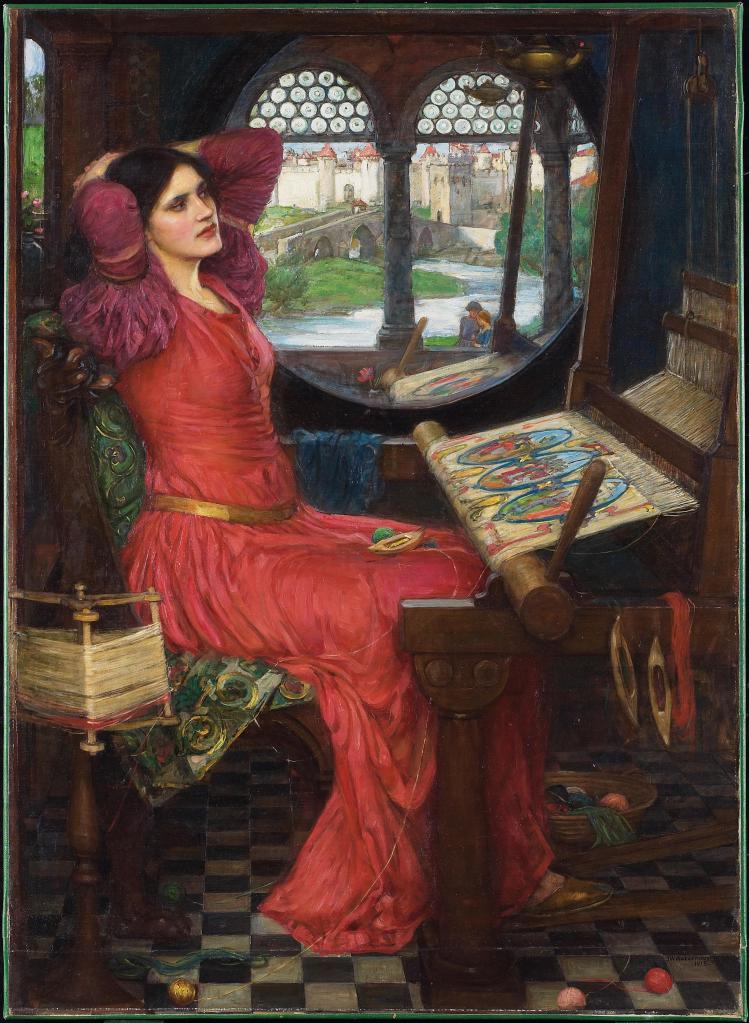
Afflicted by a curse, she is forbidden to look directly at Camelot or its inhabitants. Instead, she must remain in her garret, consigned to view her surroundings only through a magic mirror, weaving as she does, a tapestry of those things she sees reflected.
According to legend, she weaves her tapestry by night and day, untouched by the world outside her island – until one day, Sir Lancelot rides by, and Elaine sees him through the mirror – and is enchanted.
Charmed by his appearance, she decides to look directly at him and at Camelot. This breaks the curse, but with dire consequences. As a result, she falls ill and eventually dies, floating in a boat down the river.
The scene in Waterhouse’s beautiful painting depicts Elaine who, aware of the ramifications of her disobedience, has ventured out of her tower and down to the river, where she has embarked in a boat to meet her destiny, surrounded by the tapestry she has woven.
John William Waterhouse was not the only painter to be inspired by Tennyson’s poem. Artists such as John Atkinson Grimshaw and Walter Crane have also produced haunting works depicting the tragic scene.
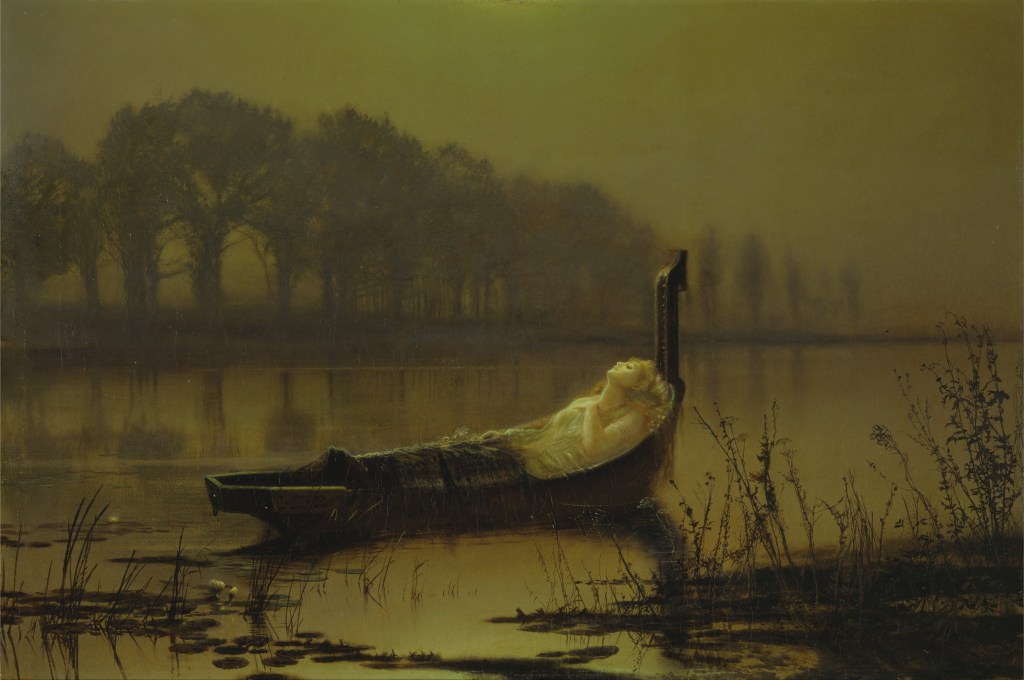
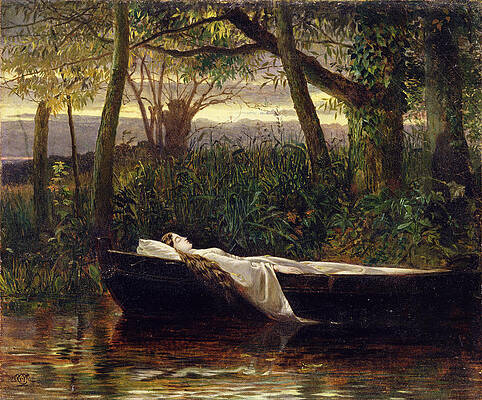
Of these three paintings, however, only Waterhouse places candles in the boat. What was he depicting here? As I have said, of those three candles, only one remains lit.
It appears that, in this style of painting, candles were often used to represent life. As we can see, two are already spent, leaving one guttering precariously in the breeze. This signifies that Elaine is soon to die.
So then, a few minutes research answered my questions about this mysterious lady. But one question remained in my mind:
Why, after viewing the picture for more than ten years, was I suddenly moved to look deeper into the legend that inspired it?
I am often told to be steered by my intuition, and to not ignore signs and signals which may be prompting me to give consideration to a matter, or to take specific action. Was my sudden and inexplicable curiosity leading me to just such a message?
I believed that could be the case.
Like many, I have long used Oracle Cards to provide guidance and insights from spirit. One of the sets I use – ‘The Mists of Avalon’ – has an Arthurian theme.
Among the deck is a card portraying The Lady of Shalott. I pulled the card to see whether its message was relevant to me.
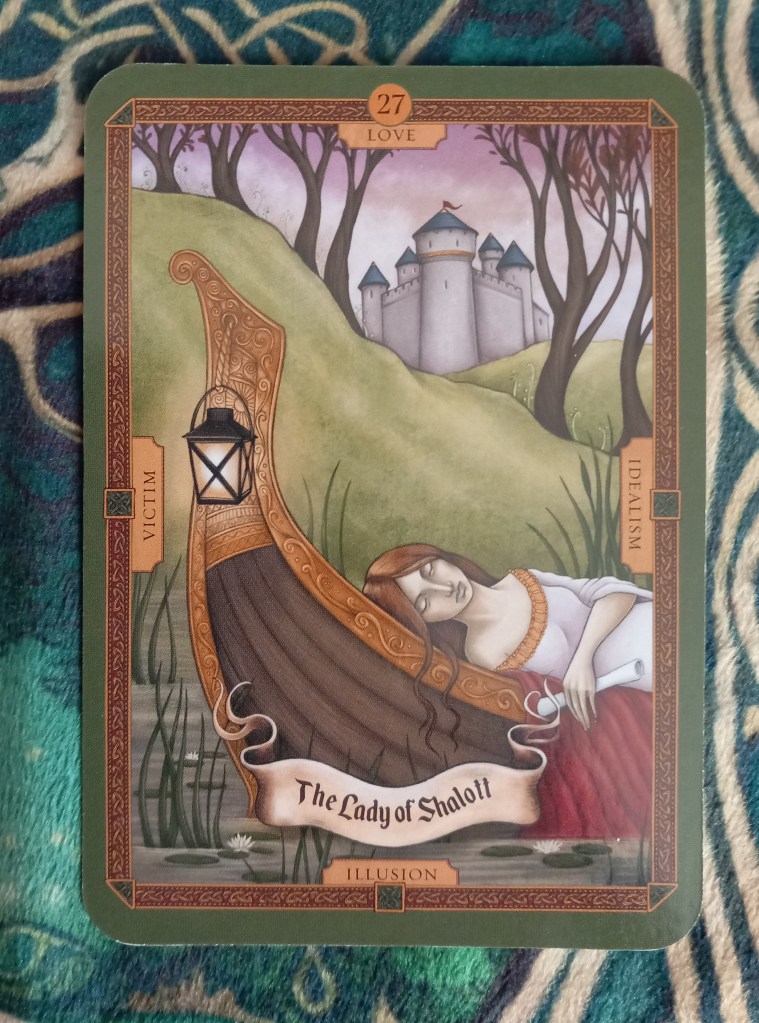
It included the following:
‘The illusionary world we create for ourselves reflects back to us in a ‘mirror image’ – be that the relationships we have, the jobs we work in, the place we live, the friends we have. You are asked to shatter this illusion and crack the mirror, breaking the perceived image of who you should be so a new image can be created. In creating this new image of you, you will be creating new experiences and a new way of living.’
This gave me a great deal on which to reflect. As I did so, my wife reminded me that one of her own decks of Oracle Cards also includes one representing the Lady of Shalott.
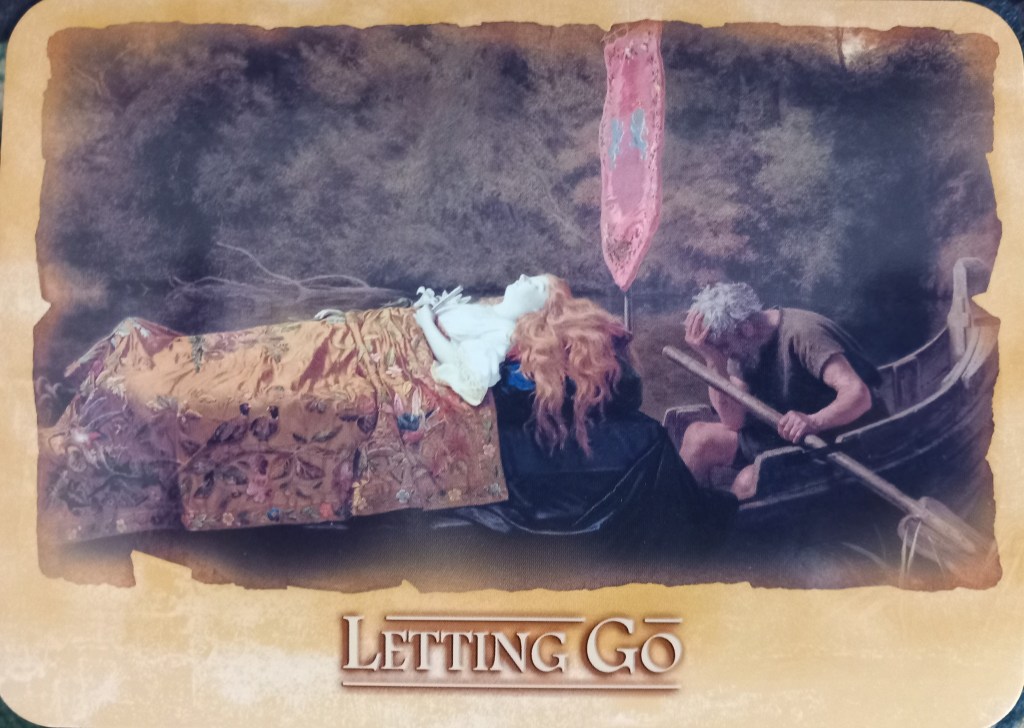
Its theme appeared to ‘mirror’ that of the card in my deck, in that its overriding message is on the subject of ‘Letting Go’. As in letting go of illusions, perhaps?
However beneficial it may be to let go of that which no longer serves us, by definition this may necessitate radical change – and change can be a scary prospect. After all, who is comfortable with change, whatever the long-term benefits may profess to be?
On this point, the card’s text also contained a hint of reassurance:
‘Are you scared to let go, afraid that if you do you will lose the little that you have? Have you become accustomed to and entrenched in the familiar way things are and fear what a new situation will bring? Remember that if something is truly yours you can never lose it.’
I’ll not say here whether I felt these messages to be meaningful to me at this point in my life. All I know is that I believe I was moved to consider them; to reflect on their relevance.
Irrespective of the validity to me, are they relevant to you, the reader? After all, in as much as I was prompted to uncover this message and write about it here, you have similarly been moved to read it. There may be an underlying reason for that.
Did spirit move me to write this post with the express purpose that you will read it?
Is this message one that was intended for you all along?
 RAVEN MOON