Ever since our earliest ancestors began telling one another stories we have enjoyed tales of adventure, daring and heroism. It matters not whether the account is real or make believe, our level of enjoyment is proportionate to the thrill of the tale. The more gutsy the courage and greater the risk the more rewarding the outcome.
Our heroes and heroines, fictional or otherwise, are often greatly admired, cherished and perhaps even emulated to a degree. Some may become role models for us, with their admirable qualities, their valour, integrity and grit.
I have already declared on this site my long-abiding love of J.R.R. Tolkien’s best-known work, ‘The Lord of the Rings.’
In my posts ‘Set on a Pilgrimage’ and ‘A Delayed Departure,’ published here in August and November, 2021, respectively, I reveal that, through the pages of Tolkein’s epic, I have repeatedly trodden in the footsteps of ‘the Fellowship,’ my journeys through Middle Earth usually commencing sometime in the Autumn.
In the post ‘A Wizard’s Words of Encouragement,’ published in December of the same year, I allude to the wisdom that may be found in Tolkein’s work, the example given being that voiced by the wizard, Gandalf as he sought to motivate the young Hobbit Frodo.
‘… all we have to decide is what to do with the time that is given to us.’
‘The Lord of the Rings’ is just one example of the fantasy genre’s many works of fiction I’ve enjoyed over the years. Another of my preferred genres is Historical Fiction.
Of these, the most numerous have been tales set in our nation’s so-called ‘Dark Ages.’ Among them, many have represented varied and unique interpretations of the legends of King Arthur.
One such work is the excellent ‘Warlord Chronicles’ trilogy by Bernard Cornwell, comprising ‘The Winter King,’ ‘Excalibur,’ and ‘Enemy of God.’
Cornwell’s interpretation of the Arthurian story is well-constructed, gritty and compelling, as one may expect from such an accomplished writer. Although the reality of Arthur’s story is one cloaked in mystery, and is one where the lines between fact and fiction are blurred, Cornwell’s rendition is written very much in the style of historical fiction, rather than fantasy.
Perhaps my preferred version, however, is from the pen of American author, and student of British Celtic mythology, Stephen Lawhead.
His series of novels known collectively as The Pendragon Cycle include ‘Taliesin,’ ‘Merlin,’ and ‘Arthur.’
Based on ancient writings by contemporaries such as Geoffrey of Monmouth, Taliesin and Gildas, Lawhead’s stories possess more of an ethereal character than Cornwell’s turbulent account, and take the reader on a memorable journey from Atlantis to Avalon. This series was my firm favourite for several years.
I move on now to non-fiction.
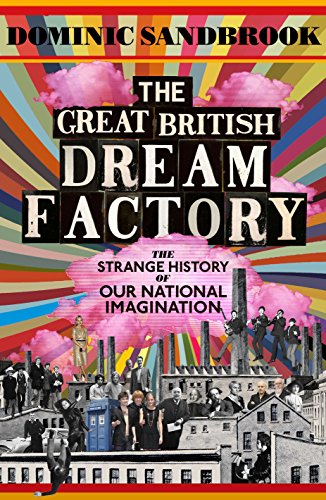
I have recently finished reading ‘The Great British Dream Factory,’ by Dominic Sandbrook.
This book, which has the sub-title, The Strange History of our National Imagination, provides an intelligent and in-depth analysis of Britain’s popular culture:
‘… from Bond and the Beatles to Catherine Cookson and Coronation Street, from Harry Potter, heavy metal and Kate Bush to Damien Hurst, Downton Abbey and Grand Theft Auto.’
Given that The Lord of the Rings and tales based on Arthurian legend have long been writ large on my fiction reading list, you can imagine my surprise when, on reading Sandbrook’s evaluation of Tolkien’s masterpiece (specifically, the story of Aragorn, the ranger who becomes king), my attention is drawn to its unquestionable correlation to King Arthur’s story.
Sandbrook explains:
“What makes Aragorn’s story so familiar is that it so obviously resembles one of the oldest and most beloved British stories of all – the story, in fact, that has come more than any other to stand for Britain’s national identity. To put it bluntly, Aragorn is King Arthur.”
What?
Surely, if that were the case, I would have seen it. Wouldn’t I?
If there were similarities in the two stories, I would have sussed them. Surely Sandbrook was mistaken. But no, for he goes on to explain:
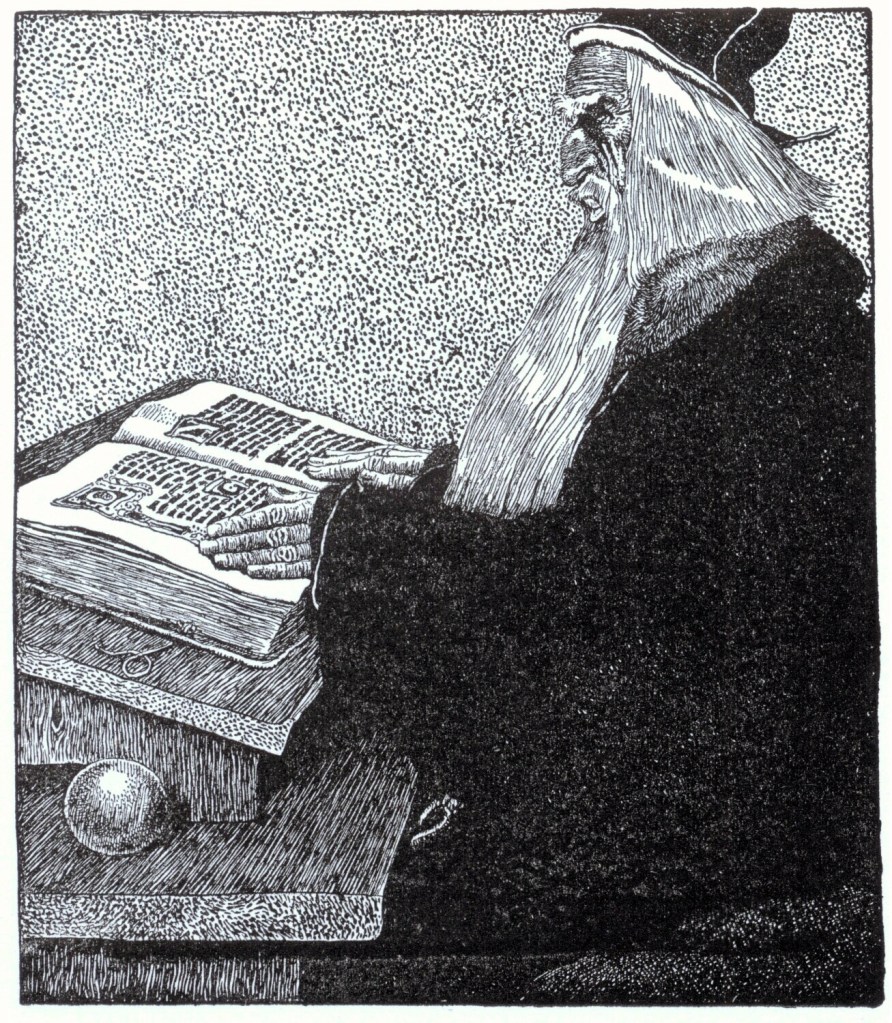
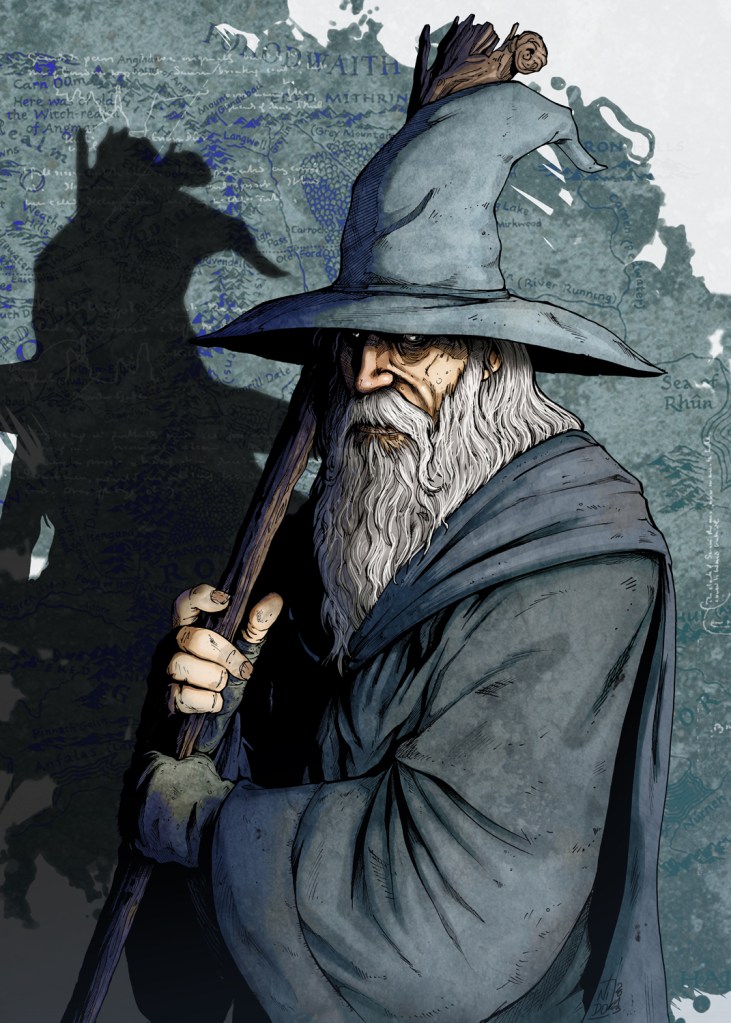
“They are both raised in exile, unaware of their real identities. They are both the subject of prophecies that one day they will come into their true inheritance. They both state their claims to kingship by reclaiming their forefathers’ swords: in Arthur’s case the sword in the stone, in Aragorn’s the ‘sword that was broken’, which is reforged for him by the elves. And both of them owe their success, at least in part, to the tutelage of a wise old wizard: in Arthur’s case Merlin, in Aragorn’s Gandalf.”
MerlinGandalf
Despite my blindness to such a correlation, it appears that Sandbrook’s assertion is one that has been made many times before. In fact, Tolkien firmly rejected suggestions that he’d been inspired by the legend of King Arthur.
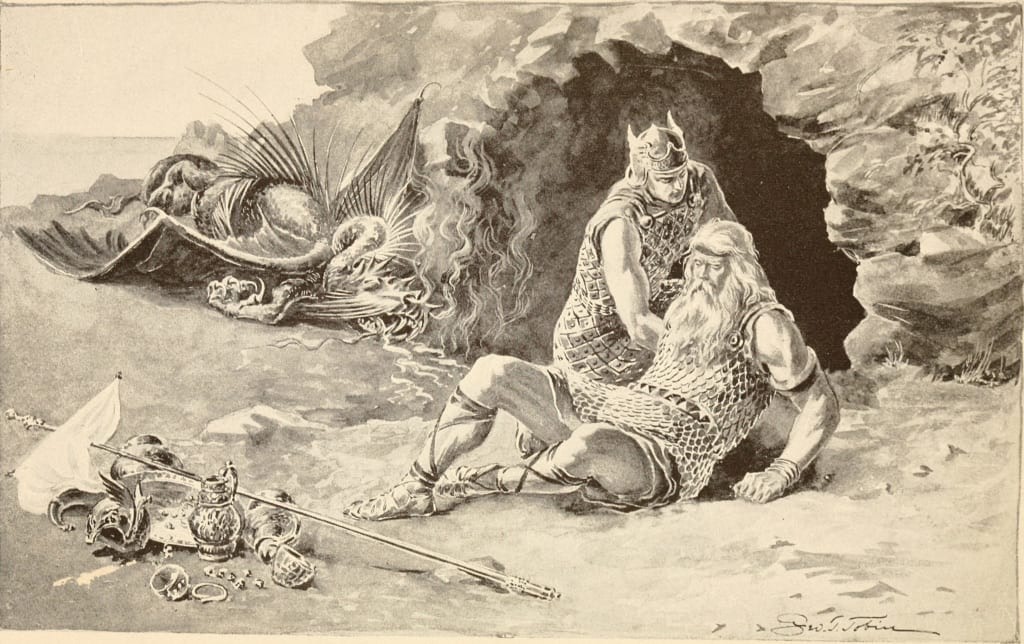
Be that as it may, whilst the author drew heavily on Norse sagas such as Beowulf in his inspiration, he could not have failed to have been influenced, to some degree, by an epic narrative such as that of Arthur.
So again, why did I fail to spot the similarities?
I pondered on this question and realised that, when I immerse myself in a tale, that story is my focus. I’m in it for the ride and my aim is to enjoy it. And while on that journey through the author’s imagination, I survey and enjoy the unfolding surroundings. What I don’t do is compare that landscape with others I may have experienced.
Consequently, I experience each story in isolation, and I leave any academic analysis to those such as Sandbrook. My aim is to enjoy fiction, rather than cogitate on it.
That said, now that the commonalities between the stories of Aragorn and Arthur have been brought to my attention I have to acknowledge their symmetry, irrespective of whether Tolkien intended it or not. And irrespective of whether I saw it or not. It’s there.
However, there is another link, a significant one that was not explored by Sandbrook. And it’s this:
In ‘The Fellowship of the Ring’ we first meet Aragorn in the guise of Strider, a hardy ranger. As the story unfolds we learn more of this remarkable character’s history, until in ‘Return of the King’ we see him step up to his role as warrior knight, defeat Sauron and ultimately claim his inheritance as the rightful king of Gondor.
In so doing he therefore restores the monarchy to that ancient and beleaguered kingdom.
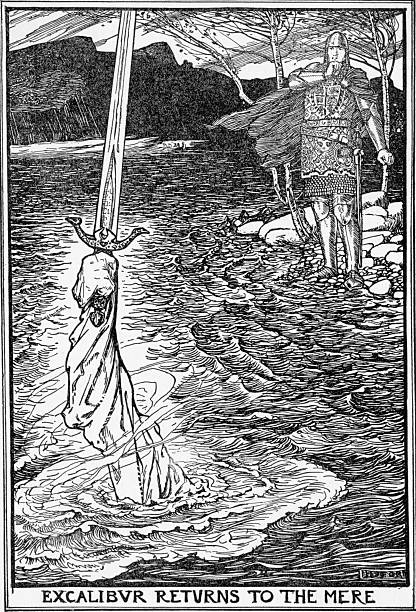
King Arthur, we are told, sustained a mortal wound at the battle of Camlann. Contemporary writings by such as William of Malmsbury refer, however, to Arthur’s immortality. It is said that his grave was inscribed with the Latin phrase:
Rex quondam, Rexque Futurus
The phrase translates as ‘The Once and Future King’. This has given rise to the belief that, though he may have fallen, Arthur – like his fictional counterpart, Aragorn – will one day return to lead his people at a time of their greatest need, to rule and redress evil.
Such, however, is the stuff of fiction.
The cavalry charges over the hill, bugles blaring, just as things appear to be lost for the ‘good guys’.
Or Scottie, engineer of the USS Enterprise manages to squeeze one final ounce of power from the engines, permitting a last-second jump to warp speed and so escapes from the evil Zurgs.
But life is rarely like that. Nor should it be.
What would be the value of success if it were gifted to us on a silver platter, rather than attained by merit? If we need not strive to achieve, how are we to grow? For it’s only through experiencing life’s trials – times when we are driven by need to tap into our core inner strengths, that we truly discover ourselves and become stronger in the process.
A little over a year ago I experienced one of life’s disruptive setbacks. This has led to a long and difficult year in which I have been forced to accept my situation in order to allow my body and mind to heal.
It was Carl Rogers who said:
‘The curious paradox is that when I accept myself just as I am, then I can change.’
When facing severe challenges it is this need for acceptance that demands strength of character. Learning to be comfortable in our discomfort is no easy task.
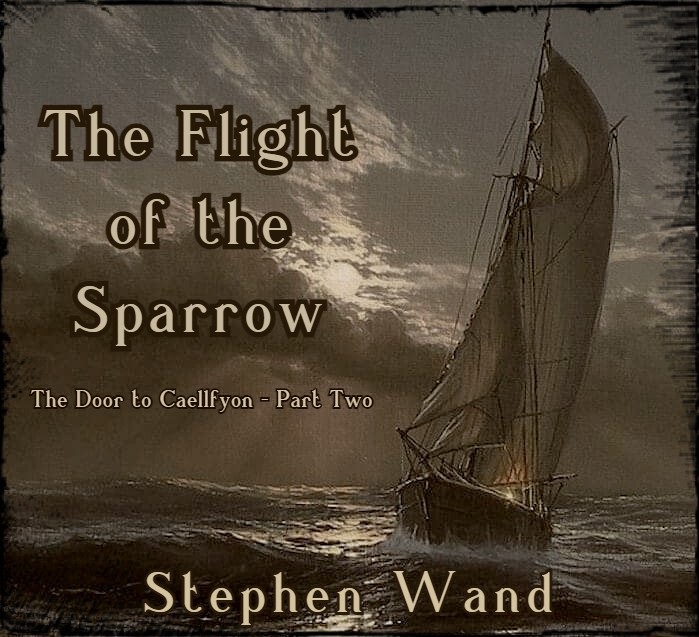
I was therefore moved recently, on reading an extract from my own fiction. The piece appears in the closing chapter of my children’s story ‘The Flight of the Sparrow’, written in 2015.
Here, the story’s protagonist Levi, a young boy who began the tale as an insecure schoolboy and had been forced to find his own courage and fortitude to save his friends from danger, hears that his father is unable to return home with him:
‘I’m not ready. I’m sorry, son, but I don’t have your strength.’ ‘Strength,’ spat Levi, unable to contain his disappointment. ‘Your Dad’s right,’ said Seymour. ‘You came here to escape something, and in so doing faced a situation far more terrible. Yet you summoned the strength to face it. You faced your fears and won. Your Dad’s own battles aren’t quite won yet.’ Deepdale placed a paw on Levi’s shoulder. ‘Strength can sometimes be found in the most unlikely of places, and brought out by the most difficult of trials.’
Reading this passage touched me deeply as it appeared to foreshadow events that were to occur in my own life; events from which I, too, would need to summon my own strength and face my fears if I was to win through.
However much I would have liked to, I could not relinquish responsibility for my well-being to a ‘saviour figure’. There was to be no passing of the buck. There would be no seventh cavalry.
We love to read of the daring exploits of our storybook champions – Aragorn, King Arthur and so on. But outside the pages of fiction, and in our own real-life adventures, it is us, and those close to us – allies both seen and unseen- lending support and encouragement each and every day, who are the true heroes.






 RAVEN MOON