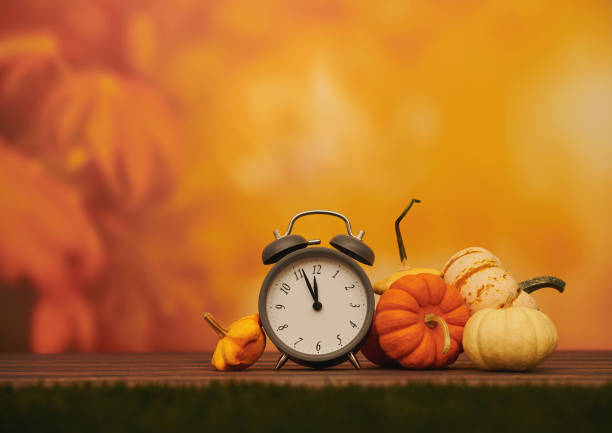
Last weekend, here in Britain, we enacted the procedure known bizarrely as ‘Daylight Saving,’ and on Saturday night, we dialled our clocks back one hour.
This is done on the last Saturday each October in a bid (we are told) to capitalise on daylight, as though changing the clocks will somehow miraculously increase the number of hours the sun shines each day.
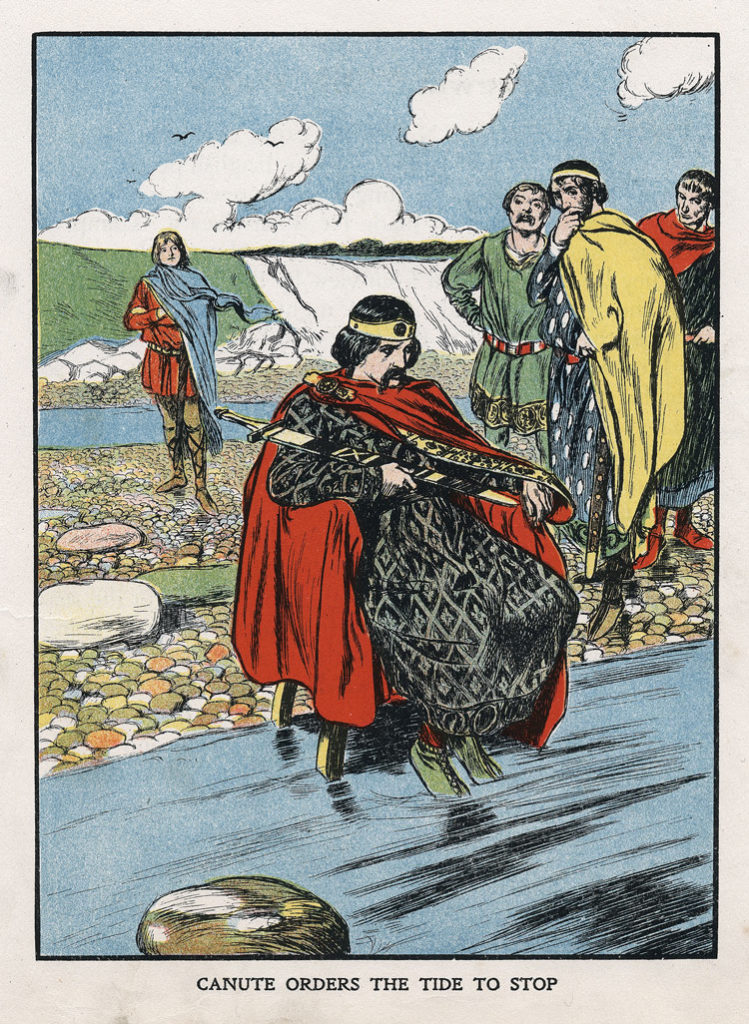
To me, this is the kind of thinking employed by King Cnut (or Canute) when he ordered the incoming tide to halt, and to not wet his feet and robes.
We know how that story ended.
‘Daylight Saving,’ then, is (in my view) simply one more example of the arrogance of ruling powers whereby, in the mistaken belief that they can manipulate the elements, they exert power and control over the daily activities of the masses.
The consequences of Cnut’s folly was little more than embarrassment and a pair of wet feet. Through ‘Daylight Saving,’ however, today’s megalomaniacs cause widespread harm. By disrupting our natural circadian rhythm, these imposed clock-shifts have been shown to be detrimental to human health.
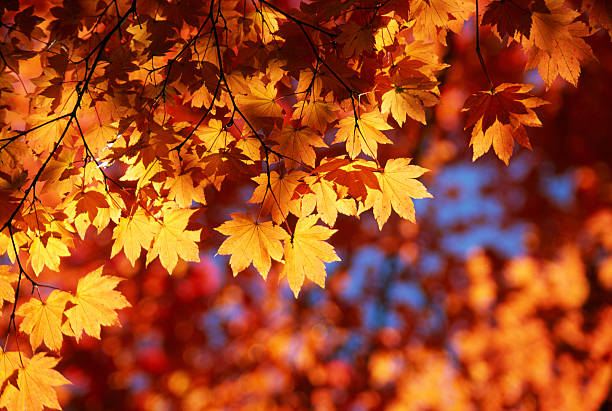
Be that as it may, each year we dutifully advance our clocks by one hour in the spring, and back one in the autumn.
For years, it must be said, I struggled to remember whether I should be winding my clocks one way or the other. In fact, one year I got it wrong.
I travelled to the nearby town to shop for a new car, only to find the showroom locked and deserted. Of course it was. I was in a different time zone to the rest of the country.
It was only once I had heard the incredibly useful phrase ‘spring forward, fall back’ that the complex technicalities of the procedure became lodged in my memory. I accept that, for us Brits, the phrase should be ‘spring forward, autumn back,’ but that doesn’t quite work. I hate to admit it, but the Americanised option is far better word-play.
In respect of the Autumn change, the phrase also takes on another meaning. One that I feel is entirely appropriate.
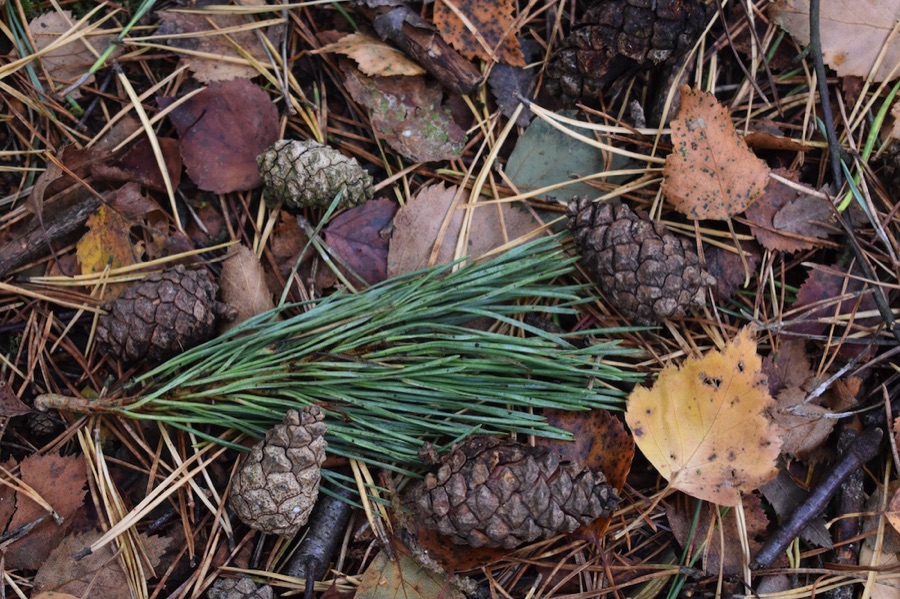
‘Fall back!’ may also be considered to be an instruction to retreat. After all, as the days grow cooler, and the periods of daylight shorter (despite Daylight Saving), do we not feel a primal urge to retreat? This is only to be expected.
So, before we give ourselves a hard time if we experience an increasing lack of enthusiasm, or feel that our get-up-and-go has all but gone, perhaps we should consider that what we are undergoing is entirely natural.
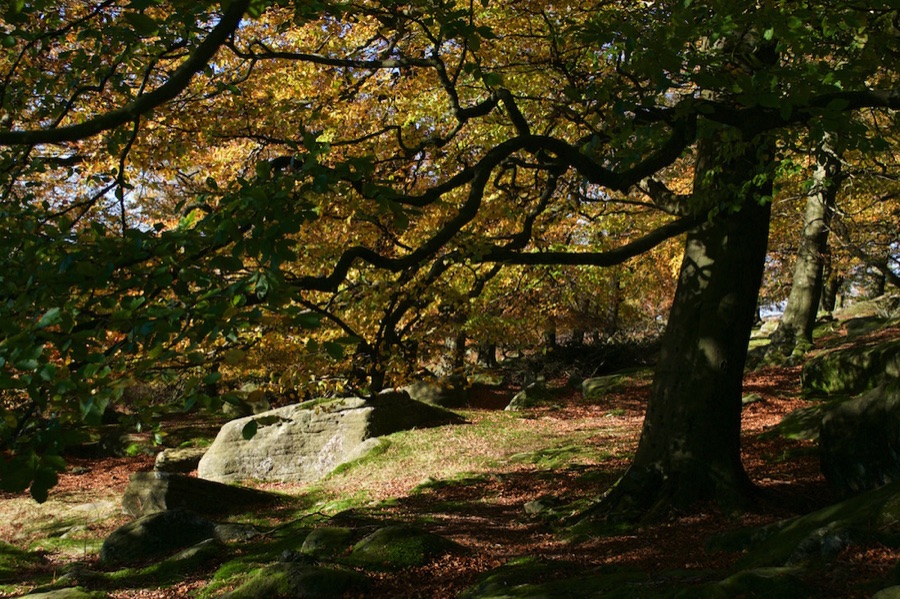
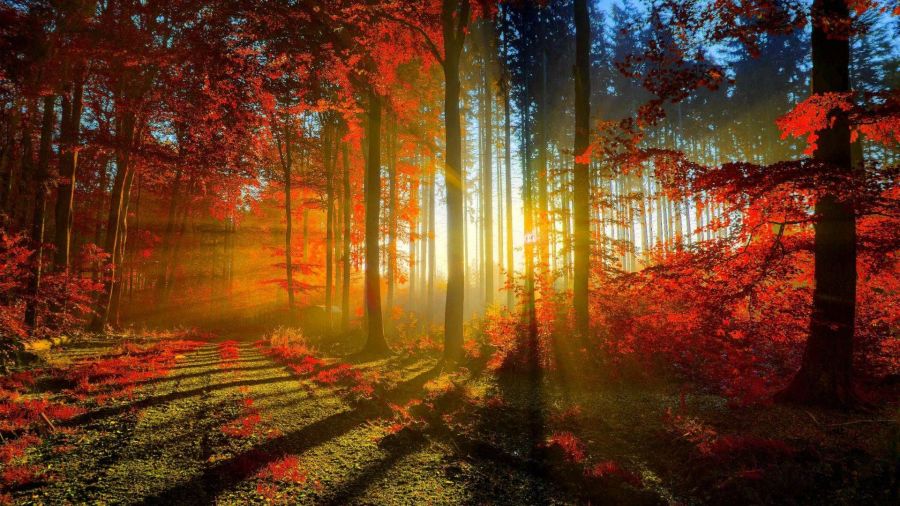
As we conduct our annual Autumn clock change, a browning is creeping over woodlands and fields. Leaves spiral to the ground in ever-increasing number. Herbs shrivel and die.
Nature’s worn-out parts are being dismantled, releasing essential nutrients back into roots and stems for storage through the winter. This ageless cycle is a time, not simply of death, but one which leads to renewal.
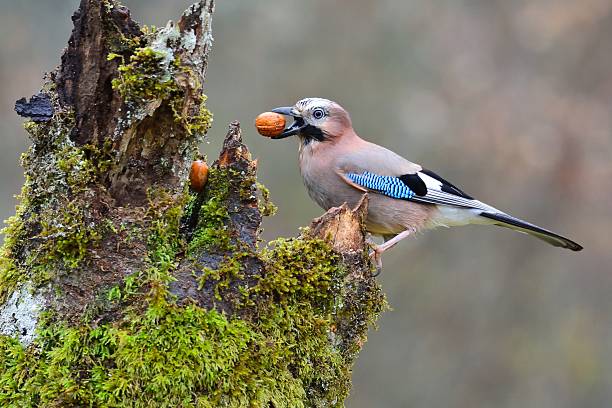
Some nutrient stores are the result of weeks of frenetic activity, larders created by mammals and birds, such as squirrels and Jays; vital stores to carry them through the scarcity of winter.
For some mammals, however, the dwindling daylight signals a time for sleep. For them, the search for food is over for now. Dormice lie in nests of dry grass in sheltered hollows, cold and unmoving. Their breathing is shallow, heartbeats slow. Hedgehogs settle to sleep on beds of leaves.
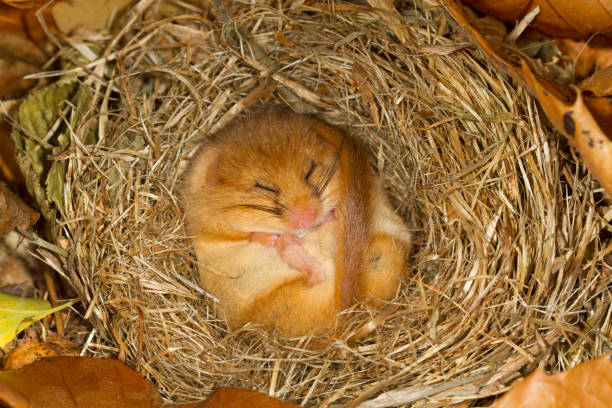
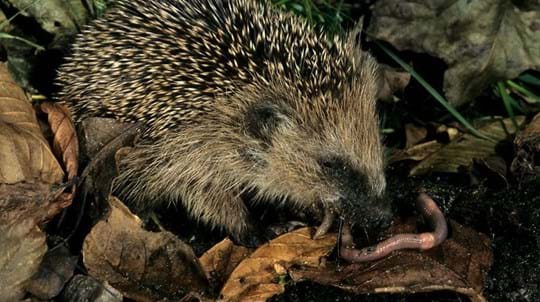
Some larger mammals, too, enter a period of dormancy as winter approaches.
Notably, bears.

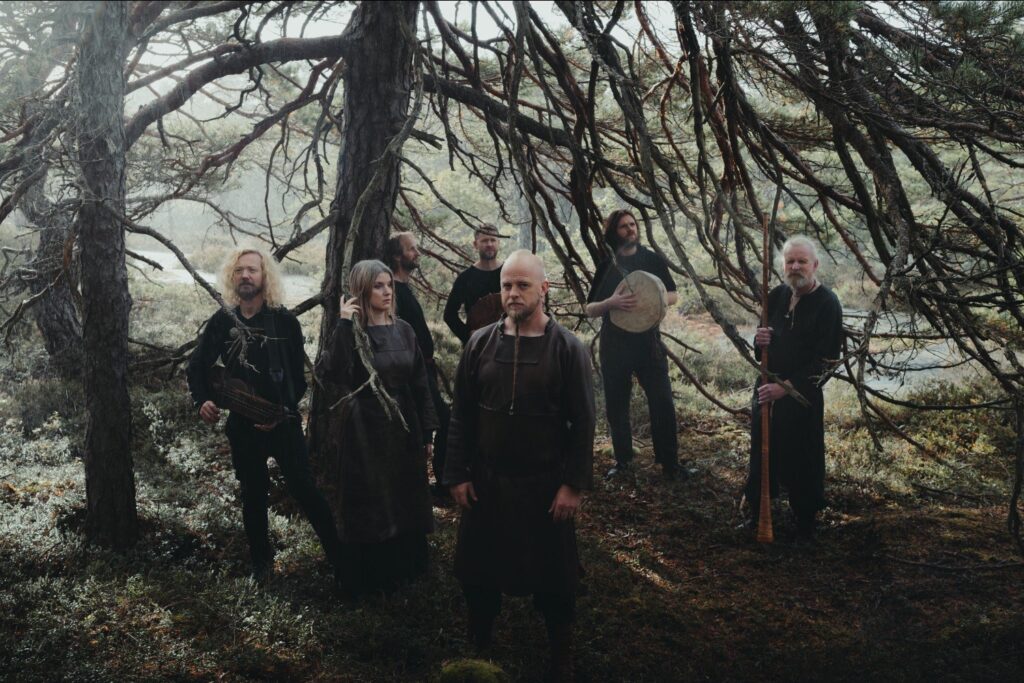
It is with clever synchronicity then that Norwegian band Wardruna have announced the January release of their latest single, ‘Hibjørnen,’ (The Hibearnator).
The record, which is performed in the ancient skaldic traditions of northern Europe, uses poetry, voice and lyre to celebrate this circle of life.
Composer/performer Einar Selvik explains:
‘The rhythm of the bear embodies the very circle of life: When winter approaches, it goes to sleep in its den – back to the womb; its pulse slowing, its body encapsulated in an intermediate death.
Like a lullaby, “Hibjørnen” takes on the perspective of the hibernating bear and its dormant dreams from inside the den.
The listener returns from the den of the bear more attuned, aware and contemplative of nature’s wonders, just in time for the freshly sprung buds.’
This timeless cycle, of rest leading to restoration is one we, too, should celebrate – perhaps in song.
To hear Hibjørnen, click on the image.
The sun wheel is constantly on her way
The woodland shepherd has returned to its den
Dreaming sweet upon its mossy bed
Of buzzing bees and flowery meadows

The sun wheel is steady on her way
Honey dreams spark my throat and palate
The winds still howl and the river stands still
I guess I should return to my rest

Out there the ice sings lullabies
Over land, over lake
Over she bear and over he-bear
Over fields and meadows
Over dens and restful beds

The sun wheel is constantly on her way
The days grow longer in the shrinking den
The shepherds blow horns, the maidens sing
The blackbird trills its waking song

Out there, the world sings a waking song
Over land, over lake
Over she-bear and over he-bear
Over fields and meadows
Out of dens and restful beds
Over she-bear and he-bear
Out of dens and restful beds
 RAVEN MOON