

Some weeks back I decided to pull a book from my shelf to read for the second time, a novel written by English author James Lovegrove. I’d enjoyed it first time around back in 2017, and as it turned out, the second reading proved to be equally pleasurable. So much so, I thought I’d write a review of it.
But first a caveat. I’m no book reviewer — there’s a talent to such things and I don’t profess to have that gift. That said, I know what impresses me and what doesn’t, and I like to think I have the ability to express my views reasonably well.
What follows here then are my own humble perceptions rather than a skilfully-crafted review following a recognised structure.
That’s the caveat out of the way.
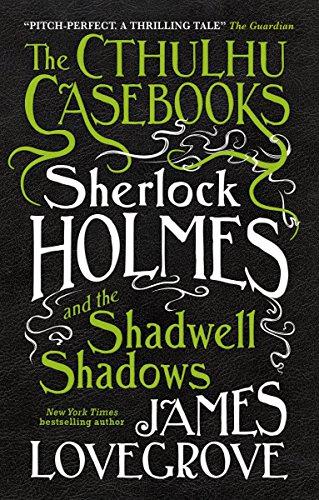
The book – ‘Sherlock Holmes and the Shadwell Shadows‘ – was published in November 2016. It wasn’t until the following year that I finally stumbled across it and dived between its covers, but it was inevitable that I would do so sooner or later. You see, this tale is a cross-over piece which includes two of my favourite literary genres.
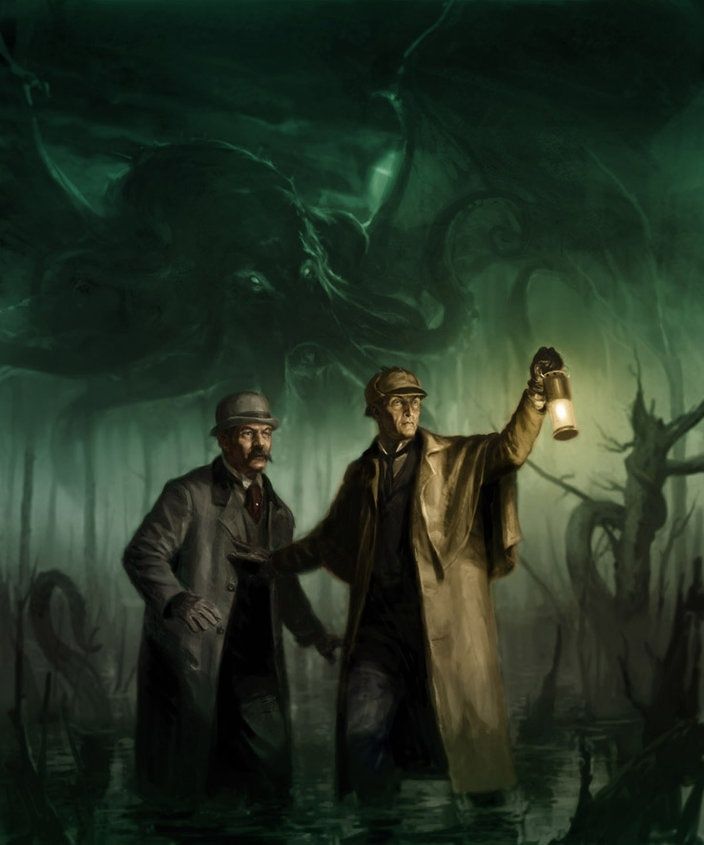

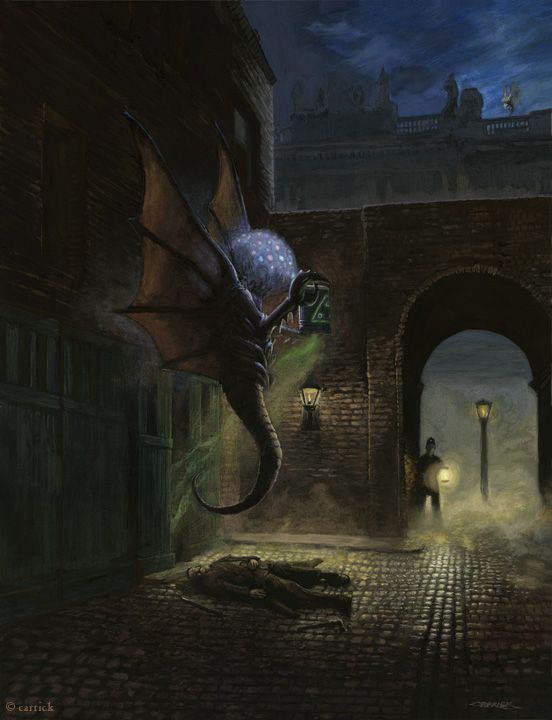
In it the author depicts Arthur Conan Doyle’s fictional characters of Sherlock Holmes and Dr John Watson as they investigate a supernatural mystery, one that centres on the Cthulhu mythos, invention of 1920s American pulp-fiction author, H.P. Lovecraft.
I’ve been a long-time fan of Sherlock Holmes since first discovering him during my early teens. Admittedly, the discovery had been made courtesy of Hammer Films’ version of ‘The Hound of the Baskervilles,’ but it prompted me to go on to read most of Conan Doyle’s Holmes stories, as well as a few written more recently by contemporary authors.
The work of H.P. Lovecraft (HPL) had also been a favourite of mine for many years, since discovering him quite by accident in my early twenties.
I’d been playing the Dungeons and Dragons role playing game for several years (I know, but what can you do?) and this eventually led me to play ‘Call of Cthulhu’, a horror role-playing game based on Lovecraft’s fiction.
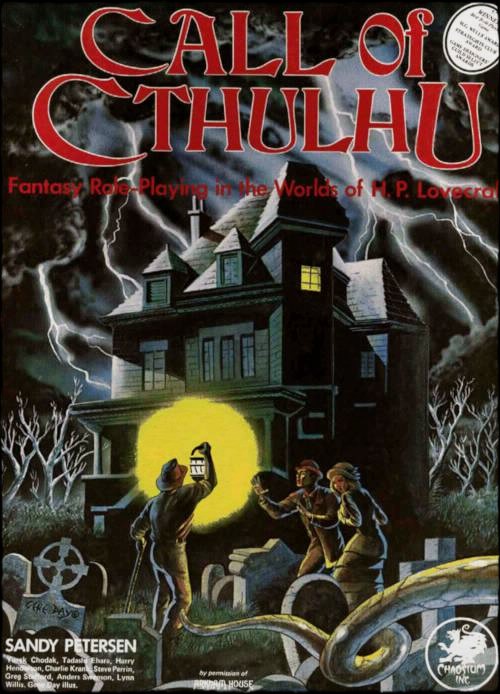
(I’ve written about the Cthulhu mythos and the ‘Call of Cthulhu’ role playing game elsewhere on this site. To access these, follow the relevant tag link on the sidebar.)
Roll forward to 2016 and enter James Lovegrove with this, the first of a trilogy in which Sherlock Holmes is pitched against the monstrous, otherworldly horrors of the Cthulhu mythos.

Was Lovegrove’s offering worth my time and money? The short answer to that is ‘yes, most definitely.’
Aside from all else, any author having the courage to take on the task of writing a Holmes novel commands a certain degree of respect. If novel writing isn’t tough enough, by taking on Holmes one must also overcome a significant and daunting hurdle — the expectations of a critical and demanding readership. This is why on-line reviews of his book are mixed. But who pays heed to such things anyway? Even Hilary Mantel’s brilliant novel ‘Wolf Hall’ received one-star reviews from some quarters.
Lovegrove’s book begins with a cleverly-crafted preface, written in the first person, in which the author tells of an email he’d received from a solicitor in Providence, Rhode Island — not only the USA’s smallest state, but the actual birthplace of writer, H.P. Lovecraft.
The email explains that English author Lovegrove had inherited a manuscript from an unknown relative, Henry Prothero Lovecraft, himself a descendant of the 1920s pulp-fiction writer.
With me so far?
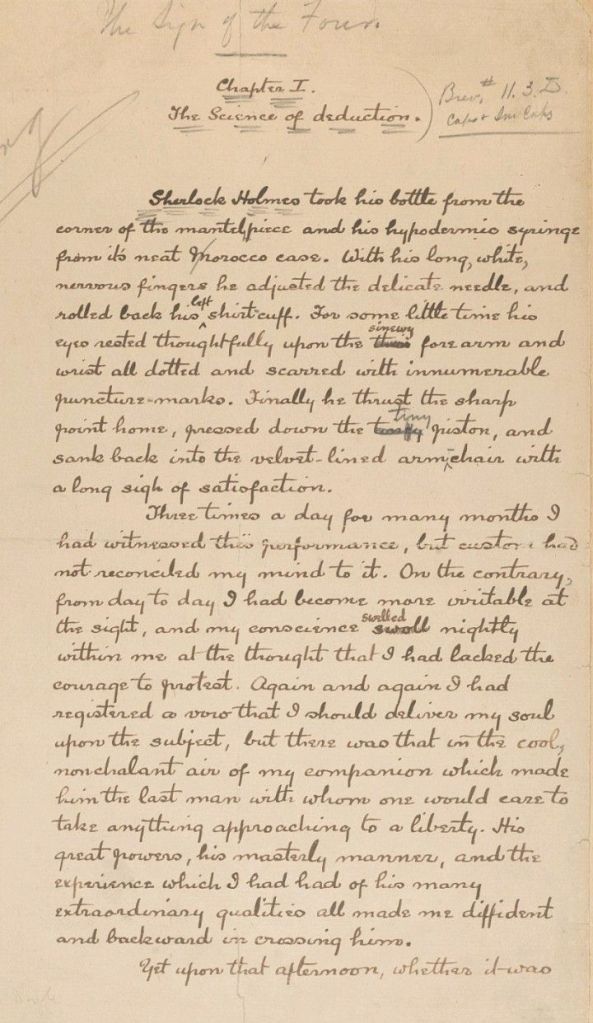
Lovegrove goes on to explain that the two trans-Atlantic families – Lovegrove and Lovecraft – share a common line of descent from the von Luftgraf family of Germany; a family who had hastily left that country ‘under a cloud’, one branch emigrating to England where they changed their name to Lovegrove, the other to America where they became Lovecraft. This was a neatly-crafted opening, and one which prompted me to keep turning the pages.

The tale that follows the preface, therefore, is presented as a reprint of the inherited manuscript which, it was claimed, had been written by John Watson, ex British army surgeon and close friend of the now famous consulting detective.
The narrative then blows apart the fictional status of the Holmes/Watson partnership, presenting them as real-life personalities of Victorian London. It also reveals that their actual investigations had been of a much darker nature than those published as fiction by Conan Doyle in the Strand Magazine.
I was already intrigued. But, had Mr Lovegrove managed to write an authentic-sounding Sherlock Holmes story? In other words, had he been able to adopt the distinctive, John Watson ‘voice’? For even had his plot succeeded in attaining the pinnacle in ripping yarns, if he failed to recreate the famous narrator’s style of delivery, the story would fall flat.

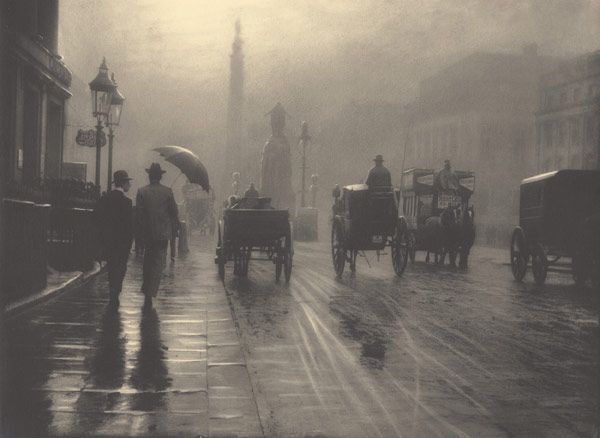
Overall, I consider that the author has done well to reflect the familiar nuance of John Watson’s nineteenth-century, middle-class diction. This was vital as it allowed me to become quickly transported to the bustling metropolis of London with its pea-soup fogs, opium fugue, smut-caked buildings and hansom cabs.
I was able to enjoy the story without the feeling that this was just a poor slip-shod attempt by a contemporary writer to hitch a ride on Arthur Conan Doyle’s gravy train and coerce some cheaply-won pounds from the legions of Holmes fans slavering for something new.
The characters of Holmes and Watson are well drawn — albeit not entirely how I would expect at times.
But, providing that contemporary authors adhere to Conan Doyle’s basic principles, I think it wise for readers to allow a degree of latitude, if only to permit a sense of vitality and originality to the genre.
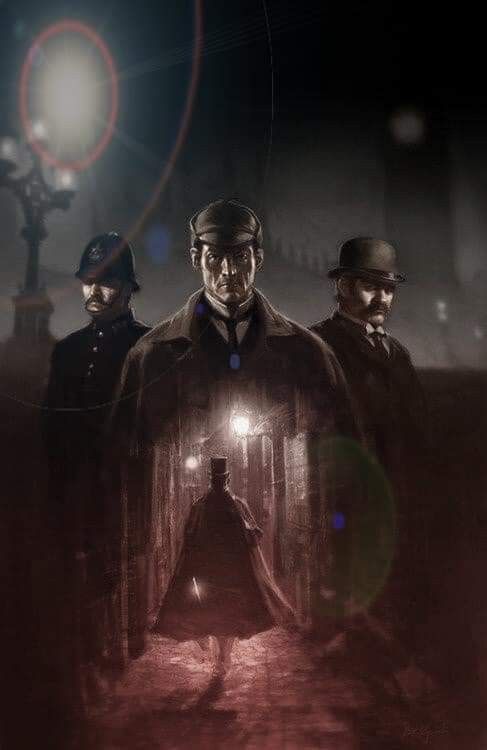
When other familiar characters, such as Professor Moriarty and Inspector Gregson step onto the stage they, too, have an air of freshness about them — subtle differences injected into their characters by the author. This adds further interest to the tale.
I won’t outline the plot here. The back-blurb does that sufficiently well. Suffice to say that, having now read the book … twice, I can say that, in my view, it succeeds in its delivery. Overall, I was well impressed and I enjoyed the story. Indeed, I enjoyed it enough to want to read books two and (if the quality is maintained therein) book three as well.
I have two criticisms, however.
While I’ve already declared that Watson’s voice is well articulated by the author, Lovegrove does lapse on occasion into what I’d describe as alliterative gobbledegook of the sort usually heard in Victorian old-time music halls.
Such unnecessary use of archaic jibberish — that he may have injected to create an air of authenticity — is somewhat overdone and only serves to kill the immersive element of the story – rather like advert breaks during a thriller movie.

The second gripe I had was Lovegrove’s habit of over-explaining the nature of the Cthulhu mythos during excessively-long and immersion-wrenching information dumps. Sure, the mythos is a complex and horrifying concept, but its very mystery is a large part of that horror.
To indulge in elaborate exposition only serves to remove the mystique, and thereby destroy any tension previously created by careful foreshadowing and uncertainty.
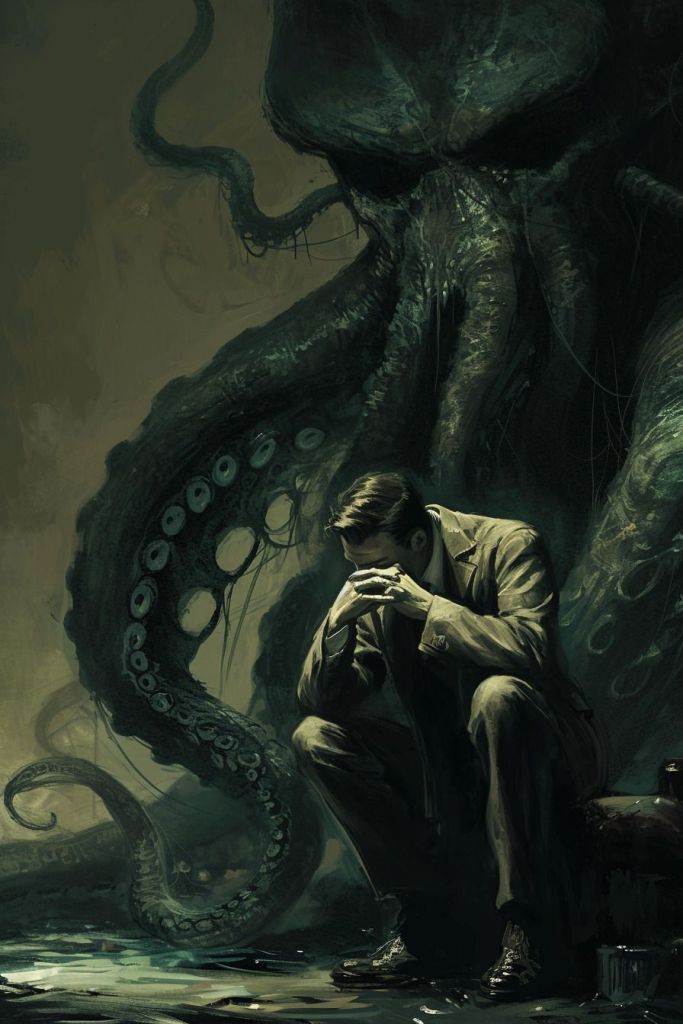
I’m a strong advocate of leaving some things unsaid, or unexplained. After all, life’s like that. Sure, an author needs a full understanding of those things or characters he’s writing about, but only a percentage of that knowledge needs to be relayed to the reader.

The fact that the author possesses all the cards allows him to write with authority and confidence, suggesting an impressive hand while only revealing a fraction of it.
Readers are generally intelligent creatures and don’t need spoon-feeding. Those who do need to be spoon-fed tend to read books like ‘Wolf Hall’ then whinge about them, leaving ridiculous, one-star reviews on Amazon.
However, don’t let my two criticisms put you off reading this book. It’s a good story, based on a neat and novel premise. There’s some intelligent writing here and several of the set-piece horror scenes are graphic page-turners.
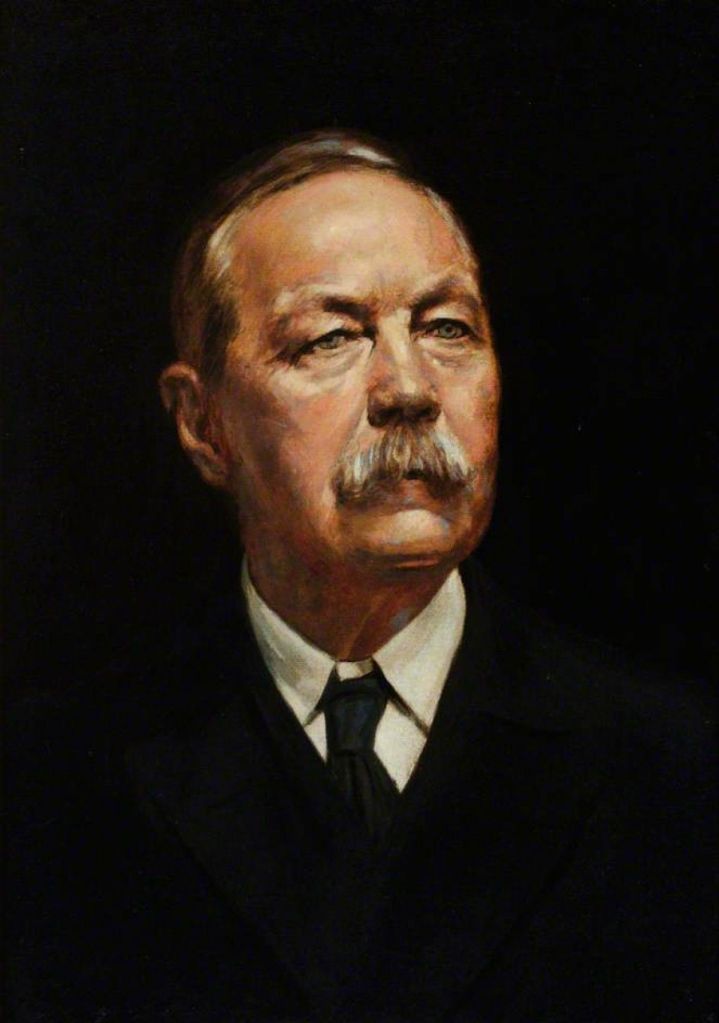
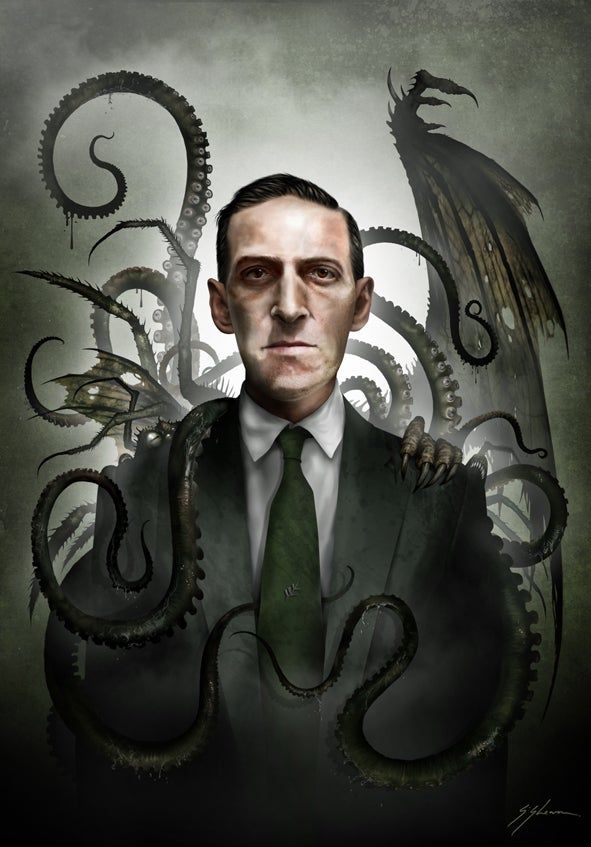
Together with the juxtaposition of inconceivable horror set against a familiar, genteel-gothic backdrop, the author has created a memorable Holmes tale that would have both Conan Doyle and HPL doffing their caps in salute.
 RAVEN MOON