

As is the case with Marmite, fans of author Stephen King fall into two diametrically opposed camps. Those who love his work occupy one side. On the other are those who either dislike his work intensely or, as is sadly so often the case, those who have never read him and never will … ‘because they don’t like that sort of thing‘.
I occupy the first camp – both with Stephen King and, funny enough, Marmite.

So, what exactly is ‘that sort of thing‘ ?
I’ll try to answer that question by using, as an example, my favourite King novel.
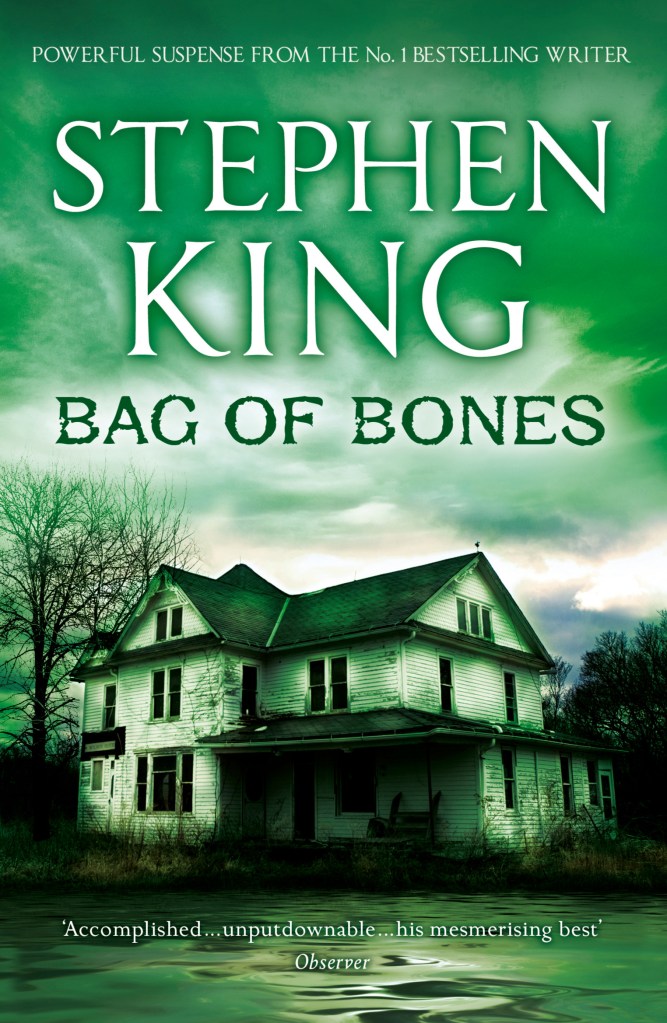
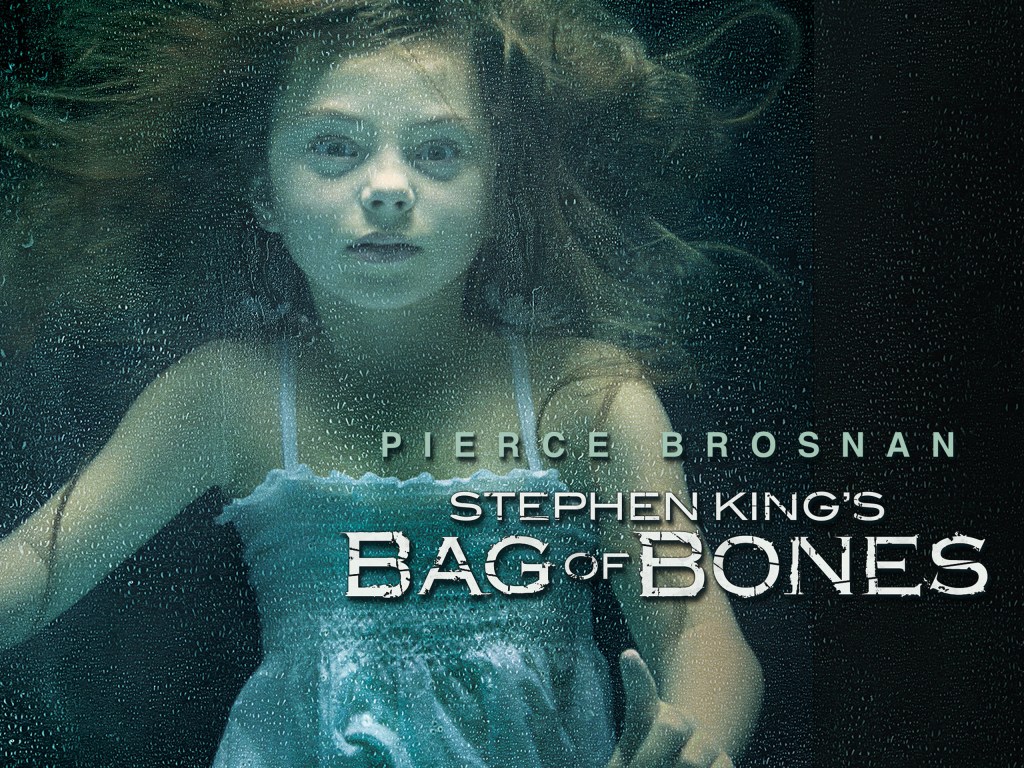
‘Bag of Bones,’ was written in 1998, and like all his other seventy or so novels, hit the best-seller lists. Such was its success it was made into a TV mini-series in 2011, starring Pierce Brosnan.
To summarise the story, the pitch on King’s own website goes:
‘Several years after his wife’s death, novelist Mike Noonan still suffers writer’s block. A dream inspires him to return to the couple’s summer retreat in western Maine, a lakeside house called Sara Laughs. Shortly after arriving, Noonan is caught in the middle of a custody battle involving the daughter of an attractive young widow and the child’s enormously wealthy grandfather. He also discovers that Sara Laughs is haunted and that his late wife, Joanna, still has something to tell him.’
That, then is the book-blurb overview. Here’s my own take on the tale (without spoilers):
Novel style
This is a contemporary supernatural thriller set in present day Maine, USA. It’s presented in an informal, conversational style, so typical of the author. The plot centres on the sudden loss of the narrator’s wife, his resulting writer’s block and the discovery that his wife may have been living another, secret life.
We follow the narrator – Mike Noonan – as he moves out to the summer home he’d once shared with his wife in Maine’s lake district. There he hopes to rekindle his writing abilities. He also aims to uncover the strange events that led to his wife’s death.

What he finds is a community ashamed of its mysterious past, and is now under the boot of a tyrannical millionaire, Max Devore. He soon discovers, too, that Devore is striving to gain custody of his deceased son’s daughter (Kyra) and is coercing the community to assist him.
Noonan is approached by the child’s young mother, Matty, requesting help.
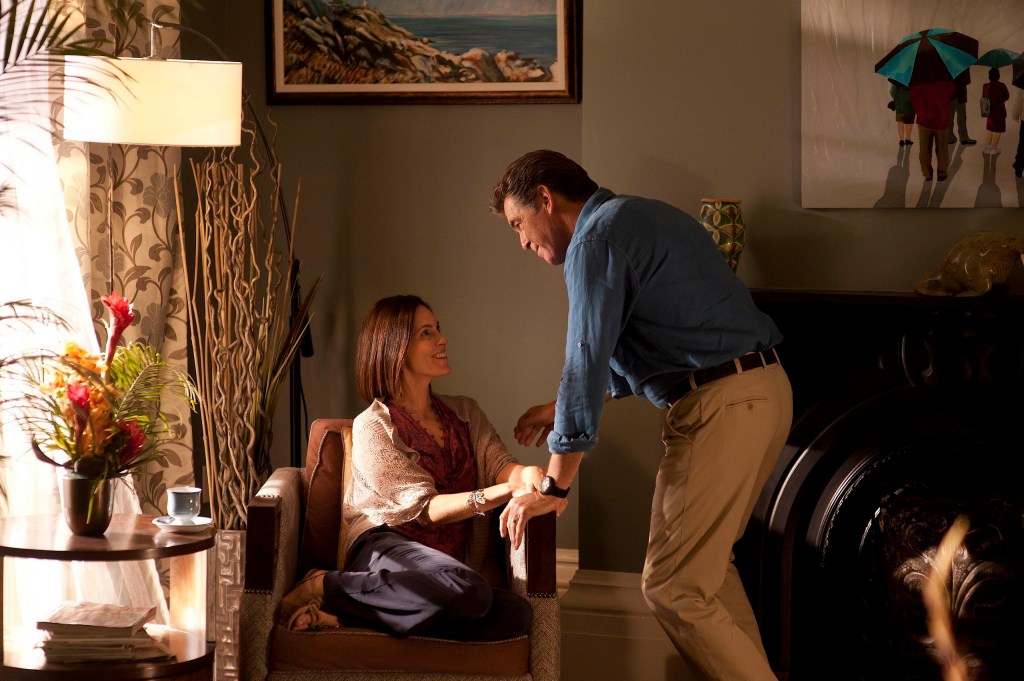
Rather than diverting him from his original purpose, in helping Matty Noonan begins to uncover the area’s dark and troubled past and that of tyrant, Devore. He also finds that these are inextricably linked to his own wife’s mysterious activities.
Strengths & weaknesses
One of the main strengths of the novel is the chosen point of view – more on this later. Another is the author’s ability to create vibrant characters and scenes whilst retaining a minimalist style that allows the reader to stay immersed in the tale.

The area is illustrated vividly and a superb picture is painted of Maine’s lake district. The history of the area, too, is portrayed well, together with colourful pictures of community life. However, whilst some readers will find this mesmerising, as did I, others may find it excessive.
Themes & imagery
The main theme here is that of hidden pasts:
The town’s shameful and violent history; the evil of Max Devore; the secrecy surrounding Noonan’s own wife. All are intertwined and, like peeling an onion, all is gradually revealed layer by layer.
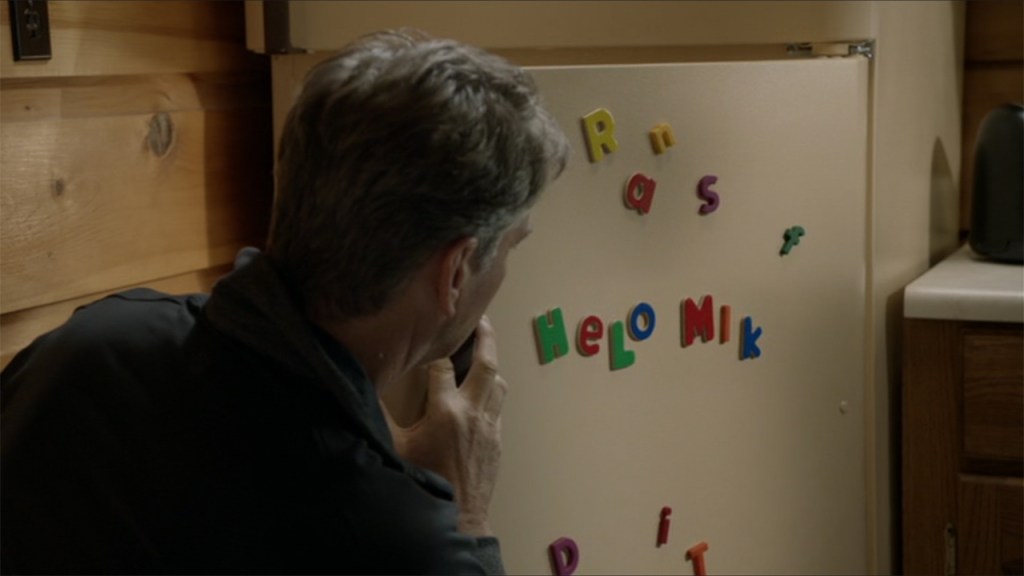
Several images are used, many having a supernatural character. Alphabet fridge magnets (which young Kyra calls ‘Fridgerfator People’) magically spell out cryptic messages and words, as though clues to the mystery are being provided by an unseen ally.
A bell hanging from a stuffed Moose Head in Noonan’s cabin (Bunter’s Bell) rings inexplicably, signalling supernatural activity. A tree down by the lake, when seen in silhouette and when the mood is right, takes on the haunting appearance of a woman pointing down the lakeside path.
As a backdrop to all of these images are Noonan’s own dramatic and disturbing dreams.
The effects of structure & viewpoint
The first person view point (PoV) creates an immediacy that ensures the book is a page-turner. The reader cannot but help empathise with the narrator from page one and on page two discovers with him the mystery concerning his wife’s secret ‘double-life.’ From then on the reader is drawn in and cares deeply about the character and the story’s outcome.
One of the usual flaws in first-person PoV is that only scenes in which the narrator plays a part can be described. King deftly overcomes this on many occasions, e.g.:
‘I glanced at my watch and saw it was ten ‘til two. They would be gathering at Grace Baptist by now. Bill Dean was wearing a grey tie. Buddy Jellison had a hat on. He was standing behind the church with some other men who were smoking before going inside.‘
Of course, there’s no way that Noonan could possibly see this. By this time, however, the reader is sufficiently aware of Noonan’s gift of perception and his grasp of the community’s mood and, consequently, doesn’t doubt him. Bill Dean will be wearing a grey tie. Definitely.
Characterisation techniques
Stephen King is a master at Characterisation. He is able to vividly and colourfully paint a character with only a few strokes. Actual appearance, such as hair and eye colour or shape of face is not used unless it has a bearing on the tale. Thus the reader’s imagination does the work, filling in the blanks without the story being interrupted by unnecessary description. e.g.:
‘The little girl – actually she wasn’t much more than a baby – came walking up the middle of route 68, dressed in a red bathing suit, yellow plastic flip-flops, and a Boston Red Sox baseball cap turned around backwards……The kid – a little blondie with a snub nose and scabbed knees – stood on the white line as if it were a tightrope and watched me approach with no more fear than a fawn.‘
Elsewhere, attention is drawn to false dentures to identify one personality:
‘ … [Bill Dean’s] grin revealed a splendidly blatant set of false teeth – the kind which used to be called Roebuckers, because you got them from the catalogue.‘
Meanwhile, one of the tale’s main villains receives appropriate treatment:
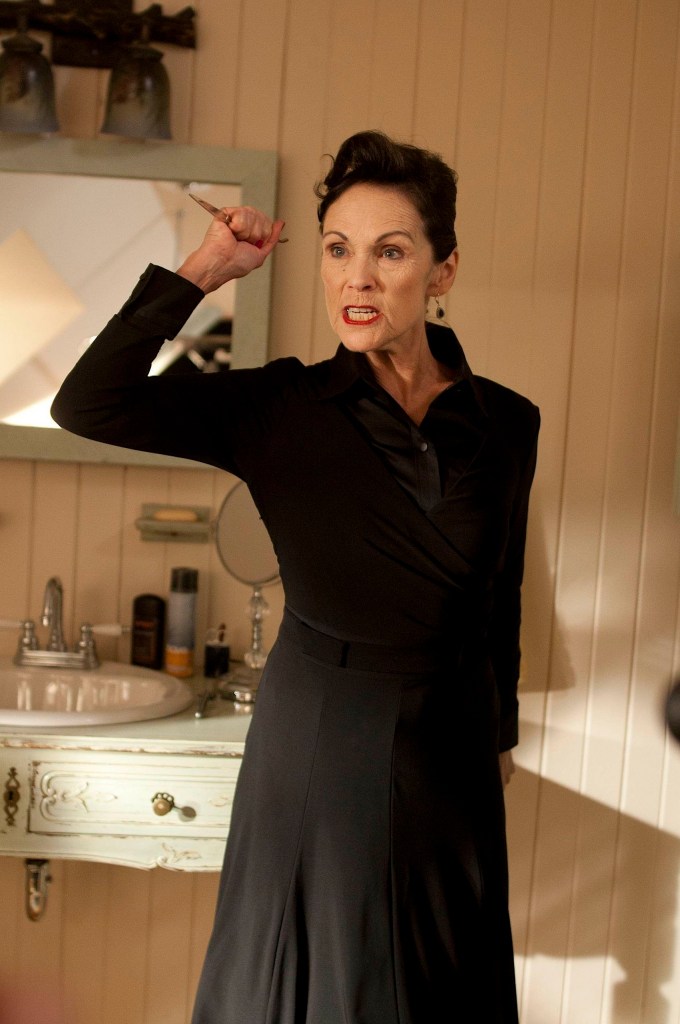
‘Her narrow face and hollow cheeks made her resemble Edvard Munch’s screamer more than ever. Her hair hung around her face in a lank cowl. Her lips were painted so brightly red she seemed to be bleeding from the mouth.‘
Effective openings
‘On a very hot day in August of 1994, my wife told me she was going down to the Derry Rite Aid to pick up a refill on her sinus medicine prescription – this is the stuff you can buy over the counter these days, I believe.‘
So begins ‘Bag of Bones,’ and we are already aware there is deception here – ‘… my wife told me…‘ What follows are several lines of scene setting, describing the town of Derry
and the location of the Rite Aid store on a small ‘strip mall.’ The event that triggers the story comes next:
‘The next time I saw her, she was on TV. That’s how you identify the dead here in Derry – no walking down a subterranean corridor with green tiles on the walls and long fluorescent bars overhead, no naked body rolling out of a chilly drawer on casters; you just go into an office marked PRIVATE and look at a TV screen and say yep or nope.‘
In the opening we know that the narrator is describing a scene that occurred some time ago – ‘ … this is the stuff you can buy over the counter these days…‘ but his rant concerning mortuary procedure reveals he is still deeply hurt by his wife’s death. Through this we begin to empathise with him – and we’re still on page one.
On page two, the contents of Johanna’s handbag point to a possible double life:
‘The Sinus inhaler was in a Rite Aid bag. It had cost twelve dollars and eighteen cents. There was something else in the bag, too – an item which had cost twenty-two-fifty. I looked at this other item for a long time, seeing it but not understanding it. I was surprised, maybe even stunned, but the idea that Johanna Arlen Noonan might have been leading another life, one I knew nothing about, never crossed my mind. Not then.‘
We are not told here what the mystery item is, but by this time, through use of an effective opening, the reader is already invested in the main character and relates to him. This is the hook. There can be no doubt then that the reader will continue turning the pages as the plot unfolds, and remain transfixed until all has been revealed much later.
To uncover the tightly-entwined secrets of Noonan’s cabin, Max Devore and Joanne Noonan’s mysterious double life, you will have to read the book.
And I recommend that you do.

 RAVEN MOON