Of all the battles fought during the second world war, which do you think was the longest?
If you were to ask that question of someone you may receive any number of answers. One might be ‘the North Africa campaign,’ or perhaps ‘the Battle for Normandy.’ Some may suggest ‘The Battle of Britain.’
But all would be wrong.
The battle for North Africa was without doubt long, at two years, eleven months and three days in duration, commencing June, 1940, and continuing through to May, 1943. The battle for Normandy, though a ferocious and desperate engagement, lasted from June 6, 1944 to August 21 of the same year.
The Battle of Britain may be a popular answer for it is a well-documented engagement, commonly-portrayed in books and film. It was a conflict in which, through a relentless bombing campaign, Germany sought to destroy the RAF, and when that failed, turned its attention on London and other key cities in a bid to crush the resolve of the British people.
The bitter contest was fought in the skies over London and above the fields and towns of the home counties. Although it looms large in the British psyche, it lasted only three months and three weeks, from July 10 to October 31, 1940.
The correct answer, and one that is often overlooked, is the Battle of the Atlantic.
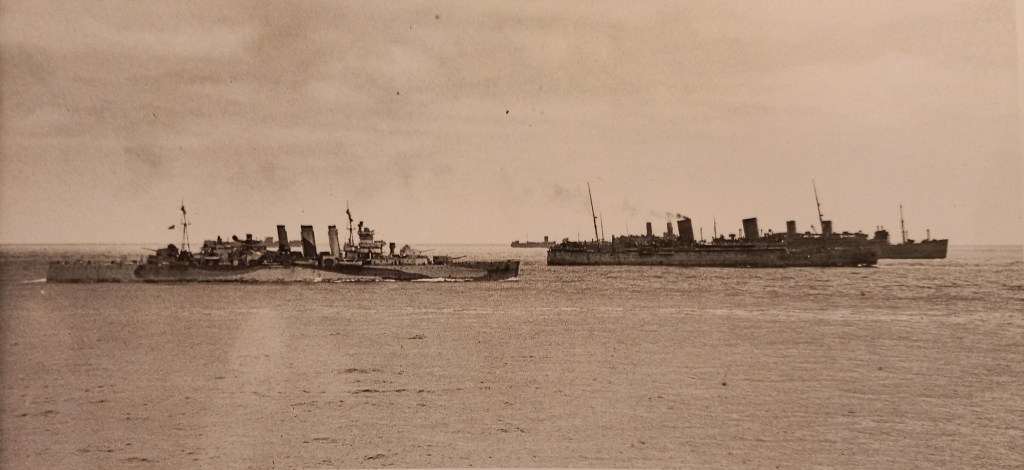
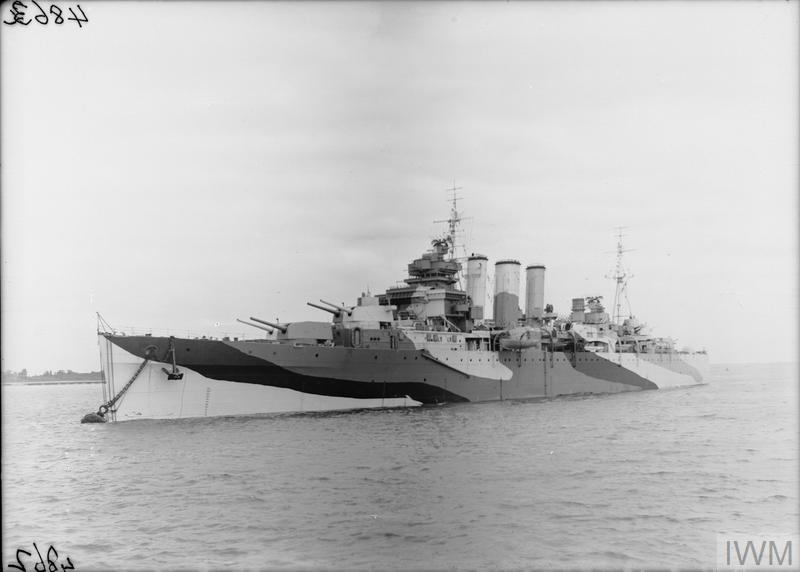
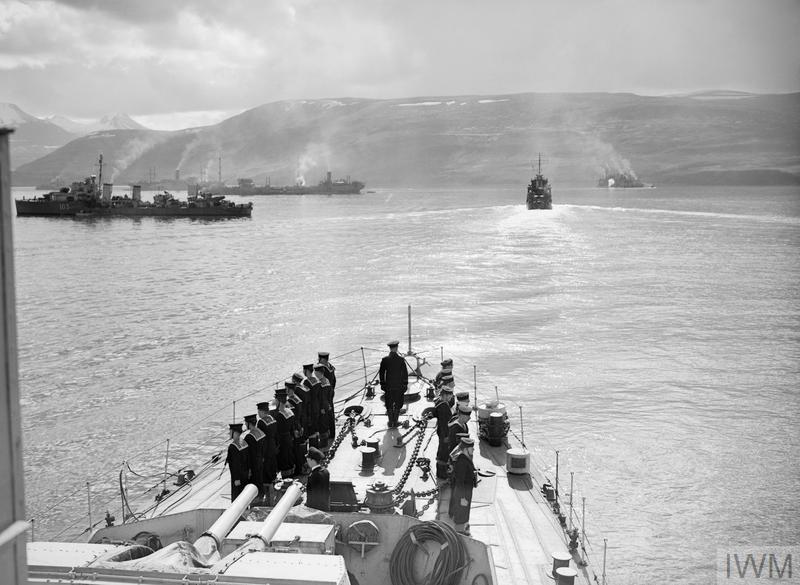
Cruiser HMS Shropshire in convoy
The RAF’s desperate ‘Battle of Britain‘ fight gained prominence in our nation’s consciousness following the famous wartime speech given by Winston Churchill on August 20, 1940 in which he said:
‘The gratitude of every home in our Island, in our Empire, and indeed throughout the world, except in the abodes of the guilty, goes out to the British airmen who, undaunted by odds, unwearied in their constant challenge and mortal danger, are turning the tide of the World War by their prowess and by their devotion. Never in the field of human conflict was so much owed by so many to so few.’
It was, however, the Navy which ensured food reached Britain’s tables, and vital supplies were brought in to equip the nation in its war effort. And this was achieved at a colossal cost, in men and ships.
Churchill may have articulated the nation’s gratitude toward ‘the few’ in his well-known speech, it was much later, however, that he expressed his most pressing, personally-held concerns of the war, when he wrote in his memoirs:
‘The only thing that ever really frightened me during the war was the U-Boat peril … it did not take the form of flaring battles and glittering achievements, it manifested itself through statistics, diagrams and curves, unknown to the nation, incomprehensible to the public.’
The Battle of the Atlantic was the most complex, and longest continuous military campaign of World War Two, lasting five years, eight months and five days. It began on September 3, 1939 and ran to May 8, 1945 – the entire duration of the war.
For most of that time, my father was a combatant serving with the Royal Navy in the Atlantic and elsewhere. His military service was to leave a lasting impression on him. In his later life it lead to recognition, respect and military honour awarded by a grateful Russian people in a poignant ceremony aboard a warship on the Baltic.
The Battle of the Atlantic, and that of the Arctic Convoys were conflicts in which combatants fought two brutal adversaries. One, of course, was the enemy’s military forces. But for seamen of both sides there was another, far more relentless and equally deadly enemy, one that did not discriminate against nations or flags. The sea itself.
‘The Cruel Sea,’ a 1953 British war film based on the book of the same name by Nicholas Monsarrat, portrays the conditions in which the Battle of the Atlantic was waged between the Royal Navy and Germany’s U-Boat fleet. It opens with the following narrative:
‘This is a story of the Battle of the Atlantic, the story of an ocean, two ships, and a handful of men. The men are the heroes; the heroines are the ships. The only villain is the sea, the cruel sea, that man has made more cruel …’
Nowhere were the conditions more cruel nor more deadly than those endured in the arctic, on the convoys delivering arms and aid to Russia. Of those theatres of conflict experienced by my father, it was the merciless arctic convoys that would create the most enduring impression.
When war broke out on September 1, 1939, my father, Francis Harold, was living in the village of Pointon, Lincolnshire. Born there, he’d lived in the tiny village all of his life.
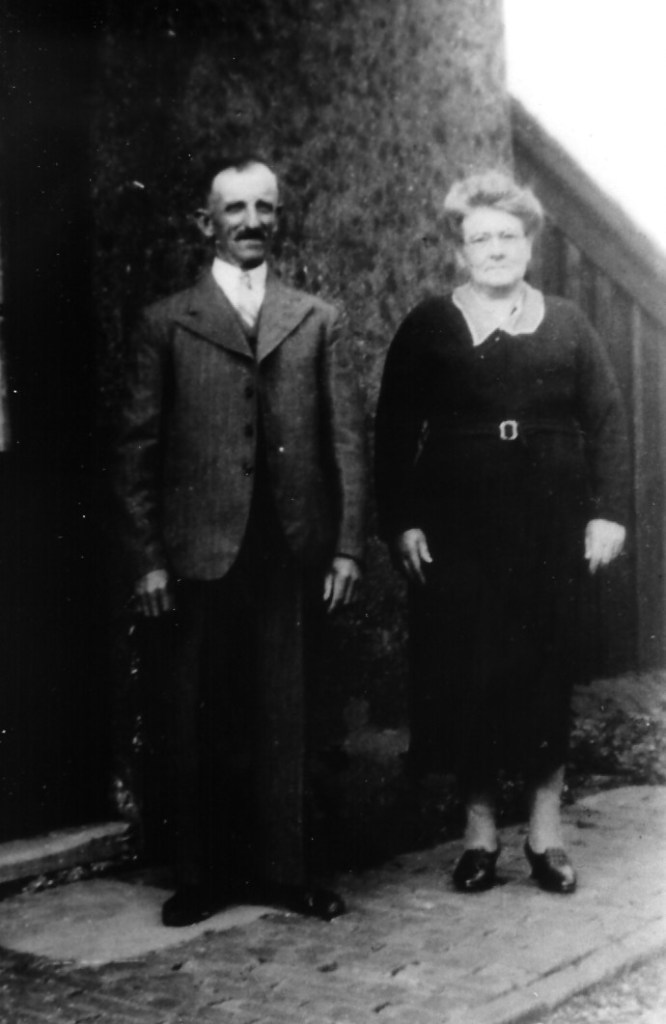
His father, William, worked as a Plate Layer on the Midland Railway, and his mother, Mary Ellen (nee Howman) was Pointon’s level crossing keeper. The railway-owned crossing gatehouse on Fen Road was the family home.
In September, 1939 my father was living at the gatehouse with his parents and older brothers, John William (Bill) and James Edward. He was employed at the village’s small bakery.
William Wand & Mary Ellen (nee Howman) Fen Road, Pointon
On the day Britain declared war on Germany, parliament enacted the National Service (Armed Forces) Act, imposing conscription on all males aged between 18 and 41. Those in key industries, such as engineering, would be exempt. My father, however, was 19 years old, and his role did not release him from active service.
His eldest brother Bill, on the other hand, was employed at a Grantham Engineering Works and therefore exempt from conscription. Furthermore, he was able to secure employment there for his two brothers.
James accepted, and joined Bill at the works. My father, however, declined the opportunity and decided instead to enter military service.
My father’s decision was much to the disappointment of his mother. For her, the previous war with Germany was no doubt an unhappy, all too recent and deeply troubling memory.
One year after the outbreak of war, my father joined the Royal Navy and began his training at the naval shore establishment, HMS Royal Arthur, at Ingoldmells, near Skegness.
He remained there through to 1941, at which time he joined another shore base, HMS Pembroke at Chatham, where he completed his training.
(Right) Francis Wand, Skegness, 1941
Recruits arriving at HMS Royal Arthur, Ingoldmells, Nr Skegness
On completion of his training in 1941, my father was assigned to HMS Shropshire, a County Class heavy cruiser.
When my father joined the crew of Shropshire she had recently undergone a refit following operations in the South Atlantic. Refit completed, the ship then steamed to the Indian Ocean where she undertook convoy cover duties between Cape Town, Durban, Mombassa and Aden.
Perhaps one of the first actions in which my father took part was in the campaign against Italian Somaliland. There, Shropshire was engaged in the bombardment of Mogadishu and Kismayu during the advance of the South African Army from Kenya to Abyssinia.
My father’s role during action stations was as a loader in the ship’s magazine, where he’d feed shells and cordite via the hydraulic lifts to the eight-inch turret-mounted guns above. He would therefore have played a part in the naval bombardment of coastal positions.
Be that as it may, if those anecdotes delivered to his children years later reflected his most enduring memories, it was not the bombardment that remained foremost in his mind. Rather it was the gifts lavished on the ship’s crew by their grateful allies. In my father’s case the gift was in the form of bananas – a whole stick of them, which he kept in his locker.
It’s doubtful whether my father had ever seen a banana up to that point, much less eaten one. Having a ‘sweet tooth’ he therefore partook of his gift with great enthusiasm. It is, perhaps, not surprising that he was violently ill as a result. Sadly, given that he clearly enjoyed their taste, this experience put him off bananas for life.
I cite that example of my father’s war stories to illustrate that, despite experiencing unimaginable horror, he was selective in his recollections. He clearly preferred to reminisce on the humorous and the trivial, as though in an effort to expunge other, less pleasant memories.
Life on board the British heavy Cruiser HMS Shropshire, 1942
Hammocks on the For’d Mess Deck, HMS Shropshire (a sketch by H. McWilliams)
In June, 1941 Shropshire returned to Britain, and in July she left Scapa Flow, bound for Hvalfjord, Iceland. There, she was to commence escort duties on the aid convoys bound for Archangel and Murmansk in northern Russia. She would continue in this role for the remainder of 1941.
On board the destroyer, HMS Fury, off Iceland, 1942
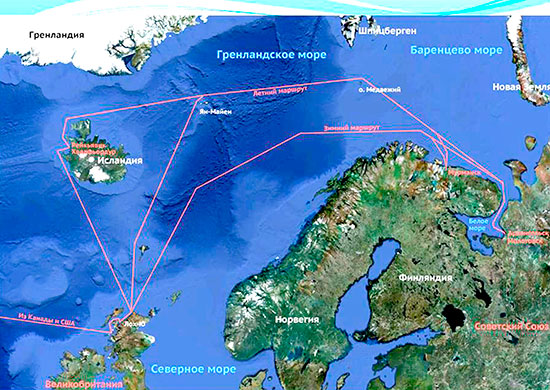
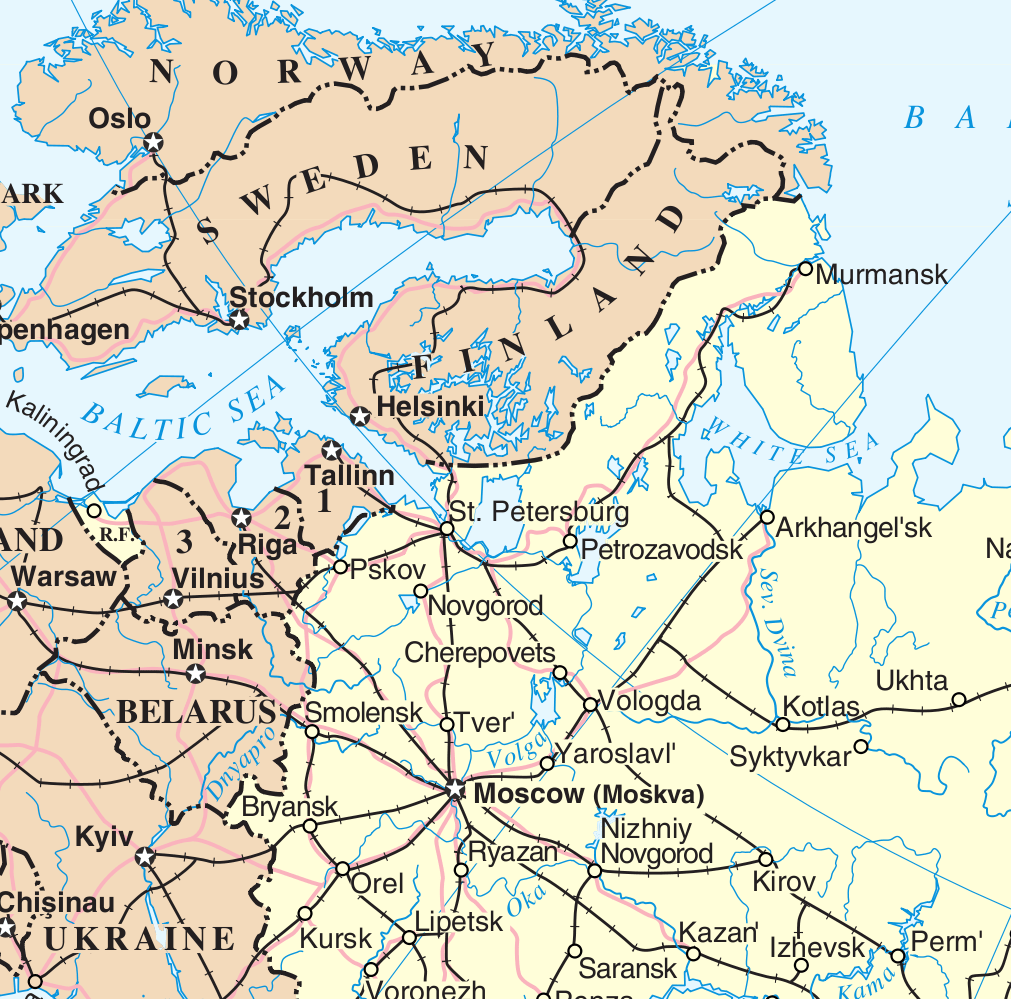
During the months when pack ice permitted, the convoys ran from Iceland, north to Jan Mayen island and on to the port of Archangel.
When pack ice increased, the route shifted south, terminating at Murmansk.
Both routes skirted Nazi-occupied Norway, rendering it particularly dangerous.
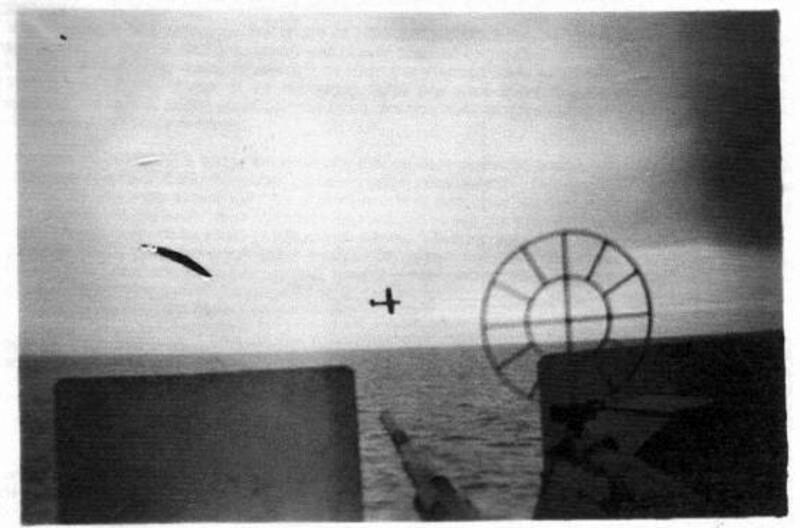
The proximity of German air, submarine and surface forces was, however, only one of many threats facing allied ships. Severe weather, pack ice, strong currents and the mix of cold fronts and warmer waters created severe hazards, too. It was under these appalling conditions that convoys found themselves attacked around the clock.
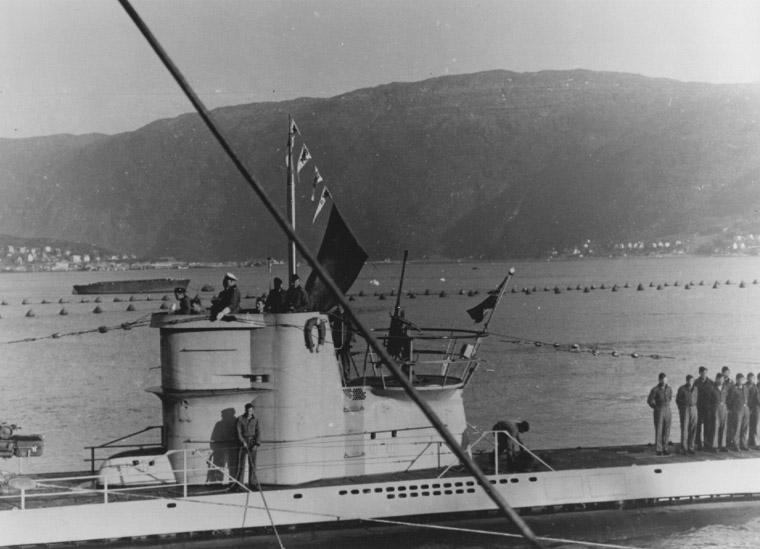
U255 Flying four victory pennants following its attack on convoy PQ17
Unsurprisingly, losses were high. Convoy PQ17, for example, suffered the worst losses of any of the Arctic Convoys. Of the 35 vessels which set out in July, 1942, only 11 succeeded in running the gauntlet of German U-Boats and bombers.
Prime Minister, Winston Churchill, called the event, ‘ … one of the most melancholy naval episodes in the whole of the war.’
This then was the bitter environment that was to create such a lasting impression on my father.
He served aboard Shropshire until (I believe) 1943. In April of that year the cruiser was gifted to the Royal Australian Navy following the loss of HMAS Canberra, and was commissioned as HMAS Shropshire on April 20th.
My father was then assigned to HMS Pembroke at Chatham Barracks, and from 1943 to 1946 he was shore-based, serving at Pembroke and HMS Ganges.
Serving ashore provided him with the opportunity to meet someone who would become his lifelong sweetheart … Catherine Jeanette Baker – my mother – and on December 18, 1943 they were married at Aveley, Essex.
On March 31, 1946 my father received his discharge from the Royal Navy.
He returned at last to his home village of Pointon having sailed the seas and visited Africa and Russia. With him on his return to rural south Lincolnshire was his wife, Catherine, and young son, Roger William, who had been born in Aveley on July 11, 1945.
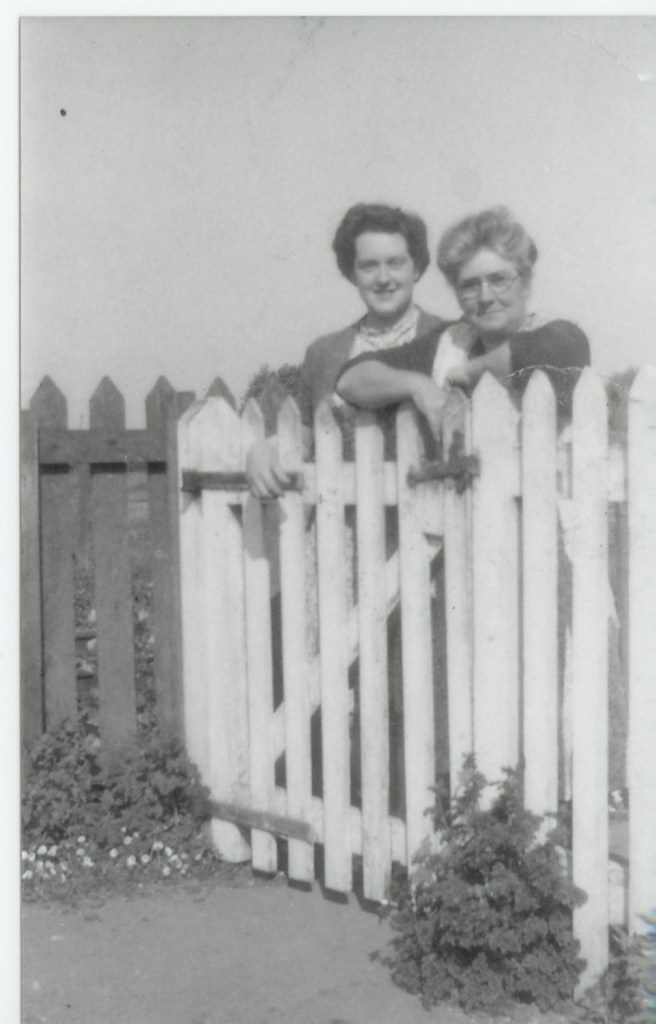
Mum and Grandma, Catherine Jeanette (nee Baker) and Mary Ellen (nee Howman), Pointon, Lincolnshire, 1946
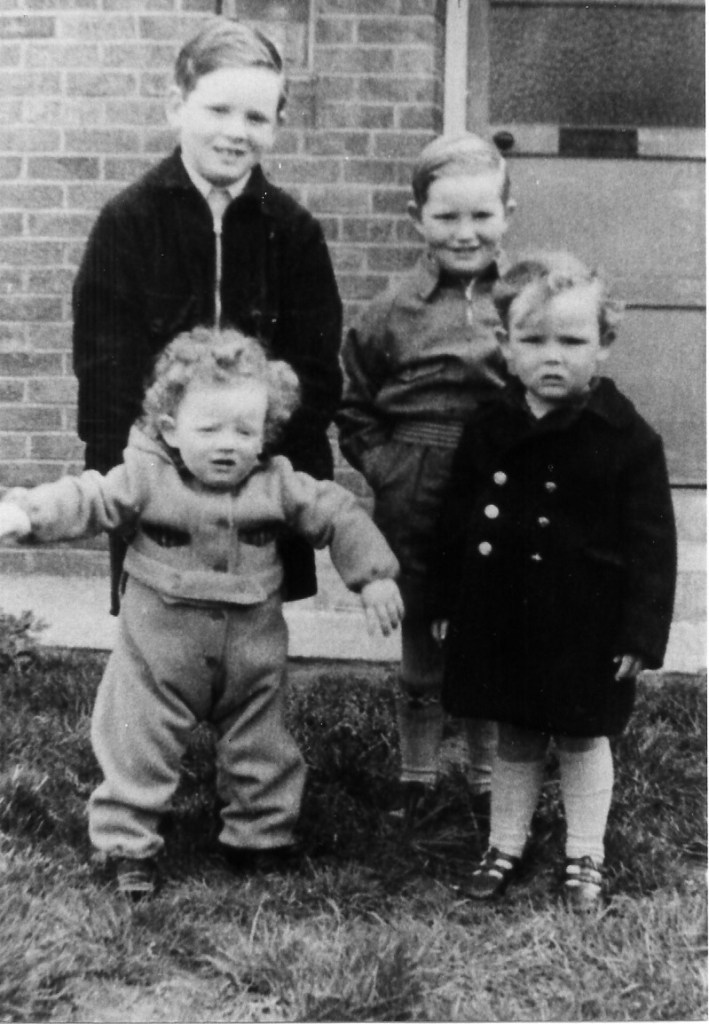
They lived in Pointon until 1950, at which time they moved to the neighbouring village of Billingborough. It was here that I was born in 1958, to a family that by then included my brothers Roger, Franklyn, Melvyn and Leon. My sister, Sheron, joined us in 1961.
… I was born in 1958 to a family that then included my brothers Roger, Franklyn, Melvyn and Leon
My father rarely spoke of his wartime service. When he did, it was to relate light-hearted stories such as the gift of bananas, above. Whilst he made no secret of the fact that his service included the Arctic convoys, he never gave vivid accounts of his experience of those gruelling routes, which Winston Churchill described as:
‘ … the worst journey in the world.’
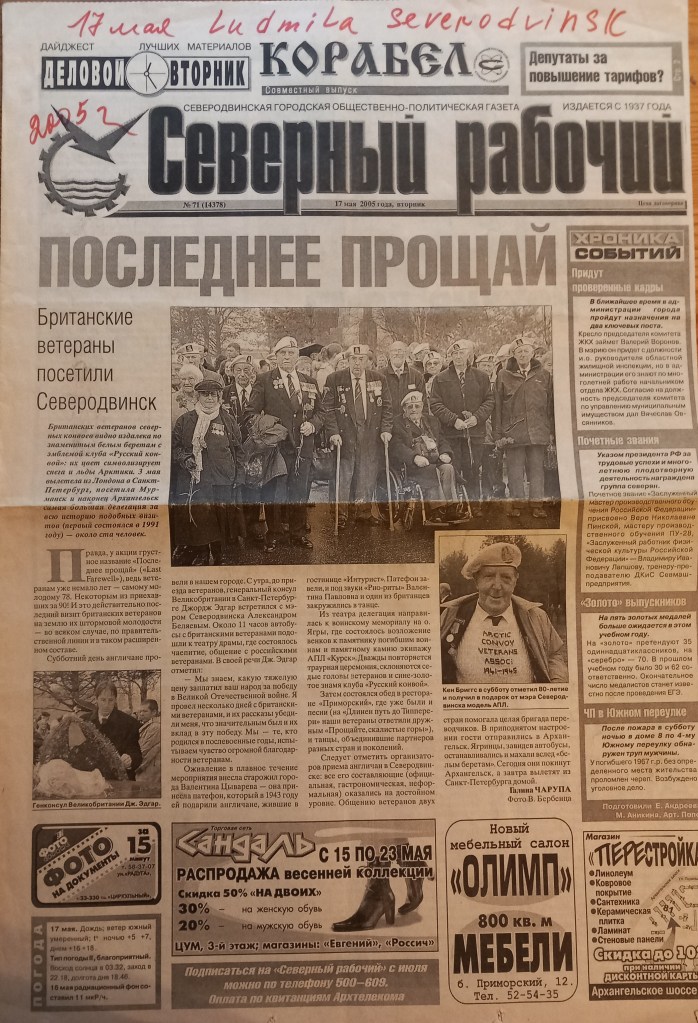
Sometime in the 1990s my father discovered and joined The Arctic Convoy Club.
A patron of the club was the journalist, broadcaster and author, Ludovik Kennedy. He was also a veteran of the Arctic convoys, having served in the Royal Navy as an officer on destroyers, including HMS Tartar, one of the vessels which pursued the German battleship Bismarck following the Battle of the Denmark Straight.
The organisation enabled Arctic veterans of both the Royal and Merchant Navies to gather and reminisce on their shared experiences, revitalising the inimitable comradeship among the men. The club acknowledged this camaraderie in its own circulars:
‘The appalling weather conditions and arduous nature of the convoys engendered in those who experienced them a comradeship of quite a unique nature. The ports of Archangel and Murmansk offered little in terms of creature comforts or safety, being under frequent heavy air attacks.’
Connection to the Arctic Convoy Club led to my father being more open about his involvement in that theatre of war. Nevertheless, he remained tight-lipped when it came to the horrors of his experience.
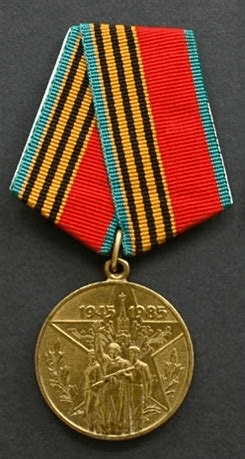
Through the efforts of the Arctic Convoy Club, and their collaboration with the Russian government, veterans’ sacrifices finally gained overdue recognition when Russia minted a special 40th Anniversary commemorative medal.
It was ever a contentious issue among veterans that their own government had steadfastly refused to acknowledge the sacrifices with a specific campaign medal. That travesty was corrected in December, 2012, when the British government finally relented, issuing the long-overdue Arctic Star.
Sadly, this tardy acknowledgement came too late for many servicemen, including my father.
The Russian government, however, had long expressed its gratitude towards their allies’ contribution to ‘the war against fascism.’ In 1945 the Russian ambassador to Britain declared:
‘The Russian convoys are a northern saga of heroism, bravery and endurance. This saga will live forever, not only in the hearts of your people, but also in the hearts of the Soviet people, who rightly see in it one of the most striking expressions of collaboration between allied governments, without which our common victory would have been impossible.’
Navy veterans were invited to Russia, where the commemorative medals would be awarded in person.
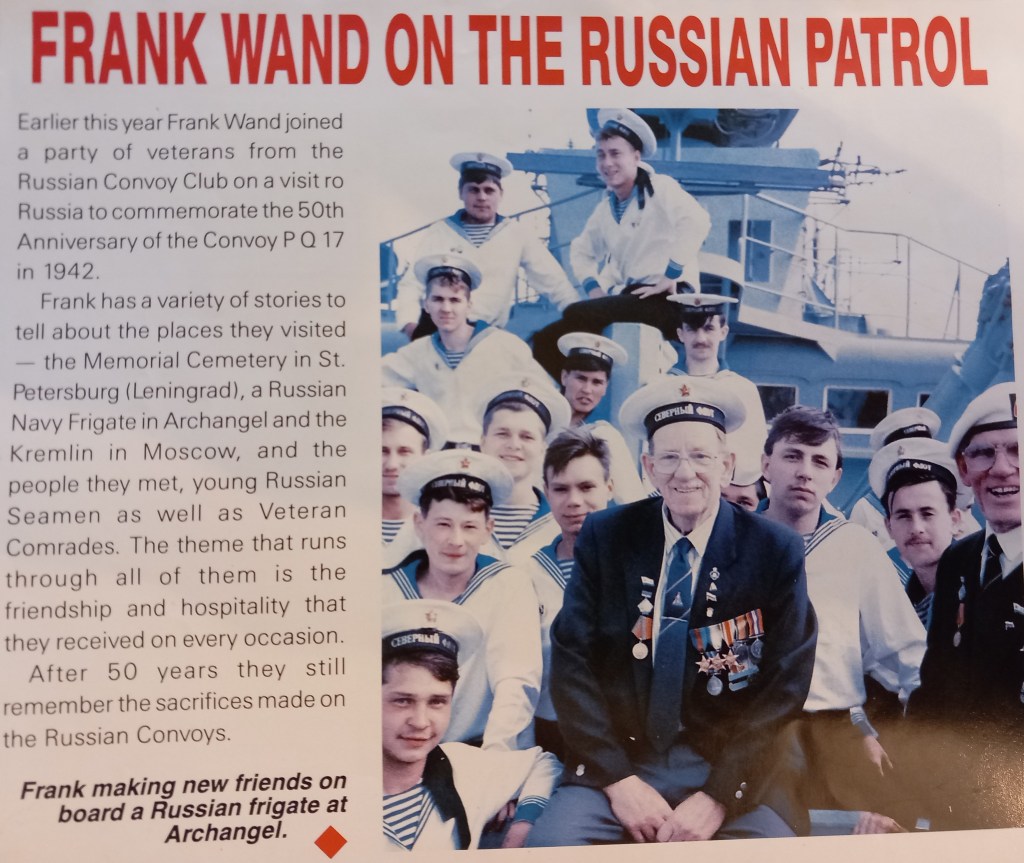
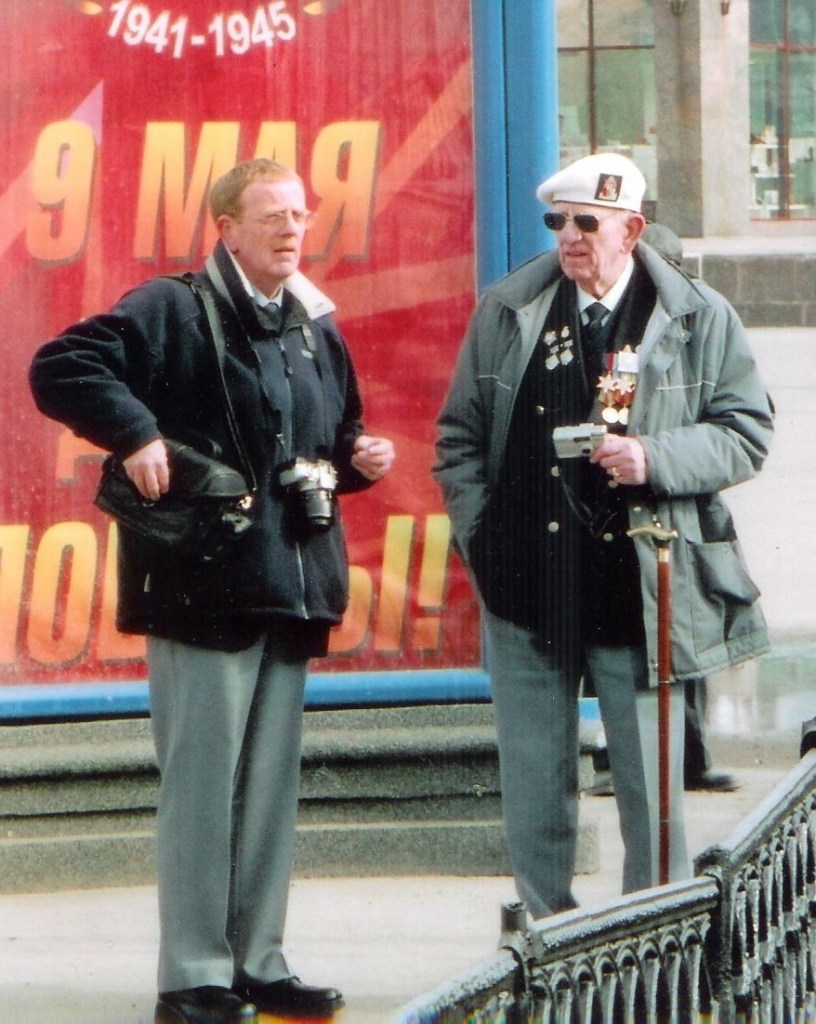
My father was fortunate to be one of them, and in 1992 he made the first of two trips to Russia, returning to the Arctic port of Archangel for the first time in over forty years.
During the visits, veterans were treated like the heroes they were and afforded every hospitality. Accompanied by a dedicated medical team, interpreters and tour guides, they were taken on tours of key sites of historical importance in St Petersburg and Archangel.
Their commemorative medals were awarded by the Commander in Chief of the Baltic fleet, Admiral Salivanov, in a ceremony aboard one of the nation’s warships.
My father, Francis and brother, Leon, St Petersburg, Russia
My father remained intensely proud of his Russian medal. The simple fact that it had been presented to him, in person, by a high ranking naval officer both moved and impressed him.
Unlike those issued by the British government, which he had received in the mail after the war, the Russian medal was personal and meant a great deal to him.
It is only fitting then that such recognition be given to those, such as my father, who had endured unimaginable hardship in the service of their country.
Finally, there can be no doubt that, whilst his wartime accounts were always spiced with his characteristic good humour, my father’s experience will have been traumatic. Nor is there any doubt that he suffered with anxiety in the years that followed.
It is to be hoped then that fellowship with fellow veterans, and recognition of his sacrifice, awarded with a smile and a handshake in the autumn of his life, was cathartic for him, giving him a measure of comfort and closure.
Have you thought what it must be like To face an Arctic winter's storm From the heaving deck of an icebound ship In the frigid light of dawn, With steel of hull so cold to the touch It would flay the skin from your hand And nothing above but a slate grey sky And far from a friendly land.
With red-rimmed eyes and face that is gaunt The result of forced lack of sleep, And nerves that are stretched to breaking point As watch after watch you keep. Think how it feels to face danger and fear In clothes that are wet through and cold, For hours and days, long weeks on end, No wonder young men soon grow old.
Do you know what it takes to face a foe You may never see or hear, Until the klaxon's shrill, harsh strident blare Gives warning they are near. Can you guess how it is to see a friend Die a hard and lingering death, To be at his side and not show your tears As he draws his final breath.
Think how it feels to be one who has seen The dead friend now weighted with lead, Consigned to a dark, cold, friendless sea When the last 'Amen' is said. If you can imagine all these things Then I ask you to spare a thought For the gallant men who were heroes all In the special war they fought.
Well written Steve, my father William Cook was on the same convoys in HMS Pincher a minesweeper clearing the pathways. He talked very little of his experiences.
Thanks, John. I imagine that serving aboard a minesweeper in heavy, Arctic swells would be little short of a nightmare. No wonder your father spoke little of it. Thanks for reading the post, and for your kind comments.
Really interesting Steve, thanks for sharing. Im not sure any of that generation shared their experiences; I’m sure alot sugfered from what we know as survivor’s guilt now. They lost so many friends and comrades. One of my Dads ships was the SS Britannia who was on route from liverpool to Bombay when in march 1941, she was attacked with 70 shells from a 6 inch gun from a German surface raider. They got 300 passengers and 100 crew into 4 lifeboats. There were 82 in Dads boat, they set sail to South America some 1500 miles, further than 600 to Dakar due to prevailing winds and bad currents. They had 1ounce of water 1 biscuit and a scraping of condensed milk a day. After 23 days they sighted land but had lost 44 mens who died from wounds and exposure, a further 38 we’re very ill. They landed near Sao Louis Brazil and discovered by fishermen. They took then in canoes to a hosp at Corupu run by nuns. British consul was told. Dad had 3 mths in hosp. I believe he was on HMS Devonshire 1931-33. But not sure if others sadly. He went in at 15 and left at 50 as a Lieutenant Commander having worked up the ranks, finishing at the admirality in Bath .
Wow, what an incredible story, Jean. It goes to show the strength of character your dad possessed, despite experiencing unimaginable hardship and trauma. Would our generation be able to cope under such conditions? I’m not sure. I’d like to think we could all rise to such challenges. Thanks for sharing.












 RAVEN MOON
Well written Steve, my father William Cook was on the same convoys in HMS Pincher a minesweeper clearing the pathways. He talked very little of his experiences.
LikeLike
Thanks, John. I imagine that serving aboard a minesweeper in heavy, Arctic swells would be little short of a nightmare. No wonder your father spoke little of it. Thanks for reading the post, and for your kind comments.
LikeLike
Really interesting Steve, thanks for sharing. Im not sure any of that generation shared their experiences; I’m sure alot sugfered from what we know as survivor’s guilt now. They lost so many friends and comrades. One of my Dads ships was the SS Britannia who was on route from liverpool to Bombay when in march 1941, she was attacked with 70 shells from a 6 inch gun from a German surface raider. They got 300 passengers and 100 crew into 4 lifeboats. There were 82 in Dads boat, they set sail to South America some 1500 miles, further than 600 to Dakar due to prevailing winds and bad currents. They had 1ounce of water 1 biscuit and a scraping of condensed milk a day. After 23 days they sighted land but had lost 44 mens who died from wounds and exposure, a further 38 we’re very ill. They landed near Sao Louis Brazil and discovered by fishermen. They took then in canoes to a hosp at Corupu run by nuns. British consul was told. Dad had 3 mths in hosp. I believe he was on HMS Devonshire 1931-33. But not sure if others sadly. He went in at 15 and left at 50 as a Lieutenant Commander having worked up the ranks, finishing at the admirality in Bath .
LikeLike
Wow, what an incredible story, Jean. It goes to show the strength of character your dad possessed, despite experiencing unimaginable hardship and trauma. Would our generation be able to cope under such conditions? I’m not sure. I’d like to think we could all rise to such challenges. Thanks for sharing.
LikeLike