
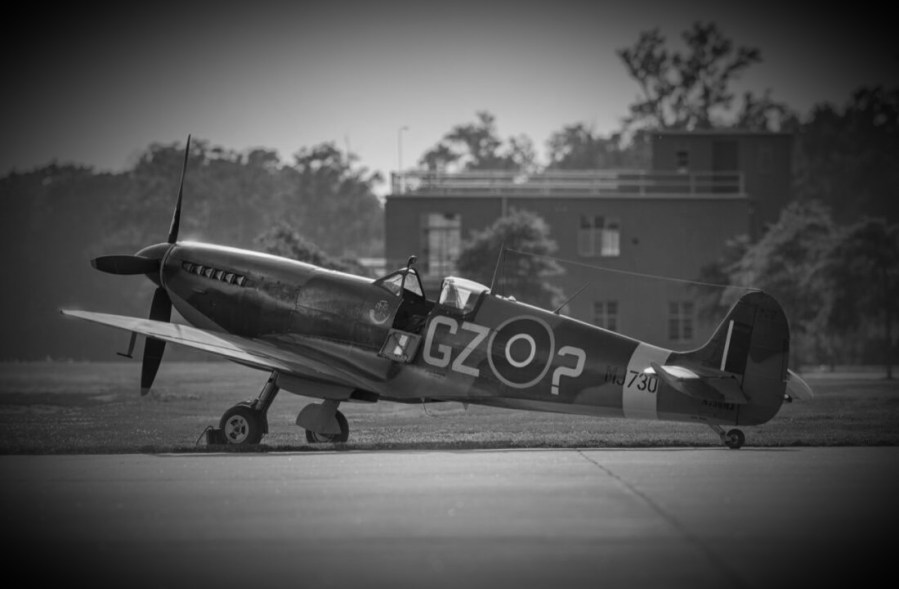
Elsewhere on this site I’ve expressed my love for cycling the near-deserted backroads and byways of my local area here in north Lincolnshire. One place which features regularly on my circuits is the village of Goxhill.
When visiting Goxhill for the first time, the signage on each of the approach roads aroused my interest, proudly declaring the village’s association with America’s Eighth Air Force.

Such a declaration should not have surprised me, given that links to our military aviation heritage is common among the towns and villages here in Lincolnshire – after all, the county has long been referred to as ‘bomber county.’ There was something about Goxhill’s sign, however, that aroused my curiosity. I sensed there to be an interesting story behind it – and I was right.
This is that story.

Arther Mee’s volume of ‘The King’s England – Lincolnshire a County of Infinite Charm,’ published in 1949 contains entries for each of the county’s parishes. The entry for Goxhill states:
Goxhill. A scattered village in the flat, green countryside by the Humber. It has a fine old church restored last century and some attractive old cottages and houses. Close by is a tall black windmill without sails, and about two miles away, at a point which is Lincolnshire’s Farthest North, is a small port called Goxhill Haven.
In the Domesday Book of 1068, the settlement appears as ‘Golsa’ or ‘Golse.’
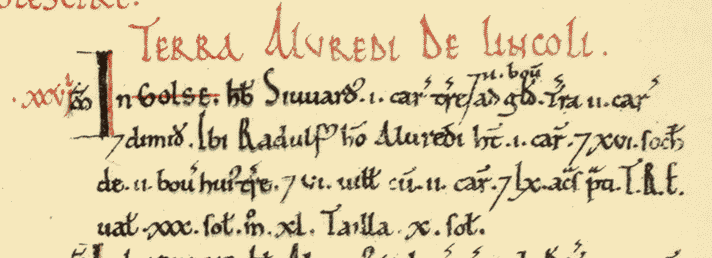
Following the Norman Conquest, the land was given to Drogo la Beuvrière, Flemish associate of William the Conqueror. Located within the ‘Yarborough Hundred,’ it then consisted of ploughland and meadows. There was no mention of a mill, nor even a priest.
Prior to the French invasion the land had belonged to Saxons, Earl Morcar, Siward of Thistleton, Grim, Auti and Hugh.
The centuries that followed saw a steady growth. In 1848 the railway arrived, connecting the village to Barton-upon-Humber, Cleethorpes and the wider national network. Despite this modern intrusion there is little doubt that Goxhill remained a quiet, rural backwater – the ‘flat, green countryside by the Humber,’ described by Arthur Mee in 1949.
Only a few years prior to the publication of Arthur Mee’s volume, however, the skies above Goxhill will have been far less quiet, when, during world war two, the RAF’s little used airbase there was handed over to the Americans. This was an event of significant historical importance. For in 1942 Goxhill became the first airfield given over to the Americans, serving exclusively as a fighter training base, from spring, 1942 to the end of 1944.

British and American personnel hold up flags at the 496th Fighter Training Group at Goxhill, 1944
For many years following the end of WW2, Goxhill airfield continued to be used as storage by the RAF and the Ministry of Defence. This has meant that much of the original infrastructure has been left fairly intact. Still standing are the main J-type hangar and two T2 hangars, as well as several other, smaller buildings.
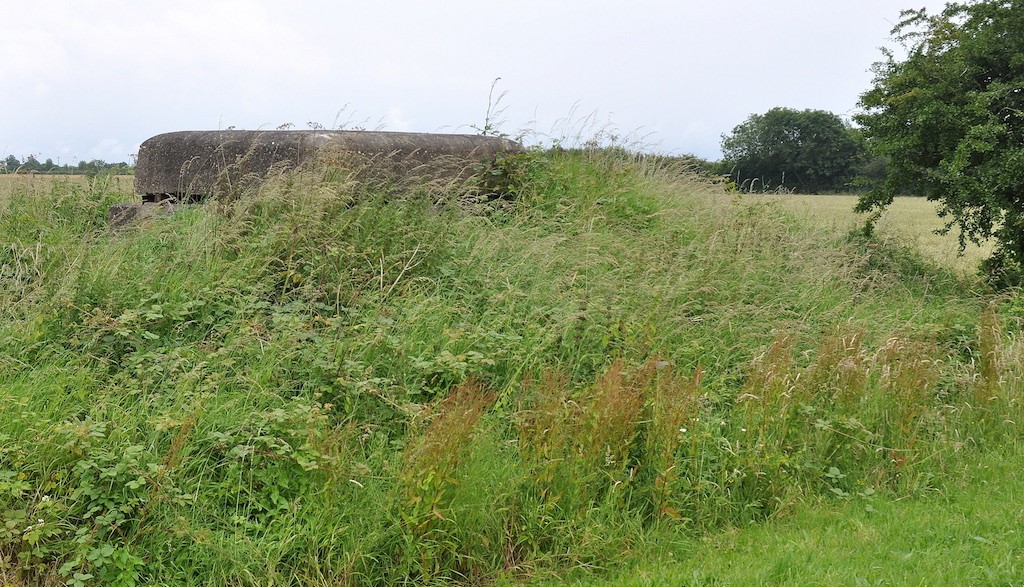
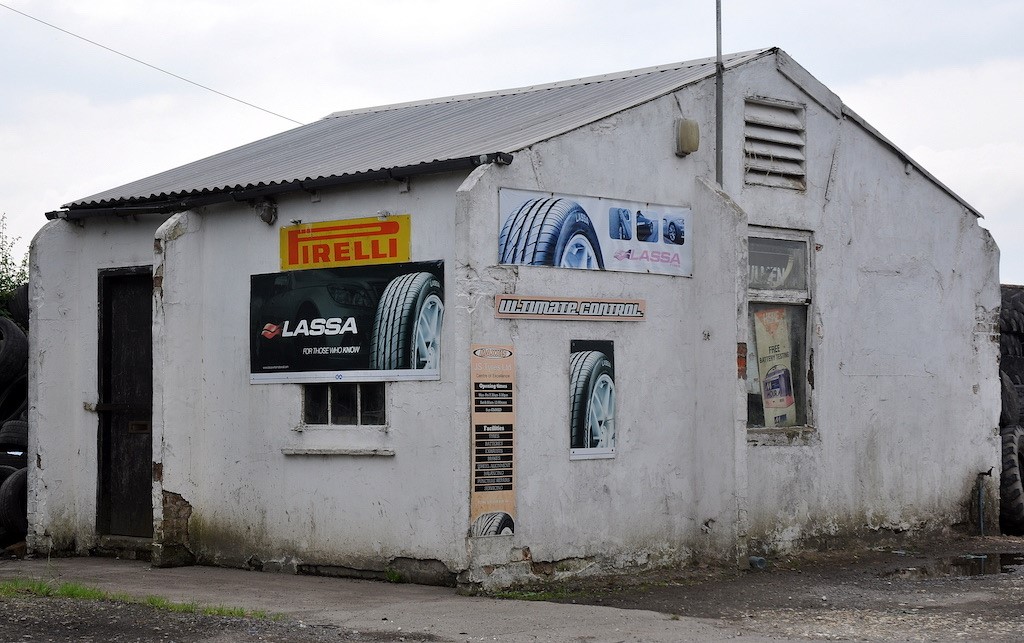
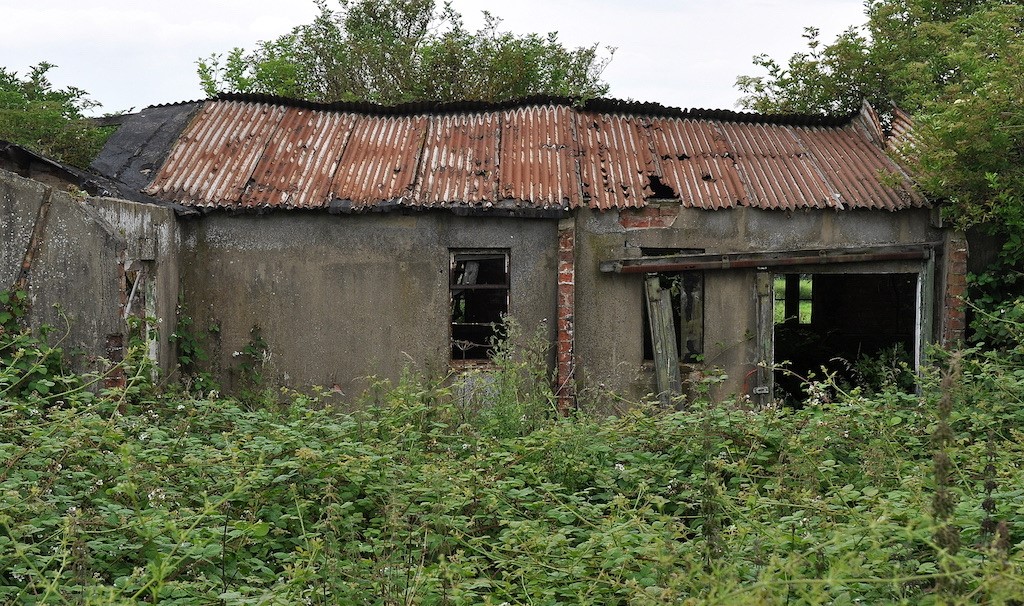
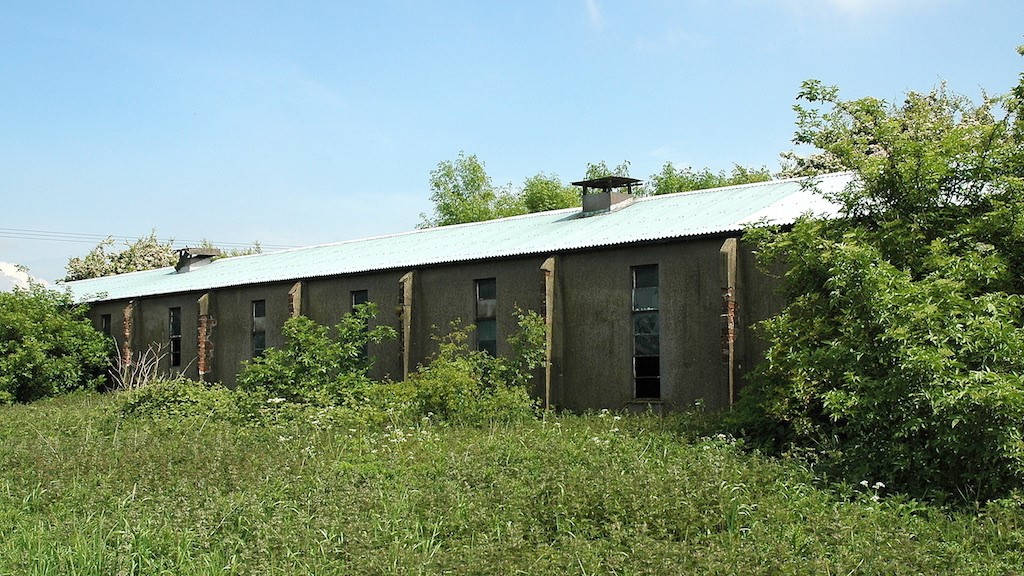
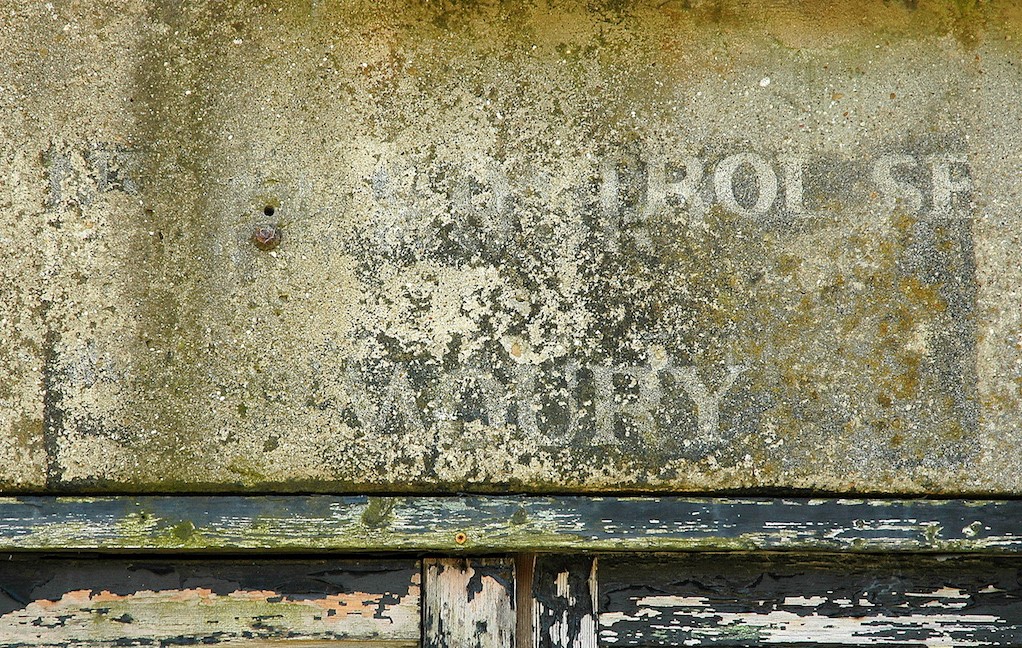

Some buildings continue to serve as agricultural storage, and industrial or trading uses. Others may be seen as crumbling ruins standing amidst grasses, shrubs and brambles as nature gradually reclaims what was once hers. The airfield’s runways and perimeter tracks were dismantled and removed in the 1990s.
A memorial to those men who served at Goxhill can be found at Horsegate Field Road. The simple monument incorporates a propeller blade from an American P-38 Lightning, which crashed at the site in 1944, killing the pilot, Second Lieutenant Lane Ferrera.

This, however, is not the only monument celebrating the bond between Goxhill and its American allies.
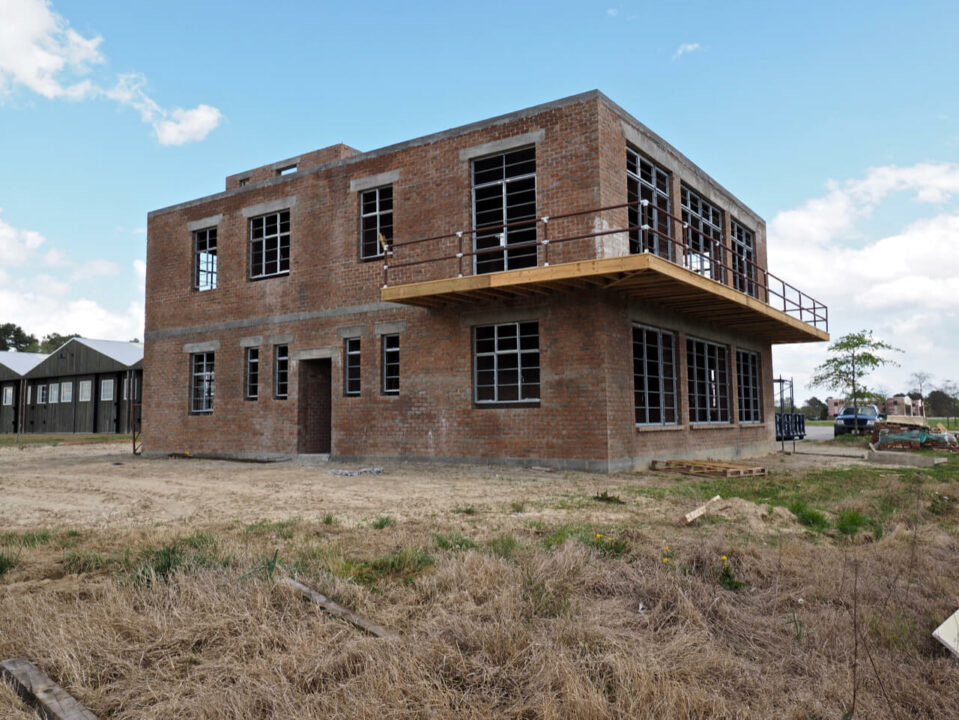
Visitors to the Military Aviation Museum at Pungo, Virginia will find an impressive collection of aircraft and memorabilia honouring the individuals who built, flew and maintained America’s military aircraft. They will also discover, by the side of one of the runways, a WW2 watch tower.

What may not be immediately obvious to visitors of the Virginia Beach museum is that this tower once overlooked a runway barely two miles from the river Humber, at Goxhill, England. Dismantled in 2003, the building was shipped to America and is now fully rebuilt at Pungo, USA.
The historic watch tower has also been lovingly refurnished and equipped with hundreds of genuine period artefacts. This ‘time capsule’ allows visitors to the Virginia attraction to step back in time to 1940s England.

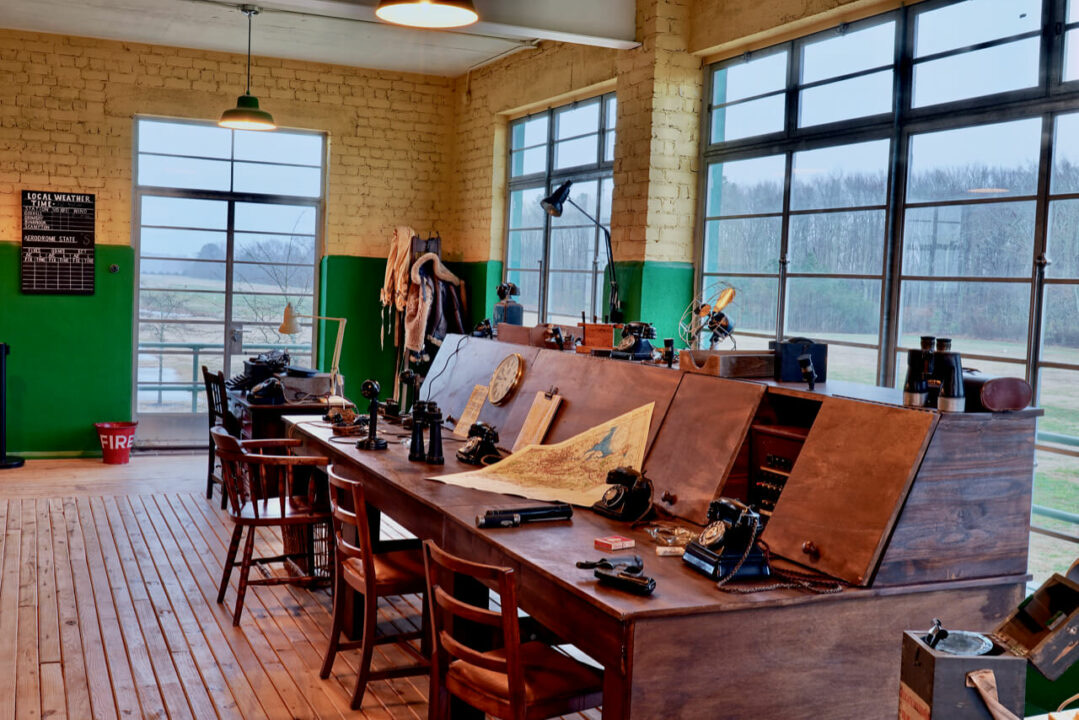
The museum’s ‘Vintage Aviation News’ declares:
The museum is quite proud to preserve and showcase this instantly recognisable piece of history in order to remember the Anglo-American partnership that shaped so many lives over a span of several generations.
The role played by the Goxhill airbase and those who served there proved to be a vital one.
When America came into the war as a result of the attack on Pearl Harbour, her military forces were small, unprepared, inexperienced, and un-blooded.
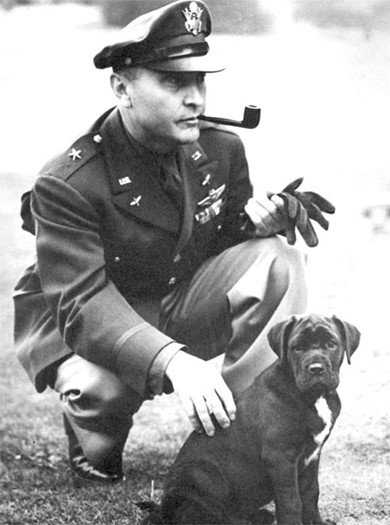
General Ira Eaker [right] the commander of the new Eighth Air Force, arrived in London in early May of 1942. He had six staff officers, no airplanes, and no airfields from which to operate.
By the end of the following year, he would have 4,000 aircraft and 185,000 men in combat, an outstanding organisational achievement.
With untested pilots and new aircraft came accidents and mistakes. The ‘top brass’ therefore knew that it would be folly to put these pilots directly into action. What they required was a ‘finishing school’ for combat fighter pilots to gain an understanding of flying conditions in England, how to work within the air traffic control systems being used, and to obtain practical support and advice from experienced pilots before going operational.
At that time the RAF were struggling to provide the air bases and aircraft needed to defend Britain. Early in 1942, however, they had several airfields that were underused.
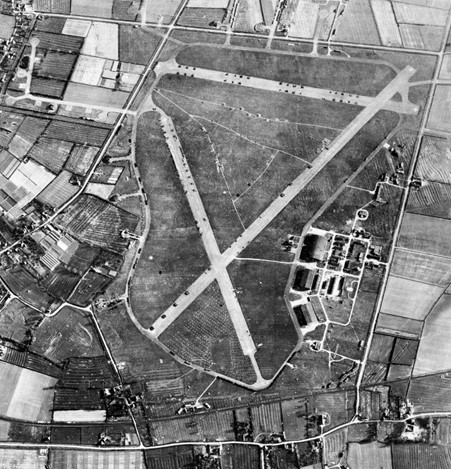
One such airbase was Goxhill. The north Lincolnshire base was a perfect location. It was relatively near to the English Channel, whilst being well north of the main arena for air combat. Furthermore, it was available for immediate use.
One month following the handover agreement, seven USAAF senior staff officers arrived in England, and RAF Goxhill was turned over to the Americans. Within weeks, Americans began occupying the new USAAF Goxhill, with General Eisenhower, Lord Portal, and others attending to mark the occasion.
USAAF Goxhill served exclusively as a fighter training base from Spring 1942 until the end of 1944. During this time, the base received thousands of newly trained pilots to acclimatise them, while serving as a Combat Crew Replacement Center for the 8th and 9th Air Forces.

The ‘Fighting Scouts’ of the 8th Air Force also trained tour-expired bomber pilots at Goxhill to fly fighter planes, serving as advance weather scouts and tactical advisors in real time with bombing missions.
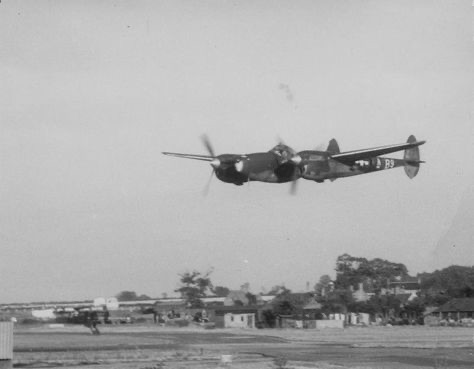
By the end of 1944, America’s first dedicated airfield in England was no longer needed. It was, however, to be several years later before the Goxhill airbase was decommissioned as a military establishment and finally returned to civilian hands, at which point it was recognised by many to be the most undisturbed and complete wartime airfield in existence.
Consideration was therefore given for the base to be turned into a museum, preserving the memory of this historically important site. Unfortunately, this project was shelved.
Thankfully, Jerry Yagen, the founder of the Military Aviation Museum in Pungo, Virginia, dared to conceive a plan of finding a suitably iconic wartime structure to bring to his museum to form a piece of living history at the center of his still-growing collection of vintage military aircraft.
That piece of living history was to be Goxhill’s own watch tower.
As the remaining buildings at what was once Goxhill Airfield crumble and decay, perhaps it’s only fitting that the watch tower, once a place of work for many American servicemen, and a key focal point for countless others should endure.
Furthermore, it is wholly appropriate that it not only survives the rigours of time, but be relocated to the homeland of those who served, to be cherished and preserved for future generations.
For it is a poignant reminder of the sacrifices made by many, and the bonds of friendship between two nations.


 RAVEN MOON