
A friend asked me a while back why I was so interested in Norse culture and mythology. Before I relate my answer, I ought to explain first of all, that my fascination is far greater than my knowledge. Yes, I’m keen to know more but there is so much of the subject of which I’m wholly ignorant. And it’s a huge subject.
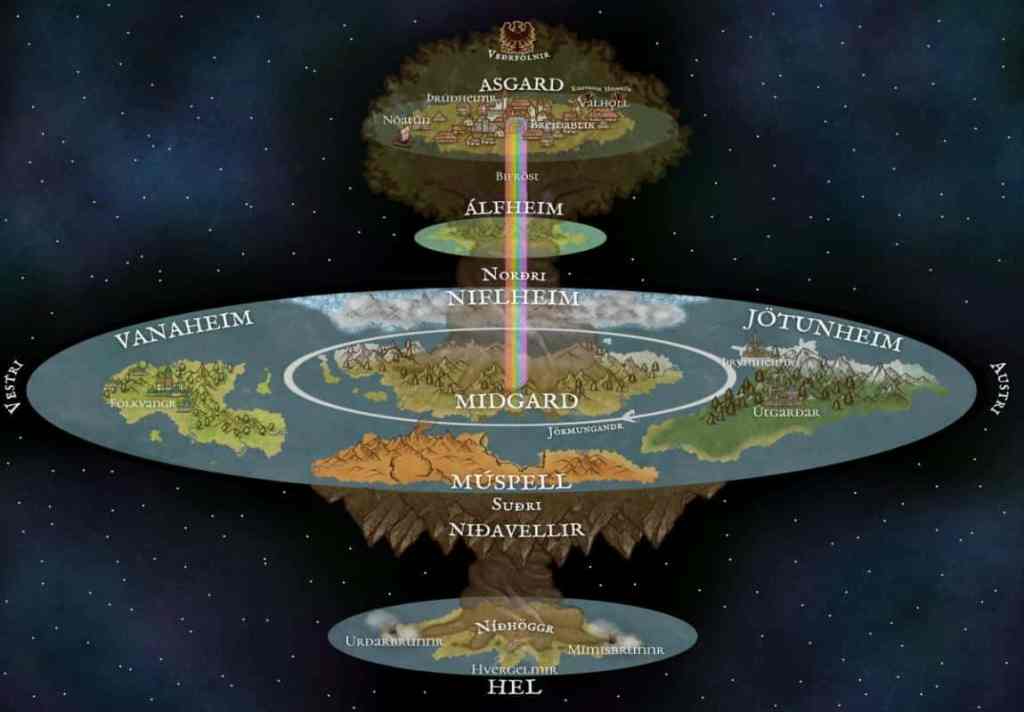
The Nine Realms of Norse Mythology – ‘…a huge subject.’
In short, I struggled to answer my friend. I probably replied quite hastily that I’d always been interested in history, and yes, whilst this is indeed the case, I also knew then and now that the truth of the matter lay much deeper than that.
The Codex Runicus, a law code written in runes (c. 1300 CE)
Having taken more time to consider the question, I feel that the draw is at a soul level rather than an intellectual one. But that still doesn’t adequately answer the ‘why’ of my friend’s query.
Why am I (and so many others) drawn, not only to Nordic culture – its history, mythology, the resonance of its language, and even the charm of its traditional music – but to that of the ancient Germanic and northern European peoples in general?
As an English native, I believe it is in our DNA to feel so connected.
Such is the long and convoluted history of the English nation that, to be English is almost certainly to have ancestral roots in northern Europe and Scandinavia. Furthermore, for someone such as myself, whose family history has for centuries been concentrated in the shires of eastern England, that certainty becomes ever stronger.
From the late ninth century, my ancestors living in what is now my home county of Lincolnshire, as well as those of the wider midlands area north and east of Watling Street, found themselves occupying a partitioned region. Here, they owed allegiance, not to the old Anglo-Saxon aristocracy of Mercia, but to their Viking overlords of the Danelaw. And it is here that a new Anglo-Scandinavian society emerged, one that was to change the culture of England forever.
Ninth-Century England, a partitioned nation; English to the West, Anglo-Scandinavians to the East.
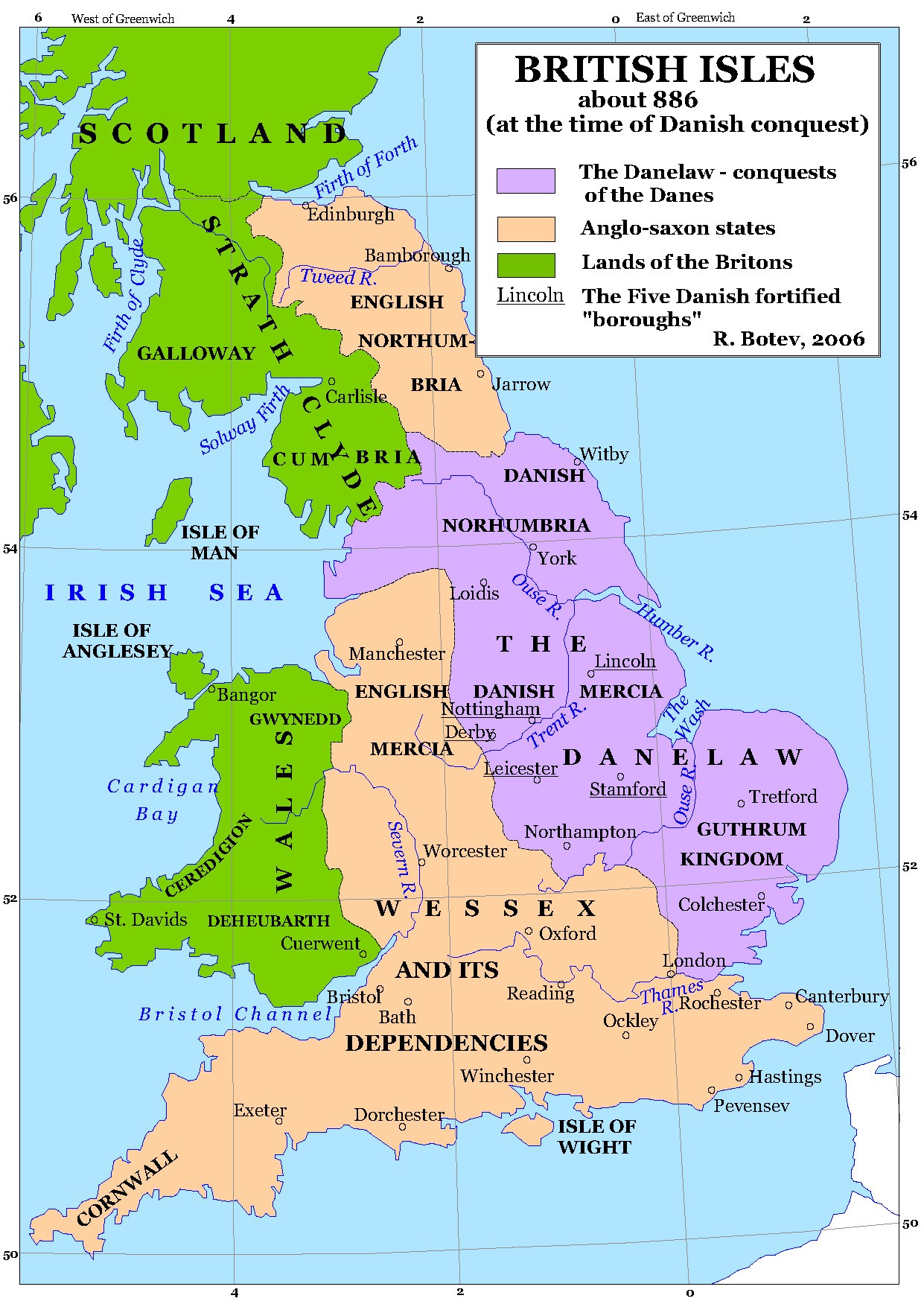
It was into this region that I was born, albeit several centuries later. By this time, the Danelaw was no more. Gone, too, were the ancient kingdoms of Mercia, Wessex and Northumbria, replaced, thanks to King Athelstan, by the unified nation of England, and its network of governmental regions, known as ‘shires.’
Whilst the Danelaw may have gone, evidence of our Nordic forebears lives on, most notably, perhaps, in the names of our towns, villages, rivers and more. This includes my own home village of Ulceby, the suffix ‘–by’ being a Danish appendage, meaning ‘farmstead’. The existing village was therefore once a farm owned by Ulf. Ulf was a Dane.
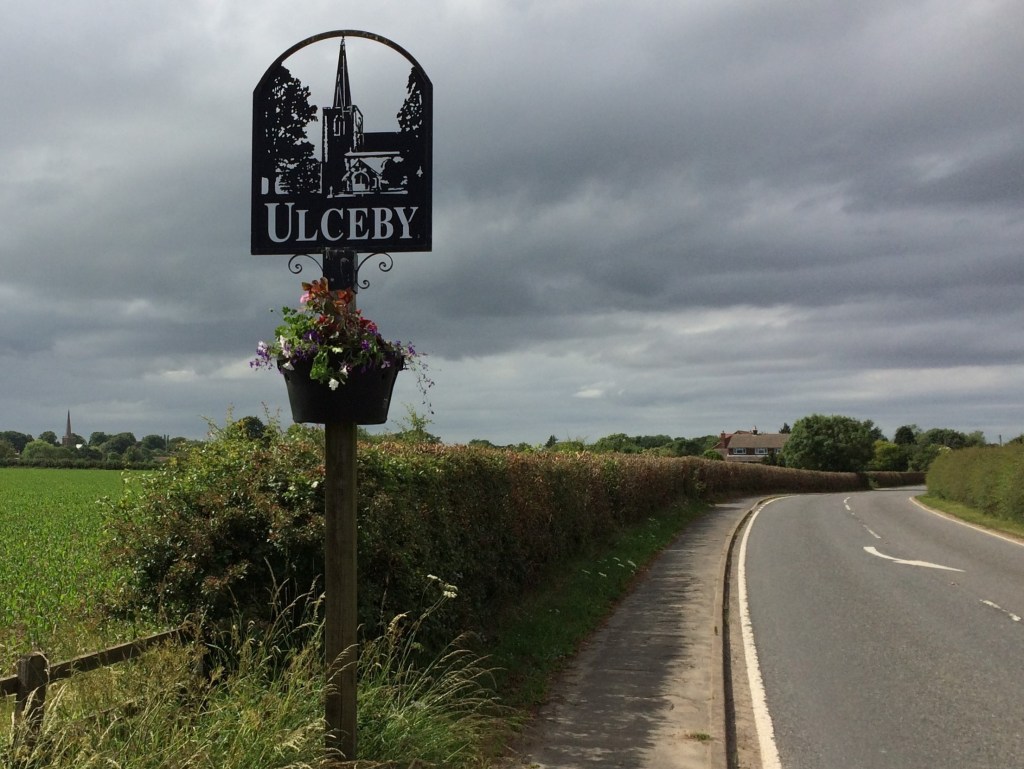
Ulceby – Now a village, once a farmstead owned by Ulf, a Dane.
Given that my own roots, like those of my forbears, extend deep into fertile soil once home to those Norse ancestors who fought over it, settled, then farmed it, there is little wonder in my mind that I have such an interest in their culture, and their ‘pagan’ beliefs.
Indeed, it is perhaps even more surprising to me that countless others do not share such an innate fascination.
I have already alluded to the fact that my interest in Norse culture vastly outweighs my knowledge. As I’ve said, the subject is a wide-ranging one. So, I’ll wrap up this brief post by covering two areas that captivate me – runes and traditional music.
Last year I added runes and rune casting to my personal divination tools, alongside pendling, and the reading of oracle cards and the Tarot.
But, what are runes?
My reference book on the subject (The Runes Box – Tools to Connect you to the Magic of the Universe) states:
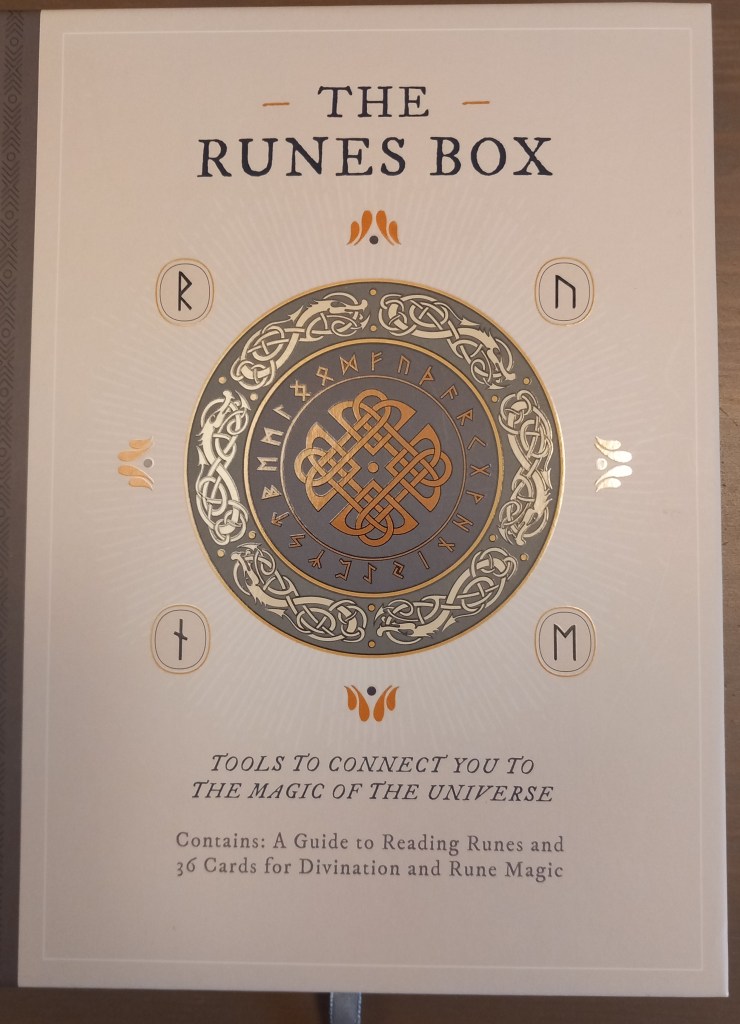
‘Runes are an ancient writing system, a bygone alphabet, but they are so much more. The Germanic and Nordic people of northern Europe and Scandinavia – the Vikings, the Goths, the Saxons, the Angles – used these mysterious symbols for all kinds of ritual purposes.
Runes have always been seen a sacred source of mystic power. At its root, the very word ‘rune’ means a secret, or something whispered.’
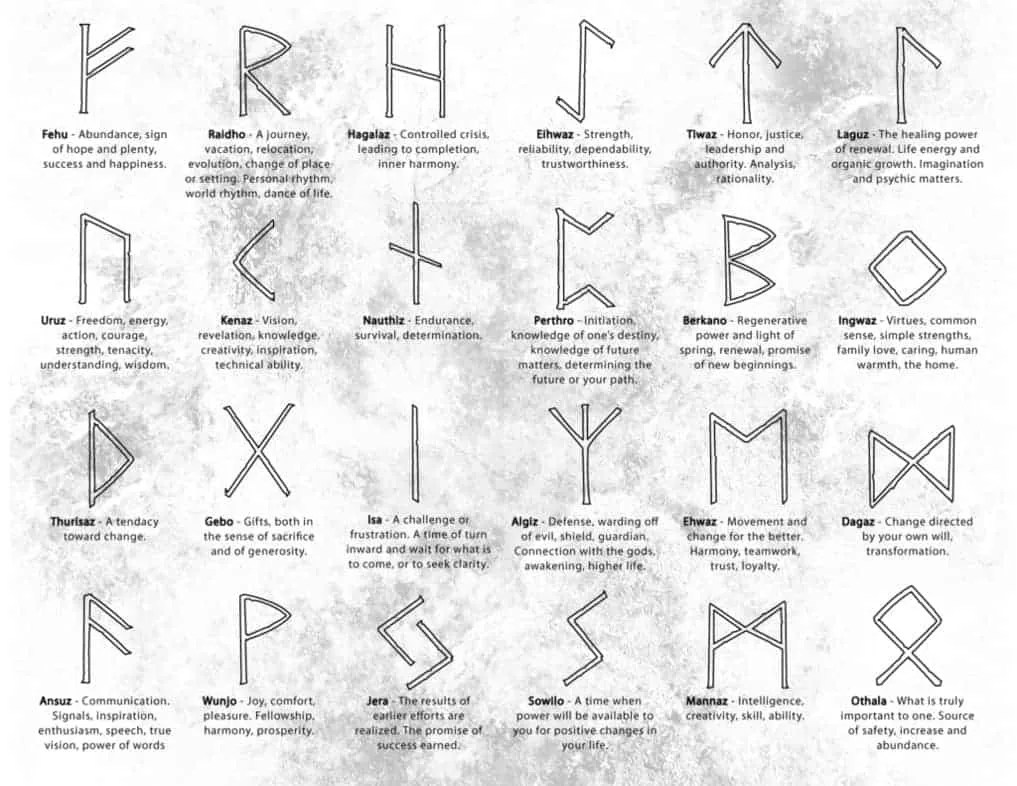
The Elder Futhark — ‘At its very root the word ‘rune’ means a secret or something whispered.’
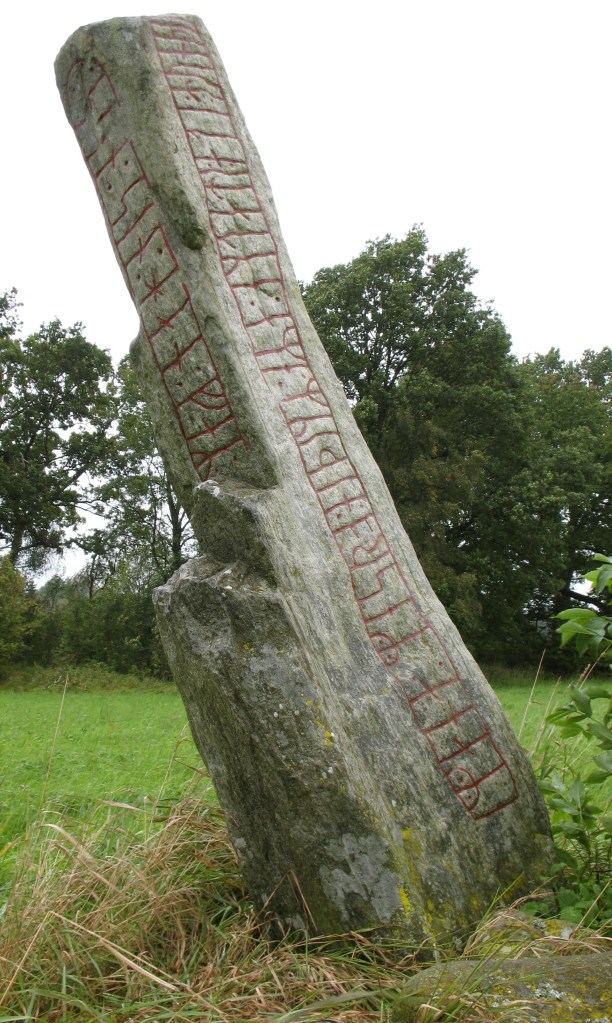
Transjö Runestone

Whilst rune sets, crafted in a wide range of materials, such as wood, stone and crystal, are readily available, it is widely recommended that the runes be made by those who’ll be using them. On this subject, The Runes Box adds:
‘Many rune casters believe that runes you have crafted yourself are more powerful because they have been specifically created for your own purposes, and so are imbued with your spirit.’
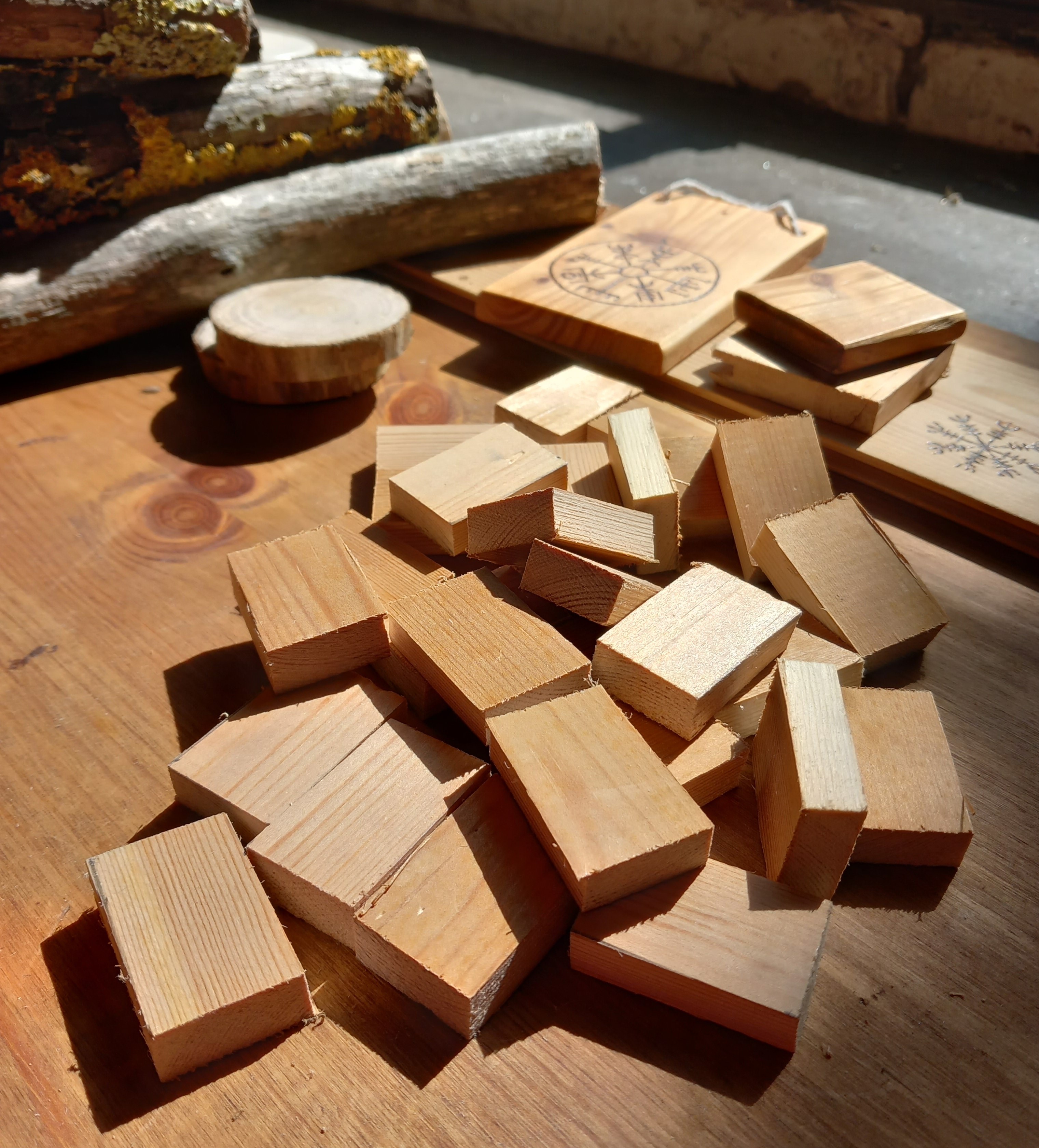
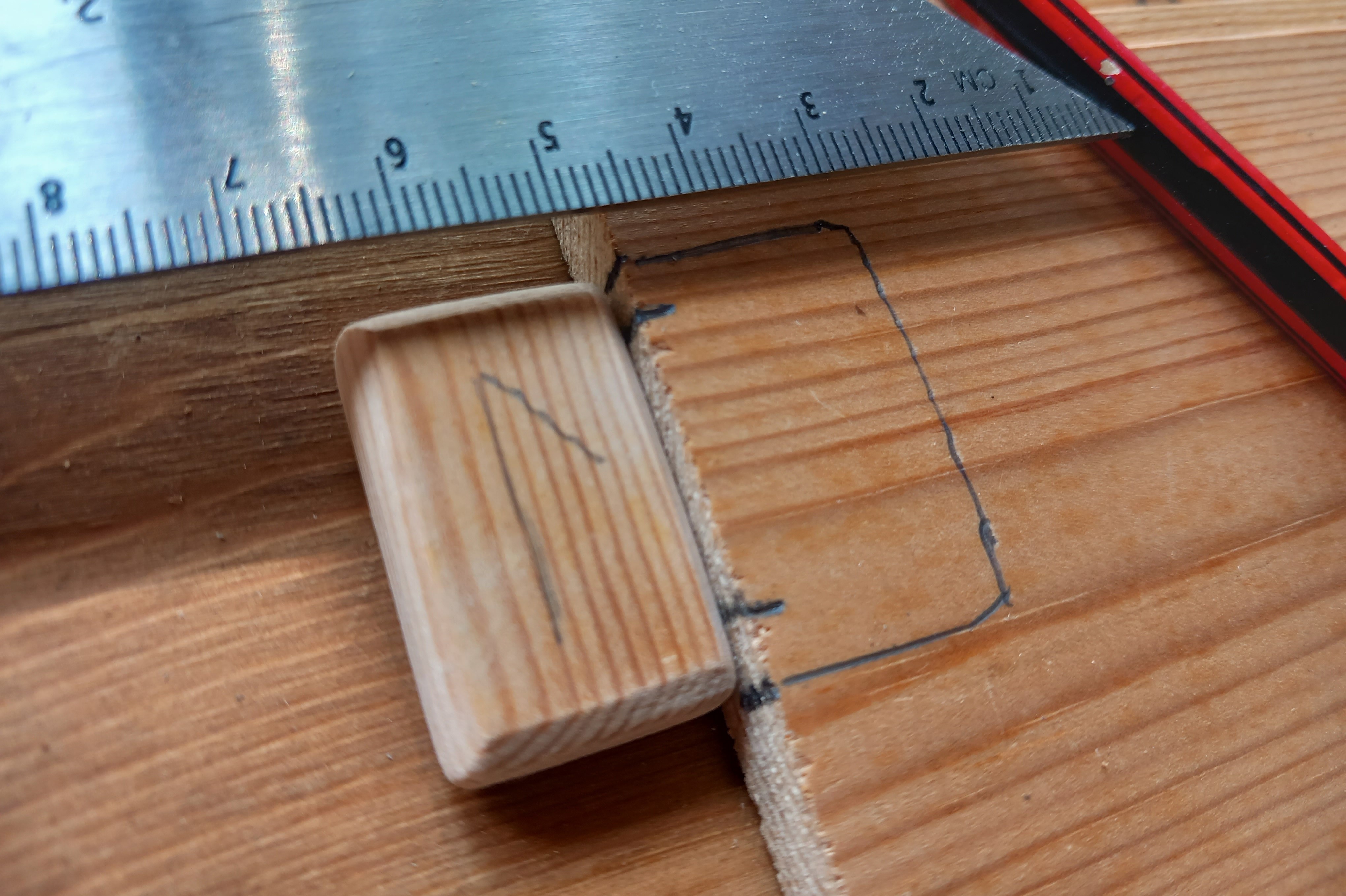
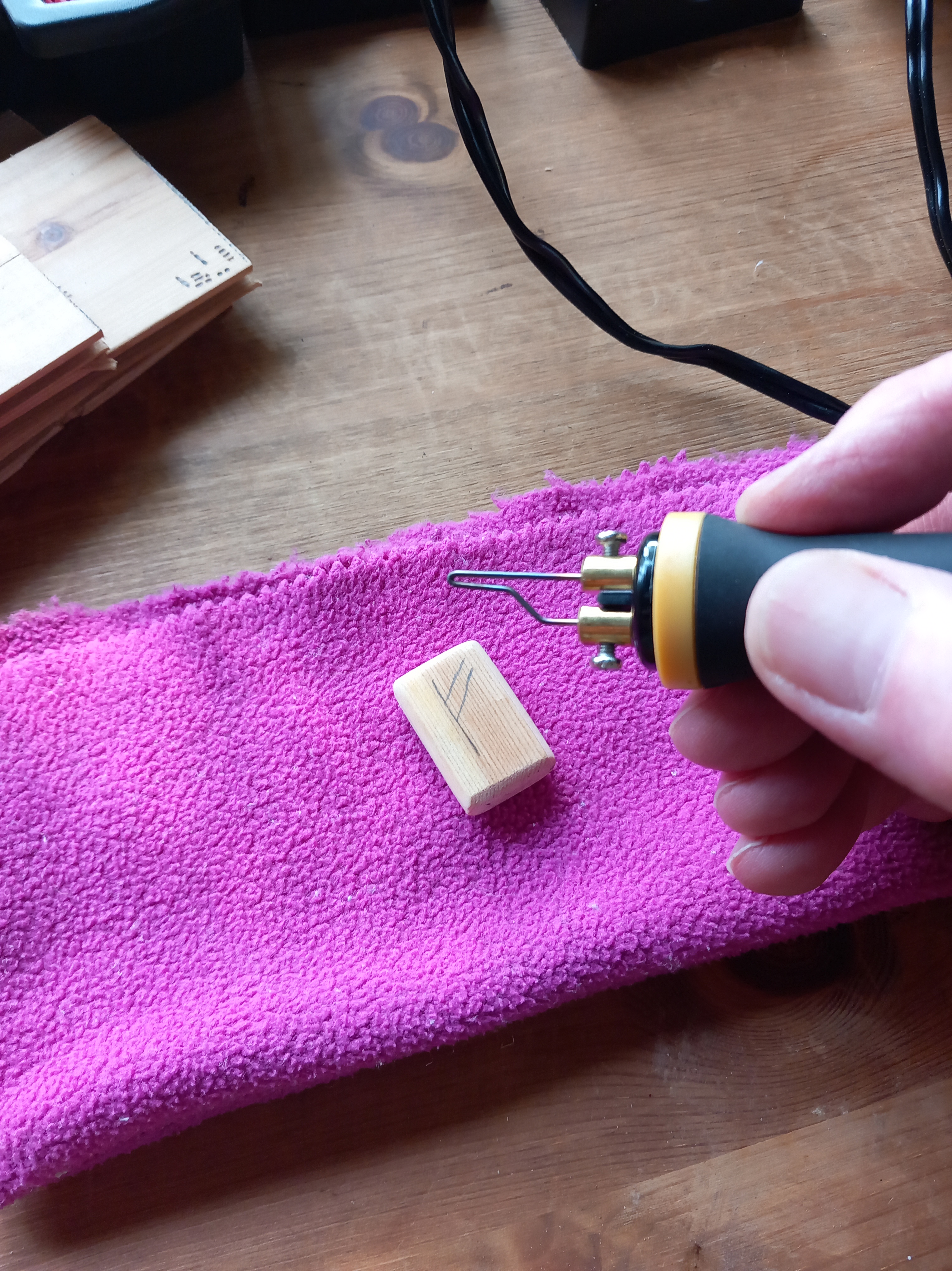
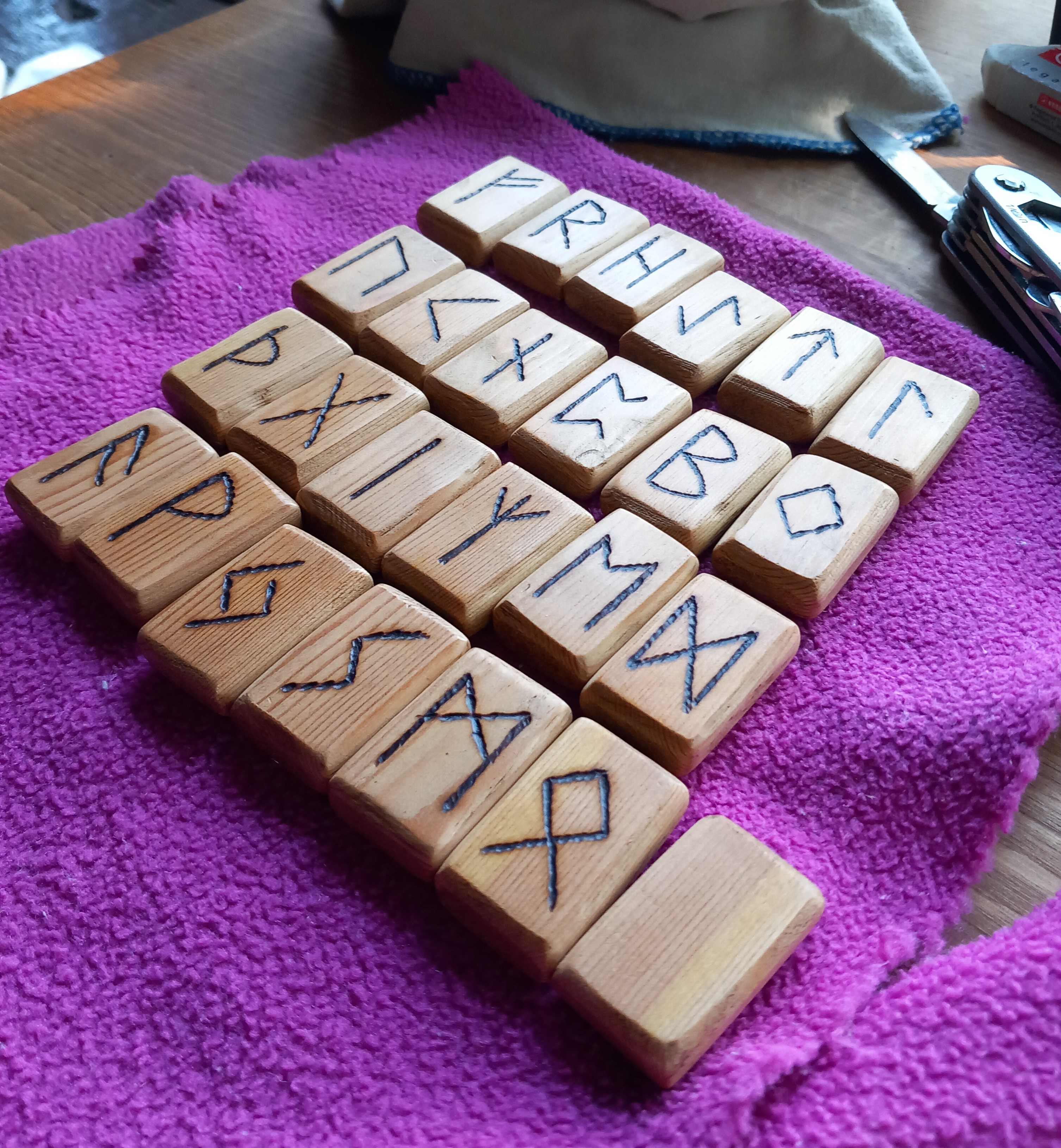
I therefore, decided to craft my own set, using scrap pine from an old wardrobe, with the symbols burnt onto the pieces, using my pyrography tool. Here’s a pictorial account of the process:





What of the origins of the runes?
According to the ancient Germanic peoples themselves, the runes were never ‘invented,’ but are instead eternal, pre-existent forces, discovered by Odin himself by enduring a tremendous ordeal.
The legend has come down to us in the Old Norse poem Hávamál (‘The Sayings of the High One’):
I know that I hung
On the wind-blasted tree
All of nights nine,
Pierced by my spear
And given to Odin,
Myself sacrificed to myself
On that pole
Of which none know
Where its roots run.

No aid I received,
Not even a sip from the horn.
Peering down,
I took up the runes –
Screaming I grasped them –
Then I fell back from there.
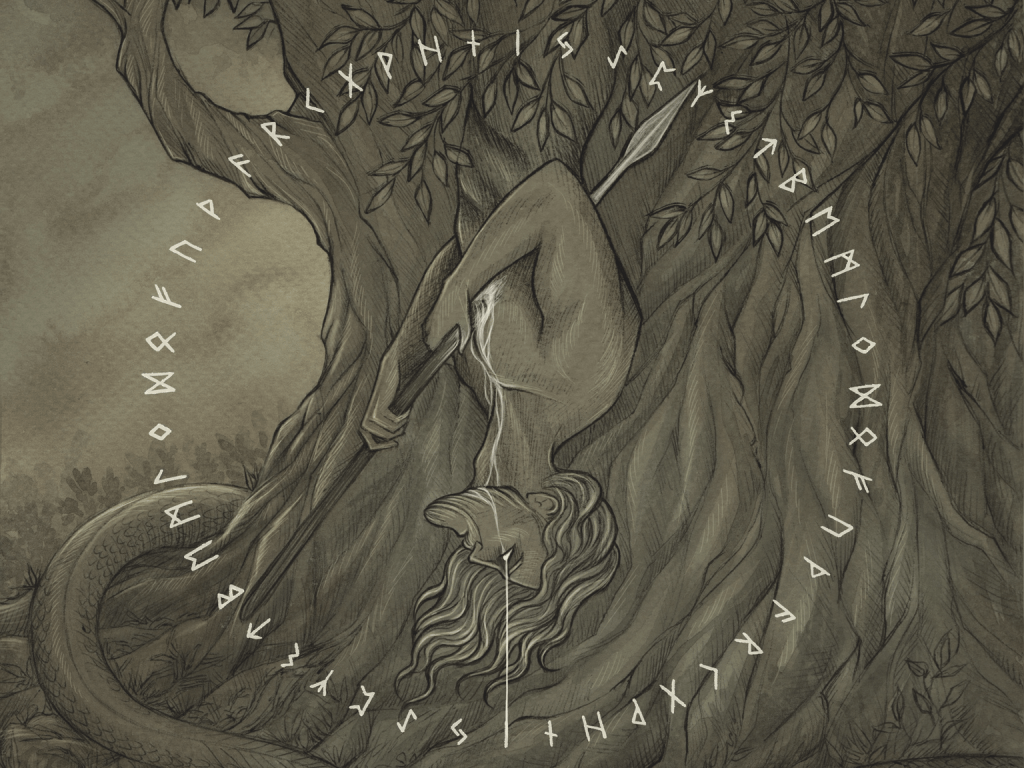
The tree mentioned in that extract from Hávamál is, of course, Yggdrasil, the world-tree at the centre of the Germanic cosmos, a mighty ash tree whose branches and roots hold the Nine Worlds.
Yggdrasil (Old Norse: Yggdrasill or Askr Yggdrasils). The mighty ash tree whose trunk rises at the geographical center of the Norse spiritual cosmos.
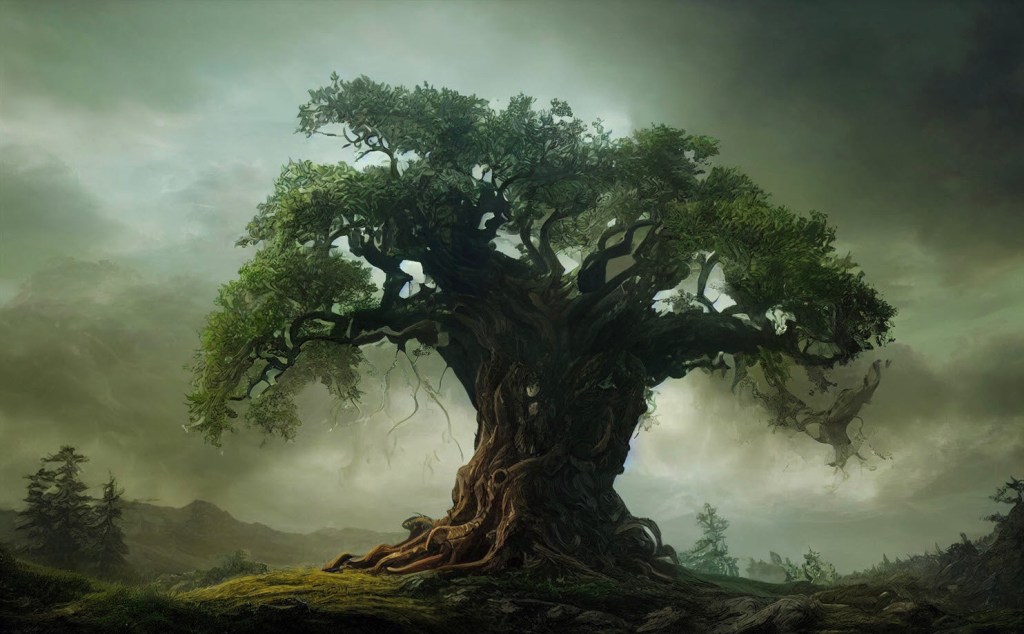
Beneath the world-tree is the Well of Urd, a vast source of wisdom.
That the runes themselves seem to have their native dwelling-place in its waters is also suggested by another Old Norse poem, the Völuspá (‘Insight of the Seeress’):
There stands an ash called Yggdrasil,
A mighty tree showered in white hail.
From there come the dews that fall in the valleys.
It stands evergreen above Urd’s Well.

From there come maidens, very wise,
Three from the lake that stands beneath the pole.
One is called Urd, another Verdandi,
Skuld the third; they carve into the tree
The lives and fates of children.
These ‘three maidens’ are the Norns, and their carvings surely consist of runes. We therefore have a clear association between the Well of Urd, the runes, and magic – in this case, the ability of the Norns to carve the fates of all beings.
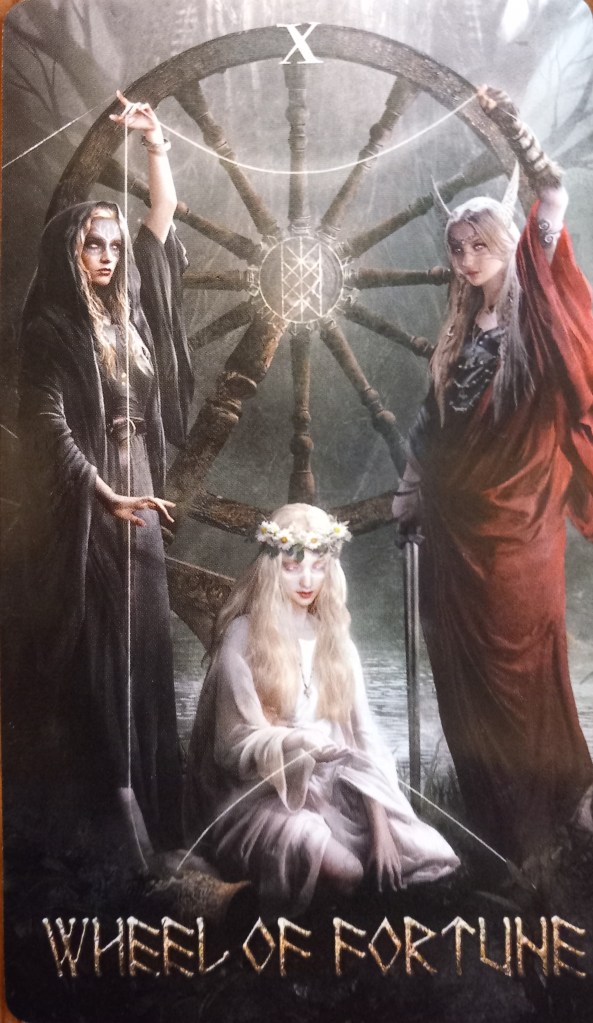
The Three Norns, Urd, Verdandi and Skuld, as depicted in ‘The Runic Tarot,’ by Jack Sephiroth, Allen Dempster and Jaymi Elford.
Norse legends, such as those from Hávamál and the Völuspá, now prompt much of the contemporary music by musicians whose compositions are inspired by traditional Nordic and Germanic folk songs, and often produced using ancient instruments, such as the tagelharpa.
One such piece of music, and the tagelharpa have already featured in a previous blog post, ‘Ulvetime (the Hour of the Wolf)’.
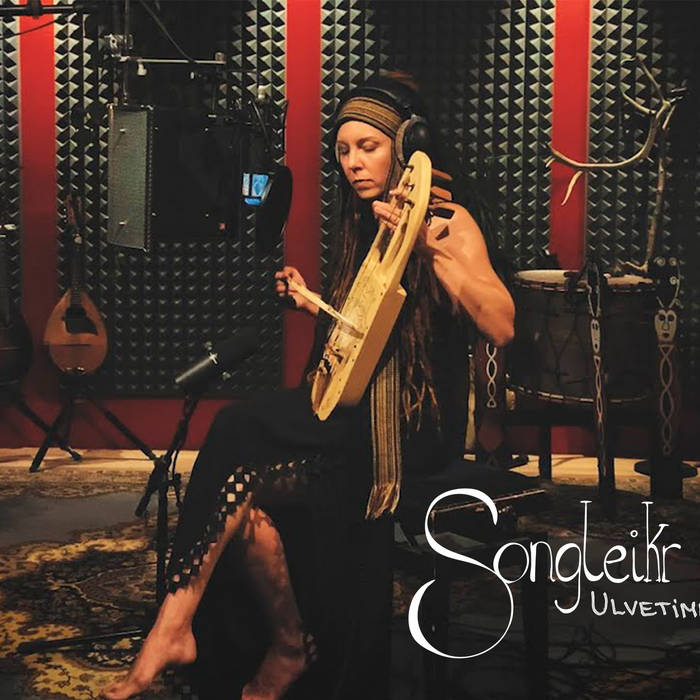
I’ll end this post with another composition, this one from Swedish artist Forndom.
Nio nätters led (Nine Night’s Agony) tells of the discovery of runes by Odin, through his nine-night ordeal, during which he hung from the branches of Yggdrasil:
Nio nätters led (Nine Night’s Agony)
Up and from the paths pale trail.
Up amongst mountains and dense snow.
Here, truly, no man walked before,
But there beautiful pine stood.
Here is quiet as the night is,
O how fair is this domain.
Here I'm sleeping,
May the third speak to me?
Wisdom, sorcery, the sphere of death,

All I can find here.
Wisdom, sorcery, the sphere of death,
Here I come near to Gods.

Through nine nights agony,
I am now tumbling down.
Teach me all about ancient speech,
Drinking from stall of knowledge.
Away the dark mind flies,
When my head is bound for home.

That which lasts no more
Now but onward do I gaze.
 RAVEN MOON